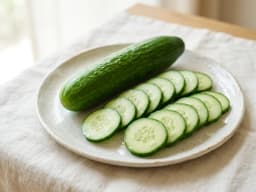
Can cats eat cucumbers?
Safe in moderationPlain cucumber is non-toxic and optional. Assess pickles by sodium, alliums, amount, and signs rather than treating every taste as poison.


Medically reviewed by Dr. Athena Gaffud, DVM · Last reviewed
Can Cats Eat Cucumbers?
Plain cucumber is non-toxic to cats and can be an optional small treat. It contains water and small amounts of nutrients, so it is inaccurate to call it empty, but it does not replace fresh water or a complete and balanced feline diet. Offer only a piece suited to the individual cat's size and eating behavior.
- 1Cucumber is non-toxic and safe for cats in very small amounts.
- 2It is mostly water and low in calories, but it is neither nutritionally empty nor a hydration treatment.
- 3Choose a small piece that suits the individual cat; peeling is optional after washing.
- 4Check pickles and seasoned cucumber for sodium and alliums, and assess the actual amount eaten.
- 5Do not stage cucumber-startle pranks; this nutrition guide does not assign a specific behavior mechanism to viral videos.

Treats should stay under 10% of your cat's daily calories. Smalls makes the rest, built around the meat an obligate carnivore actually needs.
- Human-grade ingredients, protein first
- Built for obligate carnivores
- Fresh meals delivered to your door
Webvet may earn a commission when you click through to Smalls, at no extra cost to you.
Are cucumbers safe for cats?
ASPCA lists cucumber as non-toxic to cats. A small plain piece is generally low risk, but no food exposure is literally danger-free and treat calories still count. Whether cucumber fits an overweight cat's plan depends on the complete diet and the veterinarian's calorie target.

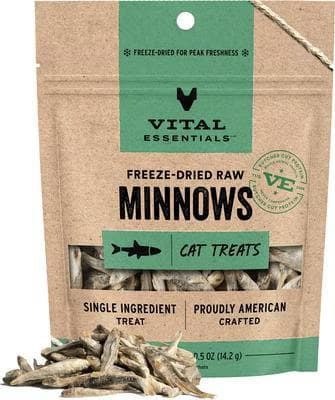
This is an optional cat treat. Review its current label, ingredients, calories, and feeding directions, and count it within the total daily extras.
Webvet may earn a commission when you click through to Chewy, at no extra cost to you.
Cucumber is optional rather than necessary. Cats have species-specific nutrient requirements, but they can digest some cooked or raw plant-derived nutrients used in complete diets. Cucumber should not be presented as a hydration therapy or a health treatment; offer it only if it fits the individual diet.
Do cucumbers offer cats any nutrition?
Cucumber contains water and small amounts of micronutrients. A cat-sized portion is not a treatment for hydration or nutrient deficiency, and it should not displace a complete and balanced feline diet. Its optional use is a matter of preference and calorie fit, not a claim that its nutrients are useless.
How much cucumber can a cat eat?
Portion is everything with a cat, because an average cat weighs only about 8 to 10 pounds. What looks like a modest bite to you is a large snack to them. There is no evidence-based coin-size or weekly serving rule; choose a small piece that fits the individual cat's calorie allowance and eating behavior. That is plenty to satisfy a curious cat without crowding out the meat-based food they actually need or upsetting their stomach. If your cat has never had cucumber before, start with an even smaller amount and watch for any digestive reaction over the next day.

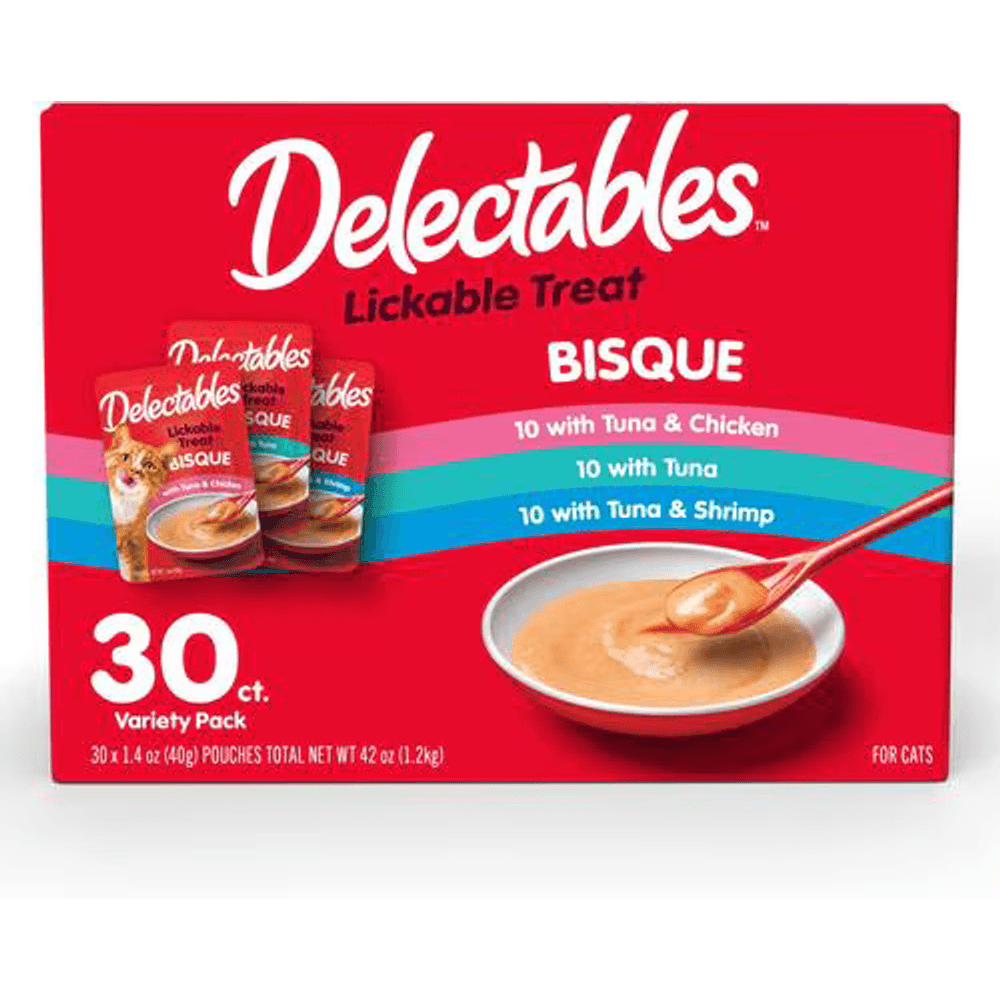
This is an optional cat treat. Review its current label, ingredients, calories, and feeding directions, and count it within the total daily extras.
Webvet may earn a commission when you click through to Chewy, at no extra cost to you.
Too much cucumber, on the other hand, tends to backfire. Because it is so watery and fibrous for a carnivore, a large helping can loosen the stool and cause diarrhea, and a cat filling up on cucumber may turn its nose up at the balanced meal it should be eating. If your cat seems to want cucumber constantly or is losing interest in its normal food, that is a cue to cut it out and check in with your vet, since a sudden fixation on unusual foods can occasionally point to an underlying issue.
How to safely prepare cucumber for your cat
Preparation is simple, but a few steps make it safer. Wash the cucumber first to rinse off any pesticide residue or wax on the skin. Then peel it, especially for a cat with a sensitive stomach, since the skin is the toughest part to digest and the most likely to carry residue. Cut a piece to suit the cat's size and eating behavior. Appropriate preparation may reduce choking risk, but no cut guarantees that risk is zero and whole cucumber chunks are not hazardous in every case. Serve it plain and raw, with no salt, oil, butter, dressing, or seasoning of any kind.

There is no need to cook cucumber for a cat, and no benefit to it either. Raw is fine and is how most cats prefer the crunch. Cucumber seeds are safe in the small amounts found in a normal slice, so you do not need to seed it. Keep any leftover cucumber refrigerated and offer it cold, since many cats seem to like the cool temperature on a warm day.
Risks and when to skip cucumber
The main risks with cucumber are mechanical and dietary rather than toxic. Large or whole pieces can be a choking hazard, so always dice it small. Too much can cause diarrhea or a mildly upset stomach because of the water and fiber load. And any pickled, salted, or seasoned cucumber can expose your cat to salt, vinegar, garlic, or onion. Pickled or seasoned cucumber requires an ingredient- and dose-specific assessment; vinegar is not equivalent to allium exposure, and salt toxicosis requires a sufficient dose. Cats on therapeutic diets should follow their veterinarian's feeding plan.

Watch your cat the first few times it tries cucumber. Vomiting, repeated diarrhea, lethargy, or a loss of appetite are signs to stop offering it and to call your veterinarian if the symptoms do not clear quickly. For most healthy adult cats, plain cucumber is not expected to cause poisoning, but tolerance and interest vary and no particular outcome can be guaranteed.
Better treats for cats than cucumber
Because cats are carnivores, the best treats are meat, not vegetables. A few shreds of plain cooked chicken give your cat the animal protein it is actually wired to want. A little plain cooked egg is another protein-rich option most cats love, and a small amount of plain cooked fish makes an occasional treat, as long as it is boneless and unseasoned. A lick of plain meat baby food with no onion or garlic works too, as does a proper store-bought cat treat that is formulated for feline needs.
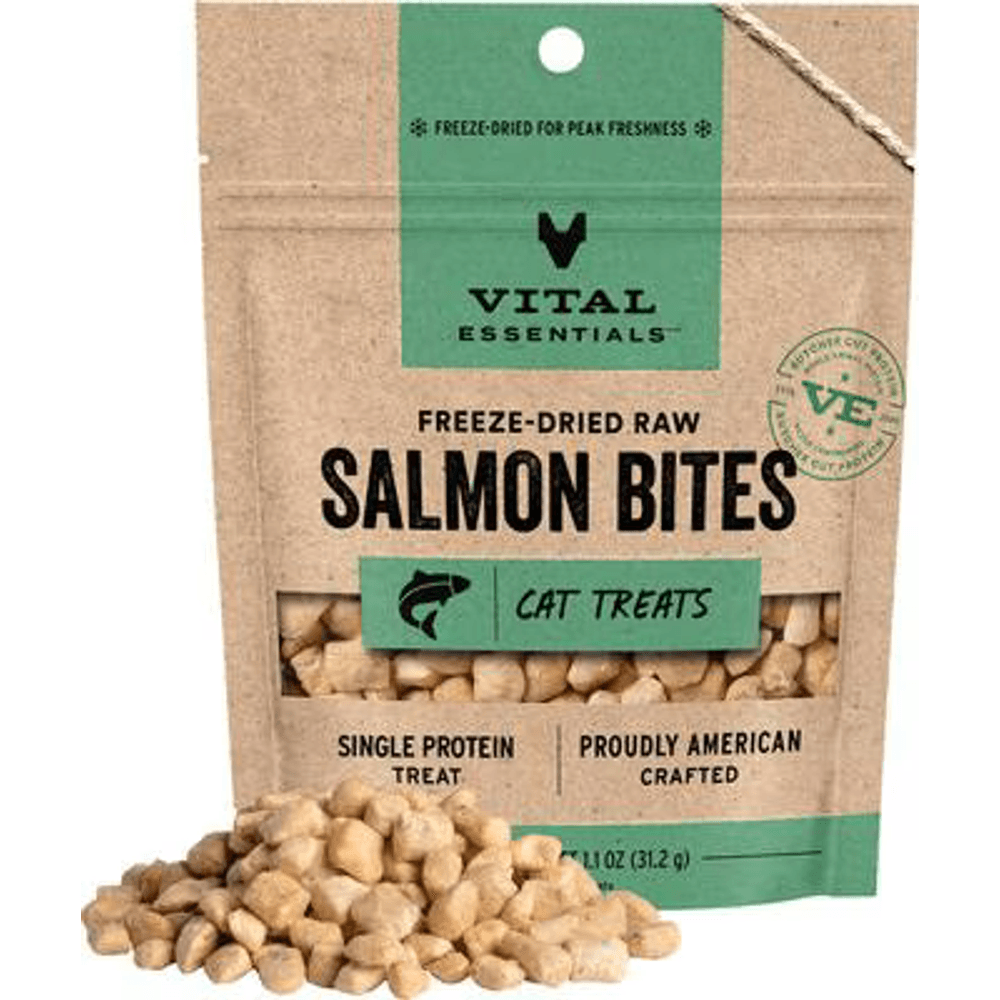
This is an optional cat treat. Review its current label, ingredients, calories, and feeding directions, and count it within the total daily extras.
Webvet may earn a commission when you click through to Chewy, at no extra cost to you.
If your cat is specifically drawn to crunchy, watery vegetables, there are a couple of other safe nibbles in the same spirit as cucumber. A small piece of cooked carrot or a bit of plain cooked green bean is a similarly low-calorie treat that some cats enjoy. Just remember the same rule applies to all of them: they are a taste for enrichment, not nutrition, and they should never replace the meat-based meals that keep your cat healthy.
Frequently Asked Questions
Why does my cat love eating cucumber?
Some cats are drawn to the cold, wet crunch and the fresh smell, and a few simply enjoy the novelty of a new texture to bite. It is uncommon but not abnormal. If the cat otherwise eats a complete diet, cucumber remains an optional extra whose calories and tolerance should be considered individually; normal appetite does not guarantee that every amount or habit is harmless.
Can cats eat cucumber skin or seeds?
Both are non-toxic, but it is best to peel cucumber for a cat because the skin is harder to digest and may carry pesticide residue or wax. The seeds in a normal slice are safe and do not need to be removed, though there is no harm in scooping them out of a large cucumber.
Can cats eat pickles or cucumbers with salt?
Pickles are not a useful routine treat, but risk depends on the recipe and amount. Check sodium and onion or garlic; vinegar itself is not an allium toxin. Seek veterinary or poison-service advice for a concerning dose or clinical signs.
Can cats eat cucumber every day?
It is better not to. Cucumber offers a carnivore no real nutrition, and a daily habit can loosen the stool and take the place of the meat-based food your cat needs. Keep it to a thin slice once or twice a week at most.
Are cats actually afraid of cucumbers?
Do not place cucumber or any object behind a cat to provoke a reaction. Viral clips do not establish a single behavior mechanism, and deliberate startling is unnecessary.

The bottom line: plain cucumber is non-toxic and can be an optional small treat, but it is not a hydration treatment or dietary requirement. Choose a piece appropriate to the individual cat, and assess pickled or seasoned products from the actual ingredients and amount.
More safe treats
More vegetables for cats
Sources
- ASPCA: Cucumber
Cucumber is listed as non-toxic to cats and dogs.
- Merck Veterinary Manual: Overview of Nutrition in Small Animals
Cats require complete and balanced feline nutrition; obligate carnivory does not make every plant nutrient indigestible or useless.
- Merck Veterinary Manual: Salt Toxicosis in Animals
Salt toxicosis depends on dose and water access, not simply whether a food tastes salty.
- Merck Veterinary Manual: Garlic and Onion Toxicosis
Allium toxicosis is dose-dependent and distinct from vinegar exposure.
- AAFP and ISFM Feline Environmental Needs Guidelines
Predictable environments and positive, consistent human interaction support feline welfare; viral clips do not establish one cucumber-specific mechanism.
- WSAVA: Feeding Treats to Your Cat
Optional treats should remain a limited part of the cat's calorie intake and should not displace complete feline nutrition.
- Merck Veterinary Manual: Gastrointestinal Obstruction in Small Animals
Foreign-body risk depends on the object, location, patient, and clinical signs; no cucumber cut can guarantee zero choking or obstruction risk.
Reviewed by Dr. Athena Gaffud, DVM
General guidance based on credible veterinary sources; not a diagnosis or a substitute for your veterinarian. If your pet ate something toxic or is unwell, contact your vet or a pet poison line right away.