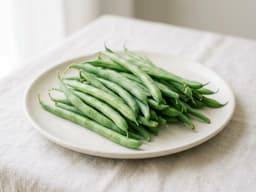
Can cats eat green beans?
Safe in moderationPlain green beans are not a recognized feline toxin, but they are not a weight-loss treatment; use a complete calorie plan and check labels.


Medically reviewed by Dr. Athena Gaffud, DVM · Last reviewed
Can Cats Eat Green Beans?
Plain green beans are not a recognized feline toxin and may fit as an optional extra for some cats, but they are not a stand-alone weight-loss treatment. A complete feline diet must continue to supply required amino acids, fatty acids, vitamins, and minerals while any calorie reduction protects lean tissue and accounts for the individual diagnosis. Identify fresh, frozen, canned, buttered, seasoned, casserole, and restaurant forms separately. Brine, onion, garlic, sauces, cheese, meat pieces, salt, and packaging can matter more than the bean itself, so keep the current label. A whole fibrous bean may be awkward for an individual cat to chew, but no universal cut size or bean count predicts choking or gastrointestinal signs. Record the amount, time, appetite, vomiting, stool, activity, breathing, and any swallowed string, bag, can lid, or wrapper. Cats with diabetes, kidney disease, urinary disease, gastrointestinal disease, food trials, or prescription diets need case-specific guidance before repeated use. For training, measured complete food is easier to count and preserves the intended nutritional plan. Store opened cans, bags, strings, and casserole leftovers securely. If the goal is satiety or weight change, track body weight and body condition through the veterinary plan rather than judging success from how much bean volume the cat accepts.
- 1Plain green beans are optional, not required feline nutrition.
- 2Do not use added fiber as a stand-alone weight-loss treatment.
- 3Plant-derived nutrients are not categorically unusable to cats.
- 4Canned and seasoned products vary; check sodium, alliums, and amount.
- 5Prepare food for the individual cat's chewing behavior and diet.

Treats should stay under 10% of your cat's daily calories. Smalls makes the rest, built around the meat an obligate carnivore actually needs.
- Human-grade ingredients, protein first
- Built for obligate carnivores
- Fresh meals delivered to your door
Webvet may earn a commission when you click through to Smalls, at no extra cost to you.
Are green beans safe for cats?
A small amount of plain green bean is not a recognized feline toxin. That does not create a universal serving or make every preparation equivalent; assess the label, amount, cat, and signs. There is an important difference between a cat stealing a plain bean and an owner using beans as part of a feeding plan. The first question is exposure triage: identify the preparation, amount, and any symptoms. The second is nutrition: decide whether the calories and bulk fit a complete feline diet. A plain taste usually does not call for poison treatment simply because it is a vegetable, but a seasoned casserole may require a label review for onion, garlic, or excess sodium. A cat that is vomiting repeatedly, refusing food, weak, or otherwise unwell needs veterinary assessment regardless of whether the bean itself is considered a toxin.

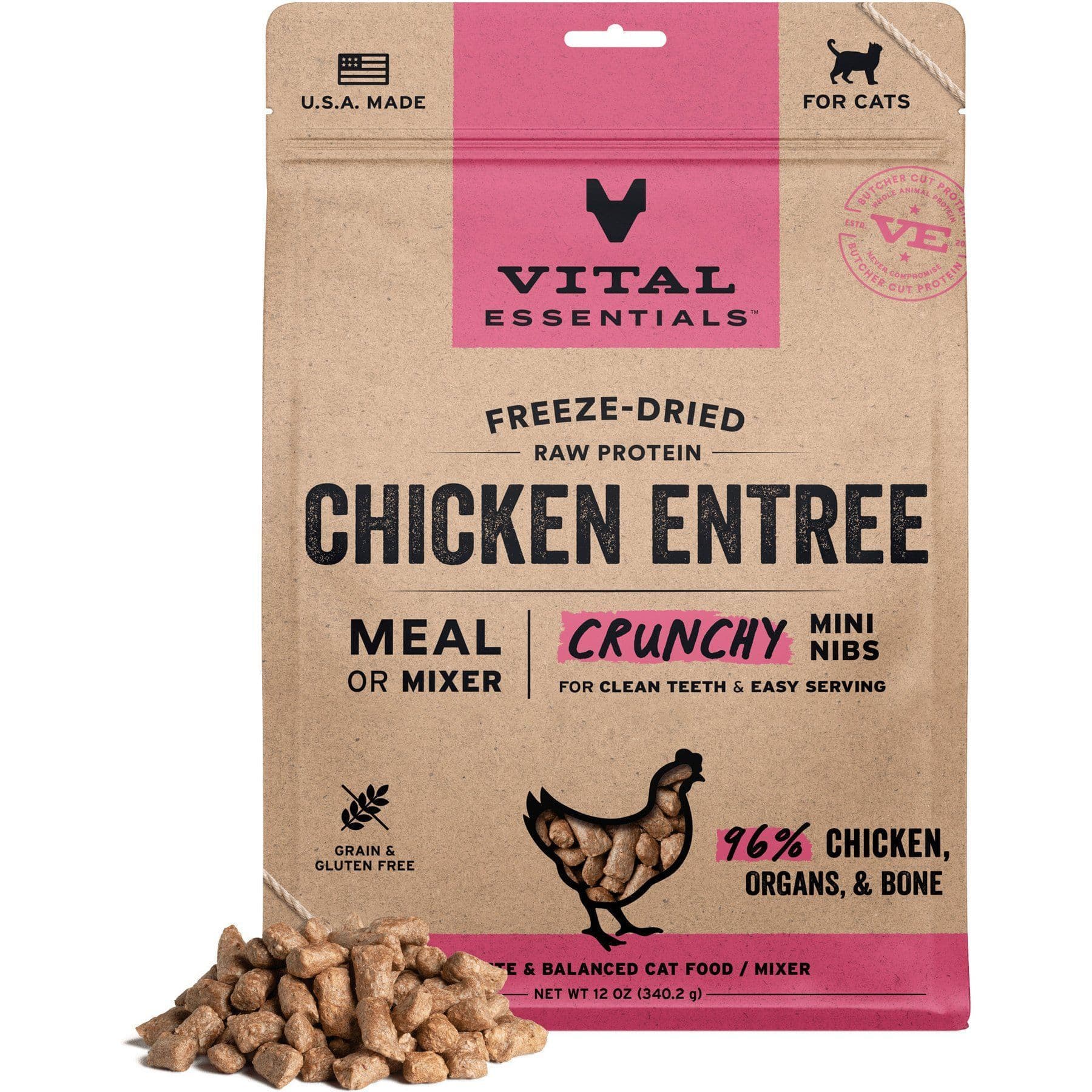
This is an optional cat treat. Review its current label, ingredients, calories, and feeding directions, and count it within the total daily extras.
Webvet may earn a commission when you click through to Chewy, at no extra cost to you.
Cats have species-specific nutrient requirements, but their interest or refusal cannot be predicted from obligate carnivory or sweet-taste biology. Do not describe vegetables as entertainment or biologically expected rejection.
What green beans contain, and why they remain optional
Green beans contain fiber, water, vitamins, minerals, and calories. Plant-derived nutrients are not categorically unusable, but a treat portion does not establish clinical benefits or fill a dietary gap. Cats still have strict species-specific requirements for amino acids, fatty acids, vitamins, and minerals, so complete feline food remains the foundation. That does not mean every nutrient from a plant passes through unused. It means the nutrient contribution of one optional bean should not be exaggerated into a health benefit or used to justify replacing complete food. A cat eating a balanced diet is not waiting for green beans to correct a vitamin deficiency. If a veterinarian recommends a particular fiber strategy for constipation, diarrhea, diabetes, or weight management, the amount and fiber source should be chosen for that diagnosis rather than copied from a general treat article.
Fiber can affect stool and satiety, but response is individual. Added fiber alone does not make green beans a feline weight-management treatment.

How to safely feed green beans to your cat
Canned and seasoned products vary. Butter and oil add calories; salt adds sodium; onion and garlic are separate dose-dependent hazards. Review the exact recipe and amount. A label check should name the actual ingredients instead of grouping all additions as toxic. Plain butter or oil mainly changes calories and fat. Added salt changes sodium. Onion and garlic are separate allium exposures that need ingredient- and dose-specific assessment. Refried beans may include fat, broth, spices, or alliums, while a canned green-bean product may contain only beans, water, and salt. Those are not equivalent situations. Keep the container or photograph the recipe when seeking advice, estimate the amount eaten, and mention the cat's weight, medical conditions, medications, and prescribed diet. That information is more useful than the labels canned, seasoned, or human food by themselves.
How much green bean can a cat have?
There is no evidence-based one-piece feline serving. Count optional treats within the individual calorie allowance and keep complete and balanced cat food primary.

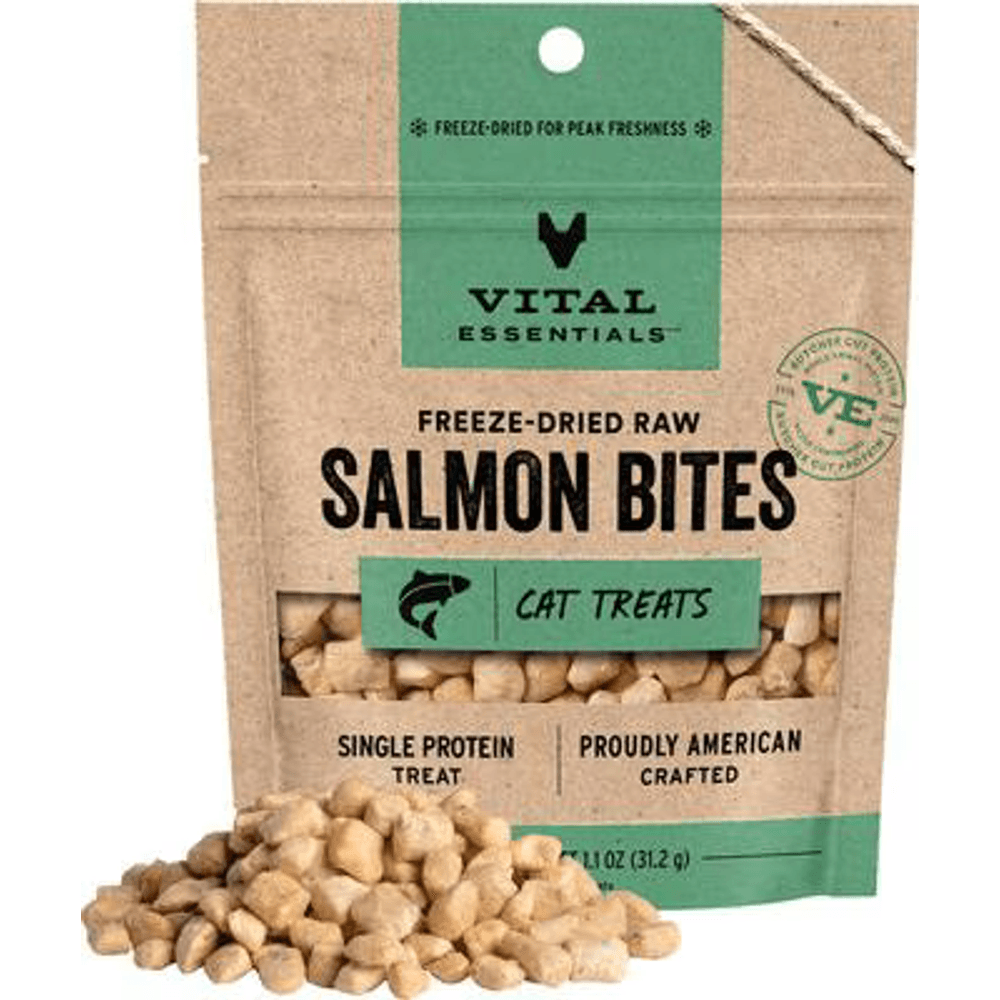
This is an optional cat treat. Review its current label, ingredients, calories, and feeding directions, and count it within the total daily extras.
Webvet may earn a commission when you click through to Chewy, at no extra cost to you.
An unsuitable amount may cause gastrointestinal signs or displace complete food. Weight loss requires a veterinarian-selected calorie target rather than more vegetables.
Better treat options for cats
Choose treats for safety, calorie fit, and individual tolerance. Meat is not categorically superior to every produce ingredient in every formulated diet. A practical treat comparison also considers texture and use. A crisp bean, soft cooked bean, freeze-dried meat, puree, or commercial treat may serve different purposes, and none is automatically best for every cat. Choose something the cat can chew, the calorie plan can accommodate, and the medical diet permits. If treats are used for training or medication, include those repeated calories rather than counting only obvious snacks.
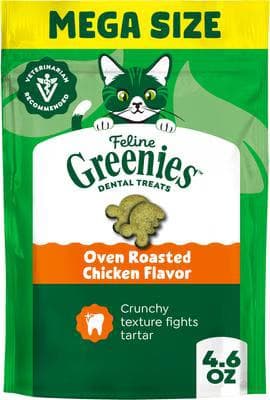
This is a dental cat treat. Follow the current label and ask your veterinarian how it fits alongside tooth brushing and professional dental care.
Webvet may earn a commission when you click through to Chewy, at no extra cost to you.
For weight control, measure the complete diet and all extras. Green beans are not a substitute for a veterinary weight plan. Safe feline weight loss is deliberately gradual and is monitored with repeat weights and body-condition scoring. A measured calorie target matters because guessing by volume can remove too much complete food or fail to reduce calories at all. Treats, table food, supplements, and food used for medication all count. Some cats also need diet adjustments for diabetes, kidney disease, urinary disease, limited mobility, or body-composition goals. Green beans may fit as an occasional extra for one cat and be pointless or unsuitable for another. If weight is the reason for considering them, ask the veterinary team to calculate the whole plan and specify what, if anything, the beans should replace.
Frequently asked questions
Can cats eat raw green beans?
Plain raw green bean is not a recognized toxin, but texture and chewing behavior matter. Cooking is an optional preparation choice, not a universal safety requirement.
Can cats eat canned green beans?
Canned products vary in sodium and added ingredients. Read the label and do not assume rinsing makes every recipe appropriate.
Can cats eat green beans every day?
Daily use is not automatically appropriate. Count all treats in the calorie plan and do not displace complete feline nutrition.
Why is my cat obsessed with green beans?
An individual cat's interest cannot be reliably explained from sweet-taste biology or carnivory.
Are any beans toxic to cats?
Legumes differ. Check the exact bean and preparation; onion, garlic, sodium, and other ingredients require their own exposure assessment.

More safe treats
More vegetables for cats
Sources
- ASPCA: Sharing Is Caring, Foods You Can Safely Share With Your Pet
Lists green beans and kiwi among optional pet-safe foods while advising small portions.
- VCA: Maintaining Weight Loss in Dogs and Cats
Weight management depends on a veterinarian-selected calorie target and complete feeding plan.
- WSAVA: Feeding Treats to Your Cat
All treats share an individual calorie allowance and should not displace complete feline nutrition.
- Merck Veterinary Manual: Overview of Nutrition in Small Animals
Complete and balanced feeding and patient-specific calorie planning are the nutritional baseline for dogs and cats.
- Merck Veterinary Manual: Garlic and Onion Toxicosis in Animals
Allium risk depends on the ingredient, concentration, dose, and susceptible patient.
- Merck Veterinary Manual: Salt Toxicosis in Animals
Salt toxicosis requires a sufficient dose and depends on exposure and water access.
Reviewed by Dr. Athena Gaffud, DVM
General guidance based on credible veterinary sources; not a diagnosis or a substitute for your veterinarian. If your pet ate something toxic or is unwell, contact your vet or a pet poison line right away.