
Can cats eat bacon?
Not recommendedA small plain cooked bacon crumb is unlikely to poison a cat, but bacon is a poor routine treat because it is calorie-dense, fatty, and salty.


Medically reviewed by Dr. Athena Gaffud, DVM · Last reviewed
Can Cats Eat Bacon?
A small plain cooked bacon crumb is unlikely to poison a cat. Bacon is still a poor routine treat because it is calorie-dense, fatty, salty, and unnecessary in a complete feline diet. Assess a larger or mixed-product exposure from the amount, recipe, patient, and symptoms rather than assuming one piece is harmless or toxic.
- 1A small plain cooked bacon crumb is not an established poisoning dose for a cat.
- 2Salt toxicosis is dose- and hydration-dependent; cats are not shown to reach a toxic dose from one strip simply because they are small.
- 3Bacon contains energy and protein, but its calories, fat, and sodium make it unnecessary in a complete diet.
- 4A rich-food exposure may be relevant to pancreatitis, but there is no predictable bacon dose or fixed one-to-two-day course.
- 5Onion and garlic risk is recipe- and dose-specific, so check the exact product.

Treats should stay under 10% of your cat's daily calories. Smalls makes the rest, built around the meat an obligate carnivore actually needs.
- Human-grade ingredients, protein first
- Built for obligate carnivores
- Fresh meals delivered to your door
Webvet may earn a commission when you click through to Smalls, at no extra cost to you.
Is bacon safe for cats?

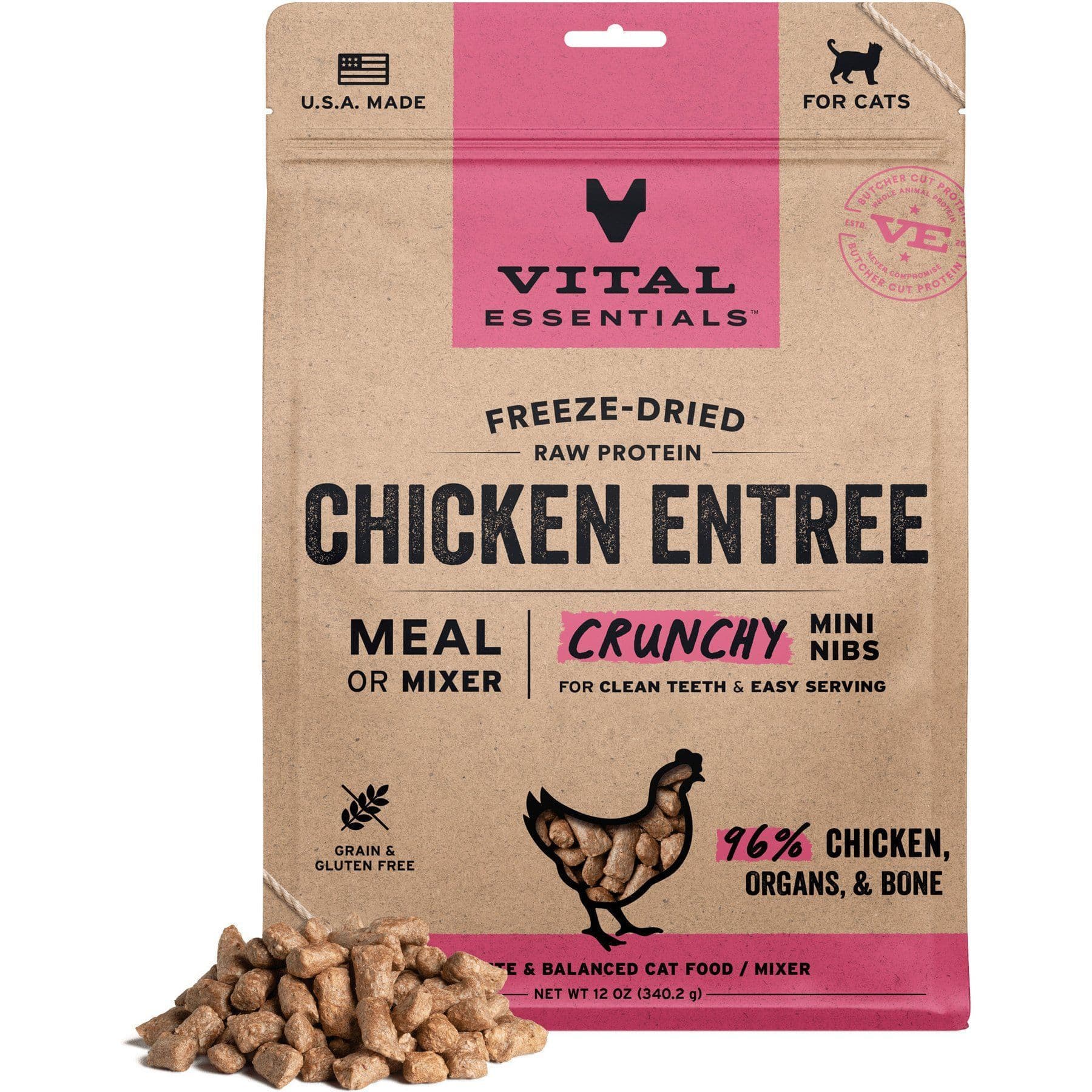
This is an optional cat treat. Review its current label, ingredients, calories, and feeding directions, and count it within the total daily extras.
Webvet may earn a commission when you click through to Chewy, at no extra cost to you.
Plain cooked bacon is not inherently poisonous to cats. No comparative dose evidence establishes that cats are among the most salt-sensitive pets, that one strip exceeds every cat's daily sodium allowance, or that feline size alone reaches a toxic dose. Bacon remains a poor treat because of its calorie, fat, and sodium density.
Bacon contains energy and protein, so it is not nutritionally empty. Bacon used as a pill wrapper can become a repeated calorie and sodium source, especially when several medications are given each day. Ask whether the medicine can be given with food and whether a lower-fat veterinary-approved carrier fits the cat's diet. Record failed doses rather than adding more bacon until the tablet is taken. It is still unnecessary because a complete feline food should provide protein, fat, vitamins, minerals, and calories in an appropriate balance. Repeated bacon treats can displace that balance and add excess calories. Nutrient presence does not establish that bacon improves muscle, coat, appetite, or another health outcome. Its protein cannot be evaluated separately from its fat, sodium, preparation, and place in the total diet. A complete-food label and the individual feeding plan are more relevant than describing one ingredient as either nutritious or worthless.
Why bacon is a bad fit for cats
Salt toxicosis is dose- and hydration-dependent. After an accidental exposure, watch the cat rather than the clock. Repeated vomiting, refusal to eat, marked lethargy, abdominal discomfort, tremors, unusual thirst, or neurologic changes deserve veterinary advice, but none of those signs diagnoses salt toxicosis or pancreatitis by itself. Report water access, concurrent foods, kidney or pancreatic history, and medications. Do not give salt, oil, milk, or another home remedy to counter the bacon. It is unlikely when sodium-regulating mechanisms are intact and fresh water is available, although very large exposures can be serious. Do not describe ordinary bacon crumbs as organ strain or poisoning without calculating the actual exposure and assessing the patient. Relevant details include the bacon's sodium content, amount eaten, time since exposure, access to water, body weight, kidney and neurologic history, concurrent foods, and current signs. A serving size printed for people is not a feline toxicology threshold.

This is an optional cat treat. Review its current label, ingredients, calories, and feeding directions, and count it within the total daily extras.
Webvet may earn a commission when you click through to Chewy, at no extra cost to you.
A rich exposure can cause gastrointestinal upset, and pancreatitis may be considered when compatible signs develop. The evidence does not establish bacon as a classic predictable feline trigger, a universal amount, or a fixed one-to-two-day course. Diagnosis requires clinical assessment.
Bacon additives vary. Onion or garlic seasoning can cause oxidative red-cell injury, but Allium risk is dose-dependent and cannot be inferred from every bacon product. Nitrates, smoke flavor, maple, barbecue coatings, and other ingredients also require the exact label and amount.
What to do if your cat ate bacon
For a small plain cooked exposure in an asymptomatic cat, remove access, keep the packaging, provide fresh water, and follow veterinarian guidance. Distinguish cooked bacon meat from raw pork, rendered grease, bacon seasoning, shelf-stable bits, and a dish that merely has bacon in its name. Their fat, sodium, preparation, and co-ingredients differ. Save the nutrition panel and ingredient list, and estimate both the meat and any grease consumed. A lick from a cooled pan and access to a package are not equivalent histories. Raw products, larger amounts, uncertain recipes, or symptoms warrant a call. Avoid universal watch windows because the exposure and patient determine the plan. Report the estimated amount, preparation, ingredient list, timing, body weight, medical history, and any vomiting, appetite change, pain, weakness, tremor, or altered thirst. That information lets a clinician distinguish routine dietary indiscretion from a case needing examination or laboratory assessment.

| Situation | Evidence-based response |
|---|---|
| Small plain cooked crumb | Usually low risk; keep label and observe as advised |
| Large amount or grease | Call with amount and symptoms |
| Raw or noncommercial pork | Discuss source and infection risk |
| Onion or garlic listed | Obtain dose assessment |
| Neurologic or severe GI signs | Seek urgent veterinary care |
Safe protein treats for cats instead of bacon
Plain cooked chicken or turkey may fit some cats better than bacon, but it still adds calories and must be boneless, unseasoned, and compatible with the complete diet. A therapeutic diet should not be changed without the treating veterinarian's approval.
This is a dental cat treat. Follow the current label and ask your veterinarian how it fits alongside tooth brushing and professional dental care.
Webvet may earn a commission when you click through to Chewy, at no extra cost to you.
Commercial cat treats can offer predictable calories and ingredients, but no treat is automatically appropriate for every cat. Count all extras and use veterinarian guidance for obesity, diabetes, pancreatitis, kidney disease, or another managed condition.
Frequently asked questions
Is cooked bacon ok for cats to eat?
Plain cooked bacon is not inherently toxic, but it is calorie-dense, fatty, and salty and is not recommended as a routine treat. Cooking does not remove those nutritional concerns.
Can cats have a tiny piece of bacon?
A small plain cooked piece is unlikely to poison a cat, but there is no reason to make it routine. Keep the product and call if the amount was substantial, the recipe was concerning, or symptoms develop.
Can cats eat raw bacon?
Raw pork can carry pathogens or parasites, with risk depending on source, processing, geography, storage, and preparation. Identify the product and contact a veterinarian for case-specific advice.
Can cats eat bacon grease?
Bacon grease is concentrated fat and may cause gastrointestinal upset. A rich exposure can be relevant when pancreatitis signs develop, but grease is not a guaranteed trigger and should not be described as chemically pure fat.
What if my cat eats a little piece of bacon and seems fine?
A small plain piece in a cat acting normally is usually low risk. Keep fresh water available and seek advice for repeated vomiting, abdominal pain, marked lethargy, neurologic signs, a large amount, or a hazardous ingredient.

Safe alternatives
More meat & seafood for cats
Sources
- Merck Veterinary Manual: Salt Toxicosis in Animals
Describes salt toxicosis in relation to sodium exposure and water access; it gives no bacon-specific universal threshold.
- Merck Veterinary Manual: Pancreatitis in Dogs and Cats
Supports dietary indiscretion as a canine risk factor while not establishing a food-specific dose or predictable outcome after one exposure.
- Merck Veterinary Manual: Overview of Nutrition in Small Animals
Supports complete and balanced feeding and patient-specific nutrition; it does not establish clinical benefit from a treat portion.
- Merck Veterinary Manual: Garlic and Onion Toxicosis in Animals
Supports oxidative red-cell injury, Heinz-body formation, methemoglobinemia, and hemolytic anemia as the primary Allium syndrome.
Reviewed by Dr. Athena Gaffud, DVM
General guidance based on credible veterinary sources; not a diagnosis or a substitute for your veterinarian. If your pet ate something toxic or is unwell, contact your vet or a pet poison line right away.