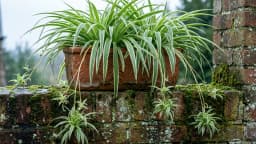
Are spider plants toxic to dogs?
Not toxic, monitorSpider plants (Chlorophytum comosum) are listed as non-toxic to dogs, but chewing can upset the stomach. Check for potting materials and products.
Confirm the plant and monitor for problems
The identified plant is non-toxic, but injury, swallowed objects, and products on it need separate assessment. Contact your vet for symptoms or uncertainty.


Medically reviewed by Dr. Athena Gaffud, DVM · Last reviewed
What to do right now
- Move the plant and fallen leaves or plantlets beyond your dog's reach.
- Confirm Chlorophytum comosum on the label or with reliable identification. A spider lily is a different plant, and ribbon plant is an ambiguous name.
- Check for missing soil, pot fragments, or product packaging. Contact your vet for those exposures, uncertain identification, or symptoms.
- Seek emergency care for trouble breathing, collapse, severe weakness, or inability to swallow.
What not to do
- Do not induce vomiting at home or give any home remedy.
- Do not assume a non-toxic plant is suitable as a snack or ignore repeated chewing and digestive symptoms.
- Do not apply this answer to spider lilies or an unidentified plant sold as ribbon plant.
What to tell the vet or poison line
- The botanical name or photos of the plant and label.
- Whether leaves, plantlets, soil, or pot materials were eaten, and about how much.
- When it happened, your dog's weight, and any vomiting, diarrhea, drooling, or appetite changes.
- Any fertilizer, pesticide, or other product used on or near the plant.
Are spider plants toxic to dogs? The ASPCA's plant database lists Chlorophytum comosum as non-toxic. That makes an identified spider plant a reasonable houseplant choice, but not a snack. Chewing plant material can still cause stomach upset, and the pot, fertilizer or another plant may create a separate problem. Check what your dog actually reached before deciding that the non-toxic label settles the incident.
Are spider plants safe around dogs?
An identified spider plant is listed as non-toxic to dogs and cats. Keep leaves, dangling plantlets and potting supplies out of chewing reach, and seek advice for symptoms or an uncertain exposure.
During watering or repotting, a MidWest Wire Dog Exercise Pen with Step-Thru Door can create a supervised dog area separate from the work. Choose a stable setup and suitable height. It is not reliable separation if your dog can climb it, push it aside or reach plant material through the panels.

Optional equipment or enrichment for your dog. Check suitability, condition, and directions, and supervise use. This product does not treat a hazardous exposure.
Webvet may earn a commission when you click through to Chewy, at no extra cost to you.
Start with where the plant will live. A hanging basket can look inaccessible while its longest leaves hang at nose level. A plant on a shelf may become reachable when a chair moves underneath it. Plan for your dog's normal movement, not just the height of the container.
Check the scientific name against the ASPCA's spider plant record. “Ribbon plant” and other common names can be ambiguous. A spider plant is also not a spider lily. Keep the nursery label, and ask the seller or a qualified plant professional if you cannot establish the identity.
Leaves, runners and the pot: check the whole setup
Spider plants have narrow, arching leaves and can produce small plantlets along dangling runners. Those moving pieces may be easier for a dog to reach than the main plant. Look for the lowest trailing leaf as well as the pot itself when deciding where to put one.

The ASPCA's general plant guidance notes that eating plant material can upset a pet's stomach even when the plant is non-toxic. There is no reason to encourage a dog to chew leaves or baby spider plants. The category helps describe poisoning risk; it is not a serving recommendation.
Inspect more than the foliage after any disturbance:
- Leaves and runners: are pieces missing, or merely bent?
- Potting mix: was soil scattered, or might some have been swallowed?
- Pot and hanger: are plastic, string or broken pieces missing?
- Care products: was fertilizer applied or a packet left nearby?
A soil spill does not prove ingestion, but a missing object should not be ignored. Keep the packaging for the growing medium and any plant food, because a generic description such as “houseplant fertilizer” may not identify the ingredients.
For routine storage, a Qdos Adhesive Double Door Dog Cabinet Lock can help secure compatible cupboard doors. Keep products in their original closed containers and check the latch. Do not store loose fertilizer in a food tub that someone could mistake for dog supplies.
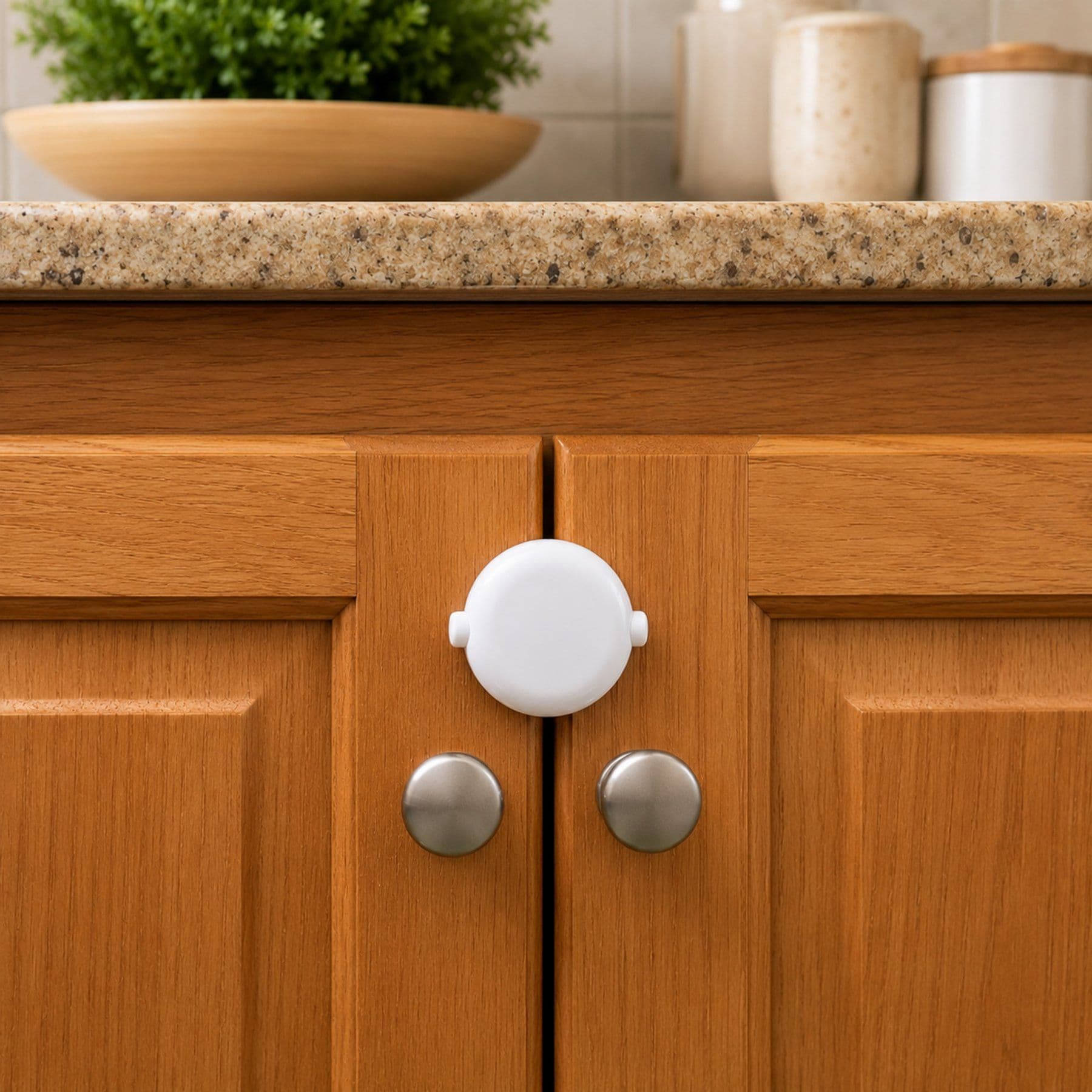
Optional equipment or enrichment for your dog. Check suitability, condition, and directions, and supervise use. This product does not treat a hazardous exposure.
Webvet may earn a commission when you click through to Chewy, at no extra cost to you.
Keep trailing plants away from curious dogs
Do a reach audit whenever the plant grows, you move furniture or a holiday display changes the room. Follow the lowest trailing leaf all the way down. A hanging pot's height is not the same as the height of its reachable foliage.
For a supervised move through a room where plants are temporarily on the floor, a lead attached to a properly fitted Frisco Padded No Pull Dog Harness lets you guide your dog to another area. Choose the correct size from measurements and put the lead away afterward. Do not leave a dog tethered beside a plant or an unstable stand.

Optional equipment or enrichment for your dog. Check suitability, condition, and directions, and supervise use. This product does not treat a hazardous exposure.
Webvet may earn a commission when you click through to Chewy, at no extra cost to you.

Give your dog something appropriate to do while you care for plants. For ordinary training, a small reward such as Fruitables Skinny Minis Pumpkin & Berry Flavor Dog Treats can reinforce settling on a mat or turning away from a harmless distraction, if suitable for their diet. Do not use the plant as a training lure. Rewarding a skill and blocking access work together.

Optional dog training treats for routine use. Check the label and calories. After suspected ingestion, ask the treating veterinarian before giving food or treats.
Webvet may earn a commission when you click through to Chewy, at no extra cost to you.
| Reach-audit checkpoint | What can change | Better arrangement |
|---|---|---|
| Lowest trailing leaf | New growth hangs farther down | Reassess the whole plant's clearance |
| Nearby furniture | A chair creates a new route | Keep the space below and beside it clear |
| Watering time | Basket comes down to the floor | Separate the dog before moving it |
| Floor underneath | Leaves or plantlets drop | Pick up debris before restoring access |
Secure the hook or stand for the pot's weight, including after watering, and follow its manufacturer's installation instructions. Keep cords, decorative strings and hanging ties away from the dog's space. If an arrangement depends on a puppy never jumping, choose a closed-off room instead.
Check after moving or sharing plants
When you separate baby plants for friends, keep the small pots together in an inaccessible workspace. They are easy to overlook on the floor or a low tray. Give each plant a label so its new owner does not have to guess the species later. Clear up cut runners before reopening the room to your dog, and check underneath the workbench rather than only the visible tabletop.
For a larger indoor-outdoor setup, our dog-friendly yard guide covers useful planning principles. If plant chewing becomes frequent or starts suddenly, ask your veterinarian about it. Repeatedly moving the same pot does not address a new behavior that might have another cause.
What to do if your dog eats spider plants
Move your dog away and identify what was involved. A small nibble of confirmed Chlorophytum comosum without symptoms or other exposure is different from swallowing an unknown amount, a treated plant or part of its container. Call your veterinarian if you are uncertain, if symptoms appear, or if something besides leaves may have been eaten.
Record a few useful facts before calling:
- The botanical name or nursery tag, plus a photo of the whole plant.
- The time of the incident and which pieces seem to be missing.
- Your dog's weight, age and relevant health conditions.
- Any vomiting, diarrhea, drooling, appetite change or unusual behavior.
- Labels for fertilizer, sprays or potting materials within reach.
Photograph what remains without delaying the call. Be clear about whether you witnessed swallowing or found a disturbed pot afterward. The distinction helps the clinic assess uncertainty. If home observation is recommended, ask what changes require another call and which clinic handles after-hours concerns.

Do not induce vomiting or give home remedies unless a veterinary professional directs you. If a toxic product or unidentified plant may be involved, U.S. poison contacts are 888-426-4435 for ASPCA Poison Control and 855-764-7661 for Pet Poison Helpline; fees may apply. Fertilizers need their own assessment.
Follow the monitoring instructions you receive. Note changes in your dog's behavior and contact the clinic again if the situation changes. Our guide to vomiting and diarrhea in dogs explains why those symptoms need context rather than an automatic diagnosis of plant poisoning.
Frequently Asked Questions
Is a spider plant pet friendly?
Chlorophytum comosum is listed as non-toxic to dogs and cats in the ASPCA plant database. Non-toxic does not mean edible or free of practical hazards. Keep foliage, plantlets and supplies inaccessible, and check the needs of any other animal species in your home. An unidentified plant with a similar common name needs a separate check.
What are some safe houseplants for dogs?
A correctly identified spider plant or Phalaenopsis moth orchid can be a non-toxic choice. Check scientific names before buying, then assess the entire pot and your dog's access. A collection containing one suitable plant is not automatically safe, and non-toxic plants still should not become a regular chewing activity or substitute for food.
What indoor plant is toxic for dogs?
Snake plants are one common example, despite sometimes being suggested alongside spider plants in houseplant lists. Individual plant identity matters more than popularity or a plant's general appearance. Check each plant separately in the plant safety finder, and contact a veterinarian promptly after suspected ingestion of a toxic or unidentified plant.
More plants and dogs
Sources
- aspca.org: spider plant
Chlorophytum comosum is listed non-toxic in the ASPCA species database.
- aspca.org: toxic and non toxic plants
Ingested plant material may cause gastrointestinal upset despite a non-toxic category.
- petpoisonhelpline.com: fertilizers
Fertilizer ingredients vary; suspected exposure needs individual assessment using the product label.
- vcahospitals.com: ingestion of foreign bodies in dogs
Swallowed foreign objects may cause obstruction; vomiting, abdominal pain, appetite loss and lethargy warrant evaluation.
Reviewed by Dr. Athena Gaffud, DVM
General guidance based on credible veterinary sources; not a diagnosis or a substitute for your veterinarian. If your pet ate something dangerous or is unwell, contact your vet or a pet poison line right away.