How Long Can Wet Dog Food Sit Out? Serving and Storage Explained
Understand wet dog food serving time, hot-weather precautions, and opened-package refrigeration, with product-specific storage examples and practical steps after overnight exposure.

BVMS MRCVS

This article contains affiliate links. Webvet may earn a commission when you buy through them, at no extra cost to you.
This article is sponsored by JustFoodForDogs. WebVet maintains editorial control and may earn a commission from qualifying purchases, at no extra cost to you.
How long can wet dog food sit out? Put the untouched remainder away promptly instead of leaving it beside the bowl. The FDA advises promptly refrigerating or discarding unused canned and pouched pet food. General USDA guidance for perishable food sets an outside limit of two hours, shortened to one hour above 90°F. Follow any stricter product instructions.
Those numbers are not a promise that every bowl remains safe until the last minute. The useful routine is to serve a manageable amount, keep the rest cold, and remove leftovers when the meal is over.
How long can wet dog food sit out?
The FDA's pet food storage advice is specific to pet food: promptly refrigerate or discard unused canned and pouched food. It does not assign a universal number of hours to every brand or recipe. Use that prompt-storage instruction as your everyday habit rather than treating the counter as a second storage location.
The USDA's two-hour rule is general perishable-food guidance. It calls for refrigeration within two hours, or one hour when temperatures exceed 90°F. Applying that conservative ceiling to a wet-food routine is different from claiming that the FDA has issued a two-hour rule for every pet food.
- 1Promptly refrigerate the untouched remainder after serving.
- 2General perishable-food guidance uses two hours, or one hour above 90°F.
- 3Follow the exact product's instructions and keep the refrigerator at 40°F or below.
- 4Choose complete and balanced food for the dog's life stage, then handle each serving safely.
How quickly does wet dog food go bad? There is no visible countdown. The product, temperature, handling, and contamination all affect the decision. A food can look ordinary without its appearance establishing safety. You should not wait for an unpleasant smell or a dried surface before deciding that a serving has been out too long.
For canned dog food after opening, separate the question of bowl time from the life of an untouched refrigerated remainder. The manufacturer's opened-package instructions apply to food kept under those conditions. They do not mean you can leave the same food in a bowl for that many days.
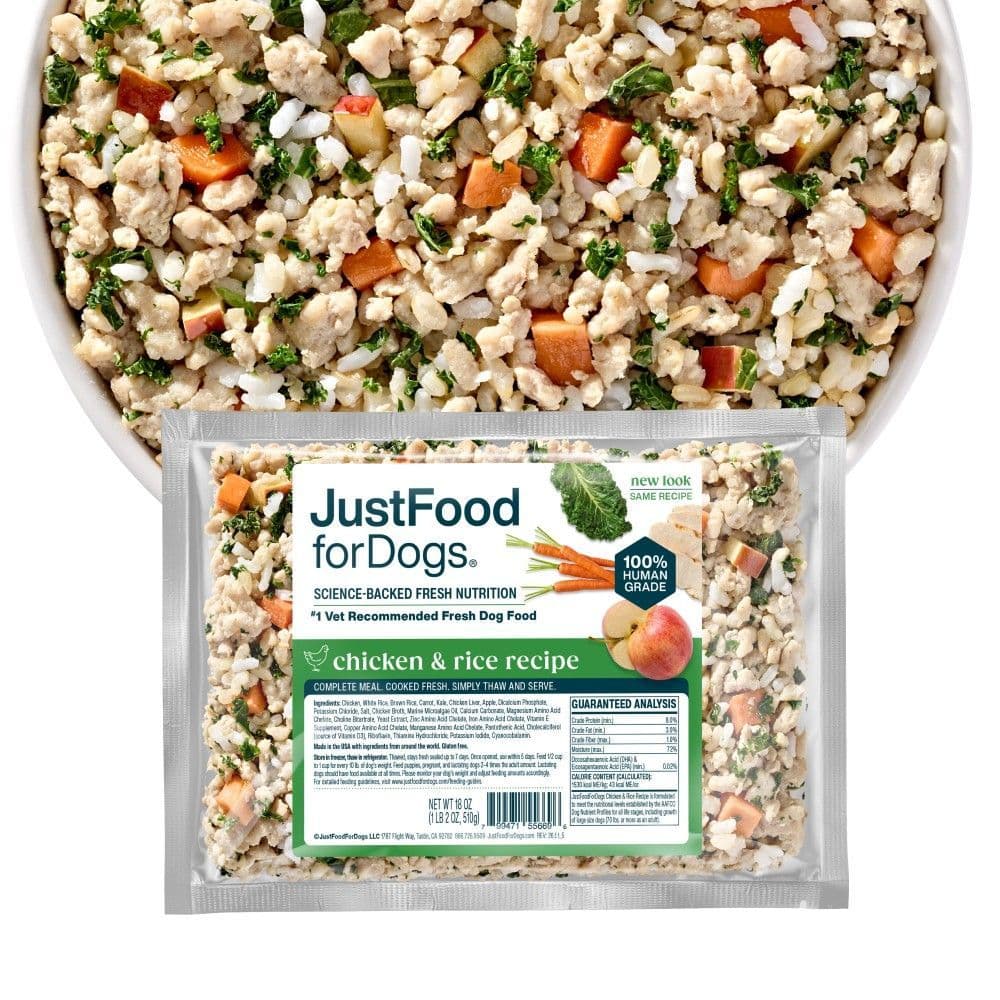
JustFoodForDogs Chicken & Rice is a complete fresh-frozen recipe formulated for all life stages, including growth of large dogs expected to reach 70 pounds or more as adults. Once thawed and served, it still needs appropriate handling. Nutritional adequacy and safe storage answer different questions.
Webvet may earn a commission when you click through to JustFoodForDogs, at no extra cost to you.
Use these questions to decide what to do next:
- Is the package unopened and specifically labeled shelf-stable?
- Is this an untouched remainder that has stayed refrigerated?
- Has the food already been served to the dog?
- How long has it been outside refrigeration, including preparation?
- Are the product's instructions stricter than the general timing above?
If you cannot establish the history of an exposed portion, discarding it is more dependable than inventing a new allowance based on how it looks. A clear serving routine reduces how often that uncertainty arises.
The clock changes when food leaves the refrigerator
An unopened package on a pantry shelf, a covered remainder in the refrigerator, and a served bowl are three different situations. The first may be shelf-stable by design. The second depends on cold storage and the product's opened-food limit. The third has entered the feeding environment and needs a shorter, meal-focused plan.

Count preparation and waiting time
Begin tracking exposure when the food comes out for preparation, not only when the dog starts eating. A container left on the counter while you answer a call has already spent time outside refrigeration. Moving its contents to a clean bowl later does not create a new starting point.
For example, a portion that waits while you prepare dinner and then remains in the feeding area has one handling history. It does not receive a separate allowance for the counter and another for the floor. This is why returning the package remainder before offering the bowl is a useful order of operations.
- Prepare the bowl and measuring utensil before taking out the food.
- Remove only the amount needed for that meal.
- Close and return the remainder promptly.
- Note when the serving was prepared if someone else will supervise feeding.
- Put away the utensils rather than leaving them in the open package.
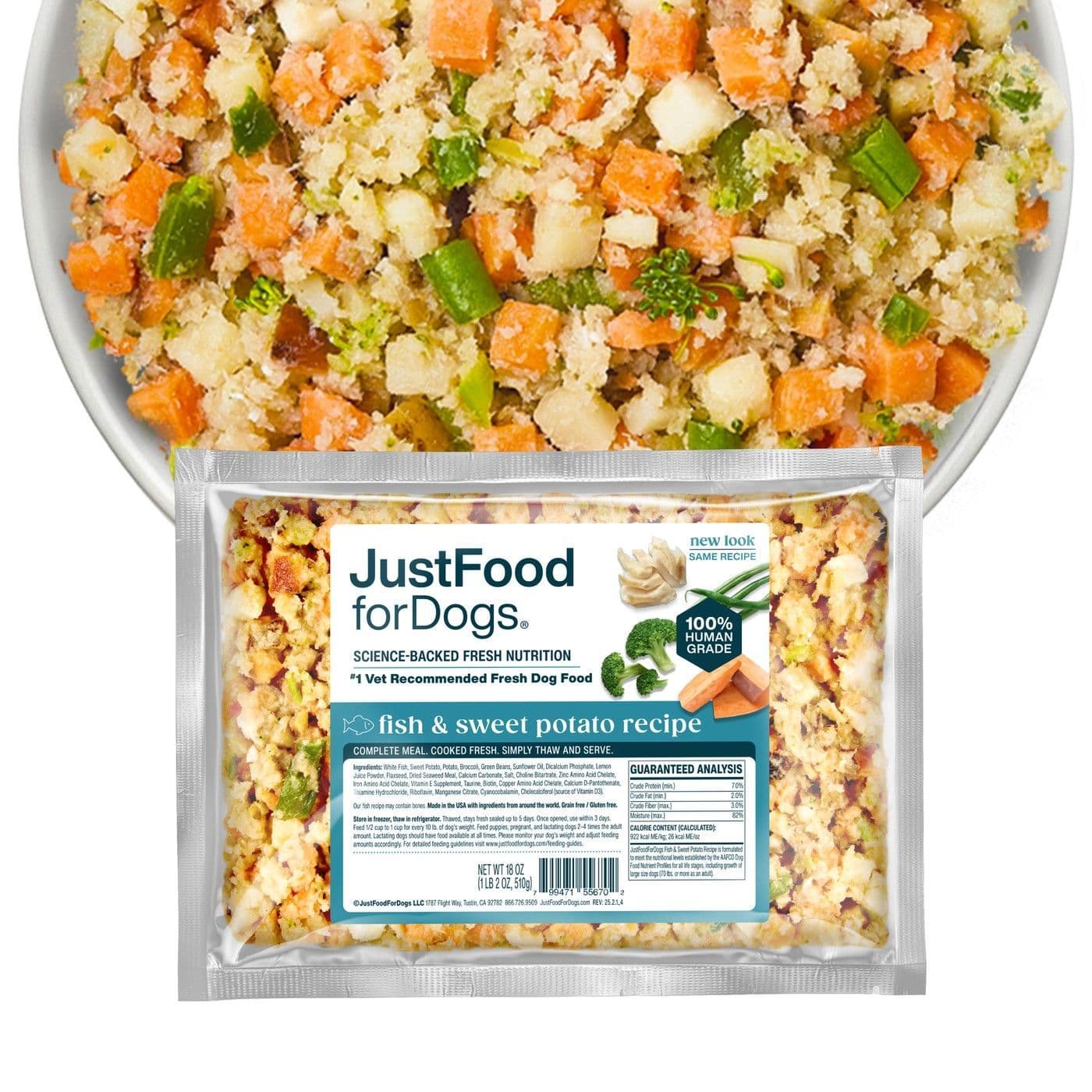
JustFoodForDogs Fish & Sweet Potato is formulated for all life stages, including large-breed growth. Its cod, pollock, and haddock blend is part of a complete recipe. The brand's shorter fish-specific refrigerated limits make clear labeling especially useful when several recipes are stored together.
Webvet may earn a commission when you click through to JustFoodForDogs, at no extra cost to you.
Match the action to the food's current state
The central distinction is that unopened is different from opened. “Shelf-stable” describes a product under its specified packaging and storage conditions. Once that package is opened, its directions change. A resealed clip or lid protects the remainder but does not restore the original unopened state.
| Food's state | Appropriate action | Basis for the decision |
|---|---|---|
| Unopened, shelf-stable package | Store according to its label until opening | Manufacturer's unopened-storage instructions |
| Untouched opened remainder | Cover and refrigerate promptly at 40°F or below | FDA storage guidance plus product-specific limits |
| Served bowl | Use a short meal routine and remove leftovers | Product instructions and conservative perishable-food handling |
| Food exposed above 90°F | Use the shorter general one-hour ceiling, or stricter label directions | USDA general perishable-food guidance |
| Opened food left out overnight | Discard it rather than attempting to save it | Exposure exceeds the general handling ceiling |
| Food with an unknown history | Do not assume a fresh storage allowance | Its required storage conditions cannot be confirmed |
This reference is useful for a pet sitter because it identifies the decision before the duration. “Five days refrigerated after opening” answers a different question from “How long has this bowl been on the floor?” Both pieces of information can be correct without being interchangeable.
Account for the actual feeding environment
Hot weather can shorten the time available for handling perishable food. Use the USDA's stated threshold above 90°F rather than inventing additional bands for every mildly warm room. A sheltered outdoor spot is still an outdoor serving environment, and shade does not establish that the food is refrigerated.
If you are feeding on a patio, preparing a meal during a trip, or carrying food between houses, make the cold-storage plan before opening the package. A closed container can keep a mess contained, but closing it does not establish a safe temperature.
- Bring out the serving close to mealtime.
- Keep the untouched remainder in appropriate refrigeration.
- Avoid leaving opened packages in a parked vehicle.
- Bring a clean bowl rather than relying on a previously used dish.
- Discard exposed leftovers when their handling limit is exceeded.
You do not need to wait until the maximum allowance to clear a finished meal. Prompt cleanup is simpler than monitoring a nearly empty bowl for another hour. It also leaves the feeding area ready for the next meal rather than carrying yesterday's residue into today's routine.
Keep one record when several people feed the dog
A short note can prevent a fresh-looking bowl from being mistaken for a fresh serving. Record the preparation time and whether the dog has already eaten from it. The important information is the food's history, not which household member last moved the dish.
Time outside refrigeration does not reset when someone adds a lid, moves the bowl, or places it briefly back in the refrigerator. Keeping that principle visible helps everyone use the same decision. It is particularly useful when morning feeding, dog walking, and pet-sitter visits overlap.
Can you leave canned dog food out all day?
No, an opened or served portion of canned dog food should not be left out all day. Wet dog food can become unsuitable if left out, and a full workday or overnight exposure goes well beyond the general perishable-food limits discussed above. Do not plan on the dog returning to the same bowl whenever it becomes hungry.
An intact, unopened package that the manufacturer labels shelf-stable is a different case. Its storage directions may allow pantry storage. That permission ends when the product is opened and does not follow the food into a bowl.
A common problem is the bowl that looks nearly untouched. Perhaps the dog sniffed it and walked away, or you cannot tell whether it took a few bites. Its appearance does not tell you how long it has been sitting there. Decide from the known preparation time and product directions, rather than using appetite as a food-safety test.
- Discard wet food left out overnight.
- Do not stir it into a new serving.
- Do not freeze it for later enrichment.
- Wash and dry the bowl before the next meal.
- Use a smaller initial serving if leftovers are frequent.
The cost of a discarded portion can be frustrating, especially with a larger package. Adjusting package size, portioning, and the serving routine is a better response than stretching the handling window. You can reduce waste at the next meal without trying to salvage food whose history is already unsuitable.
If your dog regularly leaves meals, treat that as a separate feeding or health question. Storage advice should not become a plan to wait out appetite loss. A change in eating habits deserves its own assessment, particularly when accompanied by other changes in the dog.
Store the unused portion according to its exact product instructions
Keep the refrigerator at 40°F or below, following the FDA's pet-food storage guidance. This cold-storage temperature is separate from a product's permitted number of refrigerated days.
How long wet dog food is good after opening in the fridge depends on the exact product. Refrigeration is necessary for many opened foods, but it does not give every can, pouch, or fresh meal the same storage period. Read the package's instructions for the format you purchased.
Keep the refrigerator at 40°F or below, as specified in the FDA's pet food storage guidance. Store the untouched remainder covered, use clean utensils, and retain the opening date. These actions make the manufacturer's refrigerated window usable because you know when it began and which product it describes.

Separate the refrigerated allowance from bowl time
The refrigerated allowance belongs to food that has been stored as directed. It is not a total amount of time that can be divided between a warm counter and a refrigerator. Nor does a product with a longer unopened shelf life automatically have a longer opened-food allowance.
Webvet may earn a commission when you click through to JustFoodForDogs, at no extra cost to you.
For example, “use within five days after opening” is a calendar limit under the stated storage conditions. It does not mean five daily sessions of leaving the whole package beside the bowl are acceptable. Serve from the cold remainder, then return it promptly.
- Write the opening date where it is easy to see.
- Keep the original label or a clear photograph.
- Identify the recipe if you transfer food to another container.
- Avoid mixing different packages into one unmarked remainder.
- Check the storage directions again when switching product lines.
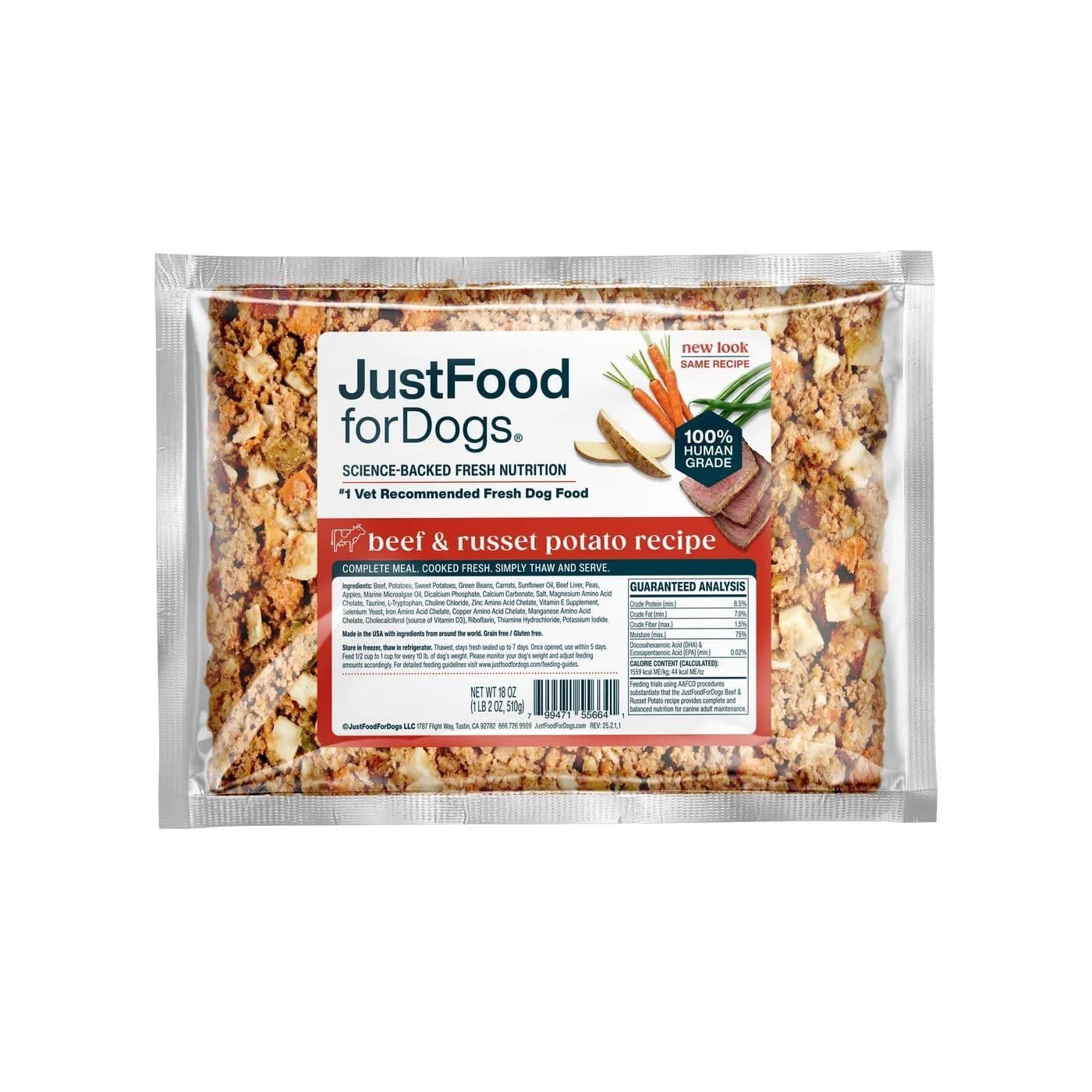
JustFoodForDogs Beef & Russet Potato is a fresh-frozen adult-maintenance recipe, with complete and balanced nutrition substantiated through feeding trials using AAFCO procedures. It is not intended for growing puppies. Its non-fish fresh-frozen storage instructions should remain with the package after thawing.
Use the correct JustFoodForDogs product window
The JustFoodForDogs FAQ distinguishes several product lines and states. For non-fish fresh-frozen recipes, it gives up to seven refrigerated days sealed in the original package after thawing and five days once opened. Fish has a shorter window: five days sealed after thawing and three days opened.
JustFresh and Pantry Fresh are separate shelf-stable formats. Once opened, JustFresh should be refrigerated and used within three days; Pantry Fresh should be refrigerated and used within five days. These are refrigerated periods, not permission to leave either food in a serving bowl for days.
| Product and condition | Refrigerated guidance |
|---|---|
| Fresh Frozen, non-fish, thawed and sealed in original package | Up to 7 days |
| Fresh Frozen, non-fish, opened | Up to 5 days |
| Fish & Sweet Potato, thawed and sealed in original package | Up to 5 days |
| Fish & Sweet Potato, opened | Up to 3 days |
| JustFresh, opened | Use within 3 days |
| Pantry Fresh, opened | Use within 5 days |
For Fish & Sweet Potato, use the shorter fish-specific FAQ guidance rather than borrowing a generic non-fish window. Check the directions accompanying the package, and ask the manufacturer if the exact product's instructions appear inconsistent. Keep the food within the shorter applicable guidance while resolving the discrepancy.
These limits also help when choosing package size. A small dog may not finish a large opened package within its window, even when every serving is handled correctly. Compare the package amount with the dog's measured daily ration before buying or opening it.
Make the label useful to someone else
A practical container label identifies the food, the date opened, and the amount inside. If the food was thawed before opening, retain that information too. A pet sitter should not have to infer the recipe from its color or estimate when a package was first used.
Webvet may earn a commission when you click through to JustFoodForDogs, at no extra cost to you.
Keep feeding instructions separate from storage instructions so both remain clear. “Give this amount at dinner” does not explain whether the package must stay refrigerated. Likewise, “use within three days” does not tell the sitter how much the dog should eat.
- Record the recipe and product line.
- Record the opened or thawed date relevant to its instructions.
- Specify the measured serving.
- State where the remainder belongs immediately afterward.
- Keep the package's lot and best-before information available.
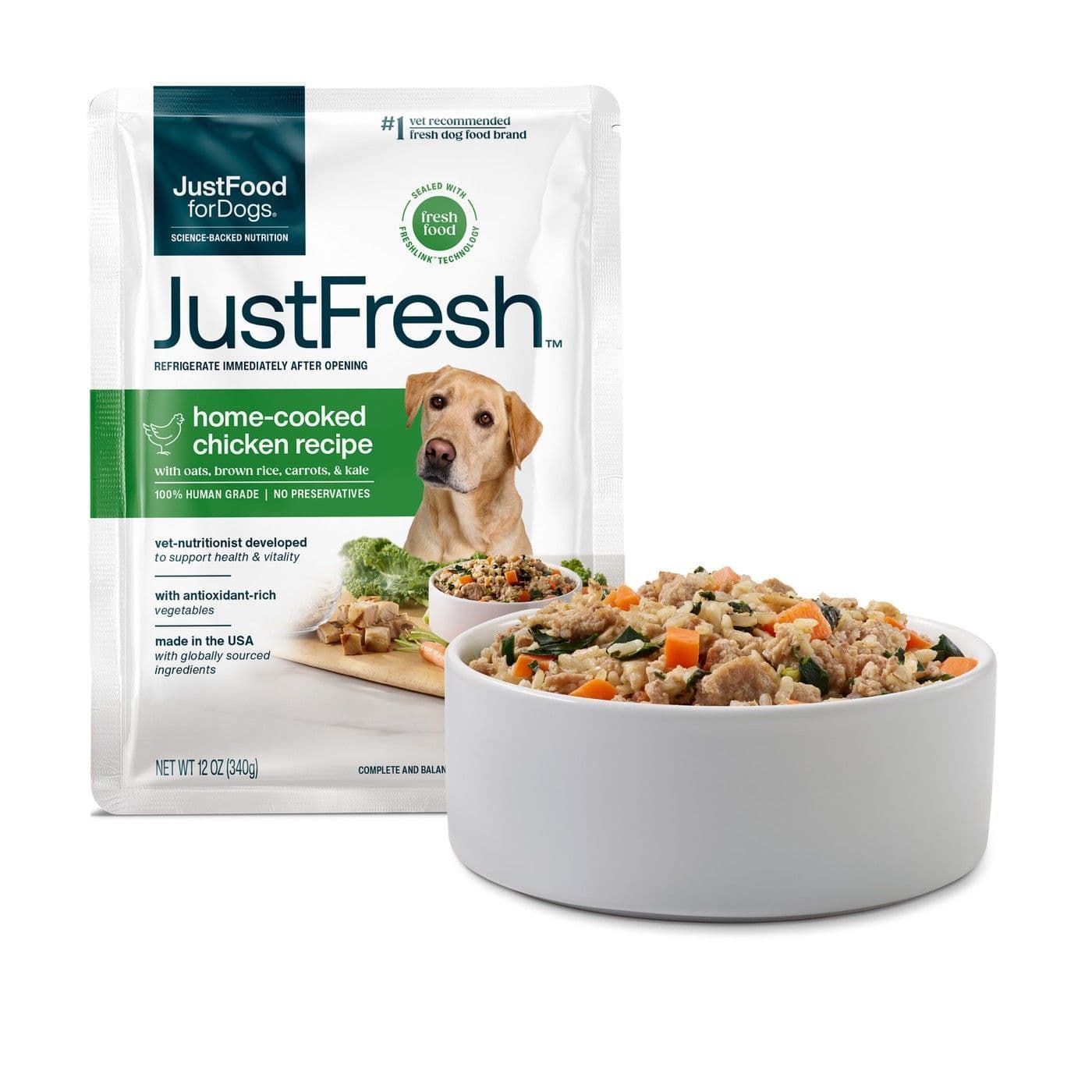
For an adult dog whose routine benefits from unopened pantry storage, JustFoodForDogs JustFresh Home-Cooked Chicken is formulated for adult maintenance. Its unopened shelf life is up to two years from manufacture, but opening changes the requirement to refrigeration and use within three days. It is not a complete growth diet for puppies.
Storage convenience should not determine whether a food is nutritionally appropriate. WebVet's guide to what makes dog food complete and balanced explains the life-stage statement. First choose a suitable diet, then choose a package size and handling routine that let you use it correctly.
Make small servings work for your daily routine
A smaller initial serving can reduce waste without reducing the dog's planned daily nutrition. Measure the intended meal, offer an amount the dog is likely to eat during that sitting, and keep the remaining food refrigerated. If more is needed, prepare a fresh portion rather than leaving the entire ration exposed.

“Small” should be relative to the dog's meal allowance, not a universal spoonful. A serving that suits one dog may be most of another dog's daily food. Use the recipe's calorie information and the established feeding plan to decide the total amount available.
The JustFoodForDogs feeding guide explains how recipe calories relate to portions. This is useful when changing foods because the same weight or scoop can contain different calories. Storage planning works better when you know how quickly your dog will actually use the package.
Use a repeatable serving sequence
Set up the food station before opening the package. A clean bowl, utensil, and prepared storage space reduce the chance that the remainder will sit out while you search for a lid or finish another chore. The sequence can stay simple enough for every person who feeds the dog to follow.
- Start with a clean, dry bowl.
- Measure the intended serving with a clean utensil.
- Close and refrigerate the untouched remainder promptly.
- Offer the meal and note the preparation time when needed.
- Remove leftovers when the meal is finished or the applicable limit is reached.
- Wash and dry the bowl and clean the feeding surface.
The FDA's handling advice supports washing feeding equipment and practicing good hand hygiene. A washable mat can make cleanup easier, but it also needs cleaning when food spills onto it. A clean bowl on yesterday's food residue is an incomplete reset of the feeding area.
If you have two bowls, one can dry while the other is ready for the next meal. This is often easier than repeatedly rinsing a single bowl and putting new food over whatever remains. Follow the bowl manufacturer's cleaning instructions, especially for any components that are not dishwasher-safe.
Plan for a pet sitter or several dogs
For a sitter, prepare clear portions and label which dog receives each one. Keep the unopened or untouched remainder in its proper storage location. The sitter needs enough information to serve safely without guessing from the package size or copying another dog's meal.
In a multi-dog household, serve separately enough to know which dog ate what. A dog moving between bowls can make it harder to judge both intake and leftovers. Record amounts served when that matters to an established feeding plan, rather than assuming that an empty dish means the intended dog ate everything.
- Label each dog's portion.
- Keep different recipes clearly identified.
- Give the sitter the actual storage directions.
- State how to handle leftovers.
- Leave a way to contact you about unexpected appetite changes.
These steps are organizational choices, not a new set of food-storage limits. Their purpose is to make the existing directions easier to follow when attention is divided. The clearest system is one that a second person can understand without reconstructing the previous meal.
Distinguish cooked fresh food from raw food
A moist texture does not tell you whether a food was cooked. Frozen storage also does not turn raw food into cooked food. Check the actual product description and follow its handling instructions.
WebVet's guide to fresh versus raw dog food explains the difference. Do not assume that a routine used for one format covers every other format. Food preparation, storage, and cleaning should match the specific product in the bowl.
What if you cannot refrigerate opened wet dog food?
Plan around the limitation before opening the package. An appropriately sized, unopened shelf-stable product can be useful during a trip, but it loses that unopened status as soon as you open it. If you cannot keep the remainder under its required conditions, do not save it simply because the original package came from a pantry shelf.
Choose a package size that fits a realistic meal, and open it close to feeding time. The goal is to avoid creating a large remainder that needs refrigeration you do not have. Check nutritional suitability and the dog's portion first, rather than choosing a package only because it is convenient.
- Carry the original product directions.
- Bring a clean serving bowl and utensil.
- Open only what you can use appropriately.
- Keep any required cold storage reliable.
- Discard a remainder you cannot store within its instructions.
A cooler is useful only if it actually maintains the required conditions. Do not assume that a bag feels cold enough because it contains one ice pack. Keep refrigerated food at the required temperature, protect packages from leaks, and monitor the storage setup rather than relying on appearance.
For an outing, distinguish food that is waiting safely in storage from food that has already been served. The unopened or chilled supply should remain protected while the dog eats. Bringing the whole day's food out beside the bowl creates avoidable exposure and makes it harder to keep track of what can still be used.
Handle a disrupted plan without guessing
Travel delays, a forgotten container, or a refrigerator problem can interrupt an otherwise good routine. Start by identifying which food is affected and what you know about its temperature and timing. An unopened shelf-stable package may have a different status from an opened pouch or thawed fresh meal.
Do not use the dog as a test of whether questionable food is acceptable. Willingness to eat does not verify safe storage. If you cannot confirm that a perishable portion stayed within its required conditions, discard it and use appropriately stored food instead.
- Separate affected portions from food whose history is known.
- Keep the package details if you need manufacturer advice.
- Do not mix questionable food into a fresh meal.
- Replace the serving with suitable, safely stored food.
- Adjust the next trip's portion sizes or storage setup.
Freezing is also a product-specific decision, not an automatic repair for a missed refrigeration step. Manufacturer permission to freeze properly handled food does not authorize freezing food that has already been left out too long.
Wet-food storage questions
Frequently Asked Questions
What happens if a dog eats wet food that was left out overnight?
Eating it does not mean illness is certain, but the exposure deserves attention. Remove the remaining food and note the product, approximate amount eaten, how long it was out, and any changes in your dog. Contact your veterinarian for advice about the individual exposure, particularly if symptoms develop. Signs of foodborne illness can include vomiting, diarrhea, reduced appetite, fever, or decreased activity. Seek prompt veterinary attention for concerning or worsening signs, including bloody diarrhea or repeated vomiting. Do not induce vomiting or give medication unless a veterinary professional directs you. Keep the packaging information available and ask whether the clinic wants a food sample before disposing of everything. Wash the bowl and clean the feeding area. A dog appearing normal immediately afterward does not establish that the food was safe, and symptoms alone cannot identify the cause.
Can I add fresh wet food on top of food already in the bowl?
Avoid continually topping up an old serving. The new food does not change the older food's exposure history, and mixing them makes that history harder to track. Remove the previous serving, wash and dry the bowl, and measure a fresh portion. Keep the untouched package remainder separate from food that has already been served so you can manage each according to its actual condition.
Does mixing wet food with kibble make it safe to leave out longer?
No. Adding dry kibble does not give the wet component a longer storage allowance. Follow the handling requirements of the perishable part of the meal. The same principle applies when water is added to kibble: do not treat a moistened bowl as though it were untouched dry food in its original package. Prepare only the amount needed and clear the serving appropriately.
Can I refrigerate food my dog has already eaten from?
A contacted serving is different from an untouched remainder in the package. Do not return it to the original container or promise it the same opened-package refrigerated lifespan. Follow any specific manufacturer directions for leftovers; a practical conservative choice is to discard the served remainder and offer a smaller initial portion next time. Refrigeration does not remove the dog's contact or erase time already spent outside cold storage.
Does warming refrigerated wet food restart its storage time?
No. Warming does not renew the package's opened-food allowance or erase earlier exposure. If the manufacturer permits warming, prepare only the portion you plan to serve, check it for hot spots, and keep the remaining food cold. Avoid repeatedly warming and cooling the full container. Continue using the original opening and thawing dates relevant to the product's directions.
The FDA's guidance on Salmonella and pets describes possible illness signs and the importance of veterinary contact. Those signs support getting help; they do not mean every overnight food exposure causes Salmonella or that an owner can diagnose the cause at home.
Veterinarian · BVMS MRCVS
Dr. Pippa Elliott, BVMS, MRCVS, is a veterinarian with nearly 30 years of experience in companion animal practice. Dr. Elliott earned her Bachelor of Veterinary Medicine and Surgery from the University of Glasgow. She was also designated a Member of the Royal College of Veterinary Surgeons. Married with 2 grown-up kids, Dr. Elliott has a naughty Puggle named Poggle, 3 cats and a bearded dragon.
Related reading

Dog Food Dry Matter Basis: Comparing Fresh, Wet, and Dry Food Labels

Can You Freeze Wet Dog Food? Portioning, Thawing, and Food Quality

Can Dogs Eat Ground Beef? Cooking, Portions, and Balanced Meals
