Can Dogs Eat Ground Beef? Cooking, Portions, and Balanced Meals
Learn how to choose, cook, and portion ground beef for your dog, calculate a shared allowance for extras, and distinguish plain beef and rice from a complete everyday meal.

BVMS MRCVS

This article contains affiliate links. Webvet may earn a commission when you buy through them, at no extra cost to you.
This article is sponsored by JustFoodForDogs. WebVet maintains editorial control and may earn a commission from qualifying purchases, at no extra cost to you.
Can dogs eat ground beef? Yes, many dogs can have a small amount of plain, thoroughly cooked ground beef as an extra alongside a complete and balanced diet. Choose lean meat, keep seasoning and cooking grease out of the bowl, and count its calories together with every other treat your dog receives.
The important distinction is between sharing a little beef and building an everyday diet around it. A pan of cooked meat can be a useful occasional addition. It does not become a balanced dog food simply because you add rice or serve it every day.
Can dogs eat ground beef?
Ground beef for dogs works best as a measured ingredient with a clear place in the day's food allowance. Its protein does not make it a substitute for all the nutrients in a complete diet. If your dog already eats an appropriate complete food, adding beef is optional, rather than something needed to make that food nutritious.
- 1Choose plain, cooked ground beef and measure the portion.
- 2Cook ground beef to 160°F and leave out seasoning and grease.
- 3All noncomplete extras share a limit of 10% of daily calories.
- 4Plain beef, including beef mixed with rice, is not a complete everyday diet.
The best ground beef for dogs is not defined by a premium label or an expensive cut. Look for an unseasoned product whose fat percentage you can identify, then use a cooking method that requires no added oil. Whether ground beef is good for your particular dog also depends on the existing diet and any feeding restrictions.
If you want a ready-to-serve complete meal instead of an occasional meat addition, JustFoodForDogs Chicken & Rice is formulated for all life stages, including growth of large dogs expected to reach 70 pounds or more as adults. Its nutritional adequacy statement describes the whole formulated recipe, not plain chicken or rice.
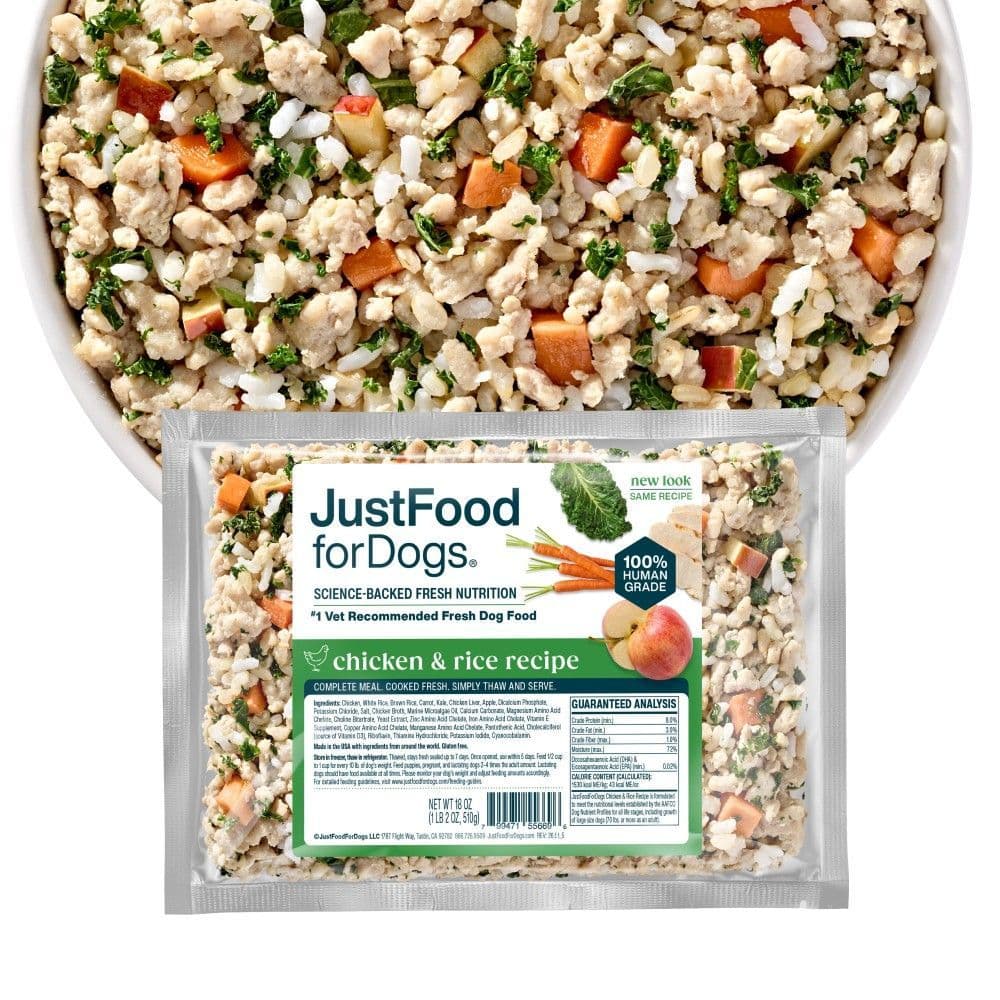
Webvet may earn a commission when you click through to JustFoodForDogs, at no extra cost to you.
Choose lean ground beef and leave out grease and seasoning
Lean ground beef gives you a more manageable starting point than a fatty burger mixture. The package's lean-to-fat ratio describes the raw product: 90/10 means 90% lean and 10% fat by weight, while 80/20 means 80% lean and 20% fat. Those numbers are not percentages of calories, and the cooked portion's energy density still depends on preparation.
Dogs can eat lean ground beef when it is plain and properly cooked, but lean does not mean unlimited. An 80/20 ground beef portion is not automatically poisonous. It is simply a fattier choice that makes it harder to keep an extra modest, particularly when pan grease is included. Start with leaner meat when preparing a separate portion for your dog.
- Read the ingredient label, especially on ready-made patties and meat blends.
- Reserve the dog's portion before adding sauces or seasonings to the family's meal.
- Drain cooking fat instead of pouring grease from ground beef onto the regular food.
- Keep added butter, oil, gravy, and cheese out of the portion you are measuring.
Can dogs eat ground beef with seasoning? Do not treat seasoned meat as interchangeable with unseasoned ground beef. Taco filling, meatloaf, and burger mixtures can contain ingredients that are unsuitable for dogs, and their recipes vary. Removing visible pieces from a finished dish does not turn it back into plain meat. A small separate batch is easier to evaluate.
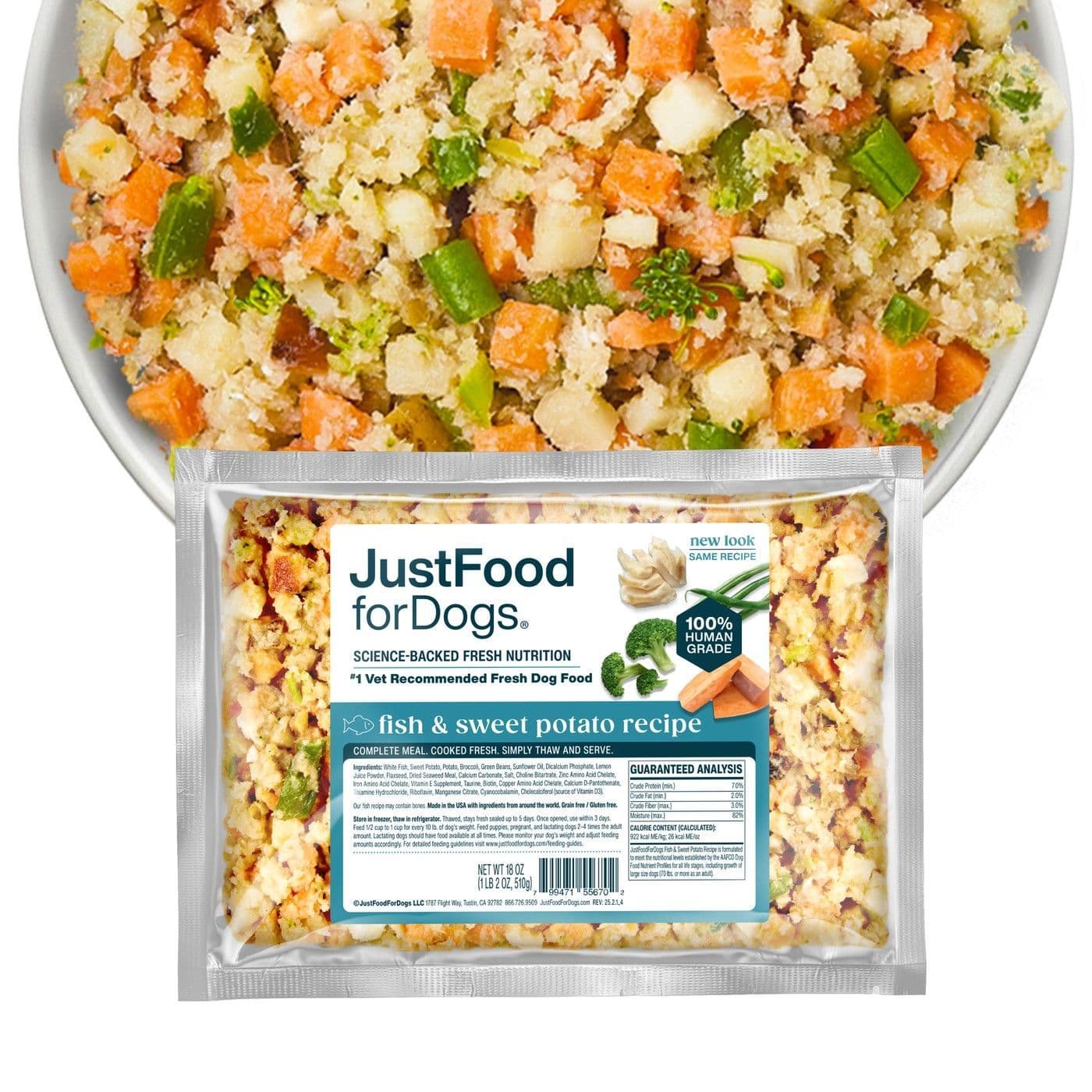
Webvet may earn a commission when you click through to JustFoodForDogs, at no extra cost to you.
When beef does not fit the household's menu, JustFoodForDogs Fish & Sweet Potato offers a complete recipe formulated for all life stages, including large-breed growth. It contains a blend of cod, pollock, and haddock. Choosing a complete alternative lets you plan the main meal separately from any small beef extra.
How to cook ground beef for dogs
Cooking ground beef for dogs can be straightforward: use plain meat, break it into small crumbles, and verify its internal temperature. The USDA's ground beef safety guidance says to cook ground beef to 160°F. A thermometer is more reliable than judging doneness by brown color or by how long the pan has been on the stove.

Boiling ground beef on the stove
Boiled ground beef is one practical option when you want to avoid added cooking fat. Use enough plain water to let you stir and separate the meat rather than leaving a dense clump. Work with a manageable batch so the meat heats evenly and you can check it properly.
- Place the meat and water in a saucepan with enough room to stir without splashing.
- Bring the water to a simmer and break the meat into small pieces with a clean utensil.
- Continue cooking and stirring so no large raw pieces remain hidden together.
- Check the meat with a food thermometer, following the thermometer's instructions for small pieces.
- Once it reaches 160°F, drain the water and rendered fat, then cool the portion before serving.
How long should you boil ground beef for dogs? There is no dependable universal minute count. The amount of meat, starting temperature, size of the crumbles, and heat level all change the time required. The boiling water's temperature does not prove that every piece of meat has reached the required temperature. Keep cooking until the food itself passes that check.
Pan cooking without added fat
You can also cook ground beef in a suitable pan without adding butter or oil. Crumble and stir it as it cooks, check the temperature, and drain the rendered grease. Whether you boil or fry ground beef for dogs, the useful distinction is controlled preparation: plain ingredients, thorough cooking, and a measured finished portion.
The best way to cook ground beef for dogs is therefore the method you can repeat safely. Boiling is not a way to turn fatty meat into a precisely measured low-fat food, and draining does not tell you exactly how many calories remain. Use nutrition information that matches the cooked preparation when working out portions.
- Weigh the amount after cooking when your calorie reference is for cooked meat.
- Keep cooked food and clean serving utensils away from raw meat juices.
- Put the dog's portion in a separate container before seasoning the family batch.
Dogs can eat cooked ground beef, but cooked meat every day still needs a role: a small extra or an ingredient in a properly formulated complete recipe. Cooking resolves the temperature step. It does not balance the meal or determine how much your dog should eat.
Why raw ground beef is a different food-safety decision
If you are choosing raw or cooked ground beef for dogs, cooking provides a practical step to reduce foodborne bacterial risks. The FDA's raw pet food guidance describes risks from bacteria such as Salmonella and Listeria for both animals eating contaminated food and people handling it.
Raw meat from the supermarket is sold with the expectation that you will handle and cook it appropriately. Being fresh, expensive, or intended for human consumption does not establish that it is safe to serve uncooked. Nor does offering raw ground beef every day make the exposure disappear.
- Keep raw meat separate from ready-to-eat food and your dog's prepared portion.
- Wash hands and clean the equipment and surfaces used during preparation.
- Use a thermometer to confirm cooking rather than relying on appearance.
A fresh cooked diet and a raw diet are different feeding approaches. Our guide to fresh versus raw dog food explains that distinction in more detail. For the occasional beef extra described here, thoroughly cooked meat is the straightforward choice. Neither raw nor cooked plain beef is nutritionally complete by itself.
How much ground beef can a dog have?
How much ground beef a dog can have depends on its daily calorie target and everything else it eats. The AAHA nutrition guidelines identify excessive treats and table food as a nutritional risk. Keep noncomplete extras combined to no more than 10% of daily calories, with the main diet supplying the rest.
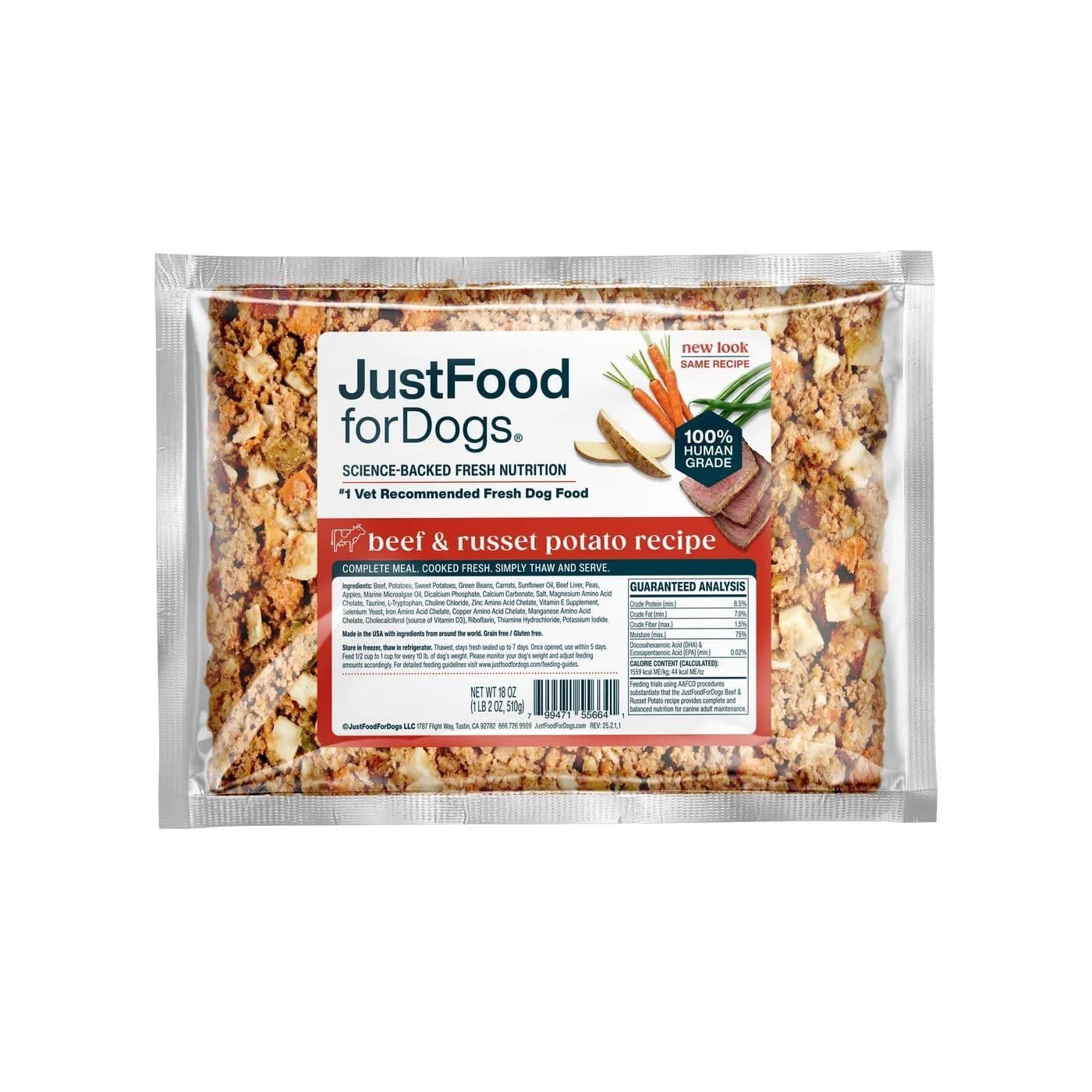
Webvet may earn a commission when you click through to JustFoodForDogs, at no extra cost to you.
A complete beef meal is a different calculation. JustFoodForDogs Beef & Russet Potato provides complete and balanced nutrition for adult maintenance, substantiated through feeding trials using AAFCO procedures. It is not intended for growing puppies. Its feeding allowance comes from the complete recipe's calorie content, not the allowance for plain beef treats.

For plain ground beef, use this shared extras budget:
- Multiply the dog's daily calorie target by 0.10 to find the maximum calories available for all extras.
- Subtract calories already used by training treats, chews, table food, and other toppers.
- Divide the calories remaining by the cooked meat's calories per gram.
- Weigh that amount of cooked beef, then serve less if you are introducing it for the first time.
Here is an explicitly hypothetical example, not a universal beef serving. Suppose a dog has a 600-calorie daily target and other extras have already used 35 calories. The maximum extras allowance is 600 × 0.10 = 60 calories. After subtracting 35, only 25 calories remain. If the particular cooked beef preparation supplies 2.5 calories per gram, 25 ÷ 2.5 gives 10 grams of beef.
| Hypothetical calculation | Result |
|---|---|
| Daily calorie target | 600 calories |
| Maximum shared extras allowance | 60 calories |
| Other extras already allocated | 35 calories |
| Calories left for beef | 25 calories |
| Assumed cooked beef energy density | 2.5 calories per gram |
| Maximum beef in this example | 10 grams |
A universal spoonful serving skips two important facts: the dog's shared extras calorie budget and the cooked meat's exact energy density. A spoonful is also less reproducible than a weight because crumbles pack differently. Measuring in grams also makes it easier for everyone in the household to use one allowance. If two people each add a little beef and someone else gives training treats, all three contributions belong in the same calculation. An extras allowance of zero remaining calories means no additional beef that day, not a second allowance just for meat.
The JustFoodForDogs feeding guide and calculator explanation can help you understand portions for complete recipes. Remember that an extra belongs inside the day's total, rather than being added above an already adequate full ration.
For a ready-made adult-maintenance option that does not require thawing before opening, JustFoodForDogs JustFresh Home-Cooked Chicken offers a different storage format. Its nutritional adequacy statement is for adult maintenance, so it is not a puppy's complete growth diet. Refrigerate the opened package and use it within three days according to the brand's instructions.
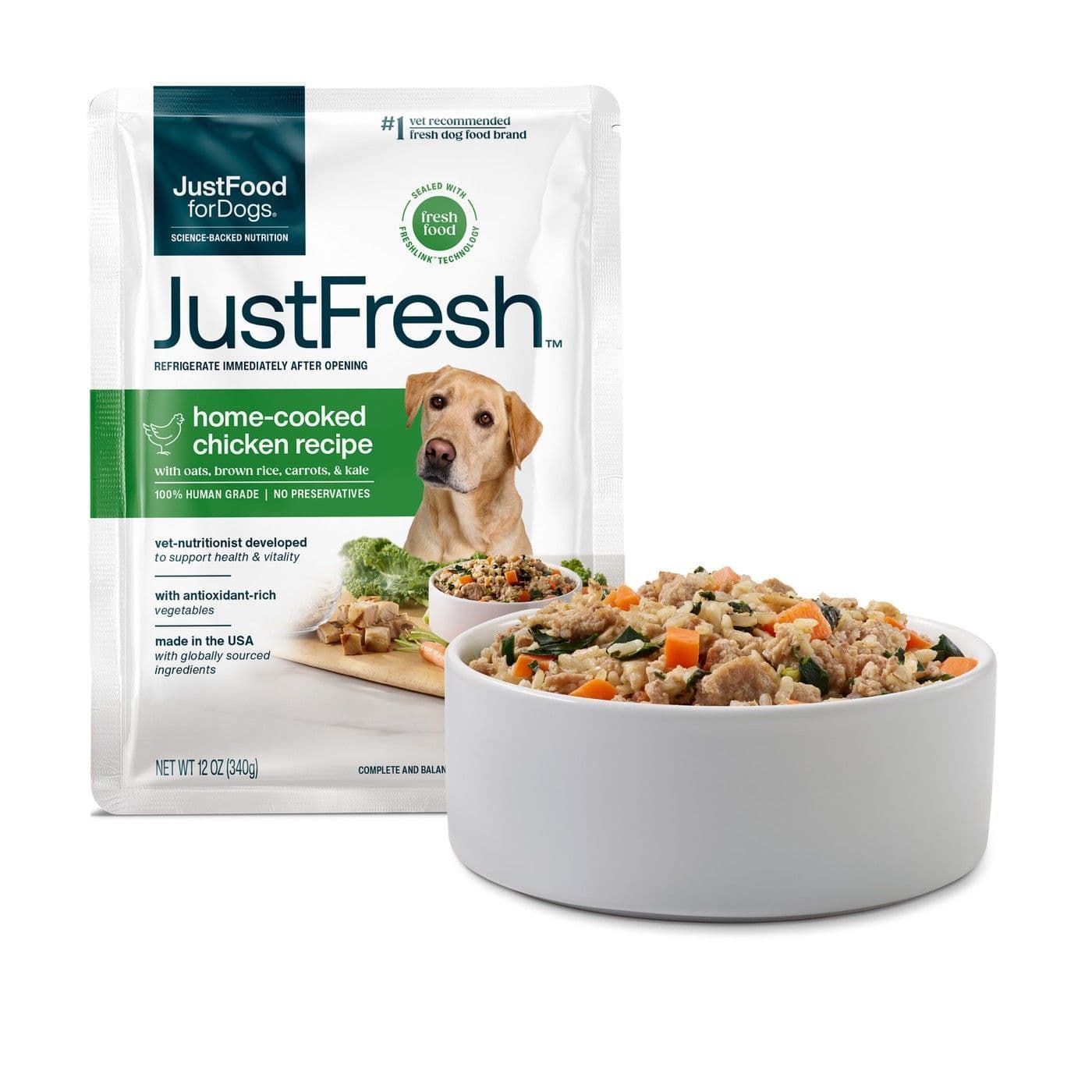
Webvet may earn a commission when you click through to JustFoodForDogs, at no extra cost to you.
Ground beef and rice is not a complete everyday diet
Dogs can eat plain ground beef and rice in an appropriate small portion, but those two ingredients do not make a complete everyday diet. Adding a carbohydrate changes the food's composition without demonstrating that all required nutrients are present in the right amounts. A bowl can look substantial and still fail to supply balanced nutrition over time.
If your question is, “Can I feed my dog ground beef every day?” first decide whether you mean a small topping or the main diet. A measured topping that fits the shared extras budget is different from replacing breakfast and dinner with beef. Feeding ground beef and rice every day as the whole diet needs a properly formulated recipe, not a ratio chosen by eye.
- For an occasional extra, count both the rice and the beef in the extras budget.
- For an everyday home-prepared diet, follow a complete recipe formulated for the individual dog.
- Use the specified ingredients and supplements in the specified amounts.
- Ask the formulator before substitutions, because replacing one ingredient can change more than its taste.
What are the benefits of homemade dog food? Home preparation lets you control exactly which ingredients you purchase, how you cook them, and the portions you serve. That can be useful for owners who want an active role in meal preparation. Those practical benefits do not make an improvised recipe complete, prove it is healthier than a suitable commercial diet, or remove the need for precise formulation.
The FDA's explanation of complete and balanced pet food describes why nutritional adequacy matters. “Complete” concerns the nutrients supplied, while the appropriate life-stage statement tells you which feeding needs the food is intended to meet. The protein source alone cannot answer either question.
WebVet's guide to what makes dog food complete and balanced explains how to read that distinction on a label. Use it when comparing a recipe with your own beef-and-rice mixture. Similar-looking ingredients do not establish nutritional equivalence, and simply adding a general supplement is not proof that you have corrected the difference.
A complete beef recipe for everyday feeding
For owners who like the idea of beef in the daily bowl, a complete formulated beef recipe offers a practical route. The important purchase decision is whether the exact product suits the dog's life stage and feeding needs. “Made with beef” identifies an ingredient; an adequacy statement addresses the whole food.
JustFoodForDogs Beef & Russet Potato is an adult-maintenance recipe. Its current listed energy density is 1,559 calories per kilogram, or approximately 44 calories per ounce. Those numbers apply to that finished recipe. They do not describe grocery-store ground beef, and they should not be used in the plain-meat example above.
- Confirm that the recipe is appropriate for your dog's age and any established dietary restrictions.
- Calculate its daily amount from the recipe's calorie density and your dog's feeding target.
- Account for extras rather than adding them on top of the full calorie allowance.
- Recheck the current label when changing recipes instead of assuming equal scoops provide equal calories.
What is the healthiest meat to give a dog? There is no single meat that is healthiest for every dog. The better decision is a suitable complete diet that the individual dog tolerates, served at the right calorie level. Chicken, fish, or beef can all appear in complete recipes; the name of the meat is only one part of the comparison.
An adult-maintenance recipe is not puppy food. A growing dog's main diet must have a suitable growth or all-life-stages statement, with large-breed growth suitability checked when relevant. That is why the specific Chicken & Rice and Fish & Sweet Potato formulations above have a different life-stage role from Beef & Russet Potato.
Store cooked beef safely and introduce it gradually
Make the amount of plain beef you can portion and store safely. The USDA's ground beef handling guidance gives a refrigerated storage window of three to four days for cooked ground beef. That is a food-handling limit, not a reason to finish a batch by giving your dog larger servings.

- Refrigerate cooked beef promptly, within two hours, or within one hour when the temperature is above 90°F.
- Divide it into small covered containers and label the preparation date.
- Freeze portions you will not use within the refrigerated window.
- Use clean utensils and wash the dog's bowl after feeding.
These time limits are general guidance for perishable human food ingredients. A packaged complete meal can have different manufacturer instructions, so keep its own storage directions with it. Do not transfer the plain cooked-beef window to every fresh dog food.
Start with a small taste instead of the full theoretical extras allowance. Introduce one new extra at a time so you can recognize what changed if it does not agree with your dog. If your dog has a prescribed diet or a known ingredient restriction, follow that plan before introducing beef. A calorie calculation cannot decide whether an ingredient is appropriate for a particular medical condition.
More ground beef questions
Frequently Asked Questions
Can dogs be allergic to beef?
Yes, beef can be a food allergen for some dogs. A reaction after beef might involve itching or digestive upset, but symptoms do not confirm an allergy. Stop the new extra and discuss the pattern with your veterinarian rather than repeatedly testing foods at home. A supervised diet trial is different from simply switching meat.
Can dogs eat wagyu ground beef?
Wagyu is still beef and follows the same plain cooking rules. Its higher fat content can make it a less convenient occasional extra than a leaner option. An expensive label does not create a nutritional need or justify a larger serving. Check the actual fat information and keep it within the same shared calorie allowance.
Can dogs eat frozen ground beef?
Thaw before cooking so you can separate the meat and check it consistently. Freezing does not reliably eliminate bacteria, so a frozen raw patty is not a ready-to-feed alternative to cooked beef. Thaw under refrigeration, keep raw juices away from other food, and cook the meat thoroughly before offering a cooled portion.
Can dogs eat old ground beef?
Do not feed spoiled meat or meat with an uncertain storage history. Unsafe storage is not corrected by giving the food to a dog instead of a person. If cooked beef has exceeded its refrigerated storage window, discard it. A normal smell alone is not reliable evidence that mishandled food is safe.
Can puppies have a little cooked ground beef?
Some puppies can have a small plain cooked taste if it fits their feeding plan, but plain beef is only an extra. A complete growth diet must supply the main nutrition. Avoid letting attractive meat replace the puppy's regular food, and remember that an adult-maintenance beef recipe is not a substitute for puppy food.
For more on the distinction between a suspected reaction and a diagnosis, see VCA's veterinarian-authored food allergy guidance.
Veterinarian · BVMS MRCVS
Dr. Pippa Elliott, BVMS, MRCVS, is a veterinarian with nearly 30 years of experience in companion animal practice. Dr. Elliott earned her Bachelor of Veterinary Medicine and Surgery from the University of Glasgow. She was also designated a Member of the Royal College of Veterinary Surgeons. Married with 2 grown-up kids, Dr. Elliott has a naughty Puggle named Poggle, 3 cats and a bearded dragon.
Related reading

Dog Food Dry Matter Basis: Comparing Fresh, Wet, and Dry Food Labels

Can You Freeze Wet Dog Food? Portioning, Thawing, and Food Quality

How Long Can Wet Dog Food Sit Out? Serving and Storage Explained
