Fresh vs Raw Dog Food: Which Is Safer and Healthier?
Cooked fresh and raw diets can look similar but pose different feeding decisions. Compare cooking, household safety, nutritional adequacy, and the practical switch to fresh meals.

BVMS MRCVS
Medically reviewed by Dr. Pippa Elliott, BVMS MRCVS · Last reviewed

This article contains affiliate links. Webvet may earn a commission when you buy through them, at no extra cost to you.
This article is sponsored by JustFoodForDogs. WebVet maintains editorial control and may earn a commission from qualifying purchases, at no extra cost to you.
Fresh vs raw dog food is a comparison that starts with one important clarification: fresh food can be cooked. A complete cooked fresh meal offers a way to serve moist, recognizable food without feeding uncooked animal ingredients. Raw diets carry additional food-safety concerns for both dogs and people.
“Healthier” requires another check. The recipe still needs to supply appropriate nutrition for the individual dog. Cooking is not a substitute for formulation, and a complete-diet claim is not a substitute for evaluating raw-food exposure. Here is how to keep those decisions separate.
Fresh vs raw dog food: start with the cooking step
- 1A cooked fresh meal and a raw meal can both look moist, but they have different handling risks.
- 2Choose complete and balanced nutrition for the dog's life stage.
- 3Evaluate household exposure as well as the dog's bowl.
Fresh commonly describes a food's presentation or storage. Raw means animal ingredients have not been cooked. In a fresh dog food vs raw comparison, look for the cooking step rather than assuming that refrigerated or frozen food belongs in one category or the other.
Is raw food good for dogs simply because it is uncooked? That claim is not established by the format. Raw food may contain familiar ingredients, but it can also carry pathogens and may be nutritionally incomplete. Is raw dog food good for dogs with a particular condition? That requires an individualized nutritional assessment, not a broad rule about uncooked meat.
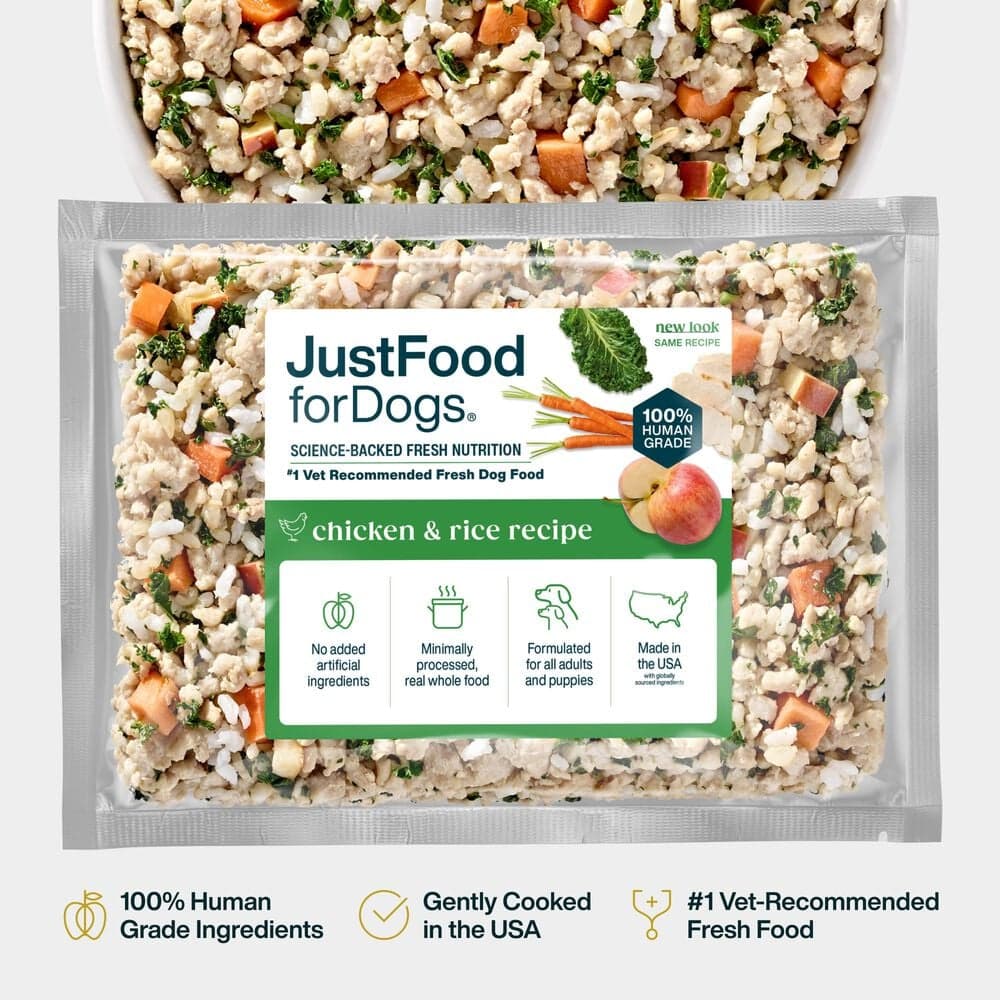
Want fresh food without raw-meat risk? Explore the gently cooked recipes mentioned in this guide.
- Chicken with rice and whole-food ingredients
- Fresh Frozen recipe
- View the recipe and feeding guide
Webvet may earn a commission when you click through to JustFoodForDogs, at no extra cost to you.
Questions worth separating
- Is raw food actually good for dogs? Evaluate evidence for the specific recipe and outcome, alongside safety concerns.
- Is raw food good for dogs with sensitive stomachs? Ongoing digestive signs need assessment; raw feeding is not a general treatment.
- Is raw food good for dogs with allergies? Raw status does not remove proteins that can trigger an individual food allergy.
- Is frozen or freeze-dried raw food different? Storage and moisture removal do not automatically make it cooked or eliminate raw-food hazards.
For owners looking for a cooked fresh option, JustFoodForDogs Chicken & Rice is a Fresh Frozen recipe to evaluate against the dog's needs. It offers a prepared cooked meal rather than requiring an owner to assemble a raw diet.
What research can tell us about health benefits
Look at what a study measured before turning its result into a health promise. Digestibility, stool output, nutrient adequacy, disease outcomes, and lifespan are different endpoints. Evidence about one does not automatically answer the others.
Research on particular cooked human-grade diets has reported digestibility advantages compared with the specific control foods tested. The University of Illinois summary of its 2021 research discusses findings about digestion and fecal output. It does not establish a universal hierarchy covering every fresh, raw, and dry food.
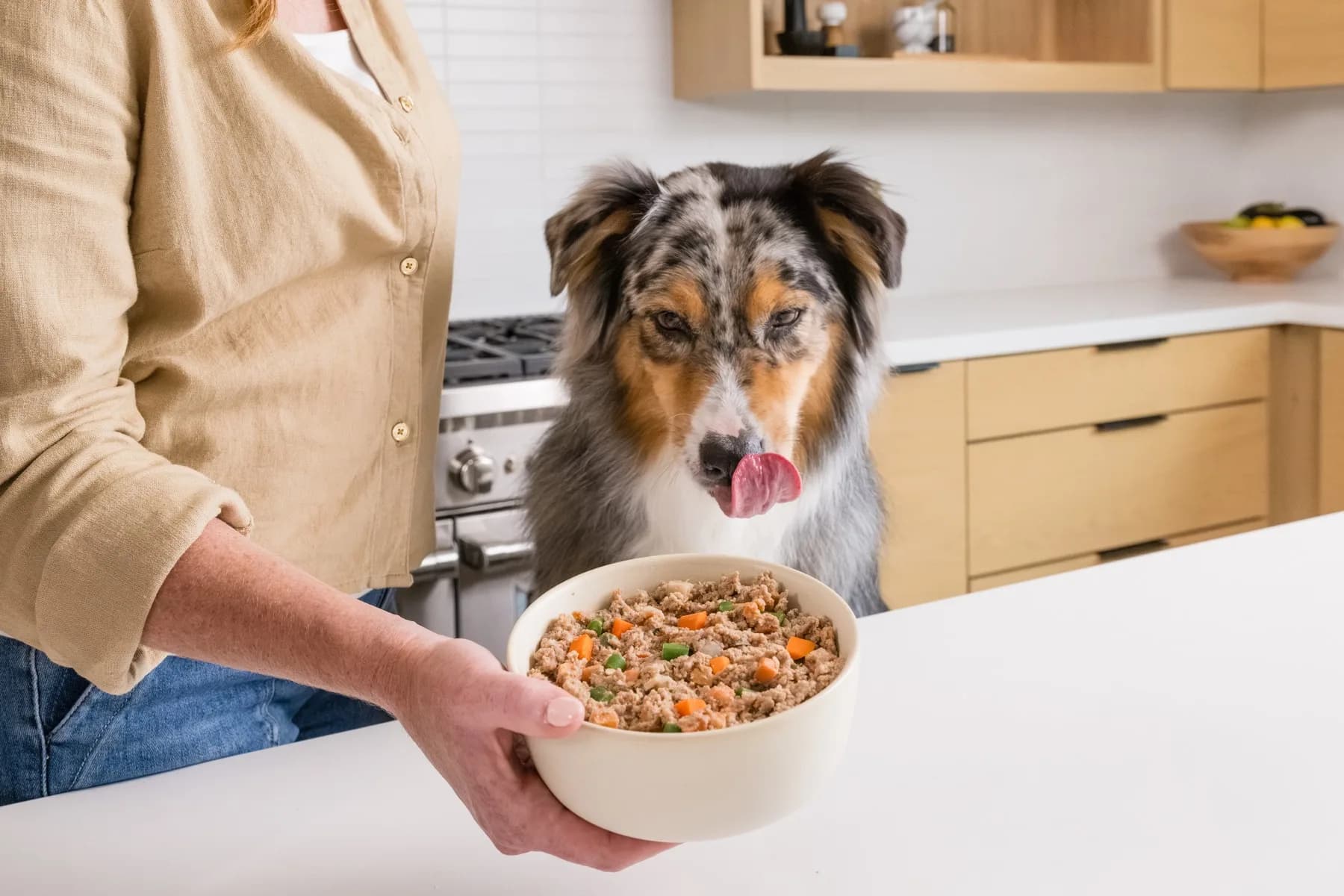
Read a benefit claim through three checks
- Which exact foods were tested?
- What outcome was measured, and over what period?
- Does the claim being made stay within those findings?
Anecdotes about a shinier coat or smaller stools can be useful observations to discuss with a veterinarian. They are not a controlled comparison of food formats. Likewise, a dog's enthusiasm for a meal does not prove that the recipe meets all nutritional needs.
Want fresh food without raw-meat risk? Explore the gently cooked recipes mentioned in this guide.
- #1 vet-recommended fresh food
- 10+ years of feeding trials & studies
- Recipes for all breeds, needs and life stages
Webvet may earn a commission when you click through to JustFoodForDogs, at no extra cost to you.
The practical attraction of JustFoodForDogs Fresh Frozen meals can stand on a more concrete basis: cooked preparation, a moist meal, and recipe-specific feeding information. Those features do not require claiming that raw feeding produces benefits that have not been demonstrated.
 $65 · no membership
Have a health question about your pet?
A licensed vet can assess your pet over video and prescribe online when it's appropriate.
 Talk to a vet
- Licensed vets
- All 50 states
- same-day Rx

Webvet may earn a commission if you book.
The safety difference for dogs and people
The CDC does not recommend raw pet food because it can carry germs that make pets and people sick. That concern includes the food, the surfaces it touches, and contact with the animal afterward. A dog appearing healthy does not by itself show that household exposure is absent.
Cooking is a meaningful control, while good handling remains important for any food. No format is a reason to ignore storage directions, dirty bowls, or recalled products. The distinction is that raw animal ingredients introduce risks that owners can avoid by choosing a suitable cooked diet.
| Question | Cooked fresh diet | Raw diet |
|---|---|---|
| Has the food been cooked? | Yes; assess manufacturer controls and handling | No; assess raw-food hazards |
| Is it nutritionally complete? | Check the exact recipe | Check the exact recipe |
| Can household members be exposed through handling? | Good hygiene still matters | Additional raw-animal-food exposure is a concern |
| Does freezing prove the food is safe? | Follow the manufacturer's storage rules | No; freezing is not cooking |
Consider the people who share the home
Children, older adults, pregnant people, and people with weakened immune systems can be more vulnerable to foodborne illness. A feeding choice therefore deserves a household discussion, not just a review of what the dog seems to enjoy.
Our guide to whether dogs can eat raw meat explores the everyday safety question. A complete cooked recipe can be a practical alternative when the goal is a fresh-style meal without uncooked animal ingredients.
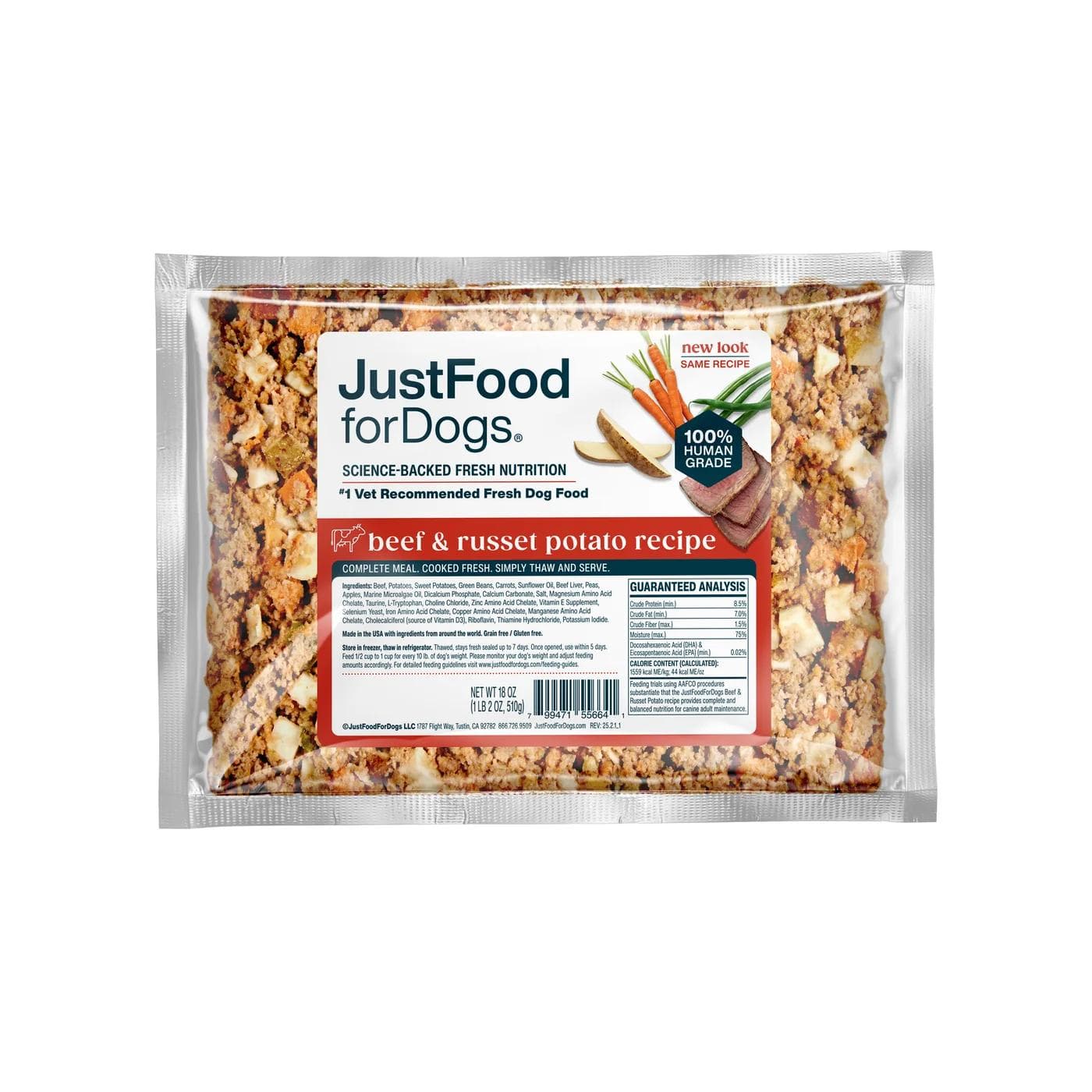
Want fresh food without raw-meat risk? Explore the gently cooked recipes mentioned in this guide.
- Beef and russet potato recipe
- Gently cooked, then frozen
- View ingredients and feeding guidance
Webvet may earn a commission when you click through to JustFoodForDogs, at no extra cost to you.
Freeze-dried and frozen raw foods still need scrutiny
Freezing and freeze-drying preserve food in different ways, but neither term means the food was cooked. Read the packaging for raw status and ask the manufacturer if that is unclear. A dry nugget can still be a raw product.
Cornell's evidence-based raw-food guidance explains why raw formats remain relevant to pathogen concerns. Do not use appearance, a frozen shipping box, or a “natural” claim as a safety test.
Before buying a raw frozen or dried product
- Confirm whether it is a full diet or a supplemental item.
- Ask what processing and finished-product controls are used.
- Read preparation, bowl-cleaning, and leftover-food instructions.
- Consider the dog's health and vulnerable people who may interact with the dog.
Do not improvise a home process to turn a raw commercial diet into a cooked one and assume the resulting formulation is unchanged. If you want cooked food, select a recipe designed for that use. JustFoodForDogs Beef & Russet Potato is another cooked Fresh Frozen recipe to assess for individual suitability.
Dry or frozen does not settle the raw-food question
When asking whether freeze-dried raw food is good for dogs, first separate preservation from a validated cooking step. A dry nugget may be convenient to store, but that appearance does not demonstrate that its raw animal ingredients have been cooked. Follow the manufacturer's handling and rehydration instructions, and discuss household exposure risks before making it part of the dog's meals.
Recovery feeding is a veterinary decision; use these calorie-dense options as talking points with your vet.
- Enter your dog’s weight and activity
- Compare fresh-food feeding options
- Use your vet’s calorie target for medical needs
Webvet may earn a commission when you click through to JustFoodForDogs, at no extra cost to you.
The same distinction applies to frozen raw food. Freezing provides storage, but it should not be treated as an automatic substitute for cooking. Compare the exact recipe's nutritional adequacy and safety information. A complete formulation addresses nutrient supply; it does not erase the separate microbial concerns associated with uncooked animal ingredients.
Nutrition matters as much as the food format
A collection of meat, organs, and vegetables is not automatically a complete diet, whether served raw or cooked. Nutritional adequacy depends on the whole formulation and the dog's life stage. Muscle meat alone cannot be treated as a balanced long-term meal.
The FDA's complete-and-balanced explanation helps interpret the relevant label statement. Check the exact recipe, not only the brand name, and distinguish daily diets from foods intended for intermittent or supplemental feeding.

Bring the right details to your veterinarian
- The current and proposed recipes, including their adequacy statements.
- Calories per measured serving and the amount actually fed.
- Treats, toppers, supplements, and table food.
- Weight, stool, appetite, or skin concerns that prompted the change.
A food allergy requires identifying the relevant dietary trigger; rawness is not a solution to the trigger. A sensitive stomach can have multiple causes. Avoid presenting a new protein or a new format as a diagnosis, and get advice before changing a therapeutic diet.
Nutritional adequacy and food safety are separate checks. A raw recipe may contain the required nutrients and still expose the household to pathogens, while an improperly formulated cooked meal can be nutritionally incomplete. Select a complete recipe appropriate to the dog, then evaluate cooking, handling, and quality controls as additional requirements rather than alternatives to balanced nutrition.
Sensitive stomachs and allergies need an individual plan
Raw food is not automatically good for dogs with sensitive stomachs or allergies. Those descriptions can involve different problems, and choosing a format does not identify the cause. Bring the dog's diet history, symptoms, and exact current recipe to the veterinarian. Repeated food changes can complicate the picture instead of producing a clear answer about what the dog tolerates.
If a veterinarian recommends a specific elimination trial or therapeutic diet, follow that plan before introducing additional proteins, treats, or toppers. The nutritional and diagnostic purpose may depend on consistent ingredients. A cooked fresh recipe can be considered when appropriate, but neither cooking nor serving food raw makes an unsuitable ingredient acceptable for a dog with a confirmed restriction.
Making a practical switch to gently cooked food
Select a complete recipe suited to the dog, then plan the cold-storage and portioning routine before it arrives. Follow the manufacturer's guidance for unopened, thawed, and opened food. Keep handling instructions available to everyone who feeds the dog.
Use the recipe's calorie density when replacing the old food. A cup of one format may provide a very different amount of energy from a cup of another. The JustFoodForDogs feeding calculator can help establish a starting point to review against the dog's weight, body condition, and other calorie sources.
Make the change manageable
- Confirm recipe suitability before ordering.
- Set the measured daily portion and account for extras.
- Introduce the new diet gradually using the appropriate guidance.
- Monitor tolerance and body condition, and seek advice for persistent problems.
Choosing cooked fresh food can meet the desire for a moist, prepared meal while avoiding raw feeding's additional safety concerns. The most useful decision combines that cooking distinction with a complete recipe and a routine the household can follow consistently.
Read the adequacy statement separately
The AAFCO label guide explains the nutritional adequacy statement. AAFCO establishes model standards; it does not approve individual brands. Check whether the exact food is complete and balanced for the intended life stage. That statement answers a nutrition question, while cooking and handling remain separate food safety questions.
Frequently asked questions
Do vets recommend raw dog food?
Vets considering a raw dog food need to address the household exposure to harmful pathogens highlighted by public-health and veterinary sources, as well as the recipe’s nutrition. Your veterinarian can discuss the exact diet, the dog's needs, and who interacts with the dog. A suitable cooked complete meal offers an alternative when the goal is fresh-style feeding without uncooked animal ingredients. Raw status should never be treated as proof of a health benefit.
What is the healthiest food to feed your dog?
The healthiest food to feed your dog needs to provide complete nutrition for the dog’s life stage and individual requirements. A cooked fresh recipe can be appropriate, but freshness alone cannot establish overall quality. The same complete-diet check applies to other formats. Raw diets additionally require attention to risks that an adequate nutrient formulation does not remove.
What are the downsides of giving raw dog food?
The downsides of giving raw dog food include bacterial exposure for pets and people, plus inadequate nutrition if the recipe is incomplete or altered. Storage and preparation can also complicate the household routine. An animal may appear well while still contributing to exposure. Evaluate the exact food and household circumstances with your veterinarian rather than relying on the appearance of the meal or a general natural-food claim.
Is it okay for dogs to eat raw meat every day?
It is not a sound feeding plan for dogs to eat raw muscle meat alone every day: it is not a complete diet, and repeated feeding does not remove bacterial risks. Adding a few vegetables or organs without a qualified formulation is not a reliable way to balance it. If you want a meat-containing daily meal, consider a suitable complete cooked recipe. Discuss any proposed long-term diet, especially for a puppy or a dog with health concerns, with your veterinarian.
What is the healthiest meat to give a dog?
There is no one meat that makes every dog's diet healthiest. Individual tolerance, medical restrictions, and the nutrient balance of the whole recipe matter more than choosing a universally best protein. A chicken or beef recipe should be evaluated as a finished diet. Cooking and safe handling also matter; choosing a different meat does not eliminate the concerns associated with serving it raw.
$65 · no membershipHave a health question about your pet?
A licensed vet can assess your pet over video and prescribe online when it's appropriate.
Talk to a vet- Licensed vets
- All 50 states
- same-day Rx
Webvet may earn a commission if you book.

Editor
The Webvet Editorial Team is the in-house group of pet-care editors and writers behind Webvet, operated by Smart Pet Collective. The team researches, writes, and maintains Webvet's pet health, behavior, and medication content. Every article follows a defined editorial process: research from reputable veterinary and scientific sources, careful drafting, mandatory review of medical content by a credentialed veterinarian, and dated publication. Health and medication articles are medically reviewed by a licensed veterinary professional before they go live and are kept current over time.
Veterinarian · BVMS MRCVS
Dr. Pippa Elliott, BVMS, MRCVS, is a veterinarian with nearly 30 years of experience in companion animal practice. Dr. Elliott earned her Bachelor of Veterinary Medicine and Surgery from the University of Glasgow. She was also designated a Member of the Royal College of Veterinary Surgeons. Married with 2 grown-up kids, Dr. Elliott has a naughty Puggle named Poggle, 3 cats and a bearded dragon.


