Female Dog Diapers: How to Choose the Right Type and Fit
Female dog diapers can manage heat discharge and urine leaks when coverage, size, and changing routine match the need. Compare materials, fit, leak causes, and safer alternatives.

BVMS MRCVS
Medically reviewed by Dr. Pippa Elliott, BVMS MRCVS · Last reviewed

This article contains affiliate links. Webvet may earn a commission when you buy through them, at no extra cost to you.
Female dog diapers are full-coverage garments designed to place an absorbent panel beneath the vulva. They can manage heat-cycle discharge, involuntary urine leaks, and some mixed accidents, but they do not treat the cause of leaking and they cannot prevent mating or pregnancy.
Choose coverage before absorbency. First identify whether the moisture is heat discharge versus urine leakage, then measure the waist and rise, check the tail opening and leg cuffs, and plan enough changes to keep the skin dry. New urine leakage, straining, blood, strong odor, pain, weakness, or abnormal discharge calls for veterinary care.
- 1Female dogs usually need a full diaper that covers the vulva, not a male belly band.
- 2Match coverage before absorbency, then choose disposable, washable, or liner-supported use.
- 3Change every damp or soiled diaper promptly and investigate new urinary or reproductive signs.
Which female dog diaper should you choose?
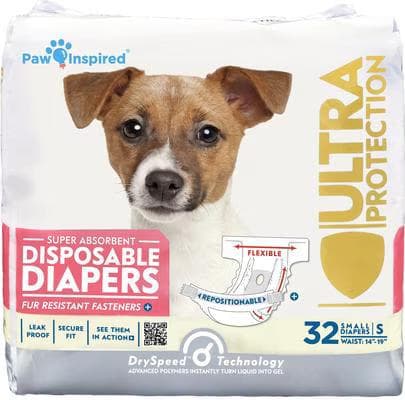
What is the best diaper for a female dog? It is the garment that covers the source of the accident, fits her individual body, stays aligned during normal movement, and can be changed before moisture remains against the skin. A highly absorbent product with the wrong rise or leg shape will still leak. For a female-specific disposable baseline, compare the measured waist and rise with Paw Inspired Ultra Protection Disposable Female Dog Diapers before buying a larger package.
| Female dog’s need | Coverage to start with | What the diaper cannot solve |
|---|---|---|
| Heat-cycle discharge | Full diaper over the vulva | It does not prevent mating or pregnancy |
| Urinary incontinence | Full diaper with absorbency matched to observed volume | It does not diagnose or treat the cause |
| Occasional mixed urine and stool | Purpose-built full coverage after veterinary advice | A tail opening may release formed stool |
| Loose stool or diarrhea | Veterinary care and protected surfaces | A standard diaper can spread stool against skin |
Full coverage is the key anatomical difference. A diaper wraps around the rear, passes between the hind legs, and surrounds the tail opening. A male wrap or belly band circles the waist and covers the penis, so it usually leaves the female urinary and reproductive area uncovered.
Webvet may earn a commission when you click through to Chewy, at no extra cost to you.
A female dog diaper with no tail hole may suit a dog without a tail, but the garment still needs the correct rear shape and must not press against the anus. Do not tape over an opening or force a standard pattern to fit unusual anatomy. Look for a purpose-built cut.
Do female dog diapers work?
Yes, female dog diapers work for many dogs when the goal is to collect heat discharge or urine and the absorbent panel remains beneath the vulva. They are less predictable for stool because formed feces can pass through a tail opening and loose stool can spread beneath the fabric.
Success depends on a clean, dry rotation rather than the label alone. A dog that needs several changes per day needs enough disposable stock or enough washable units to cover laundry time. The dog also needs regular opportunities to urinate normally outside or in her usual toilet area.
Female dog diapers for urine leaks and incontinence
Female dog diapers for incontinence may protect bedding and simplify care after the medical cause has been evaluated. Involuntary leakage often appears as dampness after sleep, dribbling while walking, or wet fur around the vulva. It differs from a deliberate squat followed by a normal stream.
Female urinary signs can reflect infection, bladder stones, endocrine disease, kidney problems, structural changes, neurologic disease, or other causes. Read about UTIs in female dogs and use the general dog diaper guide to understand when veterinarians may include garments in a broader plan.
A sudden need for more absorbency is itself useful evidence. Record when leakage occurs, how much urine the diaper collects, whether the dog is asleep, and any thirst or behavior changes. Bring those observations to the appointment rather than simply switching products.
Female dog diapers for heat and periods
Female dog period diapers are a common search term, but dogs have an estrous cycle rather than a human menstrual period. A full diaper can collect normal heat discharge indoors. It cannot stop a male from mating with the female. Secure separation and direct supervision remain essential.
The complete guide to dog diapers for heat covers cycle-specific discharge, changing triggers, overnight decisions, and pregnancy-prevention limits. Contact a veterinarian for foul odor, pus-like discharge, unusual pain, fever, lethargy, vomiting, excessive thirst, or a cycle that seems abnormal.
Disposable vs. washable female dog diapers
Female disposable dog diapers allow fast changes and do not require laundry. They can be practical for travel, short-term recovery, or testing fit before investing in a rotation. Ongoing use creates recurring cost and waste, and a disposable still has to be inspected and changed promptly.
Webvet may earn a commission when you click through to Chewy, at no extra cost to you.
Female washable dog diapers and female reusable dog diapers can make sense for predictable, repeated use. Their real capacity depends on the absorbent construction and fit, not the fact that they are cloth. Keep enough units to wash and dry completely before reuse, and follow the product care label. If the washable diaper is designed for inserts, PAWPANG Disposable Dog Diaper Liners, Medium, 100 count provides one replaceable layer to compare; verify that the medium liner lies flat without crowding the cuffs.
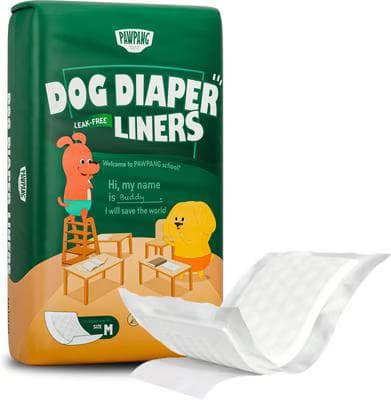
A convenient 100-count liner option for adding absorbency to a correctly fitted washable dog diaper or belly band.
Webvet may earn a commission when you click through to Chewy, at no extra cost to you.
Disposable and washable female dog diapers
Pros
- Disposables support fast changes and easy travel.
- Washables can reduce trash and spread ongoing cost across repeated uses.
- A hybrid rotation provides a clean backup during laundry or travel.
Cons
- Disposables create recurring cost and require reliable restocking.
- Washables require enough units, prompt laundry, and complete drying.
- Either material can leak or irritate skin when fit or changing frequency is wrong.
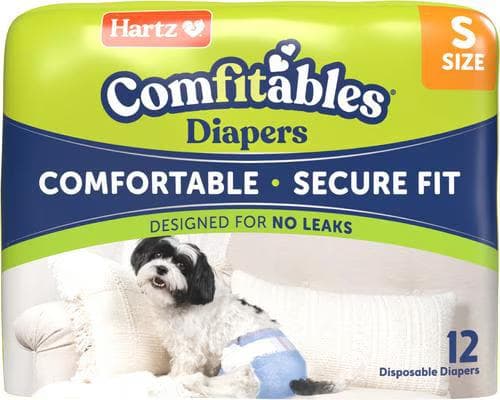
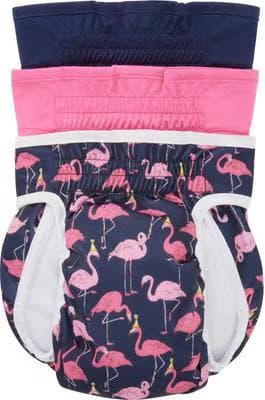
Two disposable full-coverage options are Paw Inspired Ultra Protection Disposable Female Dog Diapers and Hartz Comfitables Male & Female Dog Diapers. Compare each current chart with the dog's measured waist and check whether the absorbent panel remains beneath the vulva while she walks, sits, and lies down. For a washable female comparison, check Frisco Washable Female Diaper, X-Small, 3 count, Flamingo against the same waist, rise, tail-opening, movement, and laundry criteria.
Webvet may earn a commission when you click through to Chewy, at no extra cost to you.
How to compare female dog diaper products
Brand searches are useful for finding a particular product, but the comparison should remain consistent. Check current sizing, intended anatomy, reusable or disposable care, number of units, closure design, and whether the absorbent zone covers the dog’s accident source. Ignore unsupported claims that one diaper is universally leakproof. A second full-coverage chart to compare is the current sizing for Hartz Comfitables Male & Female Dog Diapers, using the same anatomy and movement checks. The best female dog diapers meet those anatomy and movement checks for the individual dog; there is no universal best brand.
- Confirm the product is a full-coverage female design rather than a male waist wrap.
- Use the brand’s current waist range, then check rise and tail position on the dog.
- Estimate the number of changes per day and the clean stock needed before laundry or delivery.
- Inspect seams and cuff edges for the specific dog’s skin and coat.
- Choose a returnable or small trial quantity until fit is proven.
Compare female dog diaper products by exact waist range, rise, fastener layout, absorbent-panel coverage, tail opening, pack count, wash rotation, drying time, and return policy. Product names such as disposable, washable, or reusable do not prove fit or safe wear time. Test a small quantity and confirm coverage while the dog walks, sits, and lies down.
How to measure a female dog for diapers
Measure the waist where the diaper will fasten, with the tape level and snug but not compressing the coat. Weight is only a rough filter. A narrow waist, broad hindquarters, short back, long rise, or low tail can move the absorbent panel even when the waist number matches.
The detailed dog diaper sizing guide explains waist, rise, tail-hole, and body-shape checks for extra-small through extra-large dogs. Re-measure after weight change, a major haircut, or any mobility change.
Webvet may earn a commission when you click through to Chewy, at no extra cost to you.
For readers asking how to measure a female dog for diapers, record waist circumference where the band will sit, then check rise, tail position, leg openings, coat, and body condition. Compare those measurements with the current chart for the exact product. Weight can narrow the range, but it cannot replace the movement and coverage check.
 $65 · no membership
Have a health question about your dog?
A licensed vet can assess your dog over video and prescribe online when it's appropriate.
 Talk to a vet
- Licensed vets
- All 50 states
- same-day Rx
Webvet may earn a commission if you book.
How a female dog diaper should fit

A correct fit keeps the absorbent panel beneath the vulva as the dog walks, sits, and lies down. The waistband should pass a two-finger check. The rise should not pull the waist down, the tail opening should be centered, and both leg cuffs should lie smoothly against the coat without folding inward.
- Waist rotates: reassess size, body shape, closure tension, and whether the rise is pulling.
- Panel shifts forward: the rise or rear cut may be wrong even if the waist fits.
- Leg gap opens: unfold the cuff, center the panel, and try a different cut if the gap returns.
- Deep marks or restricted sitting: loosen or replace the diaper rather than forcing it to stay.
Why female dog diapers leak
Find where the leak starts. Moisture at one leg suggests a folded cuff or shape mismatch. Moisture at the waist suggests rotation or an incorrect rise. A fully wet core points to saturation and a need for faster changes. A mostly dry core with wet fur suggests wrong coverage or misalignment.

Fur trapped beneath a seal can wick moisture outward, especially on long-coated dogs. Smooth the coat without shaving sensitive areas unless a veterinarian or groomer recommends it. If urine volume suddenly overwhelms a previously successful system, call the clinic because the problem may be a medical change.
When a female dog diaper will not stay on
A diaper that slips may be the wrong waist, rise, or body-shape cut. Check fit before adding accessories. Fastening it tighter can cause pressure and still fail when the dog sits. Activity, a slick coat, a very short back, or persistent chewing also affects retention.
If the garment is comfortable and correctly sized but still migrates, review supervised dog diaper suspenders. Suspenders should support a workable diaper, not force an unsuitable product onto the dog.
Female dog diapers that stay on begin with the correct rise and cut, not tighter fasteners. Recheck waist rotation, leg gaps, tail-hole alignment, coat friction, saturation, and whether the absorbent panel remains beneath the vulva. When fit is correct but movement still displaces the garment, the retention guide explains compatible suspenders and safer surface alternatives.
How long a female dog can wear a diaper
A female dog should not stay in one diaper all day. There is no universal safe interval. Inspect frequently and change promptly whenever the garment is wet or soiled. Provide normal toilet breaks, movement, grooming, and regular diaper-free time in a protected area.
At every change, inspect the vulvar area, inner thighs, waist, tail opening, and leg contact points. Damp coat, redness, odor, swelling, pain, or repeated licking means the dog needs a break and possibly veterinary advice.
Cleaning a female dog after urine leakage
Should you wipe a female dog after peeing? If urine has wet the coat or skin, use a gentle wipe with warm water or a veterinarian-approved pet product, then dry thoroughly. Avoid scented human wipes, harsh soap, and repeated scrubbing of the vulvar area.
Urine trapped around the vulva and inner thighs can contribute to irritation and urine scald. Do not apply human diaper cream without veterinary approval because dogs may lick it and some ingredients can be harmful when swallowed.
HICC PET Deodorizing Cat & Dog Glove Wipes may be used for outer-coat cleanup only when the label fits the situation. Keep fragranced products away from raw skin, the vulva, and other sensitive tissue; warm water, complete drying, and veterinary guidance remain the safer default when irritation is present.
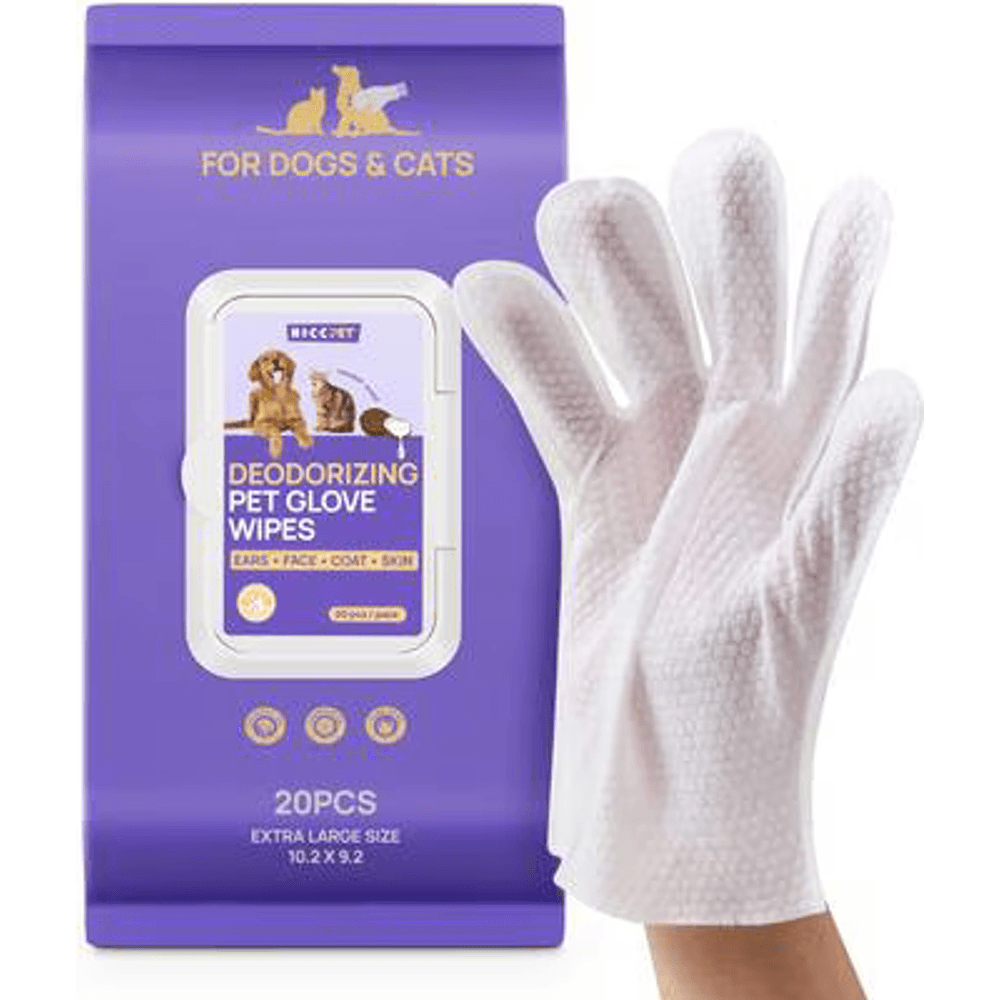
Wearable glove wipes that let you freshen and wipe down a dog's or cat's coat and skin without a full bath, while a fabric layer stays between your hand and the pet.
Webvet may earn a commission when you click through to Chewy, at no extra cost to you.
Can female dog diapers contain poop?
A standard full diaper may catch some stool, but a tail opening can release formed stool and loose stool can spread against the skin. Repeated fecal accidents need veterinary evaluation and a realistic management system. See dog diapers for poop for containment limits and protected-surface options.
Temporary homemade female dog diapers
A temporary homemade female dog diaper can be made from a clean soft shirt or carefully adapted garment only when a purpose-built option is unavailable. Avoid pins, tight elastic, exposed absorbent material, and adhesive on fur. Confirm full rear coverage, a centered tail opening, normal movement, prompt changes, and continuous supervision. The DIY dog diaper guide owns the detailed construction and replacement limits.
Alternatives to female dog diapers
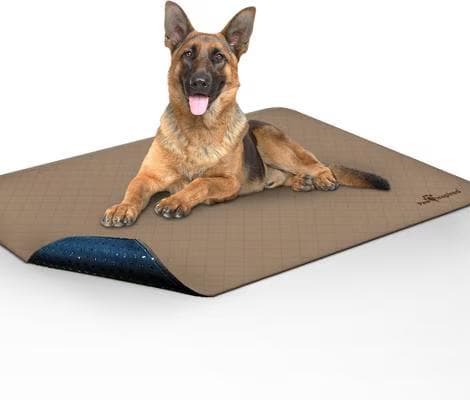
Alternatives include washable pee pads, waterproof blankets, frequent toileting opportunities, an accessible indoor toilet area, and an easy-to-clean room. A surface layer may be better than body-worn coverage for a dog who is skin-sensitive, distressed by dressing, or wet mainly during sleep.
- Protect one predictable resting area with a waterproof base and washable top layer.
- Increase scheduled outdoor or indoor toilet opportunities when the dog can still eliminate voluntarily.
- Use secure washable surfaces for heat discharge while maintaining separation from intact males.
- Follow the veterinary treatment plan for diagnosed urinary, reproductive, neurologic, or mobility conditions.
For a temporary emergency garment, follow the DIY dog diaper guide rather than using pins, tight tape, or loose pieces that can be swallowed.
A Paw Inspired Washable Dog Pee Pad or Pet Parents Pawtect Waterproof Dog Blanket can protect a chosen rest area during diaper-free skin breaks. These surface products complement a fit-and-change plan; they do not treat the cause of leakage.
A safe changing routine for female dogs
Prepare the clean diaper, soft cloth, warm water, dry towel, and laundry or disposal container before removing the used garment. Keep the dog on a nonslip surface and support her comfortably if mobility is limited. Fast changes should still be calm enough to inspect the entire contact area.
- Remove the used diaper without dragging a wet absorbent panel across the vulva or inner thighs.
- Observe the amount, color, and odor of urine or discharge before discarding or washing the garment.
- Gently clean only where needed, then pat the coat and skin completely dry.
- Allow supervised diaper-free time and check for redness, swelling, sores, pain, or persistent licking.
- Apply a clean, dry diaper and confirm the waistband, rise, tail opening, and leg cuffs again.
Keep a brief change log when leakage is new or the system is being adjusted. Record wetness, leak location, skin condition, drinking, toileting, and activity. A pattern of one-sided leaks points toward fit, while a sudden rise in urine volume or repeated painful attempts points toward a medical change.
Introduce the garment without force
Let the dog inspect a clean diaper, reward calm standing, and practice brief touches before fastening it. Build from a few seconds to a short supervised walk. Stop if she freezes, hides, pants, growls, or repeatedly bites the garment. Reassess pain and fit rather than tightening or punishing resistance.
Overnight and travel planning
Overnight wear is not automatically safe just because a product stays fastened. Fit a clean, dry diaper immediately before bed, protect the bedding as backup, and perform a skin and moisture check as soon as the dog wakes. If the diaper saturates or the dog cannot be checked when needed, use an easy-to-clean sleep area with washable protection instead. For washable bedding backup, compare the Pet Parents Pawtect Waterproof Dog Blanket dimensions and care instructions before overnight use.
For travel, carry more clean changes than the planned time requires, plus a waterproof surface cover, soft cloth, dry towel, and sealed bags for used products. Stop in a secure location for normal toileting and a skin check. Never reduce water to reduce accidents unless a veterinarian specifically directs fluid restriction.
- Use a fresh garment at departure and recheck after activity or a long period of sitting.
- Keep used washables separate from clean stock and allow no damp item to be reused.
- Bring medication and the veterinary contact plan when incontinence is part of a diagnosed condition.
At a hotel, sitter’s home, or clinic, show the caregiver the exact fit position and change routine instead of leaving only a package. Write down the dog’s normal leakage pattern, current medications, red flags, and the time of the last change. Pack a familiar washable surface so the dog can rest without continuous diaper wear.
If another caregiver cannot inspect the skin or change the garment promptly, choose protected surfaces or different supervision. Convenience for travel does not change the dog’s moisture, friction, or toileting needs.
Adjust fit for mobility without overtightening
Arthritis, weakness, a wide stance, or a low tail changes how a diaper moves. Support the dog on a nonslip surface during changes and watch her take several natural steps. A garment that stays aligned while standing may gap when she lies down or drag when she rises.
Use protected bedding to reduce the amount of time a mobility-limited dog needs body-worn coverage. If changing becomes painful, discuss handling, pain control, toileting access, and product cut with the veterinarian. Comfort is part of a successful continence plan, not a secondary concern. Reassess the setup after any gait, weight, medication, sleeping-pattern, appetite, or urine-volume change, and document what the caregiver observes. A Paw Inspired Washable Dog Pee Pad can protect a mobility-limited dog's rest area while reducing unnecessary garment time.
Female dog diapers vs. male wraps
Female diapers wrap around the rear and cover the vulva. Male wraps circle the waist and cover the penis for urine-only needs. The direct guide to male dog diapers explains the belly-band versus full-diaper boundary. Choosing by sex alone is still incomplete because stool, mobility, tail shape, and the accident source matter.
Female dog diapers provide full rear coverage, while male wraps or belly bands encircle the waist to manage urine from the penis. A belly band does not place an absorbent panel beneath female anatomy and cannot contain stool. Use the male-diaper guide when urine-only coverage for a male dog is the actual decision.
The bottom line
Female dog diapers are most useful when coverage, fit, and changing routine match the actual problem. Put the absorbent zone beneath the vulva, verify the waist, rise, tail opening, and cuffs, and troubleshoot where a leak starts before changing absorbency.
Treat new leakage or abnormal discharge as health information. A veterinarian can investigate the cause while a well-managed diaper or protected surface keeps the dog comfortable and the home easier to clean.
Female dog diaper questions owners ask
Frequently Asked Questions
Do diapers work on female dogs?
Yes, full-coverage diapers can work on female dogs because the absorbent panel can sit beneath the vulva and surround the rear. Success depends on correct rise, waist, leg openings, tail-hole alignment, and change frequency. A diaper can manage urine or heat discharge, but it cannot treat incontinence, infection, pain, increased thirst, or another medical cause.
Should I wipe my female dog after peeing?
Clean a female dog only as needed after leakage or a wet diaper, using warm water or a veterinarian-approved product, then dry the coat and skin completely before refitting. Avoid aggressive scrubbing, fragrance on sensitive tissue, and human diaper creams unless the veterinarian approves the ingredients. Persistent odor, redness, discharge, pain, or frequent urination needs veterinary advice.
What is the best diaper for a female dog?
The best female dog diaper matches the reason for use, the dog's waist and rise, and the caregiver's laundry and changing routine. Compare disposable and washable options with current product-specific charts, then perform a movement check while the dog walks, sits, and lies down. Buy a small trial quantity before committing to a large package or rotation.
Can I leave a diaper on my dog all day?
Do not leave a female dog in one diaper all day. Prompt changes, normal toilet breaks, diaper-free time, and frequent skin checks are essential because urine and discharge trapped against the coat can cause friction and urine scald. If the dog needs near-continuous protection, combine short garment periods with washable pads or waterproof bedding and ask the veterinarian to review the plan.
What can I use instead of a diaper for my female dog?
Alternatives include a washable pad, waterproof bedding, scheduled toilet trips, an easy-clean resting area, and treatment for the diagnosed cause of leakage. These options can reduce garment hours when accidents happen mainly during sleep or in one predictable place. Heat discharge still requires secure separation from males; a pad or blanket does not prevent mating or pregnancy.
$65 · no membershipHave a health question about your dog?
A licensed vet can assess your dog over video and prescribe online when it's appropriate.
Talk to a vet- Licensed vets
- All 50 states
- same-day Rx
Webvet may earn a commission if you book.

Editor
The Webvet Editorial Team is the in-house group of pet-care editors and writers behind Webvet, operated by Smart Pet Collective. The team researches, writes, and maintains Webvet's pet health, behavior, and medication content. Every article follows a defined editorial process: research from reputable veterinary and scientific sources, careful drafting, mandatory review of medical content by a credentialed veterinarian, and dated publication. Health and medication articles are medically reviewed by a licensed veterinary professional before they go live and are kept current over time.
Veterinarian · BVMS MRCVS
Dr. Pippa Elliott, BVMS, MRCVS, is a veterinarian with nearly 30 years of experience in companion animal practice. Dr. Elliott earned her Bachelor of Veterinary Medicine and Surgery from the University of Glasgow. She was also designated a Member of the Royal College of Veterinary Surgeons. Married with 2 grown-up kids, Dr. Elliott has a naughty Puggle named Poggle, 3 cats and a bearded dragon.


