Dog symptom
Drinking & urinating more in dogs
Reviewed by the Webvet Veterinarian Team · Last reviewed June 22, 2026
Noticeably increased thirst and urination together is an important sign that should always be investigated — it points to several treatable diseases.
Common causes of drinking & urinating more in dogs
- Kidney disease
- Diabetes
- In cats, an overactive thyroid; in dogs, Cushing's disease
- Certain medications, urinary tract infection, or a uterine infection in an intact female
Who's most at risk
- Middle-aged and senior pets
- Overweight pets
- Cats (kidney disease, hyperthyroidism)
- Pets on steroids or certain medications
What you can do at home
- Always keep fresh water available — never restrict water to reduce urination
- Try to measure how much they drink in a day to tell your vet
- Watch for weight loss, appetite changes, or accidents in the house
When to see a vet
- Thirst and urination are clearly increased for more than a few days
- Also losing weight, eating more or less, or low on energy
- Vomiting, weakness, a painful belly, or a sick intact female with vaginal discharge
- A urine sample (and bloodwork) is the way to find the cause — book a visit
When it's more serious
- Thirst plus weight or appetite changes strongly suggests a treatable disease — get bloodwork.
- These with increased thirst can mean kidney disease or diabetes — see a vet promptly.
- Persistent increases warrant a urine test and bloodwork to find the cause.
What your vet may do
- Confirm increased drinking/urination and rule out infection
- Bloodwork and urinalysis to check kidneys, blood sugar, and thyroid
- Imaging or further tests based on results
- Treat the specific disease found
Questions to ask your vet
- What's driving the extra thirst — kidneys, diabetes, thyroid?
- Which tests do we start with?
- Is this manageable, and what's the plan?
- What should I monitor at home?

Frequently asked questions
What causes drinking & urinating more in dogs?
Noticeably increased thirst and urination together is an important sign that should always be investigated — it points to several treatable diseases. Common causes include: Kidney disease; Diabetes; In cats, an overactive thyroid; in dogs, Cushing's disease; Certain medications, urinary tract infection, or a uterine infection in an intact female.
Is drinking & urinating more in dogs an emergency?
See a vet today. See a vet right away if: Thirst and urination are clearly increased for more than a few days; Also losing weight, eating more or less, or low on energy; Vomiting, weakness, a painful belly, or a sick intact female with vaginal discharge; A urine sample (and bloodwork) is the way to find the cause — book a visit.
What can I do at home for a dog with drinking & urinating more?
Always keep fresh water available — never restrict water to reduce urination. Try to measure how much they drink in a day to tell your vet. Watch for weight loss, appetite changes, or accidents in the house.
A closer look at increased drinking and urinating in dogs
When a dog suddenly drinks noticeably more water and pees more to match, it is one of the most meaningful early warnings a body can send, and it should always be investigated rather than watched from the sidelines. Vets call this pattern polyuria and polydipsia, or PU/PD, and it is rarely just a quirk of a hot week. Increased thirst and urination together usually point to a treatable underlying disease, and the sooner it is found, the better the outcome tends to be, so a same-week vet visit with a urine sample is the right move.
- 1Drinking and peeing more together (PU/PD) is a genuine medical sign in dogs, not a behavior quirk to ignore.
- 2The most common culprits are kidney disease, diabetes, and Cushing's disease, plus urinary infection and, in unspayed females, a uterine infection called pyometra.
- 3Never restrict your dog's water to cut down on accidents; the extra drinking is compensating for a real fluid loss, and limiting it can cause dangerous dehydration.
- 4Diagnosis hinges on a urine test plus bloodwork, so start measuring daily water intake and try to catch a fresh urine sample before the appointment.
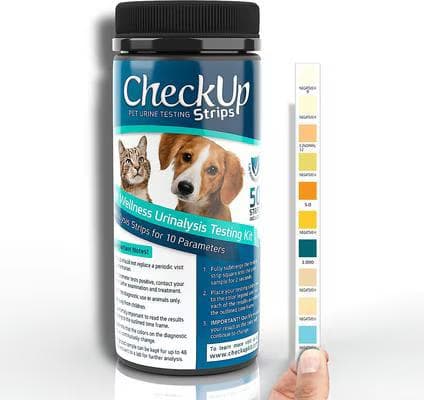
Your vet will want a urine sample. These strips screen for glucose and protein at home so you arrive with something useful, they do not replace bloodwork.
Webvet may earn a commission when you click through to Chewy, at no extra cost to you.
What increased thirst and urination actually mean
Drinking and urinating are two ends of the same balancing act. A healthy dog takes in roughly a cup of water for every ten pounds of body weight each day and its kidneys concentrate the urine to hold onto whatever fluid the body needs. When something disrupts that system, the two signs almost always travel together, and which one comes first tells vets a lot. In some diseases the kidneys lose the ability to concentrate urine, so your dog leaks fluid and drinks more to keep from drying out. In others, the drive to drink comes first and the extra urine simply follows. Either way, the body is trying to compensate for a problem it cannot fix on its own, which is exactly why the thirst is a symptom to respect rather than a habit to curb.
It helps to separate a real change from normal variation. Hot weather, a salty treat, more exercise, or a switch from wet food to dry kibble can all nudge water intake up for a day or two, and that is not the pattern that worries a vet. What matters is a sustained increase that lasts more than a few days, especially when it comes with emptying the bowl far faster than usual, waking overnight to pee, or having accidents in a previously house-trained adult dog. That combination is the body waving a flag.

The conditions vets look for first
A short list of diseases accounts for the large majority of PU/PD in dogs, and they are worth knowing because most are manageable when caught early. Chronic kidney disease is common in middle-aged and senior dogs, and increased thirst is frequently the very first sign, appearing before appetite or weight changes. Diabetes mellitus spills sugar into the urine, which drags water out with it, producing the classic bottomless thirst and, sometimes, a sweetish smell to the breath. Cushing's disease, an overproduction of the stress hormone cortisol, tends to cause tremendous drinking along with a pot-bellied look, thinning coat, and a bigger appetite. Less commonly, a urinary tract infection, liver disease, a high blood calcium level, or certain medications such as steroids can drive the same pattern.
One cause deserves a special mention for owners of unspayed female dogs: pyometra, a life-threatening infection of the uterus. It often shows up a few weeks after a heat cycle, and increased drinking and urination can be one of the earliest signs, sometimes alongside vaginal discharge, lethargy, or a swollen belly. Because several of these diseases also cause unexplained weight loss, it is worth telling your vet about any changes you have noticed on the scale, in appetite, or in energy, because those details help narrow the list quickly.
| Possible cause | Other signs you might notice | How urgent |
|---|---|---|
| Kidney disease | Weight loss, poor appetite, low energy, sometimes vomiting | See a vet within days |
| Diabetes | Big appetite yet losing weight, sweetish breath | See a vet promptly |
| Cushing's disease | Pot belly, thinning coat, panting, ravenous hunger | Book a vet visit |
| Urinary tract infection | Straining, frequent small pees, blood-tinged urine | See a vet within days |
| Pyometra (unspayed females) | Vaginal discharge, lethargy, off food, swollen belly | Emergency, go now |
How your vet pinpoints the cause
Because so many different diseases share this one sign, vets work through it methodically rather than guessing. The single most useful first step is a urinalysis, which measures how concentrated the urine is and checks for sugar, protein, blood, and signs of infection. A dilute sample tells the vet the kidneys or hormones are involved; sugar points toward diabetes. Alongside it, a blood panel checks kidney values, blood sugar, liver enzymes, and calcium, and paints a fuller picture in one draw. Depending on what those show, your vet may add a specific hormone test for Cushing's disease, a thyroid check, imaging such as an ultrasound to look at the kidneys, bladder, or a suspected pyometra, or a urine culture to confirm infection. This is why bringing a fresh urine sample and a rough tally of daily water intake genuinely speeds up the answer.
What to expect at the visit and afterward

The reassuring news is that most of the conditions behind PU/PD are managed rather than cured, and dogs often go on to live full, comfortable lives once treatment starts. What that treatment looks like depends entirely on the diagnosis. Diabetes is usually controlled with daily insulin and a consistent diet, and many owners are surprised by how quickly the endless thirst settles once blood sugar is under control. Kidney disease is slowed with special diets, fluid support, and medications that protect the kidneys and manage blood pressure. Cushing's disease is treated with a daily medication that reins in cortisol. A urinary infection typically resolves with a course of antibiotics, while pyometra usually needs urgent surgery to remove the infected uterus. Your vet will tailor the plan and, importantly, set up recheck testing to fine-tune it over time.
It is fair to ask about cost and commitment up front, because chronic conditions mean ongoing care rather than a one-time fix. Insulin, prescription diets, monitoring bloodwork, and follow-up visits add up, and lifelong medications are common. If your dog is prescribed a long-term drug, the Webvet medication guides can help you understand what it does and what to watch for, though your vet's dosing instructions always come first. Never give human medications to manage these signs; many are toxic to dogs and none will treat the underlying disease.
How to help at home safely
The most valuable thing you can do at home is turn a vague worry into useful data. For a couple of days before the appointment, measure how much water goes into the bowl and roughly how much is left, so you can give your vet an actual daily figure rather than a hunch. Note when the drinking is heaviest, whether your dog is waking overnight to pee, and any accidents. Watch closely for appetite and weight changes, energy dips, and vomiting, and keep an eye out for straining or trouble passing urine, which is a separate and more immediate emergency. Try to catch a fresh urine sample in a clean container the morning of the visit; even a small amount lets the clinic run a test straight away.
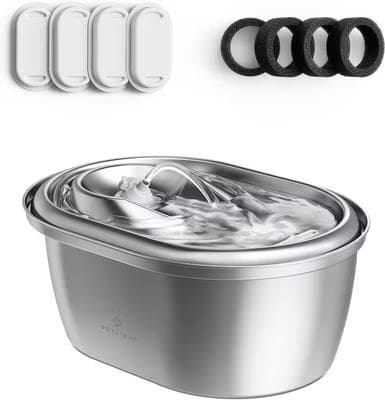
Never restrict water. A fountain keeps it fresh and appealing while your vet works out the cause.
Webvet may earn a commission when you click through to Chewy, at no extra cost to you.
The senior-dog angle and lowering the risk
Owners often ask whether drinking and peeing more is just a normal part of getting older. The honest answer is that older dogs are more prone to the diseases that cause it, not that aging itself makes a healthy dog thirsty. Chronic kidney disease, diabetes, and Cushing's all become more likely with age, so a senior who starts emptying the bowl deserves a check rather than a shrug. That is also why the single best preventive step is not a supplement or a special water, but routine wellness bloodwork and urine testing as your dog ages, which can catch these conditions early when they are easiest to manage. Keeping your dog at a lean, healthy weight lowers the risk of diabetes, and spaying female dogs removes the risk of pyometra entirely.

Pair the thirst you are seeing with any other shifts in your dog's routine. A dog that is drinking more and also refusing to eat, losing weight, or slowing down is telling you the same story from several angles, and that fuller picture is exactly what helps your vet reach a diagnosis faster. Trust what you are noticing; owners are almost always the first to spot PU/PD, and acting on it early is what makes these diseases so treatable.
Increased drinking and urinating is one of those signs that is easy to explain away and important not to. It is your dog's body compensating for something real, and in most cases that something is a disease vets diagnose routinely and manage successfully, particularly when it is found early. Keep the water flowing, jot down what you are seeing, catch a urine sample if you can, and book the visit. A simple urine test and a blood panel are usually all it takes to turn an unsettling change into a clear plan.
Sources
Reviewed by the Webvet Veterinarian Team
This guide is general information, not a diagnosis, and does not replace an exam by your veterinarian. If your pet is in distress, contact your vet or an emergency clinic right away.
Related symptoms
- Straining to urinate or can't pee in dogs
- Urinating in the house in dogs
- Ate something toxic in dogs
- Bloated belly or trying to vomit in dogs
- Collapse or fainting in dogs
- Dehydration in dogs
- Lethargy or low energy in dogs
- Not eating or loss of appetite in dogs
- Overheating or heatstroke in dogs
- Restlessness or pacing in dogs
- Seizure or tremors in dogs
- Sudden behavior change in dogs
- Weight loss in dogs