Dog symptom
Dandruff or flaky skin in dogs
Reviewed by the Webvet Veterinarian Team · Last reviewed June 22, 2026
White flakes and dry, scaly skin. Often from dry air, poor grooming, or diet — but it can also point to parasites (including 'walking dandruff' mites), allergies, or skin disease.
Common causes of dandruff or flaky skin in dogs
- Dry indoor air or low-humidity seasons
- Skin mites (cheyletiella, 'walking dandruff')
- Allergies or skin infection
- A diet low in essential fatty acids; over- or under-grooming
Who's most at risk
- Dry-air seasons and homes
- Overweight or arthritic pets that can't groom well
- Pets with allergies
- Young or group-housed pets (mites)
What you can do at home
- Brush regularly to distribute natural oils
- Ask your vet about omega-3 supplements or a skin-support diet
- Keep up parasite prevention
When to see a vet
- Flakes with itching, hair loss, redness, or sores
- Flakes that seem to 'move' (possible mites — can spread to people)
- No improvement with grooming and diet
- An older cat grooming less and looking unkempt (can signal illness)
When it's more serious
- That can be 'walking dandruff' mites, which spread to people — see your vet.
- Flaky skin with these signs needs a vet workup for the cause.
What your vet may do
- Skin exam and tests for mites, yeast, or infection
- Check for an underlying allergy or disease
- Recommend diet, supplements, or a medicated shampoo
- Treat parasites if found
Questions to ask your vet
- Could this be mites, and are they contagious?
- Would a diet or supplement change help?
- Is there an underlying skin condition?
- Which shampoo is right for my pet?

Frequently asked questions
What causes dandruff or flaky skin in dogs?
White flakes and dry, scaly skin. Often from dry air, poor grooming, or diet — but it can also point to parasites (including 'walking dandruff' mites), allergies, or skin disease. Common causes include: Dry indoor air or low-humidity seasons; Skin mites (cheyletiella, 'walking dandruff'); Allergies or skin infection; A diet low in essential fatty acids; over- or under-grooming.
Is dandruff or flaky skin in dogs an emergency?
Book a veterinary visit soon. See a vet right away if: Flakes with itching, hair loss, redness, or sores; Flakes that seem to 'move' (possible mites — can spread to people); No improvement with grooming and diet; An older cat grooming less and looking unkempt (can signal illness).
What can I do at home for a dog with dandruff or flaky skin?
Brush regularly to distribute natural oils. Ask your vet about omega-3 supplements or a skin-support diet. Keep up parasite prevention.
A closer look at dandruff and flaky skin in dogs
Dandruff in dogs is the visible shedding of dead skin cells, and in most cases it is a cosmetic nuisance rather than an emergency. Those white or grayish flakes appear when the normal turnover of skin gets out of balance, usually because the skin is too dry, too oily, poorly nourished, or irritated by parasites or allergies. The single most useful thing to know is this: a little seasonal flaking on an otherwise happy, comfortable dog is common and manageable, but dandruff that comes with itching, hair loss, odor, redness, or sores is your dog telling you something underneath needs a veterinarian's attention.
- 1Flakes alone on a comfortable dog are usually mild and reversible with grooming, humidity, and diet tweaks.
- 2Dandruff plus itching, hair loss, redness, sores, or odor deserves a vet workup for the real cause.
- 3Flakes that seem to crawl or move can be cheyletiella 'walking dandruff' mites, which spread to other pets and people.
- 4Omega-3 fatty acids, regular brushing, and not over-bathing support healthy skin, but ask your vet before adding supplements or shampoos.
- 5Sudden, spreading, or stubborn dandruff can point to allergies, infection, or a hormonal disease that needs testing.
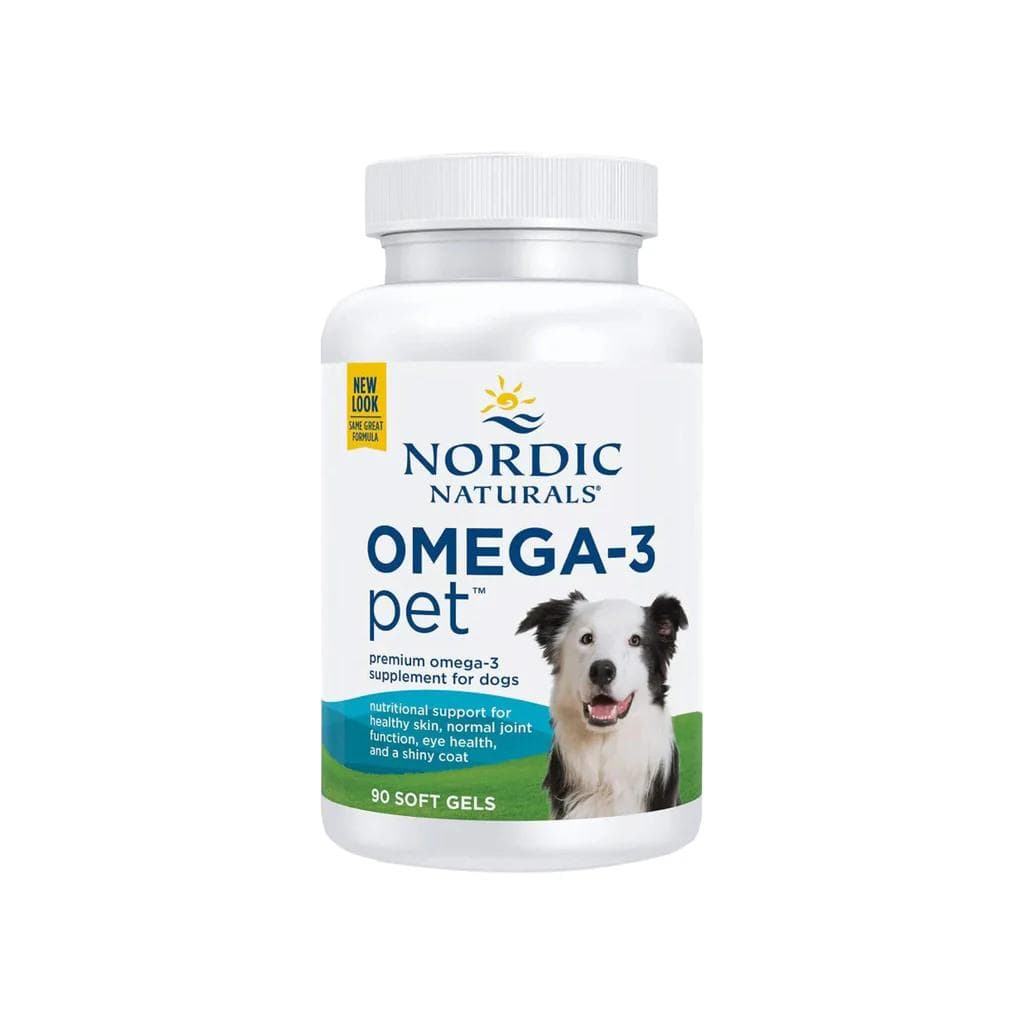
Omega-3s feed the skin barrier from the inside. Fish oil is the most common first move vets make for a dry, flaky coat.
Webvet may earn a commission when you click through to Chewy, at no extra cost to you.
What is actually happening in your dog's skin
A dog's skin constantly makes new cells at the bottom layer and sheds worn-out ones from the surface. Special glands coat those cells in a thin film of oil called sebum, which keeps the coat supple and waterproof. Dandruff shows up when that tidy conveyor belt speeds up or the oil balance shifts. Dry, flaky dandruff tends to gather along the back and near the tail base and flicks off like fine powder. Oily or greasy dandruff, often linked to a condition called seborrhea, leaves larger, waxier scales and can carry a faint musty smell. Knowing which type you are seeing helps your vet zero in on the cause, because dry flaking and greasy flaking point toward different underlying problems.
Because the skin is the largest organ and one of the first places whole-body health shows, flaking is rarely random. Low humidity from winter heating pulls moisture out of the skin. A diet short on essential fatty acids leaves the oil film thin and the coat dull. Parasites and allergies inflame the skin and drive faster cell turnover. And hormonal diseases such as hypothyroidism or Cushing's disease quietly change the skin's texture over months. That is why a vet treats dandruff as a clue rather than a diagnosis in itself.
The common causes, and how urgent each one is

It helps to picture dandruff on a spectrum from harmless to needs-attention. The table below groups the usual suspects by the other signs that tend to travel with them and roughly how quickly you should act. Use it to decide whether a few grooming changes are reasonable to try first or whether it is time to book a visit.
| Likely cause | Other signs you might notice | How soon to act |
|---|---|---|
| Dry air / winter season | Fine powdery flakes, otherwise comfortable dog | Try humidity and grooming first |
| Over-bathing or harsh shampoo | Flaking that worsens after baths, dull coat | Adjust routine; recheck in a few weeks |
| Diet low in fatty acids | Dull, brittle coat, slow to improve | Talk to your vet about diet or omega-3s |
| Cheyletiella 'walking dandruff' mites | Flakes that seem to move, itching, an itchy rash on people in the home | See your vet soon; contagious |
| Allergies or skin infection | Itching, redness, sores, odor, hair loss | Vet workup needed |
| Hormonal disease (thyroid, Cushing's) | Widespread coat changes, weight or energy changes | Vet exam and blood tests |
How vets pinpoint the cause in dogs
A vet starts by looking at the whole dog, not just the flakes. They will ask when the dandruff started, whether it followed a season change or a new food, and whether your dog is itching and scratching or losing hair. During the exam they part the coat to judge whether the scale is dry or greasy and where it sits on the body. From there, a few simple in-clinic tests do most of the detective work: a skin scraping or a piece of clear tape pressed to the coat can catch mites under the microscope, a tape or swab sample can reveal yeast or bacteria, and a comb-through can turn up fleas or their droppings.
If those first-line tests come back clear but the dandruff is stubborn, widespread, or paired with other body-wide changes, your vet may look deeper for an underlying medical driver. That can mean blood work to check the thyroid or screen for Cushing's disease, an allergy plan, or occasionally a small skin biopsy. This stepwise approach is deliberate: it treats the cheap, common, and contagious causes first and saves the more involved testing for the dogs that genuinely need it.
Walking dandruff: the flakes that move
One cause is worth singling out because it is contagious. Cheyletiella mites live on the skin surface and are large enough that, en masse, they make the flakes appear to crawl, which is how the nickname 'walking dandruff' came about. These mites are most common in puppies, in dogs from group settings like shelters or breeders, and in homes with multiple pets. They can also cause an itchy, bumpy rash on the people who handle an infested dog. The good news is that walking dandruff responds well to vet-directed parasite treatment, often the same kinds of products used for flea and tick control plus medicated baths, but every pet in the household usually needs treating and the environment cleaned so the mites do not simply return.
How to help at home safely
For mild, seasonal flaking on a dog who is otherwise comfortable, a few gentle habits make a real difference. Brush regularly, ideally several times a week, to lift loose flakes and spread natural oils along the coat. Run a humidifier during dry, heated months to put moisture back in the air. Resist the urge to bathe too often, since frequent washing and human shampoos strip the very oils that keep skin supple; when you do bathe, use a dog-formulated product. On the diet side, essential fatty acids matter, and omega-3 rich foods such as salmon and fish oil are often part of a skin-support plan, but let your vet advise the right form and amount rather than guessing.

What to expect at the vet visit and beyond
If home measures do not clear things up, or if the flakes come with itching or hair loss from the start, the visit itself is usually straightforward. Expect a full skin exam, one or two quick in-clinic samples, and a plan aimed at the cause your vet finds. Treatment might be a medicated or moisturizing shampoo used on a schedule, a parasite product if mites or fleas turn up, a course for a skin infection, a diet or supplement change, or, when a hormonal disease is behind it, treatment of that condition. Recovery timelines vary: a cosmetic dry-air flake can improve within a couple of weeks, while allergy or hormone-related skin changes are managed over months and sometimes for life. Costs track that same pattern, from a single low-cost recheck for simple cases to ongoing testing and medication for chronic skin disease. The reassuring reality is that most dandruff is very treatable once the right cause is named.
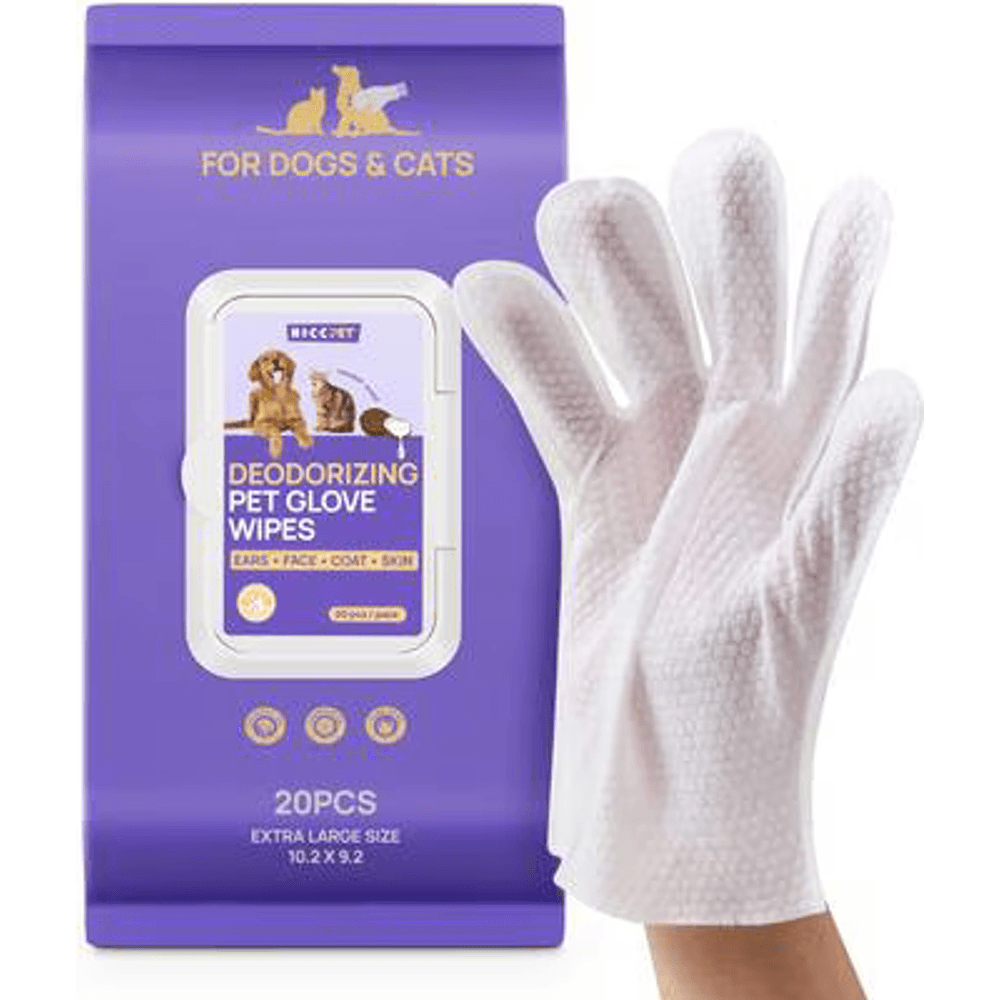
Glove wipes refresh the coat between baths, useful because over-bathing dries flaky skin out further.
Webvet may earn a commission when you click through to Chewy, at no extra cost to you.
Lowering the risk of future flare-ups
Prevention is mostly about keeping the skin's oil balance steady and catching problems early. Stay consistent with year-round parasite prevention, feed a complete, balanced diet, and keep grooming regular without over-bathing. Pay extra attention to dogs who cannot groom themselves well, such as overweight or arthritic dogs, since a spot of unreachable dandruff over the hips or tail base is common in them and a gentle brushing routine helps. Watch for early warning signs that a simple flake is becoming something more, especially new hair loss or bald patches, so you can act before the skin is inflamed or infected.

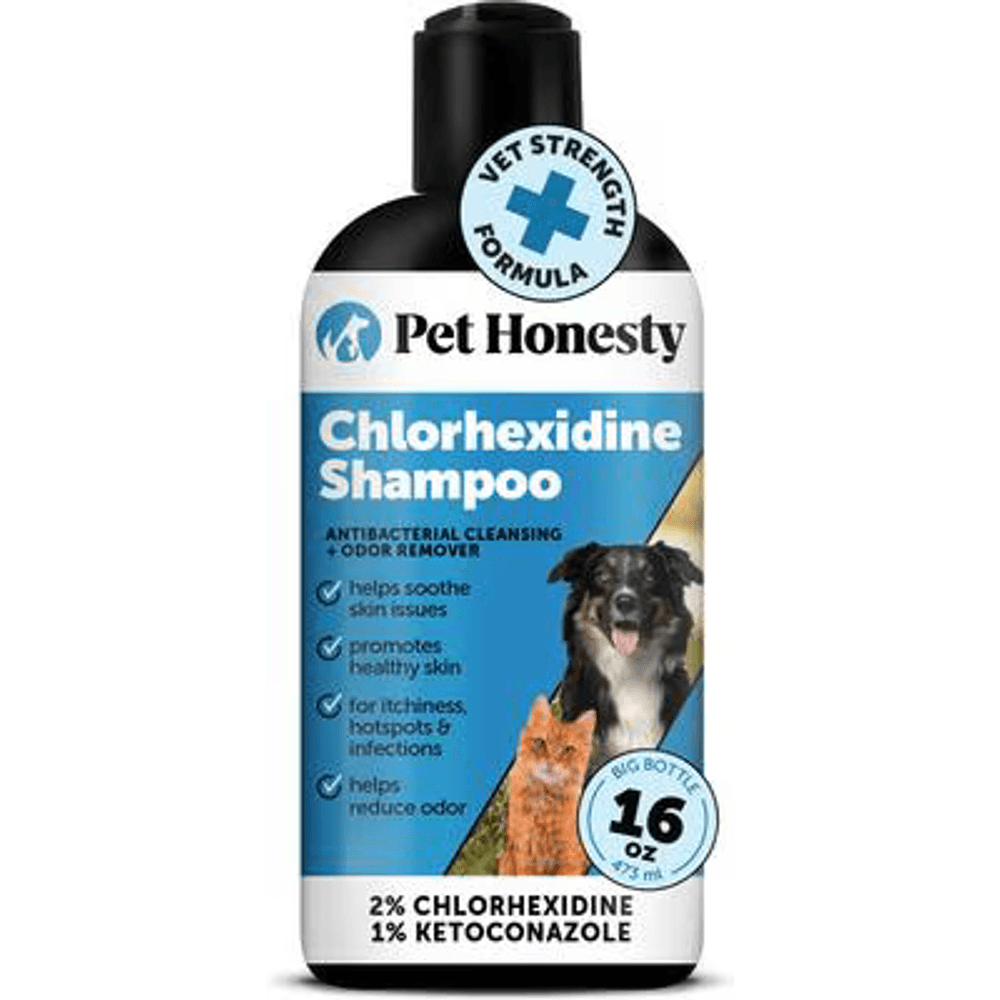
A medicated shampoo option for flaky skin with an itchy, irritated component. Ask your vet which shampoo fits the diagnosis.
Webvet may earn a commission when you click through to Chewy, at no extra cost to you.
When flaky skin is more than cosmetic
Dandruff itself is not an emergency, but it can be the outer sign of a problem that is not going to fix itself. Book a vet visit rather than waiting it out if the flaking comes with persistent itching, redness, sores, a bad smell, or hair loss; if it appears suddenly and spreads; if grooming and diet changes bring no improvement over a few weeks; or if the flakes seem to move. There is one species-specific note worth keeping in mind for multi-pet homes: an older cat that grooms less and starts looking unkempt and flaky may be signaling an underlying illness, so the same watchfulness applies across the household. When in doubt, a quick call to your veterinary team is always the safest next step, and they would far rather see a mild case early than a stubborn one late.
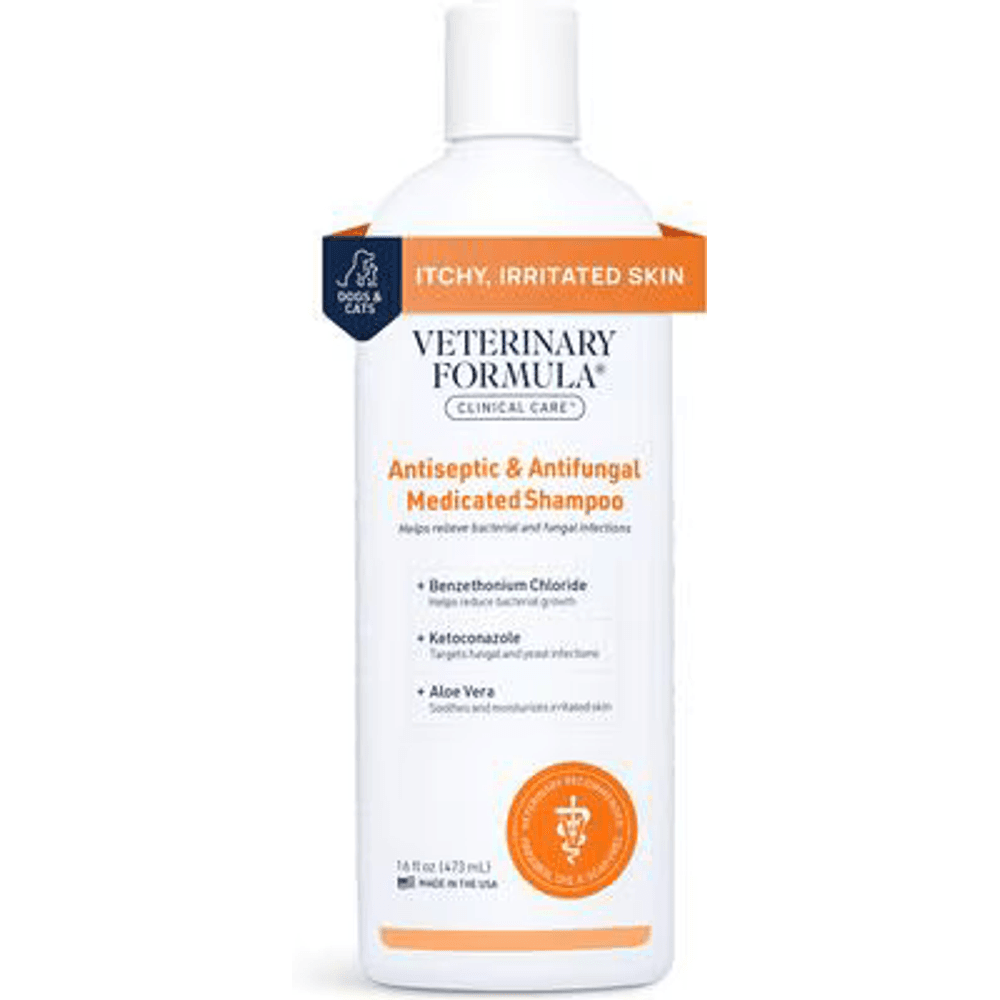
A medicated shampoo for flaky, irritated skin. Check with your vet first, since over-bathing dries skin out further.
Webvet may earn a commission when you click through to Chewy, at no extra cost to you.
Sources
Reviewed by the Webvet Veterinarian Team
This guide is general information, not a diagnosis, and does not replace an exam by your veterinarian. If your pet is in distress, contact your vet or an emergency clinic right away.