Raising Two Puppies at the Same Time: A Practical Plan
Build a realistic routine for two puppies with individual training, separate resting spaces, gradual alone time, and safe socialization.

This article contains affiliate links. Webvet may earn a commission when you buy through them, at no extra cost to you.
Raising two puppies at the same time works best when you plan for two individuals: separate learning opportunities, comfortable resting spaces, gradual alone time, and suitable socialization. Shared play can be enjoyable, but it does not replace human care or teach every skill either puppy needs.
If the puppies are already home, start with a routine you can sustain. Give each predictable care and small opportunities to participate independently. You do not need to remove all shared time or make either puppy endure distress to prove they can cope.
- 1Plan individual care and a realistic routine before adding extra training tasks.
- 2Teach each puppy in easy settings before asking them to work together.
- 3Use separate comfortable spaces and increase time apart only while each puppy remains comfortable.
Can your household meet two sets of needs?
Individual care for two puppies
Two puppies require more than twice the bowls. Each needs supervision, rest, toilet opportunities, training, suitable experiences, and veterinary care. Their needs may not happen at the same time. One may be ready to explore while the other needs quiet reassurance.
Is two dogs a lot harder than one? With two young puppies, coordinating those needs can be substantially harder. The challenge is not just the total minutes of care. It is arranging support for one puppy while the other is having an individual experience.
Before buying or adopting two puppies
- Identify who will supervise the waiting puppy during individual outings or lessons.
- Plan separate comfortable spaces and a way to prevent unwanted contact.
- Budget for each dog's veterinary care, equipment, training, and potential extra help.
- Consider how work, travel, illness, and household changes would affect the arrangement.
Be realistic about individual care. Getting two puppies at the same time does not guarantee that they will entertain one another safely or be comfortable when people leave. A companion dog is not a substitute for teaching either puppy how to manage ordinary changes.
Is it better to raise two puppies together? The possible benefits and advantages, such as compatible companionship, must be weighed against care demands and potential problems. You should not get both at once simply because they share a litter.
If you feel regret after bringing them home, seek practical support rather than assuming the situation cannot improve.
If you already have two
Focus on the next useful adjustment rather than regretting the decision. You might begin by feeding separately, giving each puppy a short lesson, or arranging a second person to help with individual outings. Select a change that improves daily life without overwhelming anyone.
Budget for two individual spaces
A MidWest exercise pen can provide a supervised area for one puppy while a caregiver helps the other. The linked pen is 36 inches high. Check each puppy’s size and climbing or squeezing ability, and introduce it gradually. Two puppies may need two separate setups.

Webvet may earn a commission when you click through to Chewy, at no extra cost to you.
If basic needs or safety are becoming unmanageable, ask for help promptly. A veterinarian, qualified reward-based trainer, breeder, or rescue may help you assess practical options. Do not wait for a particular age or a crisis before explaining what is difficult.
A flexible daily routine for two puppies
Raising two puppies together needs a repeatable rhythm, not a universal clock-based schedule. Build around waking, meals, toilet opportunities, short learning sessions, appropriate activity, and rest. Adjust the details to each puppy's age, health, and response.
If you hope to prevent problems described as littermate syndrome, give each puppy supported opportunities to eat, rest, learn, and spend time with people individually. The rotation below makes that practical. No schedule guarantees prevention, and a puppy who is distressed needs an easier arrangement rather than longer forced separation.
Pay particular attention to Puppy B's column: what does the waiting puppy do while Puppy A is with you? A rotation only works if the waiting puppy has a safe, comfortable arrangement. That may initially require another caregiver or remaining nearby.
| Daily anchor | Puppy A | Puppy B |
|---|---|---|
| After waking | Individual toilet opportunity and reward | Supervised comfort, then their own turn |
| Meal | Eats in a separate suitable area | Eats separately without competition |
| Short lesson | Easy individual practice with a person | Rests or enjoys a familiar supervised activity |
| Next rotation | Comfortable waiting arrangement | Their own brief lesson with a person |
| Suitable outing | Individual experience with a caregiver | Supported rest or individual activity |
| Shared time | Supervised play if both choose it | Equal opportunity to pause or leave |
| Rest | Own comfortable resting place | Own comfortable resting place |
What the waiting puppy does during each rotation
Choose a point in the day when help is available and neither puppy is overtired or urgently needs the toilet. Give Puppy A a brief, easy activity while Puppy B is comfortable. Then swap. A successful short rotation is a foundation, not a failed attempt at a longer plan.
Raising sibling puppies does not require matching their progress exactly. If Puppy B needs more support, provide it. You can keep the overall routine predictable while making the difficulty different for each puppy.
These tips also apply when you raise male and female puppies together, two male littermates, or a brother and sister. Living together successfully depends on individual care and compatibility. Ask your veterinarian about reproductive management; being related does not prevent mating when the dogs mature.
Adapt the routine to the actual puppies
Two German shepherd, golden retriever, Lab, boxer, or Coton puppies will not have identical routines simply because they share a breed. Account for size, activity, confidence, health, and the environment. A breed name cannot determine a safe duration of exercise or time alone for an individual puppy.
The same applies when keeping a puppy with a slightly older young dog. Review whether their activities remain suitable for both. Do not use the pair's ability to keep playing as proof that neither needs rest or a change in the arrangement.
- Keep needed supplies within reach before beginning.
- Decide who is responsible for each puppy during the rotation.
- Finish while both puppies remain comfortable.
- Make the next attempt easier if either puppy struggled.
A realistic caregiver workload includes the waiting puppy
A shared note can identify which puppy ate, toileted, trained, or rested. This is especially useful when several people provide care. “Both went outside” is less informative than knowing whether each puppy actually toileted and received a reward.
Our dog training schedule explains the value of predictable daily anchors. Use that approach to make your two-column rotation fit ordinary life. If the plan depends on uninterrupted perfect days, simplify it before adding more tasks.

Prepare separate outing equipment
Keep a fitted harness ready for each puppy so a brief individual outing is practical. The Frisco padded harness link opens the Small size. Measure both puppies separately and recheck the fit as they grow; matching ages do not mean matching measurements.

A Black Small harness for supervised individual outings. Measure each puppy separately and recheck the fit as they grow.
Webvet may earn a commission when you click through to Chewy, at no extra cost to you.
Make a plan for days with less help
Identify the care that still has to happen when one caregiver is unavailable. Toilet opportunities, meals, safety, and rest come before extra training ambitions. Keep individual learning brief and choose easy activities you can manage while both puppies have appropriate support.
Tell a sitter or family member which activities should remain separate and how each puppy usually settles. Do not expect someone unfamiliar with the dogs to improvise a complicated rotation. A few clear instructions about safe spaces, feeding, and supervision are more useful than a long list of optional exercises.
- Name the person responsible for each essential task.
- Leave individual feeding and care information in an accessible place.
- Explain what to do if a puppy cannot settle in the usual arrangement.
Raising two puppies at the same time is easier to assess when you know where the support gaps are. Arrange help before those gaps repeatedly create distress. If your plan only works when every household member is constantly available, discuss a more sustainable arrangement with a qualified professional.
Training two puppies: teach individually, then together
Training two puppies together from the beginning adds a major distraction to every lesson. Start with one puppy in a quiet, familiar setting while the other is comfortably supported. Keep the task easy enough that the puppy can participate willingly.
Useful early skills include responding to their own name, approaching a hand target, settling on a mat, and coming when called over a short safe distance. Build the response with each dog separately before practicing with both present.
You can train two puppies at the same time in the sense of raising them during the same period. You do not need to teach both at once. Puppies from the same litter still benefit from separate lessons. Keep house training records individually too, as described in the feeding and toilet section below.
Give each puppy a clear turn
Say the puppy's name, give an already learned cue, and reward that puppy's response. If the other puppy crowds in, increase space or return to individual practice. Avoid repeatedly saying both names and hoping they work out which instruction belongs to whom.
The RSPCA's training advice supports short, reward-based sessions with manageable steps. Choose rewards that the individual puppy values. Our guide to dog training treats can help with food-reward choices and practical use.
Add the other puppy as a small distraction
When both can perform a familiar response comfortably alone, arrange a brief session with two handlers and plenty of space. Ask for something easy and finish after a success. Do not expect a newly learned response to work beside an excited playmate immediately.
- Increase distance if attention becomes difficult.
- Keep rewards separate so neither puppy must compete.
- Practice a few calm turns rather than a long joint lesson.
- Return to individual practice when either puppy becomes frustrated or overwhelmed.
Teach the waiting skill separately
A puppy cannot be expected to wait calmly simply because the other is receiving attention. Introduce relaxing on a mat or enjoying a quiet activity when the setting is easy. Reward brief comfortable moments and expand gradually.
If the waiting puppy cannot cope, arrange another person or a more supportive setup. Do not punish vocalizing or movement to preserve the lesson. Successful two-puppy training includes what both dogs are learning, even when only one is receiving the cue.
Make the waiting place comfortable
A separate FurHaven Cuddler bed can give the waiting puppy a recognizable resting place. The linked Large size will not suit every puppy or room. Introduce the bed when someone is available to support settling, and choose a different setup if the puppy chews or swallows bedding.
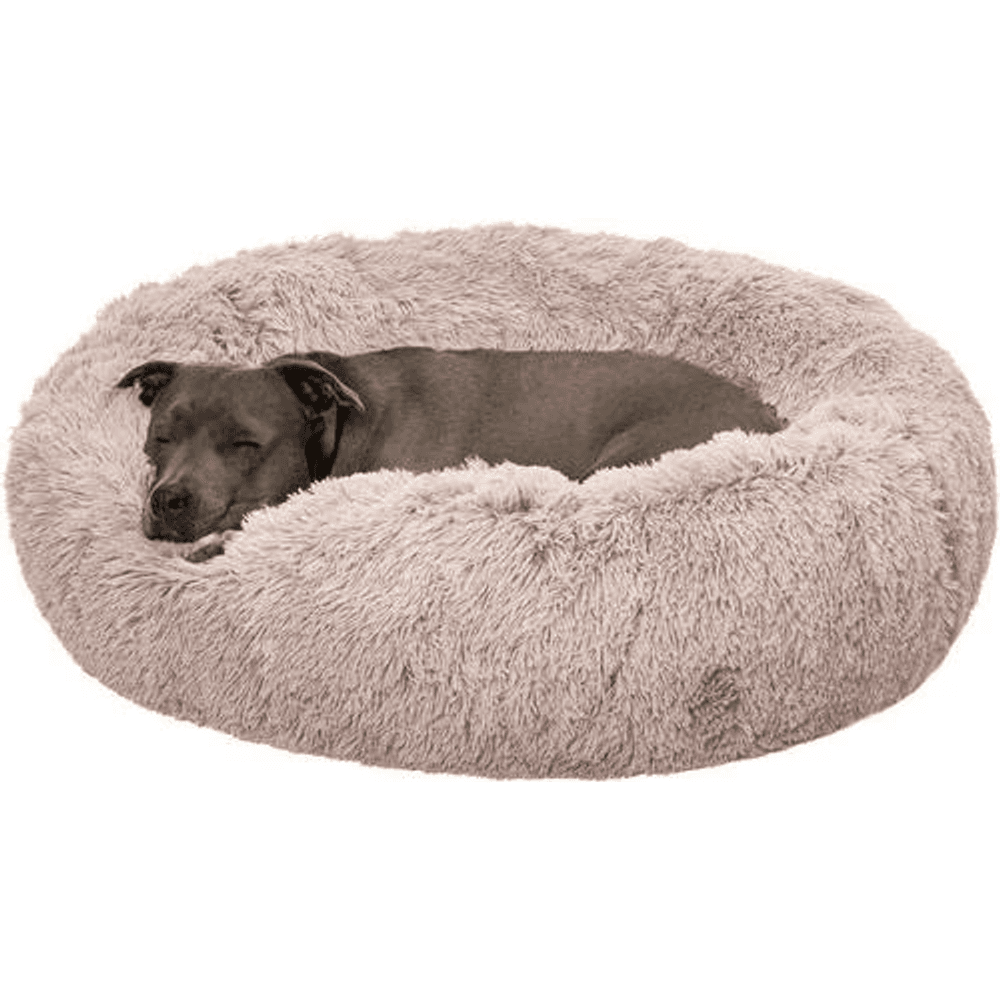
A Taupe Large resting option for a puppy who can use bedding safely. Check the size and supervise introduction. Choose another setup if the puppy chews or swallows bedding.
Webvet may earn a commission when you click through to Chewy, at no extra cost to you.
Separate crates, sleep, and calm alone time
Separate training and resting spaces
Plan individual resting spaces for two puppies, whether you use crates, pens, or suitable puppy-proofed areas. Each dog should be able to rest without being disturbed or blocked by the other. Introduce the space positively and match it to the puppy's comfort and safety.
Crate training two puppies is still an individual process. Do not assume that a shared crate teaches either puppy to settle alone. A separate crate for each puppy allows you to adjust space, support, and routine to that animal.
Introduce the resting area before asking for duration
Allow calm exploration of the space and associate it with suitable pleasant experiences. Keep a caregiver nearby at first if needed. The RSPCA's crate guidance describes gradual introduction and emphasizes that crates should be safe resting places, not punishment.
A crate or pen must fit the puppy and the intended use. Consider comfortable posture, safe construction, supervision, and toileting needs. Equipment does not resolve distress by itself, and some dogs need an alternative arrangement rather than more confinement practice.
Gradual alone time below distress
Begin with a change that both puppies can handle comfortably. That may be separate activities a short distance apart while people stay nearby. Gradually introduce changes in distance, visibility, or duration one at a time.
Return before the exercise becomes overwhelming. If a puppy becomes distressed, make the next attempt easier rather than waiting for exhaustion. The right pace is determined by the puppy's response, not a rule that they must tolerate a particular number of minutes by a certain age.
| Practice | Begin here | Make it easier if |
|---|---|---|
| Separate resting spaces | Comfortable areas with a person nearby | Either puppy repeatedly tries to escape or cannot settle |
| Small distance change | One easy step while both remain engaged | Following or vocalizing escalates |
| Brief loss of sight | Only after easier practice is comfortable | Either puppy becomes distressed |
| Ordinary caregiver movement | Predictable small departures and returns | The routine becomes a repeated panic event |
Make night care realistic
Two puppies sleeping together may look peaceful, but each still needs an individual safe resting arrangement and suitable overnight care. Separate sleeping spaces do not automatically mean distant rooms. Begin with a setup that lets you meet their needs and help them settle.
Expect to adjust for toilet needs, comfort, and different waking patterns. Avoid using overnight exhaustion as a training strategy. If one puppy's distress repeatedly disrupts both dogs, ask for help revising the arrangement rather than treating sleep deprivation as an unavoidable test.

Feeding and toilet training without confusion
Feed two puppies in separate suitable areas so each can eat without interference. This also makes it easier to monitor individual appetite and intake. Follow the appropriate feeding plan for each puppy rather than assuming equal age means identical portions or dietary needs.
Do not use shared food bowls or valued chews as a test of friendship. If food-related tension occurs, increase management and seek guidance. Each puppy should have access to food without the pressure of defending it from the other.
Keep individual toilet records
Potty training two puppies relies on noticing each dog's needs. Offer appropriate opportunities after ordinary transitions such as waking, eating, or activity, and reward the puppy who toilets in the desired place. The timing and frequency depend on that individual.
Reward the puppy who completed the task
Carry a few Zuke’s Mini Naturals Peanut Butter & Oats treats for short individual lessons or supervised toilet trips. Give the reward to the puppy whose response you are reinforcing. Use an appropriate piece size and keep both puppies’ treat intake within their feeding plans.

Soft, pea-sized training treats made with peanut butter and oats. Small enough to reward often while keeping treats inside the 10% of daily calories vets recommend.
Webvet may earn a commission when you click through to Chewy, at no extra cost to you.
- Record which puppy actually toileted, rather than assuming both did.
- Supervise each puppy closely enough to notice their signals.
- Clean accidents without punishment and adjust the next opportunity.
- Ask your veterinarian about unusual frequency, discomfort, or a change in toileting.
Avoid turning every outing into play
Two puppies may become distracted together outside. If that makes toilet opportunities ineffective, take them individually when you can support the waiting puppy safely. Keep the purpose clear, then provide suitable play or exploration separately.
House training two puppies at the same time may progress at different rates. Do not withhold an opportunity because the other puppy does not need one yet. A clear record helps you respond to the slower or less obvious puppy without guessing.
If you are using puppy pads and outdoor training together, make the intended toilet location clear and reward each puppy consistently. A puppy will not necessarily pee and poop during the same trip. Observe what actually happens rather than assuming that taking both out at once completes both dogs' needs.
Socialization, walks, and play
Safe socialization beyond the sibling
Raising two puppies from different litters and raising siblings both require experiences beyond the pair. Each puppy needs safe opportunities to encounter people, suitable animals, handling, sounds, and environments at a comfortable pace.
The AVSAB socialization guidance supports early positive experiences rather than waiting for every vaccination to be complete. Ask your veterinarian which settings are appropriate for each puppy and local disease risks. Avoid equating socialization with unrestricted contact with unfamiliar dogs.
Give each puppy some individual outings
A solo experience makes it easier to notice what that puppy finds interesting or difficult. The outing can be modest: calm observation with you, an appropriate short walk, or gentle handling in a familiar place. It does not need to be a crowded or ambitious trip.
If the puppy is worried, create distance, lower the difficulty, or end the experience. Forcing contact can make an encounter harder. The objective is useful, comfortable learning, not collecting the greatest number of new experiences in a day.
Build joint walks gradually
Teach basic lead skills individually before asking two puppies to walk together. Two handlers can make early shared outings more manageable. Give the dogs enough space that neither must keep pace with the other's excitement or fear.
- Choose a quiet suitable route.
- Use separate leads and appropriately fitted equipment.
- Reward manageable moments of attention.
- Change the distance or return to individual practice when needed.

Keep shared play optional
Supervise interactions and allow breaks. Both puppies should be able to move away and rest. A puppy who wants to stop should not have to repeatedly escape pursuit to obtain quiet.
Watch whether puppies are playing too rough for the particular partner, rather than judging by breed. Shih tzu, Chihuahua, bulldog, and husky puppies all need compatible activities and the opportunity to disengage. When getting ready for walking together, train the basic skills separately so excitement does not overwhelm the quieter puppy.
VCA's guidance on social groups discusses appropriate play partners and supervision. Compatibility matters more than simply putting young dogs together. Do not make the smaller, quieter, or more tired puppy responsible for enforcing every boundary.
How this relates to littermate syndrome
Littermate syndrome is an informal trainer term, not a diagnosis that every sibling pair develops. The concern behind the phrase is often that two dogs have too few individual experiences, struggle apart, or repeatedly come into conflict. Those patterns deserve attention without assuming one universal cause.
Our littermate syndrome guide explains the evidence and limitations. For observation rather than a daily routine, use signs of littermate syndrome, which compares ordinary bonding with concerning repeated patterns.
Know when a routine is not enough
If either puppy becomes intensely distressed apart, cannot access essentials safely, or is repeatedly frightened by the other, seek veterinary and qualified behavior support. Do not rely on an exercise pen, calming product, or a fixed timetable to solve a more serious concern.
Our guide to separation anxiety in dogs addresses that distinct topic. A professional can help determine whether it applies and how to plan safe, achievable practice. Sharing a litter cannot answer that question.
Is it a mistake to get a second dog?
A second dog is not automatically a mistake. The decision depends on compatibility, the needs of both animals, and the care your household can reliably provide. Two puppies create a particular workload because both are learning many basic skills at once.
If the second puppy is already home, assess actual daily needs before making an irreversible conclusion. Support, a better routine, and suitable management may help. Where safety or welfare cannot be maintained, discuss options honestly with qualified professionals and the breeder or rescue involved.
How do I tell if my dog needs another dog?
Enjoying some dog company does not prove that a dog needs a permanent housemate. Consider the dog's comfort around suitable companions, ability to rest, relationship with people, and everyday activity needs. Another dog cannot be assumed to resolve boredom, fear, or distress when left.
Arrange appropriate social opportunities without committing to adoption as an experiment. If your dog is struggling, address the specific problem first. A potential new dog also needs a home that can meet their needs, regardless of any hoped-for benefit to the existing pet.
What age is the hardest puppy stage?
There is no single hardest age for every puppy or caregiver. Early toilet and sleep routines can be demanding, while growing puppies may bring changes in activity, attention, or social interaction. With two dogs, those challenges may arrive at different times.
Review the routine when it stops working instead of interpreting a difficult week as permanent failure. Keep expectations appropriate, restore manageable practice, and protect rest. Seek help early if the difficulty involves distress, conflict, or needs your household cannot safely meet.
Frequently asked questions
What is the 3-3-3 rule for puppies?
The 3-3-3 rule is a rough guide people use to discuss adjustment after adoption, not a validated deadline for a puppy's behavior. Individual pace varies. Do not expect two puppies to settle, bond, or tolerate separation on matching dates. Observe each dog's comfort and needs, and adjust support when a particular situation is difficult.
Are dogs happier with a second dog?
Some dogs enjoy living with a compatible companion, while others do not benefit from the same arrangement. Individual preference and the quality of the relationship matter. A second dog also needs their own human care, rest, and suitable activities.
Friendship can add enjoyment, but it cannot guarantee relief from boredom, anxiety, or other behavior concerns.
How long does it take for two new dogs to get along?
How long two new dogs take to get along varies, and there is no fixed deadline. Keep introductions and shared activities manageable, allow safe distance, and watch whether both dogs choose to participate. Do not rush repeated contact because an expected number of days has passed.
If interactions become frightening or unsafe, prevent further conflict and ask a qualified professional to help assess the relationship.
At what age is a dog most trainable?
There is no universal age at which a dog is most trainable. Start gently with suitable learning opportunities in puppyhood, using short sessions and rewards the individual puppy enjoys. Dogs continue learning beyond puppyhood. For two puppies, the important first step is an easy individual setting.
Add distractions gradually instead of expecting both to learn beside an excited playmate.

Editor
The Webvet Editorial Team is the in-house group of pet-care editors and writers behind Webvet, operated by Smart Pet Collective. The team researches, writes, and maintains Webvet's pet health, behavior, and medication content. Every article follows a defined editorial process: research from reputable veterinary and scientific sources, careful drafting, mandatory review of medical content by a credentialed veterinarian, and dated publication. Health and medication articles are medically reviewed by a licensed veterinary professional before they go live and are kept current over time.


