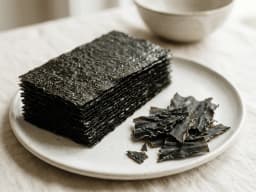
Can cats eat seaweed?
Safe in moderationSeaweed products vary too much for a universal cat serving. Identify the species, iodine, ingredients, amount, diet plan, and symptoms.


Medically reviewed by Dr. Athena Gaffud, DVM · Last reviewed
Can Cats Eat Seaweed?
Seaweed is a broad product category, not one feline food. Nori and kelp are not interchangeable, and species, harvest, processing, iodine, sodium, contaminants, seasonings, and serving mass vary. No cat-specific serving or universal safety threshold can be assigned from the word seaweed.
- 1Nori, kelp, supplements, snacks, and beach seaweed are different exposures.
- 2Commercial seaweed iodine content can vary widely.
- 3No cat-specific teaspoon or body-size serving is established.
- 4Cats on an iodine-restricted therapeutic diet must receive no outside food.
- 5Assess sodium, alliums, packaging, foreign material, and symptoms separately.

Treats should stay under 10% of your cat's daily calories. Smalls makes the rest, built around the meat an obligate carnivore actually needs.
- Human-grade ingredients, protein first
- Built for obligate carnivores
- Fresh meals delivered to your door
Webvet may earn a commission when you click through to Smalls, at no extra cost to you.
How to assess an exact seaweed product for a cat
A small piece of a plain edible sheet may be a low-risk exposure, but direct cat-specific feeding evidence is sparse. It is optional and should not be promoted for minerals, omega-3s, antioxidants, digestion, immunity, coat, or dental health.

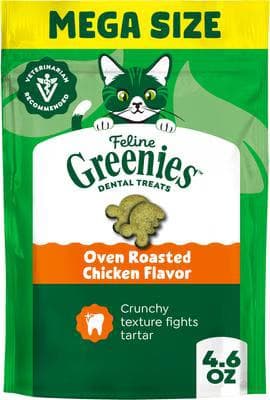
This is a dental cat treat. Follow the current label and ask your veterinarian how it fits alongside tooth brushing and professional dental care.
Webvet may earn a commission when you click through to Chewy, at no extra cost to you.
Cats eating complete feline food should not receive kelp as an iodine supplement without a veterinary nutritional indication and a measured formulation. Commercial seaweed testing has found wide iodine variation and inaccurate or incomplete labeling in some products.
Risks of feeding seaweed to cats
No evidence supports a faster thyroid response in cats based on species comparison alone. The actual seaweed species, iodine concentration, mass consumed, duration, thyroid status, complete diet, and other supplements matter. Identify the product instead of relying on the word seaweed. Plain nori, seasoned snack sheets, kelp powder, kombu, wakame salad, carrageenan in complete food, supplements, and beach-cast material differ in iodine, sodium, concentration, and added ingredients. Keep the package and note iodine per labeled amount when supplied, oil, spices, onion, garlic, sweeteners, and the maximum quantity missing. Published testing found wide iodine variation among commercial seaweed products, which makes brand and batch information important.
A cat receiving an iodine-restricted therapeutic diet for hyperthyroidism must eat that diet exclusively. Merck explains that outside food can make the nutritional therapy ineffective. This specific warning is different from claiming all seaweed tastes poison every cat.

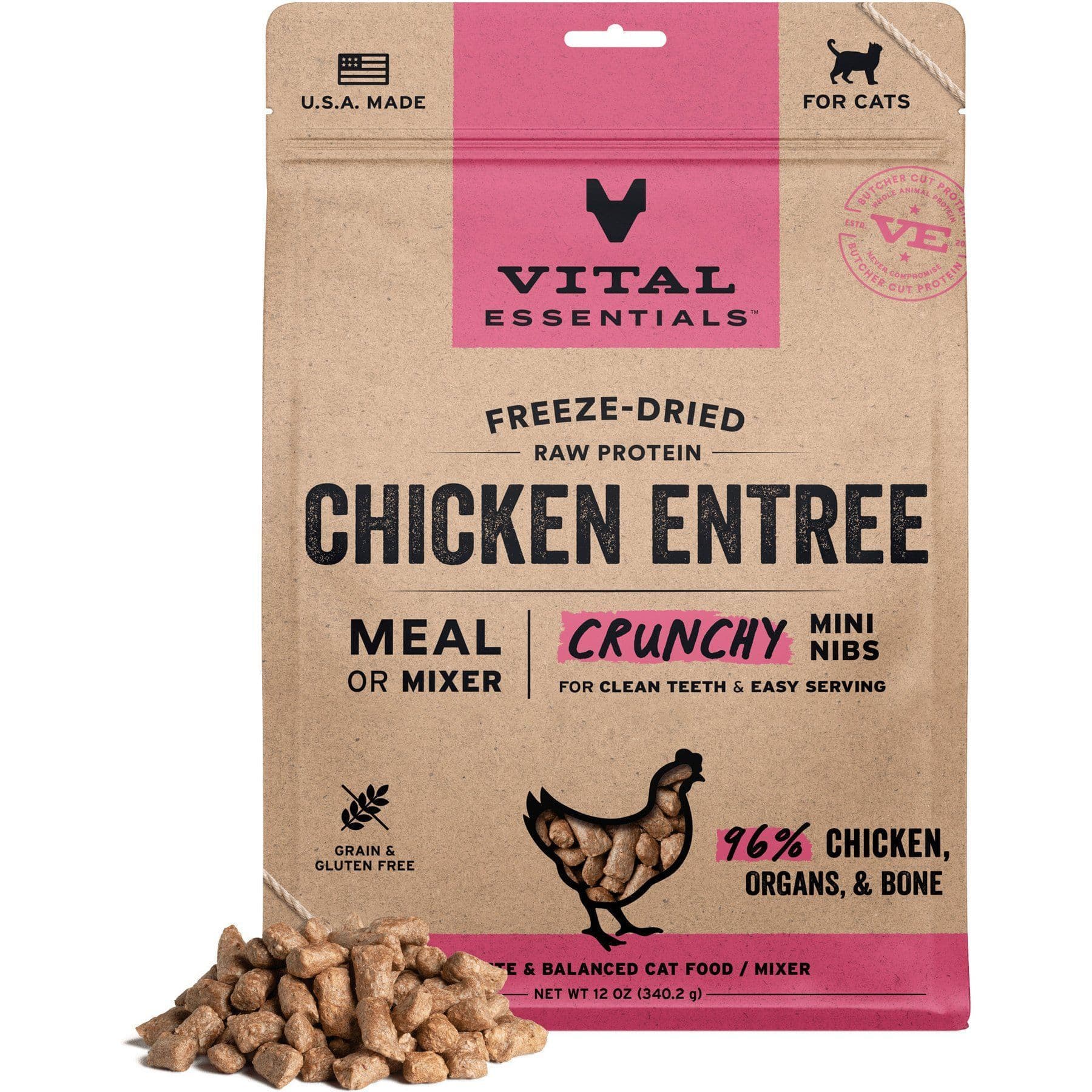
This is an optional cat treat. Review its current label, ingredients, calories, and feeding directions, and count it within the total daily extras.
Webvet may earn a commission when you click through to Chewy, at no extra cost to you.
Salt toxicosis requires excessive sodium exposure and is not established by a small salty taste alone. Review sodium from the exact product, amount, water access, and symptoms. Onion and garlic seasoning creates a separate allium concern.
Assessing an exact seaweed product and amount
No cat-specific serving, teaspoon, or body-size table is evidence based. If a veterinarian approves an exact plain edible product, use its labeled mass, calories, iodine declaration, and the cat's total diet rather than extrapolating from dogs.
Do not offer kelp powders, human iodine supplements, or mixed marine products for a claimed health effect. Therapeutic diets, thyroid medication, kidney disease, and other managed conditions require the treating veterinarian's approval before any addition. Cats managed with an iodine-restricted diet for hyperthyroidism must eat that therapeutic diet exclusively for it to work; seaweed snacks, supplements, flavored medicines, and shared food can disrupt the plan. A cat receiving thyroid medication or another prescription diet also needs individualized review before any kelp product. Beach seaweed adds sand, salt water, decay, fishing line, hooks, and unidentified marine material to the exposure. Repeated vomiting, pronounced weakness, tremors, abnormal behavior, collapse, or suspected string, hook, or wrapper ingestion warrants prompt veterinary care.
| Exposure | What to check | Why |
|---|---|---|
| Plain nori | Ingredients, mass, iodine if declared | Not equivalent to kelp |
| Kelp powder | Tested iodine, formulation, dose | May be concentrated and variable |
| Flavored snack | Alliums, sodium, oil, spices | Ingredients create separate concerns |
| Beach seaweed | Amount, species, debris, symptoms | Mixed foreign-material exposure |
| Iodine-restricted diet | Any outside food | Can defeat therapeutic control |
Choosing another optional cat treat

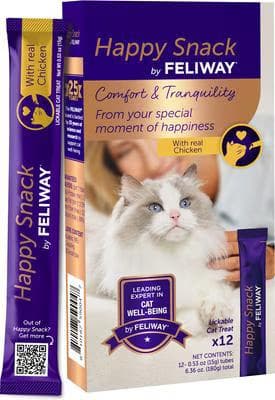
This is an optional cat treat. Review its current label, ingredients, calories, and feeding directions, and count it within the total daily extras.
Webvet may earn a commission when you click through to Chewy, at no extra cost to you.
Beach seaweed carries different uncertainties from a packaged edible sheet, including sand, saltwater, microorganisms, trash, hooks, line, and unknown species. A swallowed piece does not automatically swell in the stomach or obstruct, but substantial material or symptoms need prompt assessment.
Choose rewards by complete diet, calories, ingredients, texture, and medical plan. A measured portion of regular complete cat food is easier to track than variable seaweed and does not create an unplanned iodine supplement.
Frequently asked questions
Can cats eat seaweed with salt?
No universal feline seaweed serving exists because products and iodine content vary.
Can cats eat seaweed snacks or sushi nori?
Nori and kelp are not interchangeable.
My cat ate a seaweed snack. What should I do?
Do not add kelp or iodine supplements to complete cat food without veterinary formulation.
Is kelp safe for cats?
Cats on an iodine-restricted therapeutic diet must receive no outside food.
How much seaweed can a cat have?
A small piece does not automatically swell or obstruct; assess the amount, object, and symptoms.

For an exposure, save the package, identify the species and product, estimate the amount and time, note other supplements and therapeutic diets, and monitor symptoms. Contact a veterinarian for concentrated products, unknown amounts, alliums, substantial foreign material, or signs. Photograph the front, ingredient panel, nutrition facts, iodine declaration, serving mass, lot, and remaining product. Names such as kelp, nori, kombu, wakame, and dulse should not be collapsed into one exposure. If a supplement is involved, count missing tablets or scoops and list every added mineral or vitamin. Do not estimate iodine from color, taste, or a human serving. Keep the cat indoors and observe appetite, vomiting, stool, activity, gait, thirst, and urination without forcing food or water. A cat that stops eating needs timely veterinary attention independent of the seaweed question. For beach material, report sand, saltwater, fishing line, hooks, plastic, decomposition, and the maximum amount that could have been swallowed. Do not use hydrogen peroxide or another home emetic in a cat. Cats receiving radioiodine, methimazole, or another hyperthyroidism treatment may have different diet instructions; the strict no-outside-food rule specifically applies when an iodine-restricted therapeutic diet is being used as the treatment. Confirm which plan the cat is actually following. A normal thyroid cat does not need kelp to prevent disease, and a hyperthyroid cat should not receive an improvised iodine supplement. Store powders, flakes, supplement tubs, desiccant packets, and snack wrappers in closed cabinets. A knocked-over kelp container creates an unknown concentrated exposure and is different from licking one food sheet. If a veterinarian has recommended a standardized dental or nutrition product containing seaweed, use only that product as directed and report every other supplement. The presence of seaweed in a tested product does not validate household kelp additions. Flavored seaweed snacks may also include sesame, soy, fish, chili, sugar, or other ingredients that affect a food trial or individual tolerance without being universal toxins. During an elimination diet, exclude them unless the supervising veterinarian approves the exact product. If several pets shared a bag, report the maximum one cat could have eaten rather than dividing the missing sheets. Keep silica packets and plastic trays with the package because swallowing them creates a separate concern. Keep seaweed powder away from shared scoops and pill containers, since a concentrated spill is harder to quantify than a snack sheet. Bring the exact label to appointments so iodine and sodium can be considered alongside the cat's food and medications.
More safe treats
More vegetables for cats
Sources
- Food and Nutrition Research: Iodine in Commercial Kelp and Seaweed Products
Testing of 96 commercial products found large iodine variation and inadequate or inaccurate labeling in some products.
- Merck Veterinary Manual: Hyperthyroidism in Animals
Cats managed with an iodine-restricted therapeutic diet must eat it exclusively because outside food can make the diet ineffective.
- Merck Veterinary Manual: Nutritional Requirements of Small Animals
Complete diets control nutrient intake; limited-ingredient home mixtures can be inadequate, and processed plant ingredients can be digested and used.
- Merck Veterinary Manual: Salt Toxicosis in Animals
Salt toxicosis follows excessive sodium exposure, particularly with restricted water; sodium's presence alone does not establish poisoning.
- Merck Veterinary Manual: Gastrointestinal Obstruction in Small Animals
Foreign-body risk depends on the object, amount, and patient rather than being guaranteed by a shell, hull, skin, seed, or bone.
Reviewed by Dr. Athena Gaffud, DVM
General guidance based on credible veterinary sources; not a diagnosis or a substitute for your veterinarian. If your pet ate something toxic or is unwell, contact your vet or a pet poison line right away.