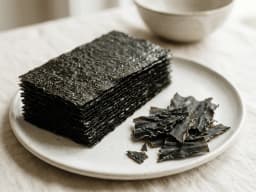
Can dogs eat seaweed?
Safe in moderationSeaweed products vary too much for a universal dog serving. Identify the species, iodine, ingredients, amount, source, and any symptoms.


Medically reviewed by Dr. Athena Gaffud, DVM · Last reviewed
Can Dogs Eat Seaweed?
Seaweed is a broad category, not one ingredient. Nori and kelp are not interchangeable, and products vary by species, harvest, processing, iodine, sodium, contaminants, added seasonings, and serving mass. No universal safe dog portion can be assigned from the word seaweed.
- 1Seaweed and kelp products are not interchangeable.
- 2Commercial products can vary widely in iodine content and labeling accuracy.
- 3Do not add kelp as a supplement without a measured veterinary formulation.
- 4Assess beach seaweed for amount, texture, contaminants, and foreign material.
- 5Salt, oil, alliums, iodine, and obstruction are separate exposure questions.

Treats should stay under 10% of your dog's daily calories. JustFoodForDogs makes the rest of it.
- Recipes developed by veterinary nutritionists
- Whole-food ingredients you can recognise
- Fresh meals delivered to your door
Webvet may earn a commission when you click through to JustFoodForDogs, at no extra cost to you.
Is seaweed safe for dogs?
A study of 96 commercial macroalgae foods and supplements found that iodine content varied widely and some labels were incomplete or inaccurate. Human product data do not create a canine toxic dose, but they show why a teaspoon of an unidentified kelp powder is not equivalent to a piece of nori.

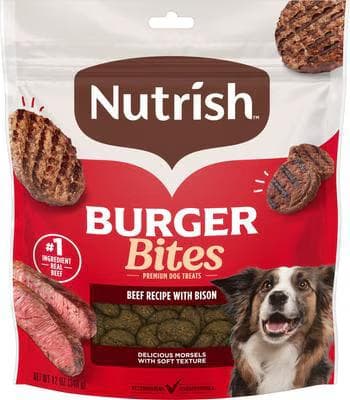
This is an optional dog treat. Review its current label, ingredients, calories, and feeding directions, and count it within the total daily extras.
Webvet may earn a commission when you click through to Chewy, at no extra cost to you.
Dogs eating complete food should not receive kelp as an iodine or mineral supplement without a veterinary nutritional indication and a measured formulation. Uncontrolled supplementation can disrupt a balanced diet, and nutrient presence does not prove benefits for inflammation, immunity, stool, coat, omega-3 status, or oral health.
A small plain food-sheet exposure may be low risk, but direct canine feeding data are limited. Identify the species and product, check declared iodine and serving mass when available, count calories, and consider the dog's thyroid status, therapeutic diet, and other supplements.
Seaweed product differences and nutritional limits
Beach seaweed is different from packaged food. It may be mixed with sand, saltwater, hooks, line, trash, microorganisms, or contaminants, and a large amount can create a foreign-material concern. Evidence does not establish predictable rapid enlargement or an emergency outcome from every beach exposure. Identify the seaweed by species and product whenever possible. Plain nori sheets, seasoned snack packs, kelp powder, kombu, wakame salad, carrageenan in a formulated food, dental products, supplements, and beach-cast material are not equivalent. Save the label and record iodine per serving when provided, sodium, spices, oil, sweeteners, and the amount missing. Commercial kelp products can vary markedly in iodine, so a spoon, strip, or sheet is not a reliable measure across brands. Beach material may also carry sand, salt water, fishing gear, decay, or an unidentified marine organism.
Foreign-body risk depends on quantity, texture, shape, hydration, and the dog. Repeated vomiting, abdominal pain, distention, inability to keep water down, marked lethargy, or failure to pass stool after a substantial exposure warrants prompt veterinary assessment.

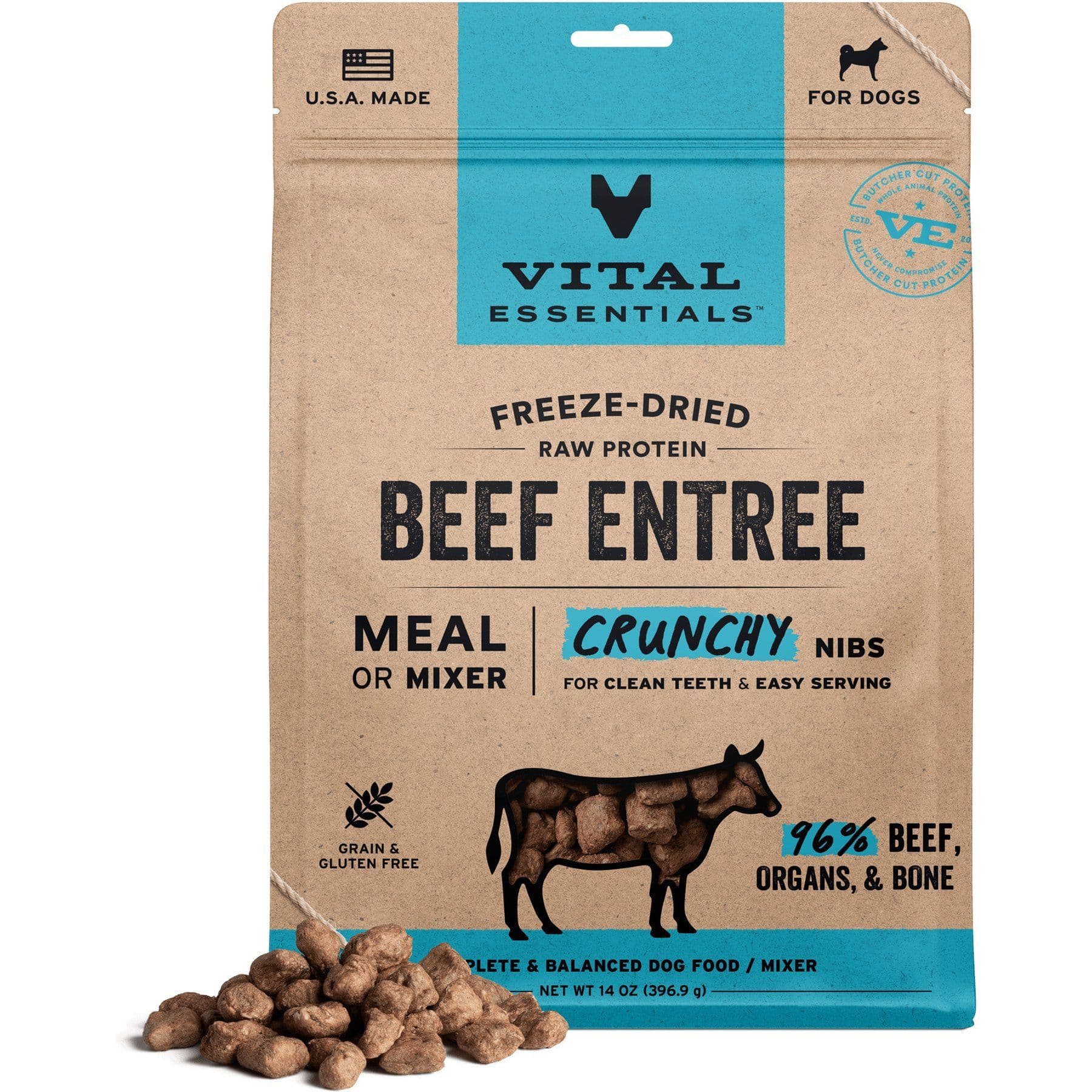
This is an optional dog treat. Review its current label, ingredients, calories, and feeding directions, and count it within the total daily extras.
Webvet may earn a commission when you click through to Chewy, at no extra cost to you.
Why no universal seaweed serving exists
No evidence-based teaspoon serving exists for kelp, nori, or mixed seaweed. If a veterinarian approves a particular edible product as an occasional food, use its exact mass, calories, iodine declaration, and the dog's total diet rather than a body-weight chart.
Supplements require more scrutiny than an occasional food sheet because they may concentrate kelp or iodine. Do not combine products or use a human supplement to treat thyroid, skin, dental, digestive, immune, or inflammatory disease without veterinary formulation.
| Product or exposure | Information needed |
|---|---|
| Nori sheet | Ingredients, serving mass, iodine if declared, amount |
| Kelp powder or supplement | Species, tested iodine, formulation, dose, indication |
| Flavored snack | Alliums, sodium, oil, spices, packaging |
| Beach material | Quantity, texture, contaminants, foreign objects, symptoms |
How to prepare and serve seaweed

Review flavored seaweed snacks for onion, garlic, chives, sodium, oil, sweeteners, spices, and packaging. Salt and oil are not automatically toxic, while allium ingredients create a distinct toxicologic concern. Actual dose and patient factors determine urgency.
Record the package, product name, species if listed, iodine declaration, amount missing, time, dog weight, water access, other supplements, and symptoms. This information is more useful than labeling an exposure simply kelp or seaweed. For beach exposures, note whether the seaweed was fresh, dried, decomposing, tangled, or mixed with fishing gear. Estimate the maximum mass or volume missing and whether the dog drank seawater. Do not force fluids or attempt a home sodium correction after substantial seawater ingestion; call for instructions and provide normal water access unless the veterinarian directs otherwise. Keep the dog away from additional beach material while observing gait, alertness, vomiting, abdominal comfort, and ability to drink. For packaged food, photograph both the front and ingredient panel because names such as sea vegetable, kombu, wakame, dulse, kelp, and nori identify different products. If iodine is not declared, do not estimate it from color or taste. For supplements, record the lot, labeled daily dose, number of tablets or scoops missing, and whether other minerals or vitamins are included. A poison professional or veterinarian may need the manufacturer. Do not add kelp to a dog already receiving a thyroid medication or therapeutic diet without the prescriber's knowledge. Store powders where a dog cannot tip or tear the container, because a spill produces an unknown concentrated exposure. Measuring spoons used for supplements should not remain on a counter. If a veterinary product already contains a standardized seaweed ingredient, do not add human kelp on top without reviewing the full nutrient intake.
Risks and what to watch for
For a small plain packaged exposure in an asymptomatic dog, monitor based on professional advice. Contact a veterinarian for a concentrated supplement, unknown product or amount, allium ingredient, substantial beach material, swallowed packaging, or clinical signs. A dog receiving thyroid medication, an iodine-sensitive therapeutic plan, or another prescribed diet needs the veterinarian to review any kelp or seaweed supplement. Report the supplement concentration and every other iodine source rather than adding a household product for coat, dental, or thyroid purposes. After an accidental exposure, repeated vomiting, diarrhea with weakness, tremors, abnormal behavior, marked thirst, collapse, or suspected wrapper, hook, or line ingestion warrants prompt advice. A small amount of plain nori and a concentrated kelp capsule require very different calculations.
Do not induce vomiting unless directed. Beach material, sharp objects, concentrated products, and the dog's condition can change whether decontamination is appropriate.
What to do if your dog ate too much
Seaweed is not required as a treat. A measured portion of regular complete food or a veterinarian-approved simple treat is easier to track than a variable marine plant product.

If an iodine supplement is medically indicated, the dose should come from a known formulation and the veterinarian's nutritional plan. Household spoon measures and variable kelp powders cannot supply that precision.
Choosing another optional dog treat
The most defensible advice is product-specific: distinguish species and form, avoid unmeasured supplementation, assess beach material separately, and respond to the real amount and symptoms.

This is an optional dog treat. Review its current label, ingredients, calories, and feeding directions, and count it within the total daily extras.
Webvet may earn a commission when you click through to Chewy, at no extra cost to you.
Seaweed's nutrient content does not establish a dental or medical benefit in a dog. Use tested veterinary products only for an indicated purpose under professional direction.
Frequently asked questions
Is dried seaweed okay for dogs?
No universal safe seaweed serving exists because species and products differ greatly.
What types of seaweed are toxic to dogs?
Nori and kelp should not be treated as nutritionally interchangeable.
What are the signs of seaweed poisoning in dogs?
Commercial macroalgae products have shown wide iodine variation and imperfect labels.
Can dogs eat seaweed snacks?
Beach seaweed may create a foreign-material concern, but every small exposure does not inevitably obstruct.
Can dogs eat seaweed every day?
Do not use kelp for thyroid, dental, skin, immune, or digestive claims without veterinary formulation and evidence.

More safe treats
More vegetables for dogs
Sources
- Food and Nutrition Research: Iodine in Commercial Kelp and Seaweed Products
Testing of 96 commercial products found large iodine variation and inadequate or inaccurate labeling in some products.
- Merck Veterinary Manual: Nutritional Requirements of Small Animals
Complete diets control nutrient intake; limited-ingredient home mixtures can be inadequate, and processed plant ingredients can be digested and used.
- Merck Veterinary Manual: Salt Toxicosis in Animals
Salt toxicosis follows excessive sodium exposure, particularly with restricted water; sodium's presence alone does not establish poisoning.
- Merck Veterinary Manual: Gastrointestinal Obstruction in Small Animals
Foreign-body risk depends on the object, amount, and patient rather than being guaranteed by a shell, hull, skin, seed, or bone.
Reviewed by Dr. Athena Gaffud, DVM
General guidance based on credible veterinary sources; not a diagnosis or a substitute for your veterinarian. If your pet ate something toxic or is unwell, contact your vet or a pet poison line right away.