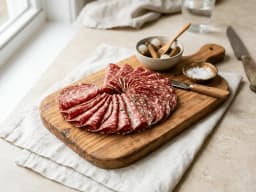
Can cats eat salami?
Not recommendedSalami is not a suitable cat treat. Check the exact label and amount for alliums, sodium, fat, and packaging instead of using a slice rule.


Medically reviewed by Dr. Athena Gaffud, DVM · Last reviewed
Can Cats Eat Salami?
Salami is not a suitable cat treat, but the name alone does not establish poisoning. Recipes vary in garlic, onion, sodium, fat, spices, casing, preservatives, and slice size. Identify the exact product and amount before deciding whether a stolen taste can be monitored or needs prompt professional advice.
- 1Salami recipes vary; the product name does not establish a toxic dose.
- 2Check for garlic, onion, chives, leek, sodium, fat, and swallowed packaging.
- 3Cats can develop delayed anemia after a sufficient allium exposure.
- 4No universal slice, pea-size, or body-size action threshold exists.
- 5Do not induce vomiting unless a veterinarian or poison professional directs it.

Treats should stay under 10% of your cat's daily calories. Smalls makes the rest, built around the meat an obligate carnivore actually needs.
- Human-grade ingredients, protein first
- Built for obligate carnivores
- Fresh meals delivered to your door
Webvet may earn a commission when you click through to Smalls, at no extra cost to you.
Why salami is not a good treat for cats
Allium ingredients are the clearest toxicologic concern. Cats are particularly susceptible to oxidative red-blood-cell injury, and concentrated garlic or onion powders can matter. Signs of anemia may not appear for several days, so a normal appearance immediately after exposure does not settle a confirmed allium concern.

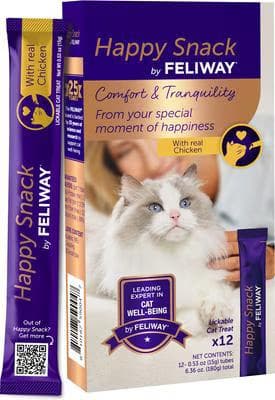
This is an optional cat treat. Review its current label, ingredients, calories, and feeding directions, and count it within the total daily extras.
Webvet may earn a commission when you click through to Chewy, at no extra cost to you.
Sodium and fat make many salamis poor routine treats, but neither creates the same outcome at every dose. Salt toxicosis requires an excessive sodium exposure and is influenced by water access. Pancreatitis is multifactorial and cannot be diagnosed or predicted from a generic slice.
What is actually in a slice of salami
Use the ingredient list, nutrition panel, product weight, amount missing, and recipe. Do not apply a single sodium value to all salami. Nitrates, saturated fat, and calories may affect nutritional suitability without functioning as automatic acute poisons at every exposure. Salami is not one recipe. Dry-cured slices, cooked salami, pepper-coated logs, snack sticks, sandwiches, and charcuterie products vary in sodium, fat, garlic, onion, spices, fermentation, casing, and concentration. Preserve the package and photograph the ingredient and nutrition panels. A cat on the counter may also reach cheese, olives, grapes or raisins, nuts, chocolate, alcohol, toothpicks, skewers, paper, plastic, or a freshness packet, so report the entire setting rather than only the meat.
Fermented or dried ready-to-eat salami is not the same as raw meat. Microbial risk depends on the product, handling, storage, recall status, and individual patient. Spoilage or a recalled product deserves its own assessment; the word salami does not prove Salmonella or Listeria exposure.

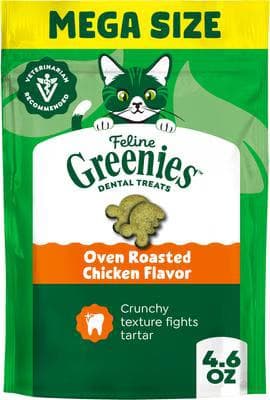
This is a dental cat treat. Follow the current label and ask your veterinarian how it fits alongside tooth brushing and professional dental care.
Webvet may earn a commission when you click through to Chewy, at no extra cost to you.
| Question | Information to collect |
|---|---|
| Which salami? | Brand, flavor, full ingredients, nutrition panel |
| How much? | Product weight or grams missing, not a generic slice |
| Any toxic ingredient? | Garlic, onion, chives, leek, or concentrated powders |
| Any separate hazard? | Spoilage, recall, casing, string, clip, or wrapper |
Assessing a salami exposure in a cat
No pea-size or half-stick threshold is evidence based. The same visual piece can differ greatly in weight, allium concentration, sodium, and fat. A kitten, adult cat, or large cat still needs product- and amount-specific assessment.
A tiny unseasoned taste in an asymptomatic cat is different from an unknown amount of garlic-seasoned salami, but body size is only one input. Medical history, therapeutic diet, packaging, timing, and signs also change the response.
What to do if your cat ate salami

Remove access, save the package, estimate the amount and time, and inspect for missing casing, string, clip, or wrapper. Contact a veterinarian or poison service for an allium ingredient, large or unknown amount, swallowed nonfood material, or clinical signs. If more than one cat had access, report the largest amount any individual could have eaten rather than averaging the missing food. Give the professional the cat's weight, age, diagnoses, medications, current diet, and water access. A photo of the ingredient panel, nutrition facts, lot code, and remaining product is useful. Homemade or deli salami may require a recipe or manufacturer call because powdered onion and garlic are not always visible. Keep the cat indoors and easy to observe, but do not repeatedly handle a distressed cat to inspect the gums. Do not give milk, oil, bread, charcoal, hydrogen peroxide, salt, or another home remedy. Cats should not receive dog emesis products. If monitoring is advised, ask which signs may be delayed, how long to watch, whether a blood test is recommended, and what change should trigger an emergency visit. Appetite and normal behavior immediately after ingestion do not exclude later allium-related anemia. Conversely, a tiny product-specific exposure should not be escalated solely because salami is salty or cured. The professional needs the formulation and dose to make that distinction.
Do not induce vomiting unless a veterinarian or poison professional directs it. Watch for vomiting, marked diarrhea, abdominal pain, weakness, pale or yellow gums, rapid breathing, dark urine, tremors, disorientation, seizures, or collapse. Allium-related delayed anemia requires follow-through even if early signs are absent. Provide the cat's weight, medical history, maximum amount missing, product sodium, timing, water access, and symptoms. Repeated vomiting, pronounced lethargy, weakness, pale or yellow gums, rapid breathing, dark urine, tremors, collapse, or suspected casing, skewer, or wrapper ingestion warrants veterinary care. Allium-related red-cell injury may be delayed even when early behavior looks normal. Cats should not receive hydrogen peroxide or other dog emesis methods. Continue the regular complete diet unless the treating veterinarian directs a different feeding plan.
Choosing another planned cat treat
For rewards, use measured complete cat food or a veterinarian-approved treat that fits the calorie and medical plan. Meat-based does not automatically mean appropriate, and another cured meat can carry the same label, sodium, fat, or packaging questions. A cat on a hydrolyzed or novel-protein food trial should not receive salami because even a small unplanned protein can invalidate the trial. A cat with a prescription cardiac, renal, gastrointestinal, or weight-management diet may also have specific calorie or sodium goals. Those are reasons to follow the treating veterinarian's plan, not reasons to claim that every trace of salami causes acute toxicosis. Keep appropriate planned rewards in a separate container so family members do not improvise with deli meat. Refrigerate the remaining salami and do not discard the wrapper until the exposure has been assessed. Note whether vomiting, diarrhea, poor appetite, or weakness was already present before the theft. If several foods were eaten together, list them all. A cured-meat exposure should not distract from chocolate, alcohol, raisins, xylitol, medication, skewers, or packaging in the same meal. For ongoing observation, use the cat's usual litter-box output, appetite, breathing, gum color, and activity as practical comparisons. Do not repeatedly stress the cat with forced examinations. When a blood recheck is advised for an allium exposure, keep it even if the cat appears comfortable because laboratory changes can precede obvious anemia.
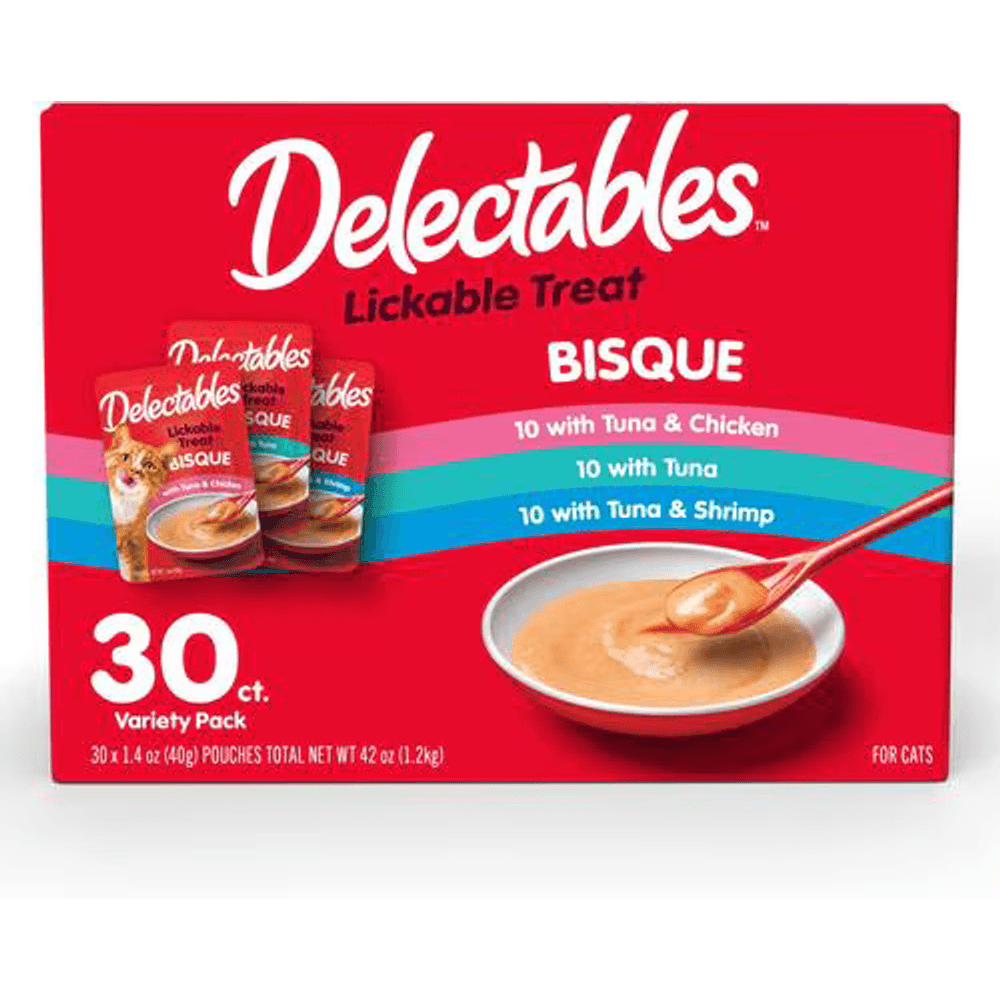
This is an optional cat treat. Review its current label, ingredients, calories, and feeding directions, and count it within the total daily extras.
Webvet may earn a commission when you click through to Chewy, at no extra cost to you.
Frequently asked questions
Can cats have a little piece of salami?
A tiny taste is not automatically poisoning, but the exact label and amount still matter.
Is salami toxic to cats?
Garlic and onion are not present in every salami. Confirm the actual ingredients.
Can kittens eat salami?
Sodium content varies, so a generic milligram value or slice threshold is unreliable.
Can cats eat pepperoni or other cured meats?
Ready-to-eat fermented salami is not synonymous with raw contaminated meat.
What should I do if my cat ate a whole slice of salami?
Seek advice for alliums, a large or unknown amount, swallowed packaging, or symptoms.

Safe alternatives
More meat & seafood for cats
Sources
- Merck Veterinary Manual: Garlic and Onion Toxicosis
Allium risk depends on the actual ingredient, concentration, amount, species, and patient; anemia signs can be delayed for days.
- Merck Veterinary Manual: Salt Toxicosis in Animals
Salt toxicosis follows excessive sodium exposure, particularly with restricted water; sodium's presence alone does not establish poisoning.
- Merck Veterinary Manual: Pancreatitis in Dogs and Cats
Pancreatitis is multifactorial; diet recommendations and risk assessment differ by species, patient, diagnosis, and total nutrient intake.
- Cornell Feline Health Center: Feeding Your Cat
Cats require complete feline nutrition, treats should remain limited, and dairy tolerance varies among adult cats.
- Merck Veterinary Manual: Gastrointestinal Obstruction in Small Animals
Foreign-body risk depends on the object, amount, and patient rather than being guaranteed by a shell, hull, skin, seed, or bone.
Reviewed by Dr. Athena Gaffud, DVM
General guidance based on credible veterinary sources; not a diagnosis or a substitute for your veterinarian. If your pet ate something toxic or is unwell, contact your vet or a pet poison line right away.