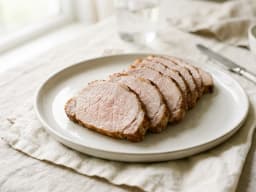
Can cats eat pork?
Safe in moderationPlain pork cooked to a safe temperature can be an optional cat treat. Raw at-risk porcine tissue carries pathogen and pseudorabies concerns.


Medically reviewed by Dr. Athena Gaffud, DVM · Last reviewed
Can Cats Eat Pork?
Plain pork cooked to a safe internal temperature can be an optional treat for some cats. Cut, fat, seasoning, sodium, bones, amount, and the cat's complete diet matter more than the meat name alone.
- 1Plain pork cooked to the recommended food-safe temperature is not a recognized feline toxin.
- 2Fat varies by cut; pork is not categorically fattier than chicken or turkey.
- 3Raw animal products can carry bacterial and parasitic hazards.
- 4Raw at-risk porcine tissue can transmit usually fatal pseudorabies to cats.
- 5There is no evidence-based bite count; optional treats must fit the individual calorie plan.

Treats should stay under 10% of your cat's daily calories. Smalls makes the rest, built around the meat an obligate carnivore actually needs.
- Human-grade ingredients, protein first
- Built for obligate carnivores
- Fresh meals delivered to your door
Webvet may earn a commission when you click through to Smalls, at no extra cost to you.
Is cooked pork safe for cats?
Plain properly cooked pork is not poisonous by category. It contains nutrients and calories but is not complete feline nutrition, so it should not displace the cat's balanced diet.

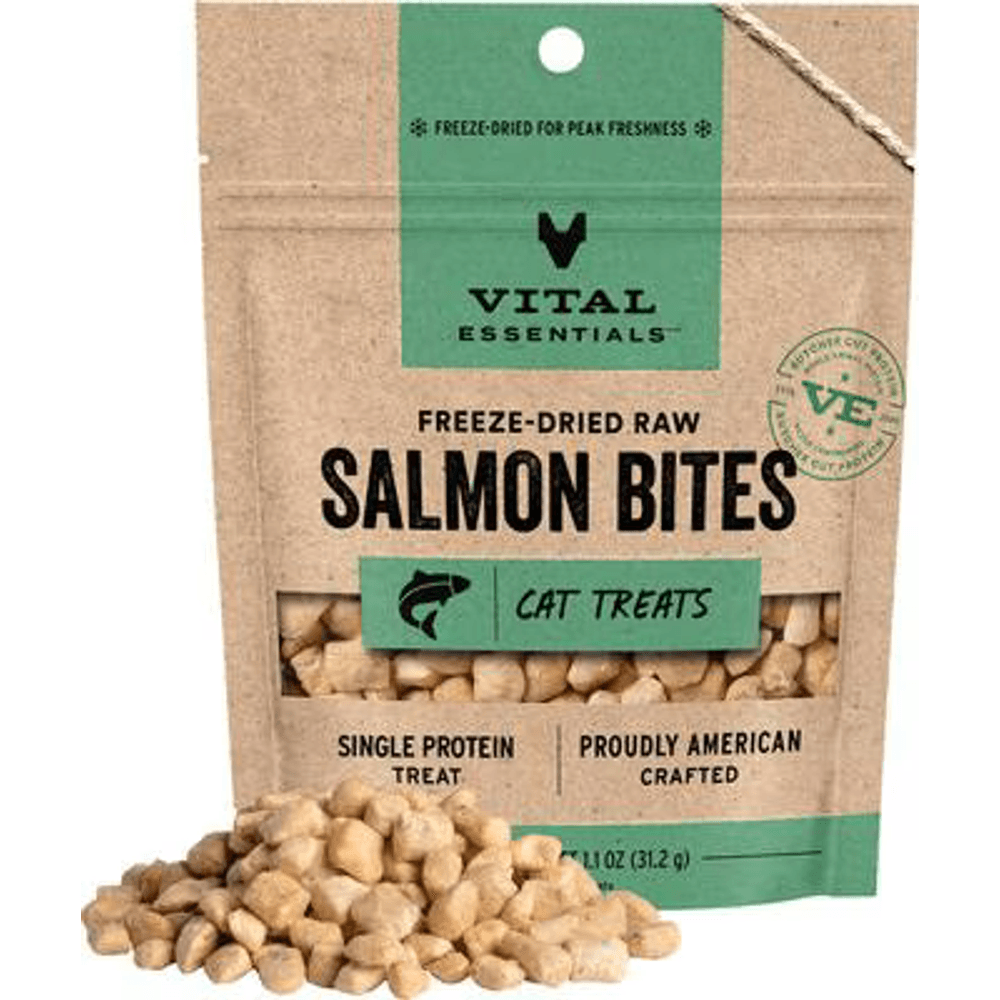
This is an optional cat treat. Review its current label, ingredients, calories, and feeding directions, and count it within the total daily extras.
Webvet may earn a commission when you click through to Chewy, at no extra cost to you.
Fat and sodium are preparation-specific. Loin, belly, skin, bacon, ham, sausage, and deli meat differ, so one statement about all pork is inaccurate. Trim and cooking choices should follow the cat's calorie plan, not a rule that every visible trace of pork fat is poisonous.
Federal temperature guidance and the actual package determine whether a product needs cooking. Cured ready-to-eat meat, uncooked pork, and cooked leftovers are different food-safety questions.
Pork and feline nutrition
Cats require complete feline nutrition. Pork can provide animal protein, fat, vitamins, minerals, and calories, but a treat portion does not establish a special health benefit.

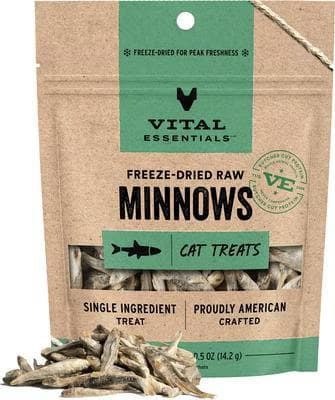
This is an optional cat treat. Review its current label, ingredients, calories, and feeding directions, and count it within the total daily extras.
Webvet may earn a commission when you click through to Chewy, at no extra cost to you.
Do not explain safety through stories about a cat's attraction to meat. Interest, refusal, and tolerance vary, and none determines a safe dose.
There is no blanket disease or age exclusion for pork. Follow prescription-diet rules and the veterinarian's plan for the individual cat. A food-allergy evaluation is another reason to follow the treating plan closely. Adding pork during an elimination trial can make results difficult to interpret even when the meat is fully cooked and not toxic. Dietary suitability and toxicology are different questions.
How to prepare an optional taste
Cook whole pork cuts to 145 F with a three-minute rest and ground pork to 160 F. Use plain boneless meat and confirm any seasoning or glaze. Measure temperature in the thickest part and keep raw juices away from cooked food, dishes, and surfaces the cat may investigate. Do not rely on meat color alone. Refrigerate leftovers promptly, follow the package's storage instructions, and discard spoiled food. These steps address ordinary foodborne hazards while preserving the important distinction between rare modern commercial Trichinella exposure and higher-risk raw wild or noncommercial meat. Separate ordinary cooked pork from higher-risk exposures. Note whether the cat reached plain cooked grocery meat, raw meat, feral-swine tissue, cured pork, sausage, bacon, spoiled scraps, or drippings. Record the source, cut, preparation, storage, amount missing, and time. Raw at-risk porcine tissue raises infectious questions that a cooked boneless household taste does not. Commercial processing and inspection reduce some hazards but do not turn a processed pork product into complete feline food. Preserve the label or receipt when the source is uncertain.
CDC describes U.S. trichinellosis as rare, not inevitable. Raw or undercooked wild game and noncommercial pork remain relevant pathogen and parasite concerns.

| Check | Why it matters |
|---|---|
| Cut and fat | Profiles vary; compare the actual product |
| Internal temperature | Follow federal guidance for whole cuts and ground pork |
| Raw tissue source | Feral, wild-boar, outdoor-pig, and affected-region tissue raises pseudorabies concern |
| Seasoning and sodium | Confirm ingredients and amount rather than assuming |
| Bones and packaging | Assess foreign-body risk separately |
Pork forms that need closer review
Bacon, ham, sausage, deli meat, and seasoned pork vary in sodium, calories, fat, curing, and allium content. Keep the label and assess the actual product. A stolen deli slice, a bite of cooked loin, raw ground meat, a rib with bone, and wild-boar trim are five different events. Packaging can also be swallowed, and strings, skewers, foil, or absorbent pads introduce foreign-body questions. Give the veterinary team the product name, photographs, label, cooking status, source animal when known, and the best amount estimate so the response is specific to the exposure.
A fatty food exposure does not automatically cause pancreatitis. Repeated vomiting, poor appetite, abdominal pain, weakness, or lethargy warrants veterinary assessment.
Comparing pork with other treats
Chicken and turkey are not always leaner than pork; cuts and preparation determine the comparison. Choose any optional meat for calorie fit, food safety, and the cat's diet.

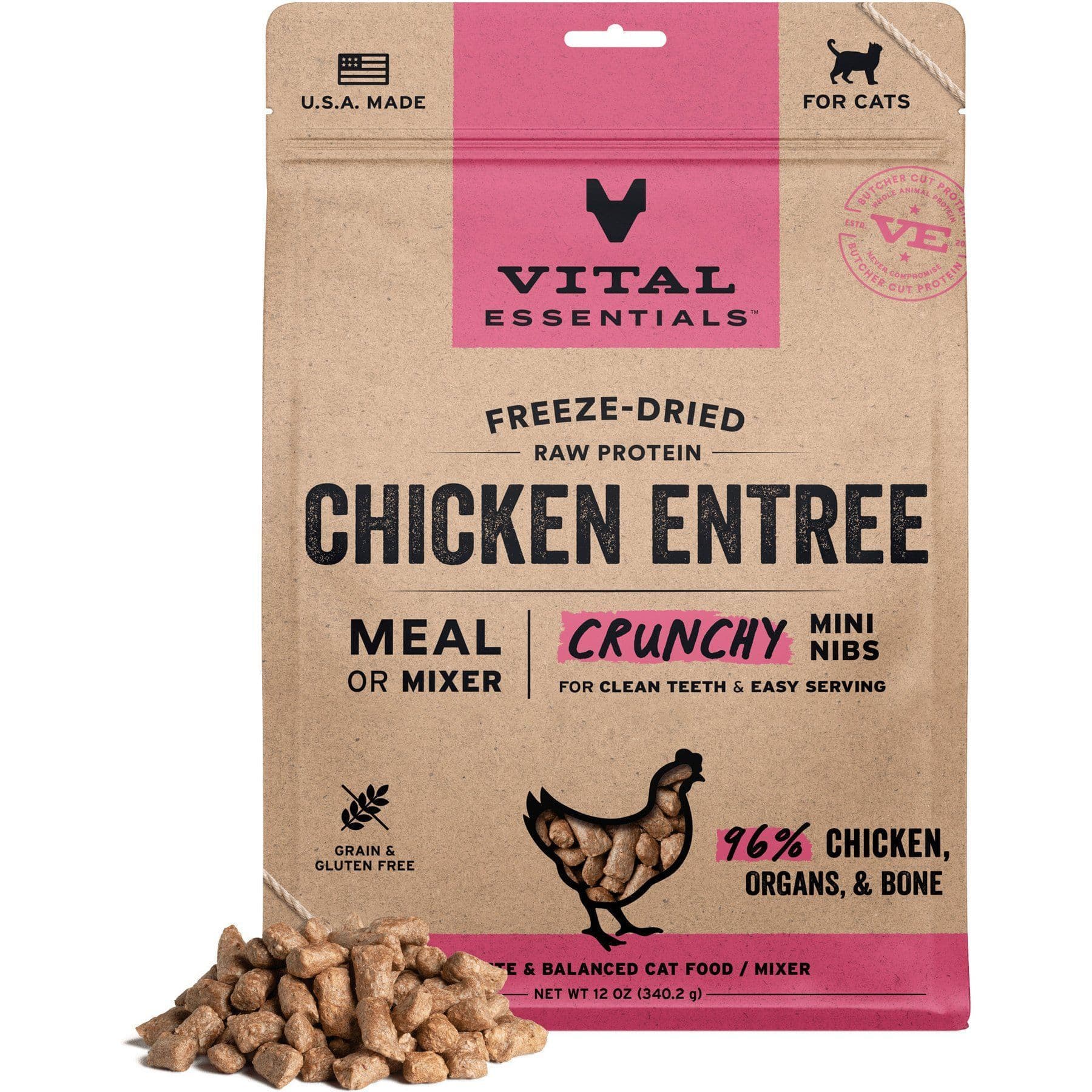
This is an optional cat treat. Review its current label, ingredients, calories, and feeding directions, and count it within the total daily extras.
Webvet may earn a commission when you click through to Chewy, at no extra cost to you.
Cornell guidance keeps treats to a limited share of daily intake. No bite count replaces the individual calorie allowance and complete diet. A cat's calorie budget may leave little room for extras after lickable treats, dental products, food used for medication, and table tastes are counted. Even plain meat can unbalance the diet if it repeatedly replaces complete food. If pork is offered at all, it should be one planned item within that allowance, not a routine substitute for the formulated meal. A cat on an elimination trial or prescription renal, urinary, gastrointestinal, cardiac, or weight-management diet may need pork excluded even when the immediate toxicology concern is low. Use the food and treat list supplied for that individual plan, and count food used for medication among daily extras.
If a cat ate pork
Save the label and identify the cut, cooking status, source, seasonings, bones, amount, time, cat weight, medical history, and signs. Look beyond the meat itself. Cats may swallow bone fragments, butcher string, skewers, absorbent pads, foam, plastic film, or sauce packaging while raiding a counter or trash can. Seasoning can add onion or garlic, and brines or cured products can add substantial sodium. Report every accessible component and the maximum amount one cat could have eaten. Repeated vomiting, abdominal pain, marked lethargy, loss of appetite, fever, neurologic signs, breathing difficulty, or collapse warrants veterinary attention. Hydrogen peroxide and other dog emesis methods are unsafe choices for cats; use instructions from a veterinarian or poison service.
Obtain prompt advice for raw at-risk porcine tissue, a concerning bone or package, hazardous seasoning, repeated vomiting, weakness, breathing changes, intense itching, or neurologic signs.
Frequently asked questions
Is it okay for cats to eat cooked pork?
Plain pork cooked to the recommended food-safe temperature can be an optional taste if it fits the cat's calorie and medical plan.
Can cats eat raw pork?
Raw pork can carry pathogens. Raw at-risk porcine tissue can also transmit usually fatal pseudorabies to cats.
Can cats eat bacon, ham, or sausage?
Bacon and ham vary in sodium, fat, curing, and seasoning. Assess the exact product and amount.
How much pork can a cat have?
No evidence-based feline bite count exists. Count any optional plain cooked pork within the individual treat allowance.
Why does my cat love pork so much?
Compare cuts and preparation. Chicken or turkey is not automatically leaner or more appropriate than every pork cut.

More safe treats
More meat & seafood for cats
Sources
- FDA: Cooking Meat and Poultry Safely
FDA advises 145 F with a three-minute rest for pork roasts and chops and 160 F for ground pork.
- CDC: About Trichinellosis
Trichinellosis is rare in the United States; risk remains with raw or undercooked meat, especially wild game and noncommercial pork.
- Merck Veterinary Manual: Pseudorabies in Pigs
Dogs and cats are susceptible incidental hosts and can be infected by consuming contaminated raw porcine tissue; disease is usually fatal.
- USDA APHIS: Pseudorabies
USDA reports feral-swine circulation and sporadic detections, including a contained 2026 commercial-herd event, so current risk wording should avoid absolute eradication claims.
- Cornell Feline Health Center: Feeding Your Cat
Cornell recommends complete and balanced feline food as the primary diet; optional cooked pork should not repeatedly displace it.
- Merck Veterinary Manual: Pancreatitis in Dogs and Cats
Pancreatitis is multifactorial and cannot be predicted or diagnosed from one food exposure alone.
- Merck Veterinary Manual: Garlic and Onion Toxicosis
Allium risk depends on the actual ingredient, concentration, amount, species, and patient rather than a food category alone.
Reviewed by Dr. Athena Gaffud, DVM
General guidance based on credible veterinary sources; not a diagnosis or a substitute for your veterinarian. If your pet ate something toxic or is unwell, contact your vet or a pet poison line right away.