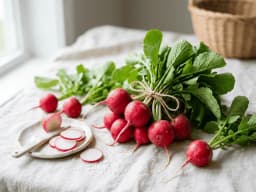
Can cats eat radishes?
Safe in moderationPet-specific grocery-radish data are limited. ASPCA's wild-radish warning applies to horses, not cats; identify the plant and exposure.


Medically reviewed by Dr. Athena Gaffud, DVM · Last reviewed
Can Cats Eat Radishes?
Direct feline grocery-radish data are limited. A small exposure is not the same as a proven safe serving, and common radish root or greens should not be confused with ASPCA's horse-only wild-radish listing.
- 1Direct feline data for grocery radish, Raphanus sativus, are limited.
- 2ASPCA's wild-radish record covers Raphanus raphanistrum and lists toxicity to horses, not cats.
- 3Grocery-radish greens are not recognized as a feline toxin.
- 4No one-sliver, piece-count, or body-size serving has been validated for cats.
- 5Identify the plant, part, preparation, amount, cat, and signs before deciding what to do.


Treats should stay under 10% of your cat's daily calories. Smalls makes the rest, built around the meat an obligate carnivore actually needs.
- Human-grade ingredients, protein first
- Built for obligate carnivores
- Fresh meals delivered to your door
Webvet may earn a commission when you click through to Smalls, at no extra cost to you.
Are grocery radishes safe for cats?
No characteristic feline poisoning syndrome from a small grocery-radish exposure is established here, but absence from a poison list cannot prove safety. ASPCA says its database is a guide and is not all-inclusive. Plant databases are not comprehensive food-feeding trials. Absence from a list cannot establish a cat-safe amount, while an entry for another plant and another animal cannot be generalized without evidence. If the cat chewed something grown outdoors, photograph the whole plant, root, leaves, flowers, and seed pods so a veterinarian or poison specialist can work from an identity rather than a common name.
Common grocery radish is Raphanus sativus. ASPCA's wild-radish page identifies Raphanus raphanistrum and lists horse toxicity; it does not substantiate a feline toxin claim for grocery radish. Start by identifying the plant. A grocery radish root, daikon, radish greens, wild radish, horseradish, and an unknown yard plant have different identities and evidence. Photograph the leaves, flowers, root, and packaging, and preserve a sample if that can be done safely. Outdoor exposure may include fertilizer, herbicide, pesticide, mulch, or another plant. A database entry for wild radish and horses does not answer whether a cultivated radish portion is suitable for a cat, so the exact specimen and circumstances should guide the call.
Radish and a cat's complete diet
Cats have species-specific nutrient requirements, but obligate carnivory does not establish that radish has zero nutritional content or that plant material predictably causes gastrointestinal illness.
Radish remains optional because complete cat food should supply the required nutrient balance. A nutrient list also does not prove that a radish taste provides a meaningful feline health benefit.

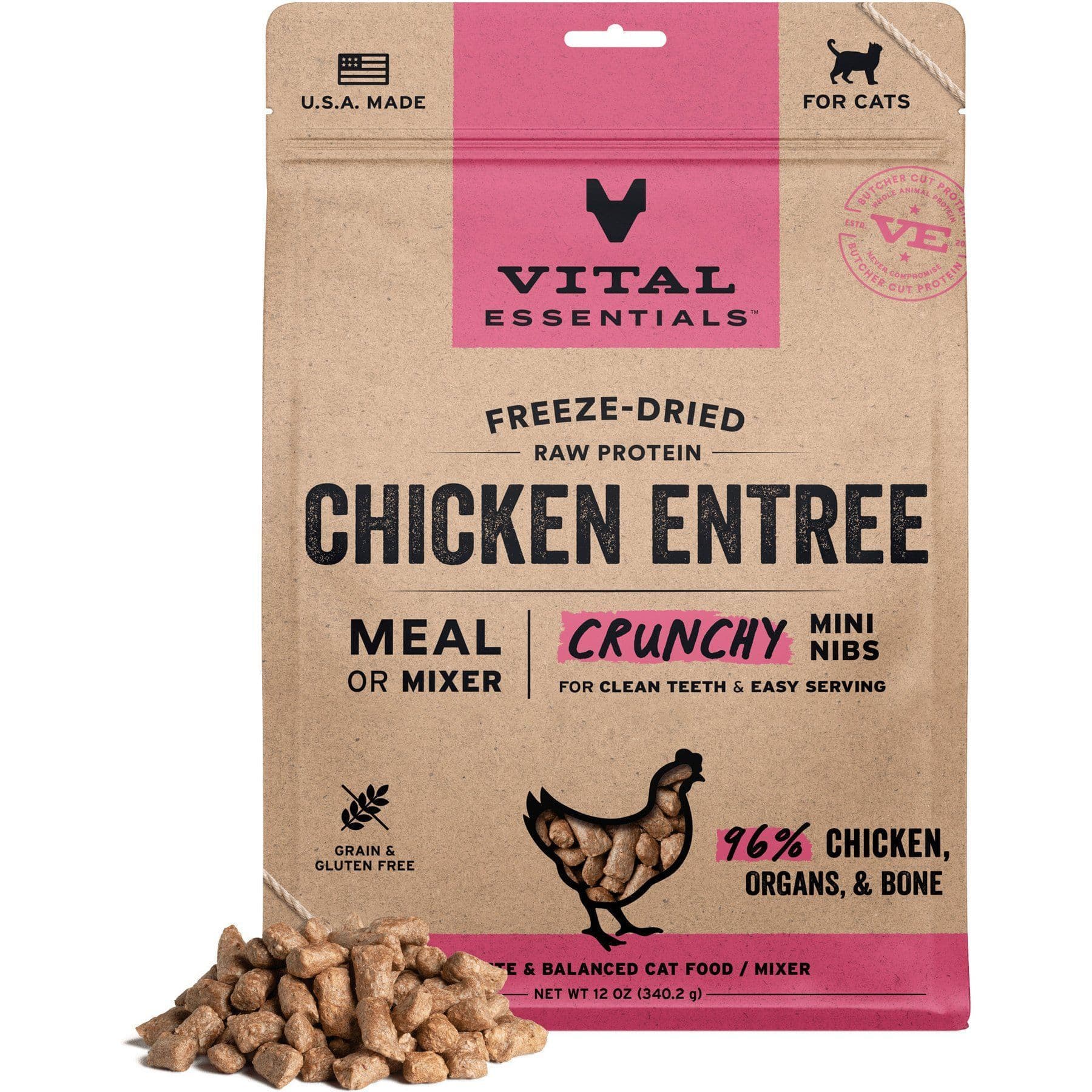
This is an optional cat treat. Review its current label, ingredients, calories, and feeding directions, and count it within the total daily extras.
Webvet may earn a commission when you click through to Chewy, at no extra cost to you.
How much radish can a cat have?
There is no evidence-based one-sliver or body-size serving. For an exposure, use plant identity, part, preparation, total amount, cat weight, medical history, chewing, and clinical signs.
| Situation | How to assess it |
|---|---|
| Small grocery-radish exposure | Identify root or greens, amount, preparation, cat, and signs |
| Cat with a medical diet | Ask the treating veterinarian before adding extras |
| Grocery-radish greens | Not established as a feline toxin; assess texture and amount |
| Outdoor wild plant | Do not assume grocery-radish guidance applies; identify the species |
| Pickled or seasoned product | Check sodium, alliums, oil, sugar, vinegar, and packaging |
What risks can be assessed without guessing?
An individual cat may vomit or develop diarrhea after many unfamiliar foods, but raw fiber, peppery flavor, or obligate carnivory does not let us predict that outcome from one radish taste.


This is an optional cat treat. Review its current label, ingredients, calories, and feeding directions, and count it within the total daily extras.
Webvet may earn a commission when you click through to Chewy, at no extra cost to you.
Grocery-radish greens are not established as poisonous or reliably more irritating than root. Wild radish and horseradish are different plants or products and need separate identification. Human use of radish greens also does not establish a feline serving or guarantee that every cat will tolerate them. The careful correction is to remove the unsupported toxicity and inevitable-upset claims. Wilted, moldy, pesticide-contaminated, or heavily soiled produce introduces different questions, so describe storage, treatment, freshness, and what was actually swallowed. Review mixed dishes ingredient by ingredient. Pickled radish, kimchi, salads, sandwiches, dips, and roasted vegetables may add sodium, vinegar, chili, onion, garlic, sweeteners, or rich sauce. Note the maximum quantity missing and any wrapper, skewer, foil, or plastic the cat could have swallowed. Breathing difficulty, repeated vomiting, marked lethargy, tremors, collapse, abdominal pain, or refusal of normal food warrants prompt veterinary advice. For a normal cat after a small plain exposure, preserve the regular complete diet and monitor according to case-specific guidance rather than beginning a repeated vegetable routine.
Preparing an optional grocery-radish taste
Wash produce, remove soil and damaged material, and choose a texture the individual cat can chew. Do not discard greens because of an unsupported toxicity claim or hide radish in food to force interest.
Cooking changes texture and flavor but does not establish a safe serving or health benefit. Pickled, salad, and restaurant recipes require their actual sodium, alliums, oil, sugar, and other ingredients. Pickled radish, kimchi, salad, sandwiches, and restaurant foods may contain onion, garlic, sodium, vinegar, sugar, oils, sauces, skewers, foil, or plastic. Save the container or recipe. A confirmed allium, a very salty product, a swallowed object, and a plain root exposure need different responses even if owners call all of them radish.
Choosing another optional feline treat

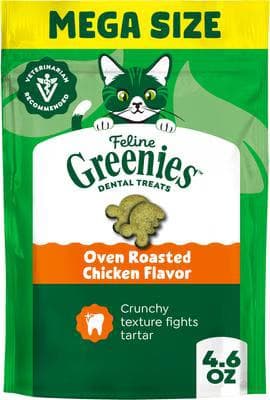
This is a dental cat treat. Follow the current label and ask your veterinarian how it fits alongside tooth brushing and professional dental care.
Webvet may earn a commission when you click through to Chewy, at no extra cost to you.
Choose treats for calorie fit, complete nutrition, texture, and individual tolerance. Plain animal protein may suit some cats but is not automatically appropriate for every medical or prescription diet.
A different vegetable is not proved safer merely because it tastes milder. Familiar, veterinarian-approved treats within the cat's calorie allowance are easier to assess than experimenting with produce. During an elimination diet or therapeutic feeding plan, a tiny novel vegetable can still interfere with interpretation or calorie control. Use only treats approved for that plan, even though the reason is dietary management rather than established radish toxicity. Secure pickling liquid and condiment jars as well as the vegetable, since brine and lids create separate exposure details.
Frequently asked questions
Are radish leaves or greens toxic to cats?
Grocery-radish greens are not established as a feline toxin. Identify the plant and assess amount, texture, and signs.
Can cats eat radishes raw or cooked?
ASPCA's wild-radish record lists horse toxicity and covers a different species from common grocery radish.
My cat ate a piece of radish. Should I worry?
No one-sliver or body-size serving is evidence based. Radish is optional and direct feline feeding data are limited.
Why is my cat not interested in radishes?
Cooking changes texture but does not create a validated serving or clinical benefit for cats.
Do radishes offer cats any health benefits?
Pickled and seasoned products vary. Check sodium, onion, garlic, oil, sugar, vinegar, and packaging.

The careful answer is data-limited: common grocery radish is not established as a feline toxin, but no cat-specific serving or benefit is validated. Prevent outdoor plant access and assess any real exposure from the exact plant and signs. Observe breathing, swallowing, appetite, hiding, energy, vomiting, stool, abdominal comfort, facial swelling, and behavior. A comfortable cat after a small identified grocery-radish exposure is different from a cat that ate an unknown wild plant or develops repeated signs. Report what changed instead of predicting a peppery-food reaction. Cats that chew garden plants may be seeking play, investigating texture, or showing a broader behavior change; interest alone does not identify a nutrient deficiency. Repeated plant eating, vomiting, weight change, or appetite change deserves a complete history. Keep unknown plants and garden chemicals inaccessible while identification and veterinary advice are obtained.
More safe treats
More vegetables for cats
Sources
- ASPCA: Wild Radish
ASPCA's wild-radish record identifies Raphanus raphanistrum and lists toxicity to horses, not dogs or cats; it does not establish grocery-radish toxicity.
- ASPCA: Toxic and Non-Toxic Plants
ASPCA says its plant list is a guide and not all-inclusive, so absence from the list cannot by itself prove safety.
- Cornell Feline Health Center: Feeding Your Cat
Cats need complete feline nutrition; treats should remain limited, and dairy tolerance varies because many adult cats are lactose intolerant.
- AAHA: Nutritional Risk Factors
Noncomplete foods above 10 percent of daily calories can dilute essential nutrients; individual medical and life-stage factors require assessment.
- Merck Veterinary Manual: Gastrointestinal Obstruction in Small Animals
Foreign-body and choking concerns depend on object and patient characteristics; a food texture does not guarantee obstruction.
Reviewed by Dr. Athena Gaffud, DVM
General guidance based on credible veterinary sources; not a diagnosis or a substitute for your veterinarian. If your pet ate something toxic or is unwell, contact your vet or a pet poison line right away.