
Can cats eat pomegranate?
Safe in moderationDirect feline pomegranate data are limited. No universal serving or safety guarantee is established; assess the exact product, amount, cat, and symptoms.


Medically reviewed by Dr. Athena Gaffud, DVM · Last reviewed
Can Cats Eat Pomegranate?
Direct feline oral pomegranate data are limited. A universal feline safety classification or dose-response has not been established for an aril, seed, juice, rind, extract, or supplement. A predictable tannin- or acid-related outcome after a household exposure is also not established. If a cat has already eaten pomegranate, identify the exact part or product, estimate the largest possible amount, note the time, and record current signs. There is no evidence-based reason to add pomegranate to a complete feline diet as a routine treat or home treatment.
- 1Direct feline oral pomegranate data are limited, so current evidence does not establish a universal safety classification or dose-response.
- 2No validated universal feline pomegranate serving, aril count, or preparation is established.
- 3A pomegranate aril includes juice-containing tissue around a central seed.
- 4Rind, arils, juice, extracts, supplements, mixed products, and packaging require separate assessment.
- 5After an exposure, record the product, fruit part, amount, timing, cat, and symptoms, and seek case-specific veterinary advice when needed.

Treats should stay under 10% of your cat's daily calories. Smalls makes the rest, built around the meat an obligate carnivore actually needs.
- Human-grade ingredients, protein first
- Built for obligate carnivores
- Fresh meals delivered to your door
Webvet may earn a commission when you click through to Smalls, at no extra cost to you.
What current evidence can and cannot establish
Pomegranate does not appear as a dedicated entry on ASPCA's feline plant list, but ASPCA states that its plant lists are not exhaustive. Absence from that list cannot establish oral safety. Human trials, laboratory models, plant-chemistry papers, and dog-oriented articles answer different questions and should not be converted into a feline serving or poisoning threshold. Direct feline incidence data are also insufficient to say that a small exposure reliably causes nothing, mild stomach upset, or a specific toxic syndrome. The most accurate conclusion is that the risk from a given exposure is not well quantified and should be assessed from the actual product, amount, patient, and symptoms.


This is an optional cat treat. Review its current label, ingredients, calories, and feeding directions, and count it within the total daily extras.
Webvet may earn a commission when you click through to Chewy, at no extra cost to you.
Cats need complete food formulated for their species and life stage. Pomegranate contains nutrients and plant compounds, but their presence does not prove that a household taste improves immunity, digestion, hydration, urinary health, antioxidant status, or any other clinical outcome in cats. Obligate carnivory describes essential feline nutrient requirements; it does not prove that every plant ingredient is poisonous or metabolically useless. The practical nutrition concern is simpler: pomegranate is an unneeded, incomplete extra that can add calories or displace complete food without an established feline benefit.
No universal feline pomegranate serving
No validated universal feline pomegranate serving is established. Body weight alone cannot convert the evidence gap into a teaspoon, aril count, household-size descriptor, or weekly schedule. Product form, fruit part, concentration, every other extra, body condition, life stage, medical history, and the complete diet would all matter. An accidental exposure report is not a feeding recommendation. If a veterinarian advises observation or continued feeding for an individual cat, follow that case-specific plan rather than a generic online portion.
University of Florida research describes the aril as juice-containing tissue surrounding a central seed. Cultivars vary in seed hardness, so crushing or mashing an aril does not create a standardized seed-free product or a proven safe preparation. Do not intentionally offer pomegranate to test tolerance. After an accidental exposure, report whether the cat reached whole arils, loose seeds, rind, white membrane, juice, dried fruit, powder, extract, a supplement, or a mixed food. Save the package or recipe so the formula and maximum amount can be reviewed.

Pomegranate parts and products are different exposures
Whole fruit, arils with seeds, loose seeds, leathery rind, white membrane, juice, concentrate, extract, powder, supplements, desserts, drinks, and plant material are not interchangeable. They differ in texture, concentration, ingredients, and physical form. A source about one product cannot establish the risk of another. Rind or packaging may create an object-specific gastrointestinal concern, but passage, obstruction, or surgery cannot be predicted from the food name. Report the dimensions, material, whether it was chewed, the cat's size, and any gagging, vomiting, pain, appetite change, or stool change.
| Part or product | Evidence-based assessment |
|---|---|
| Aril with central seed | Direct feline risk and dose-response are not established; record the count and symptoms |
| Rind or white membrane | Tough nonfood material; physical risk depends on piece dimensions, patient, and signs |
| Juice, extract, powder, or supplement | Concentration and formula differ; no universal feline household dose is established |
| Dessert, drink, yogurt, or other mixed food | Review the complete ingredient list, package, and maximum amount eaten |
| Plant material or uncertain exposure | Identify what is missing and obtain case-specific veterinary or poison-service advice |
A mixed product needs its own ingredient review. If the pomegranate was inyogurt, a dessert, syrup, juice blend, candy, baked food, or supplement, record the exact brand or recipe instead of assuming that dairy, sweeteners, or another ingredient is present. Sugar and calories are nutrition questions, not proof of acute poisoning. Observeddiarrheaor vomiting is clinically relevant but nonspecific; it does not identify pomegranate, lactose, an additive, infection, obstruction, or another cause by itself. Keep the label and contact the veterinarian if signs are significant, persistent, or worsening.
What to do after a pomegranate exposure
After an exposure, remove access and write down the fruit part or product, time, maximum possible amount, cat's weight, medical conditions, medications, and current signs. An individual cat may developvomiting, diarrhea, reduced appetite, pain, lethargy, or no obvious sign, but current evidence does not assign those outcomes to a specific aril count or chemical threshold. Contact a veterinarian promptly for repeated gastrointestinal signs, marked lethargy, breathing or neurologic changes, inability to eat or drink normally, blood, severe pain, a concerning rind or package exposure, or rapid worsening. Do not induce vomiting or give peroxide, salt, oil, milk, bread, charcoal, or medication unless a veterinarian directs it.

Choosing a predictable reward
For a predictable reward, start with a measured portion of the cat's regular complete food. Plaincooked chicken, fully cookedegg, or unseasoned cookedsalmonmay be optional for some cats, but none is automatically appropriate for every calorie plan, food trial, allergy history, or therapeutic diet. Mixed meat products containing onion orgarlicrequire ingredient- and amount-specific assessment. Compare any extra by its full formula, calories, preparation, and fit with the individual cat's diet rather than treating animal-source food as inherently superior.
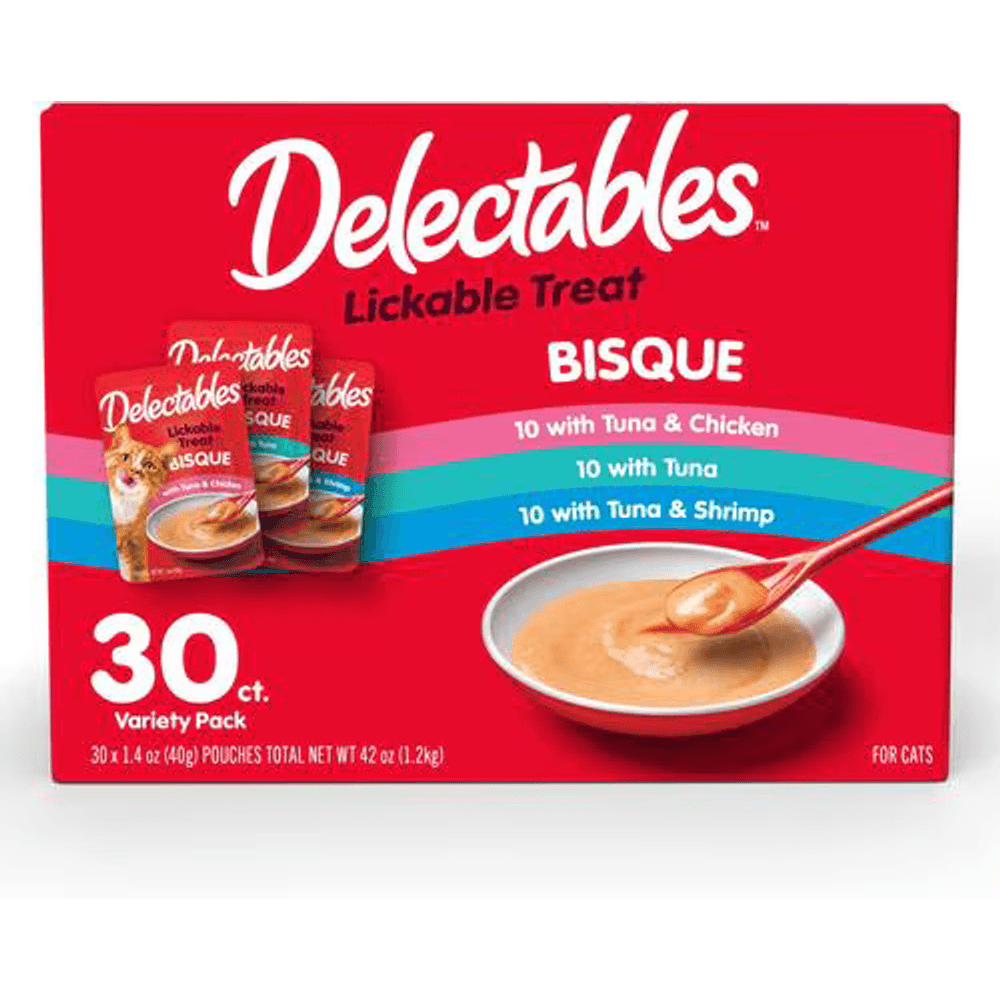
This is an optional cat treat. Review its current label, ingredients, calories, and feeding directions, and count it within the total daily extras.
Webvet may earn a commission when you click through to Chewy, at no extra cost to you.
Switching from pomegranate toblueberriesorappledoes not solve the evidence or diet question automatically. Each food and product form has its own ingredients, physical hazards, calories, and patient considerations. During an elimination trial, prescription diet, weight-management plan, or chronic disease treatment, even an otherwise low-concern extra can interfere with the plan. If no human food has been approved, there is no nutritional need to find a substitute; use the measured complete-food ration or a veterinarian-approved commercial reward.
Frequently asked questions
Can cats eat pomegranate?
Direct feline oral data do not establish a universal safety classification, routine serving, or predictable outcome. There is no nutritional need to offer pomegranate. After an exposure, assess the exact part or product, amount, patient, and symptoms.
Are pomegranate arils or seeds safe for cats?
No validated feline risk estimate or serving is established. An aril is juice-containing tissue around a central seed. Record the number and form eaten instead of relying on a generic safe or toxic label.
What if my cat ate pomegranate rind?
Rind is tough nonfood material. Choking or gastrointestinal risk depends on its dimensions, whether it was chewed, the cat, and current signs. Contact a veterinarian for concerning or uncertain exposures and do not use a home remedy.
Are pomegranate extracts or supplements safe for cats?
Fresh fruit, extracts, powders, supplements, and formulated pet foods are different products. A manufacturer-controlled ingredient in a complete formula does not create a household dose for a separate product. Ask the treating veterinarian before use.
Can kittens have pomegranate?
No kitten-specific serving or safety evidence is established. Kittens need complete growth nutrition and gain no proven benefit from pomegranate. Contact a veterinarian after a meaningful, uncertain, or symptomatic exposure.

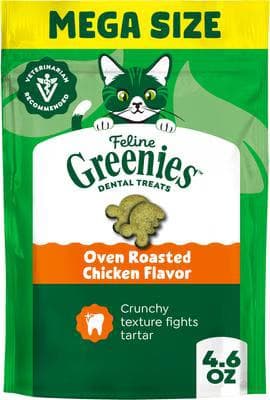
This is a dental cat treat. Follow the current label and ask your veterinarian how it fits alongside tooth brushing and professional dental care.
Webvet may earn a commission when you click through to Chewy, at no extra cost to you.
Direct feline evidence remains too limited for a safety guarantee, toxicity prediction, or household serving. Keep pomegranate out of routine treat rotation unless the treating veterinarian has a patient-specific reason to use a particular formulated product. After an exposure, separate the fruit part from any mixed ingredients or swallowed packaging, record the maximum possible amount and timing, and watch the cat's actual condition. A measured portion of complete food is the simplest predictable reward, and veterinary advice should guide any response to significant, uncertain, or symptomatic exposures.
More safe treats
More fruits for cats
Sources
- AAHA: 2021 Nutrition and Weight Management Guidelines
Noncomplete foods and patient-specific risk factors should be assessed against the complete diet; this guidance does not establish a feline pomegranate serving.
- Merck Veterinary Manual: Gastrointestinal Obstruction in Small Animals
Foreign-body risk and treatment depend on the object, location, patient, and clinical signs rather than the food name alone.
- ASPCA: Toxic and Non-Toxic Plant List for Cats
ASPCA's plant list is not exhaustive, so the absence of a dedicated pomegranate entry does not establish feline oral safety.
- University of Florida IFAS: Pomegranates
Pomegranate arils are juice-filled structures that contain central seeds.
Reviewed by Dr. Athena Gaffud, DVM
General guidance based on credible veterinary sources; not a diagnosis or a substitute for your veterinarian. If your pet ate something toxic or is unwell, contact your vet or a pet poison line right away.