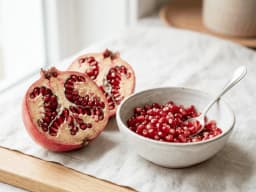
Can dogs eat pomegranate?
Safe in moderationDirect canine pomegranate data are limited. No universal serving or predictable outcome is established; assess the exact product, amount, dog, and symptoms.


Medically reviewed by Dr. Athena Gaffud, DVM · Last reviewed
Can Dogs Eat Pomegranate?
Direct canine oral pomegranate data are limited. A universal safety classification, serving, dose-response, or predictable gastrointestinal outcome for fresh arils has not been established. A dog may havevomitingordiarrheaafter an exposure, but those signs are nonspecific and cannot be assigned to tannins, acids, or a particular aril count without better evidence. Rind, white membrane, mixed ingredients, and packaging require separate assessment. Record the exact part or product, largest possible amount, time, dog's weight, health history, and current symptoms.
- 1Direct canine oral pomegranate data are limited; no universal safety classification or dose-response is established.
- 2No validated canine serving, aril count, or preparation can be derived from body weight alone.
- 3Arils with central seeds, rind, membrane, juice, extracts, mixed products, and packaging are different exposures.
- 4Observed gastrointestinal signs are nonspecific and should not be predicted from tannins, acids, or one food name.
- 5Record the exact product, amount, timing, dog, and symptoms, and seek case-specific veterinary advice when needed.

Treats should stay under 10% of your dog's daily calories. JustFoodForDogs makes the rest of it.
- Recipes developed by veterinary nutritionists
- Whole-food ingredients you can recognise
- Fresh meals delivered to your door
Webvet may earn a commission when you click through to JustFoodForDogs, at no extra cost to you.
What current canine evidence can establish
Pomegranate is not a documented classic canine food toxin in the same category as several better-established hazards, but that comparison does not prove that every pomegranate form or amount is safe. If a mixed pomegranate product containschocolate, raisins, confirmed xylitol, alliums, caffeine, alcohol, or another known hazard, assess that ingredient from its actual concentration and amount. For plain fruit, the honest conclusion is that direct canine tolerance and dose-response evidence are limited. Avoid both automatic emergency language and reassurance that a stray aril cannot cause a problem.

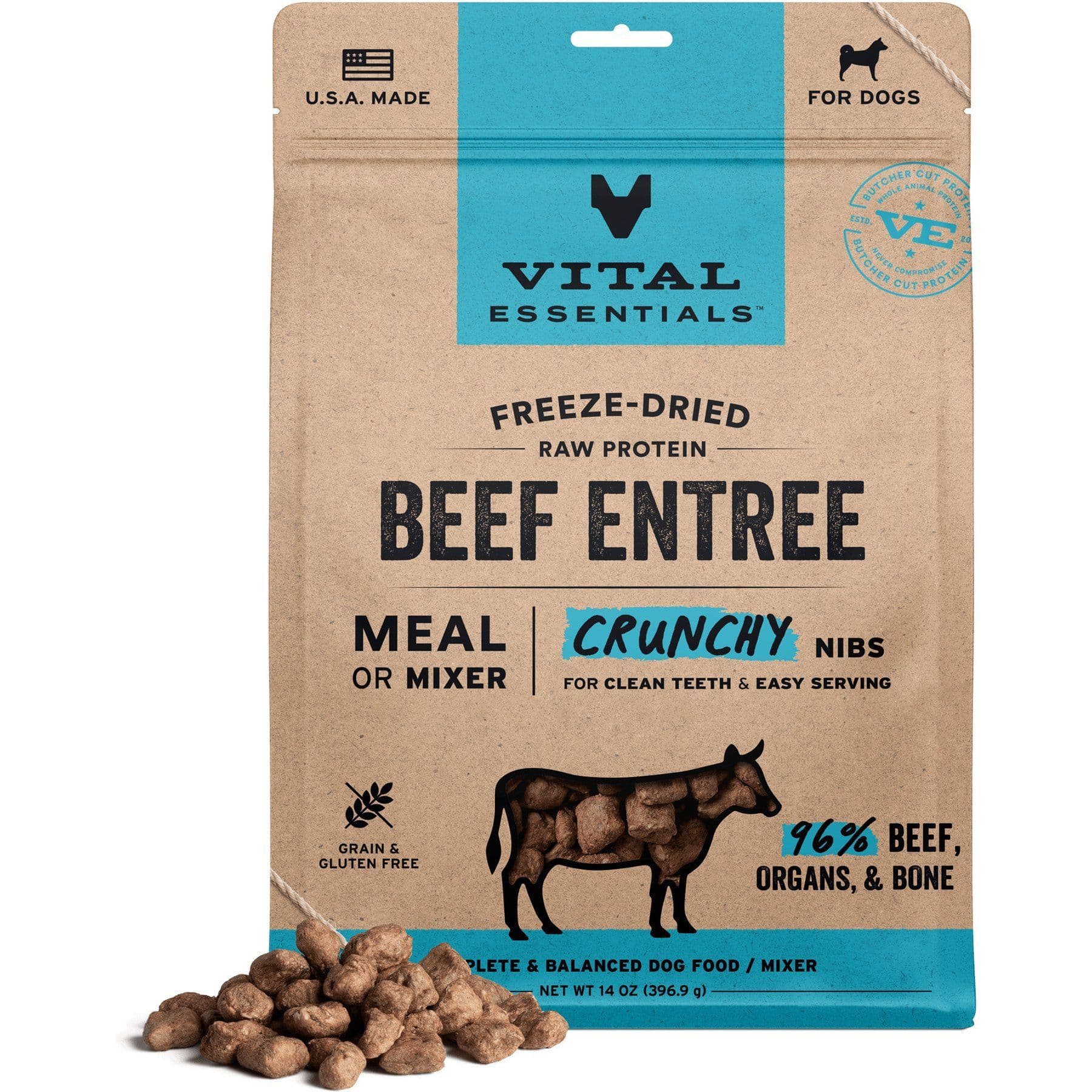
This is an optional dog treat. Review its current label, ingredients, calories, and feeding directions, and count it within the total daily extras.
Webvet may earn a commission when you click through to Chewy, at no extra cost to you.
Pomegranate contains tannins, acids, sugars, fiber, and other plant compounds, but composition alone does not predict a dog's clinical response. Direct canine oral incidence and dose-response data are limited. Current evidence is insufficient to assign a common gastrointestinal outcome, rapid intestinal transit, low severity, or short duration to an aril exposure. Signs after a new food are possible but nonspecific. They may reflect the food, another ingredient, spoilage, an object, an unrelated illness, or several factors, so the actual exposure and patient need assessment.
Nutrition claims and complete dog food
Pomegranate nutrient tables and human research do not establish a canine antioxidant, digestive, immune, weight, hydration, vitamin, or disease-treatment benefit from a household serving. Dogs eating a complete diet receive required nutrients from the full formula. That does not make every plant ingredient useless or imply that animal-source treats are always better. It means that an extra should be judged by calories, ingredients, tolerance, and the complete feeding plan rather than by a superfood label or one highlighted nutrient.
Fresh arils, juice, concentrate, dried fruit, extract, powder, supplements, human snacks, sauces, desserts, and dog treats are different products. Review the complete formula, calorie information, serving directions, and maximum amount eaten. A commercial food formulated with pomegranate is assessed as a whole recipe; it does not prove that fresh fruit or a separate extract is safe at a household dose. Likewise, sugar-free, natural, antioxidant, or made-with-real-fruit wording does not identify the sweetener, concentration, or other ingredients.

No universal canine pomegranate serving
No validated universal canine pomegranate serving is established. Body weight alone cannot convert limited evidence into a few arils, a spoonful, a percentage of calories, or a weekly schedule. Fruit part, product concentration, total daily extras, life stage, body condition, current diet, medical history, and the outcome being considered all matter. The general recommendation to limit noncomplete foods does not create a specific pomegranate allowance. If a veterinarian approves a particular product for an individual dog, use that product's calories and the dog's complete feeding plan.
| Exposure | What to assess |
|---|---|
| Arils with seeds | Count, amount, timing, dog, symptoms |
| Rind, membrane, stem, or package | Dimensions, material, chewing, symptoms |
| Juice, extract, supplement, or mixed product | Full formula, concentration, calories, confirmed hazards |
Pomegranate parts and products are different exposures
An aril includes juice-containing tissue around a central seed. Cultivars vary in seed hardness, so crushing or mashing an aril does not create a standardized product or a proven safe preparation. Rind, white membrane, stem, packaging, and a large clump of material have different physical characteristics. If an exposure already occurred, report what is missing, the object's dimensions, whether it was chewed, and any gagging, vomiting, pain, appetite change, or stool change. Passage, obstruction, and the need for surgery depend on the object, dog, location, and signs rather than the food name.
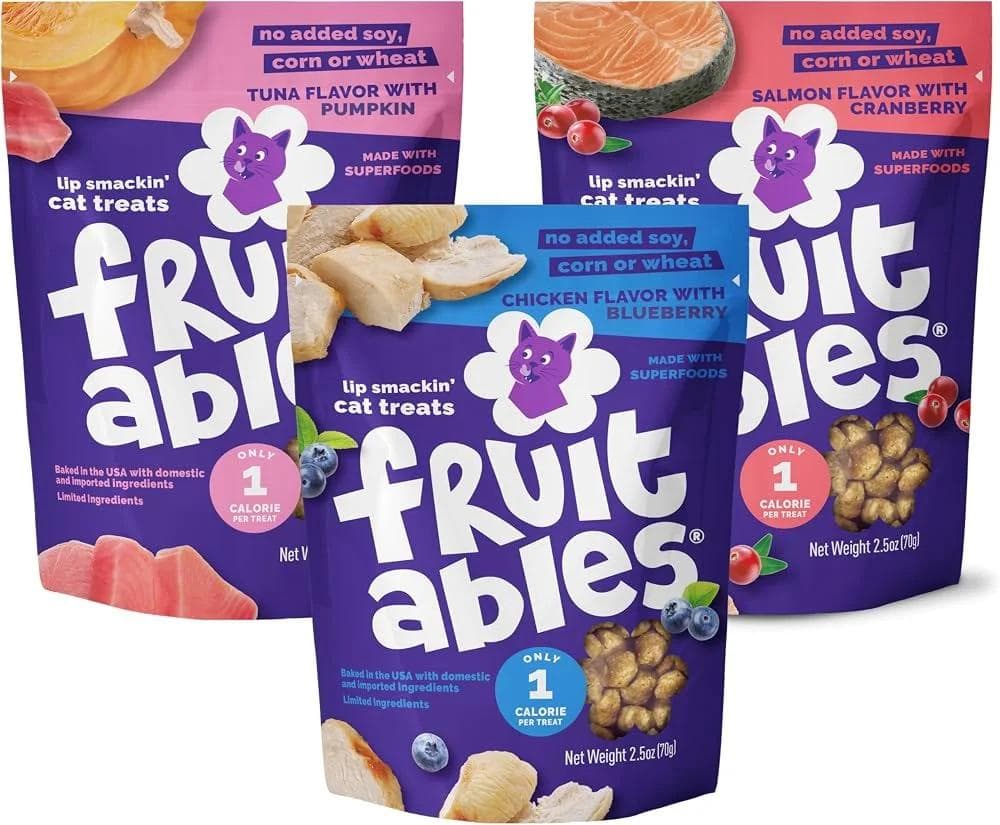
This is an optional dog treat. Review its current label, ingredients, calories, and feeding directions, and count it within the total daily extras.
Webvet may earn a commission when you click through to Chewy, at no extra cost to you.
For juice, candy, sauce, yogurt, baked goods, supplements, or flavored snacks, save the package and list only ingredients that are actually present. Check sweeteners, chocolate, raisins, alliums, alcohol-containing flavor concentrates, caffeine, sodium, fat, and packaging when relevant to the exact product. Sugar-free or diet wording does not confirm xylitol, and pomegranate products do not share one hazard profile. Each confirmed ingredient, object, amount, and symptom has its own evidence and triage.

What to do after a pomegranate exposure
After an exposure, remove access and keep the fruit, recipe, or package. Contact a veterinarian promptly for repeated vomiting or diarrhea, inability to keep water down, marked pain or abdominal swelling, weakness, blood, breathing or neurologic changes, loss of appetite, or a concerning rind or packaging exposure.Lethargyis nonspecific but important when it accompanies other signs or is marked or worsening. Do not induce vomiting or give peroxide, salt, oil, milk, bread, charcoal, medication, or an unplanned food change unless a veterinarian directs it for that dog and exposure.
Choosing another reward
Another fruit is not automatically safer or more useful.Blueberriesandappleshave different calories, plant parts, preparation issues, and patient considerations. Compare any alternative by its exact form, ingredients, physical hazards, total extras, and fit with the individual diet. During an elimination trial, prescription diet, calorie restriction, or chronic disease treatment, even a low-concern extra can interfere with the plan. If no human food has been approved, use part of the measured complete-food ration as the reward.
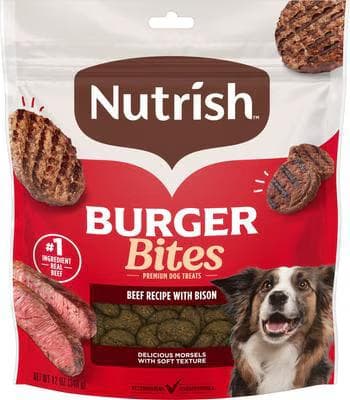
This is an optional dog treat. Review its current label, ingredients, calories, and feeding directions, and count it within the total daily extras.
Webvet may earn a commission when you click through to Chewy, at no extra cost to you.
Direct canine pomegranate evidence remains too limited for a safety guarantee, poisoning prediction, household serving, or home-treatment recommendation. There is no nutritional need to test tolerance. After an exposure, separate the fruit part from mixed ingredients and swallowed packaging, record the largest possible amount and timing, and observe the dog's actual condition. A measured portion of complete dog food is the simplest predictable reward. Contact the veterinarian or an animal poison service for significant, uncertain, or symptomatic exposures and follow case-specific instructions.
Frequently asked questions
Are pomegranate arils or seeds safe for dogs?
Direct canine data do not establish a universal safety classification, serving, or predictable outcome. An aril contains a central seed. Record the form and amount eaten and assess the individual dog and symptoms.
How much pomegranate can a dog have?
No validated universal canine portion is established. A general treat-calorie limit does not create an aril count. If a veterinarian approves a specific product, use its calories and the dog's complete feeding plan.
What if my dog ate pomegranate rind?
Rind is tough nonfood material. Physical risk depends on dimensions, chewing, the dog, and signs. Contact a veterinarian for a significant or uncertain exposure, repeated vomiting, pain, appetite loss, or other concerning changes.
Can dogs drink pomegranate juice or use an extract?
Juice, concentrate, extract, powder, supplements, and fresh fruit differ. Review the complete product and amount. A formulated ingredient does not establish a household dose for another product.
My dog ate pomegranate. What should I do?
Remove access, save the fruit or package, and record the part, product, maximum amount, time, dog, and symptoms. Call the veterinarian or an animal poison service for significant, uncertain, or symptomatic exposures.

More safe treats
More fruits for dogs
Sources
- AAHA: 2021 Nutrition and Weight Management Guidelines
Noncomplete foods and patient-specific risk factors should be assessed against the complete diet; the guideline does not establish a pomegranate serving.
- Merck Veterinary Manual: Gastrointestinal Obstruction in Small Animals
Foreign-body risk and treatment depend on the object, location, patient, and clinical signs rather than the food name alone.
- ASPCA: Toxic and Non-Toxic Plant List for Dogs
ASPCA's plant list is not exhaustive, so the absence of a dedicated pomegranate entry does not establish canine oral safety.
- University of Florida IFAS: Pomegranates
Pomegranate arils are juice-filled structures that contain the seeds; fruit parts and product forms should not be conflated.
Reviewed by Dr. Athena Gaffud, DVM
General guidance based on credible veterinary sources; not a diagnosis or a substitute for your veterinarian. If your pet ate something toxic or is unwell, contact your vet or a pet poison line right away.