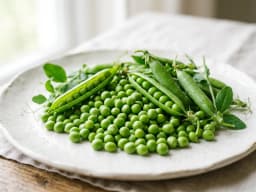
Can cats eat peas?
Safe in moderationA small amount of plain cooked or thawed peas is unlikely to poison a healthy cat. Keep extras small, and check canned peas for sodium and other ingredients.


Medically reviewed by Dr. Athena Gaffud, DVM · Last reviewed
Can Cats Eat Peas?
A small amount of plain cooked or thawed peas is unlikely to poison a healthy cat. Peas are also used as processed ingredients in some complete cat foods. Keep any extra small enough that it does not displace the cat's complete diet, and do not present meat-versus-vegetable rhetoric as a measure of safety.
- 1A small amount of plain cooked or thawed peas is unlikely to poison a healthy cat.
- 2Properly processed pea starch can be digested by cats and may be part of a complete formulated food.
- 3Treat peas as an extra and keep the cat's complete diet as the main source of nutrition.
- 4Cut or mash food as needed for the individual cat's chewing style; a pea pod is not automatically an obstruction.
- 5For canned peas, read the sodium and ingredient label and avoid onion or garlic.

Treats should stay under 10% of your cat's daily calories. Smalls makes the rest, built around the meat an obligate carnivore actually needs.
- Human-grade ingredients, protein first
- Built for obligate carnivores
- Fresh meals delivered to your door
Webvet may earn a commission when you click through to Smalls, at no extra cost to you.
Are Peas Safe for Cats to Eat?
Yes, plain green peas are considered safe and non-toxic for cats. Garden peas, snap peas, and snow peas do not contain anything poisonous to felines, and you will actually find peas listed on the ingredient panel of many commercial cat foods, where they act as a source of plant fiber and carbohydrate. Peas carry vitamins A, B, C, and K along with a little protein and fiber, which is why pet food makers sometimes include them. Those nutrients sound appealing on paper, but a cat's body is tuned to pull what it needs from animal tissue, so the vitamins in a pea are far less useful to your cat than they would be to you. In short, safe is not the same as necessary. A pea will not hurt a healthy cat in a tiny amount, yet it earns its place only as an occasional curiosity, never as a substitute for the meat protein your cat truly requires.

How peas fit into a cat's diet
Cats have species-specific nutrient requirements, including taurine, preformed vitamin A, and arachidonic acid. Obligate carnivory describes those requirements; it does not show that every properly processed plant ingredient in a complete feline food is unusable. Cats lack a functional sweet-taste receptor, but food interest and nutritional suitability should not be inferred from that fact alone. Cats have species-specific nutrient requirements, but that does not mean they are unable to digest properly processed plant starch. A complete food can use processed pea ingredients while still meeting feline nutrient requirements. A large unaccustomed extra may cause gastrointestinal signs in an individual cat, so introduce extras cautiously.
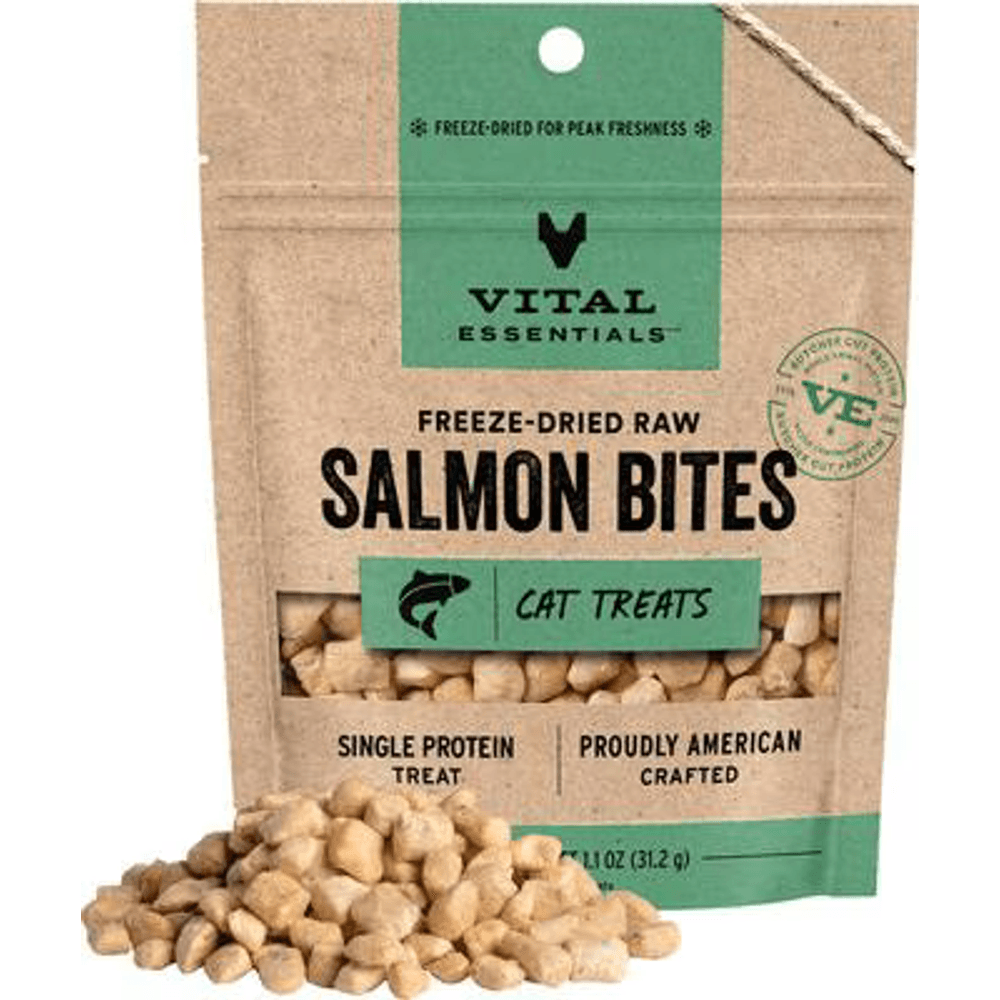
This is an optional cat treat. Review its current label, ingredients, calories, and feeding directions, and count it within the total daily extras.
Webvet may earn a commission when you click through to Chewy, at no extra cost to you.
How Many Peas Can a Cat Eat?
Portion size is where cat feeding really differs from dog feeding. A typical house cat weighs only eight to ten pounds, so what looks like a trivial nibble to us is a meaningful amount of food for such a small animal. No validated feline pea serving is established by body weight. If a veterinarian approves peas as an optional extra, use the cat's calorie plan and the exact product rather than a fixed count. Watch how your cat responds over the next day: many cats show no interest at all, some enjoy batting a frozen pea around more than eating it, and a few will happily crunch one down. If your cat tolerates that small taste with no soft stool or vomiting, you can offer a similar tiny amount now and then, but there is never a reason to build up to a larger portion.

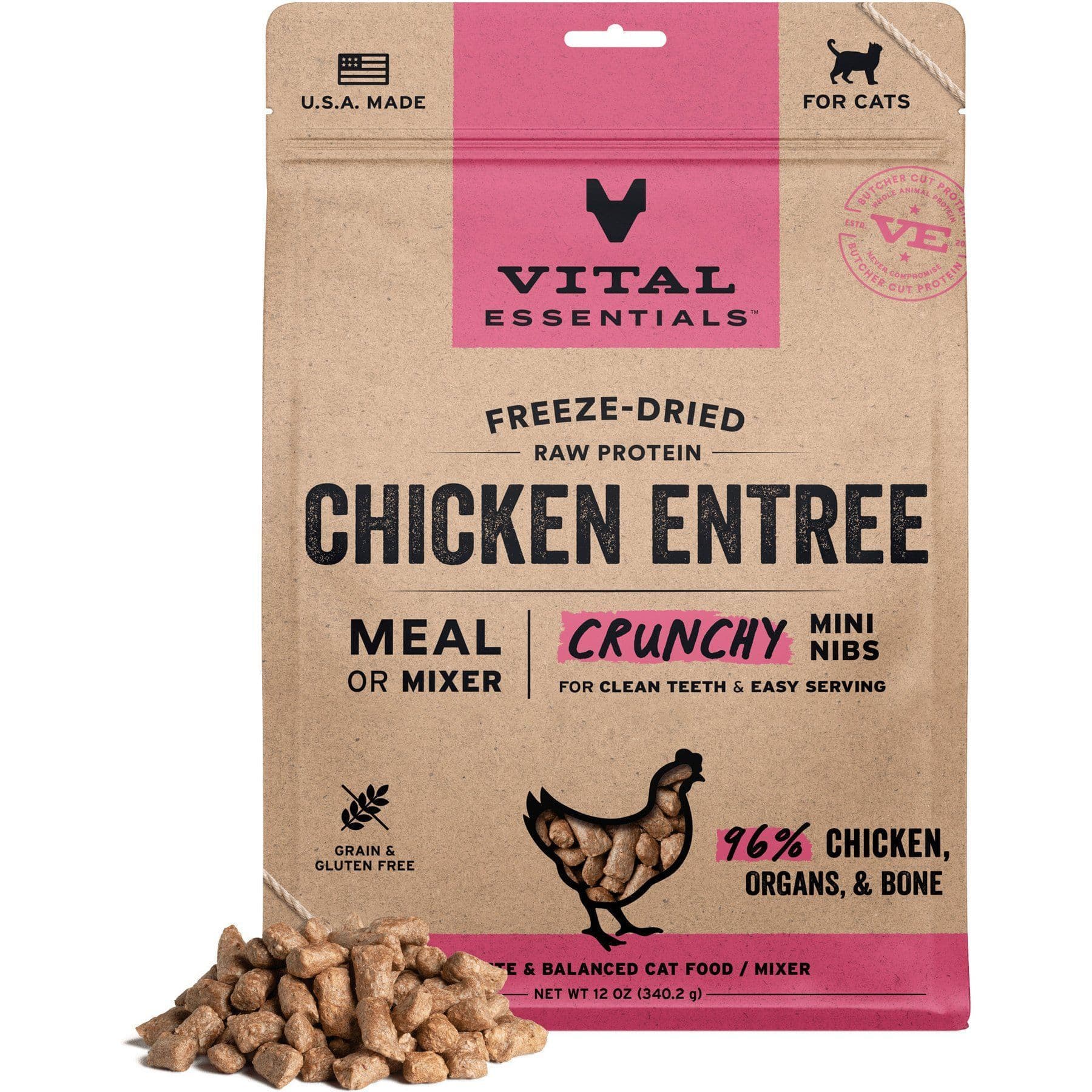
This is an optional cat treat. Review its current label, ingredients, calories, and feeding directions, and count it within the total daily extras.
Webvet may earn a commission when you click through to Chewy, at no extra cost to you.
| Factor | What to consider | Action |
|---|---|---|
| Complete diet | Extras can dilute balanced nutrition | Keep extras within the daily treat-calorie budget |
| Chewing style | Whole foods may be awkward for some cats | Cut or mash as needed |
| Medical diet | The allowed extras vary by diagnosis | Ask the prescribing veterinarian |
How to Prepare Peas for Your Cat
If you do want to share a pea, keep it as plain and simple as possible. Use fresh peas or plain frozen peas that you have thawed or lightly cooked in water. Serve them without any butter, oil, salt, or seasoning, and absolutely no onion or garlic, both of which are toxic to cats and often cooked alongside peas in human dishes. Mashing or splitting the peas makes them easier for a small cat to handle and lowers any choking risk, which matters most for kittens and older cats. A whole pod may be awkward for some cats to chew, so cut food to suit the individual cat rather than predicting an obstruction. Canned peas vary: check sodium and ingredients, rinse if appropriate, and avoid products containing onion or garlic.
Why Are Peas in My Cat's Food?
It can be confusing to hear that cats do not need peas and then spot peas on your cat food label. Pet food companies use peas as a plant-based source of fiber, carbohydrate, and a little protein, and they help bind kibble together and add bulk. In a complete, properly formulated diet, that small inclusion is not a problem, because the food is still built around animal protein and fortified with the taurine and other nutrients your cat needs. What matters is the overall recipe, not the presence of a pea. Some owners worry about legumes such as peas in connection with heart health, a discussion that has centered mostly on grain-free dog foods; the science is still evolving and is far less clear for cats. If you have any concern about the ingredients in your cat's food, the best step is to ask your veterinarian, who can weigh your individual cat's health against the specific diet.

What If My Cat Eats Too Many Peas?
Because plain peas are non-toxic, a cat that eats a few more than intended is very unlikely to come to harm. The most you are likely to see is some digestive upset: mild diarrhea, a bit of gas, or vomiting as the extra fiber moves through a system that is not designed for it. In most cases this passes on its own within a day, and you can simply return to your cat's normal meat-based diet and offer plenty of fresh water. Pay closer attention if the peas were canned, seasoned, or cooked with onion or garlic, if your cat swallowed a whole pod, or if your cat is very young, very old, or already has kidney or digestive problems. Signs that warrant a call to your veterinarian include repeated vomiting, ongoing diarrhea, loss of appetite, straining, or unusual lethargy. When in doubt, it is always reasonable to phone your vet for guidance rather than wait and watch.
Better Treats to Offer Instead of Peas
Since your cat is a meat-eater, the best treats are also meat. A little plain cooked chicken is the gold-standard cat snack: high in the animal protein cats thrive on and almost always a hit. A small amount of plain cooked egg gives a protein-rich change of pace, and a flake or two of plain cooked fish makes an occasional treat most cats adore, as long as it is boneless, unseasoned, and offered only now and then. A lick of plain meat baby food with no onion or garlic, or a proper commercial cat treat, works too. If you would still rather offer something green, a tiny piece of plain cooked green bean or a shred of carrot is a safer vegetable choice than most, but even those remain a taste rather than a meaningful part of a cat's diet.
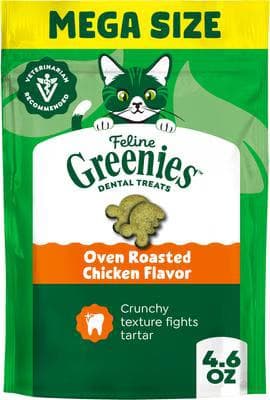
This is a dental cat treat. Follow the current label and ask your veterinarian how it fits alongside tooth brushing and professional dental care.
Webvet may earn a commission when you click through to Chewy, at no extra cost to you.

Frequently Asked Questions
Are peas safe for cats to eat?
Plain edible peas are not recognized as toxic to cats, but they are optional and nutritionally incomplete. Assess the product, amount, complete diet, and individual tolerance.
How many peas can a cat eat?
No universal pea count is established for cats. If an optional amount is approved, use the product's calories and the individual cat's complete diet, life stage, health, and tolerance rather than a fixed household number.
What happens if my cat eats a pea?
After an accidental pea exposure, record the product, amount, seasonings, cat, and symptoms. Plain edible peas are not recognized as a common feline poison, but individual outcomes vary. Repeated vomiting, diarrhea, appetite change, marked lethargy, or other concerning signs need case-specific assessment.
Can cats eat frozen or canned peas?
Plain frozen peas can be thawed or lightly cooked. For canned peas, check sodium and ingredients and rinse if appropriate. Cut or mash peas or pods when needed for the individual cat's chewing style; do not describe every pod as a choking or blockage event.
What vegetables should cats avoid?
Cats should never eat onions, garlic, chives, or leeks, which are toxic and can damage red blood cells. Raw or green potato and unripe tomato are also off-limits. A cat's complete diet should supply required nutrients; any optional treat should be assessed by calories, ingredients, and individual tolerance rather than by a food-group hierarchy.
More safe treats
More vegetables for cats
Sources
- Journal of Animal Science: Effects of six carbohydrate sources in cats
In a controlled feeding study, extruded pea-starch diets had greater than 93 percent starch digestibility in cats.
- 2021 AAHA Nutrition and Weight Management Guidelines
Dietary recommendations should center on a complete and balanced diet and patient-specific nutritional assessment.
- Merck Veterinary Manual: Salt Toxicosis in Animals
Salt toxicosis requires excess sodium exposure and is influenced by water access; sodium's mere presence does not establish poisoning.
- Pet Poison Helpline: Pet Friendly Human Food
Veterinary poison-control guidance lists peas among foods that do not pose a toxicity risk to healthy pets and says they may be offered raw or cooked.
- AAHA: Nutritional Risk Factors
Noncomplete foods above 10 percent of daily calories can dilute essential nutrients.
- Merck Veterinary Manual: Gastrointestinal Obstruction in Small Animals
Foreign-body risk depends on object and patient characteristics; a pea pod is not automatically an obstruction.
- Merck Veterinary Manual: Garlic and Onion Toxicosis
Cats are susceptible to alliums, but ingredient form and exposure amount still determine risk.
Reviewed by Dr. Athena Gaffud, DVM
General guidance based on credible veterinary sources; not a diagnosis or a substitute for your veterinarian. If your pet ate something toxic or is unwell, contact your vet or a pet poison line right away.