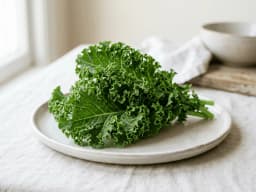
Can cats eat kale?
Safe in moderationA small plain kale exposure is unlikely to poison a cat, but no serving or benefit is established; follow any prescription diet exactly.


Medically reviewed by Dr. Athena Gaffud, DVM · Last reviewed
Can Cats Eat Kale?
A small identified exposure to plain kale is unlikely to poison a cat. Kale remains unnecessary, yet feline nutrient requirements do not make every plant component unusable or create a fixed-size safety threshold. Urinary stones have multiple causes; a cat on a urinary, renal, gastrointestinal, allergy-trial, or other prescription diet needs that plan protected rather than a blanket kale rule. Separate raw leaves, cooked kale, chips, smoothies, salad, soup, powders, supplements, and packaging. Oil, salt, cheese, onion, garlic, nuts, sweeteners, and other prepared-food ingredients require their own assessment. Steaming changes texture but has not been shown to remove enough oxalate to prevent feline urinary disease. Record the amount, time, appetite, vomiting, stool, urination, activity, breathing, and any missing stem, tie, skewer, or wrapper. Kale's nutrient list does not establish digestive, urinary, immune, coat, or weight benefits from a taste. Complete feline food is a more predictable repeated reward. Straining to urinate, repeated unproductive trips, vocalizing, blood, or marked discomfort requires prompt veterinary care regardless of a kale exposure. Provide the exact prescription-food name and all recent extras so the urinary history is not reduced to one vegetable. Record whether the kale was raw, cooked, seasoned, blended, or part of a mixed dish, because the form changes the questions worth asking. A cat on a therapeutic diet should not receive recurring kale additions unless the prescribing team has accounted for them.
- 1Plain kale is not established as a feline toxin, but it is unnecessary.
- 2Feline calcium-oxalate urolithiasis is multifactorial.
- 3Cats on prescription diets should receive only approved extras.
- 4There is no evidence-based pea-size serving or universal preparation rule.
- 5Cooking changes texture but is not proven to lower clinical stone risk.

Treats should stay under 10% of your cat's daily calories. Smalls makes the rest, built around the meat an obligate carnivore actually needs.
- Human-grade ingredients, protein first
- Built for obligate carnivores
- Fresh meals delivered to your door
Webvet may earn a commission when you click through to Smalls, at no extra cost to you.
Is Kale Safe for Cats?
A small plain exposure generally does not establish poisoning. There is no universal safe amount, predictable gastrointestinal response, or special kitten risk.

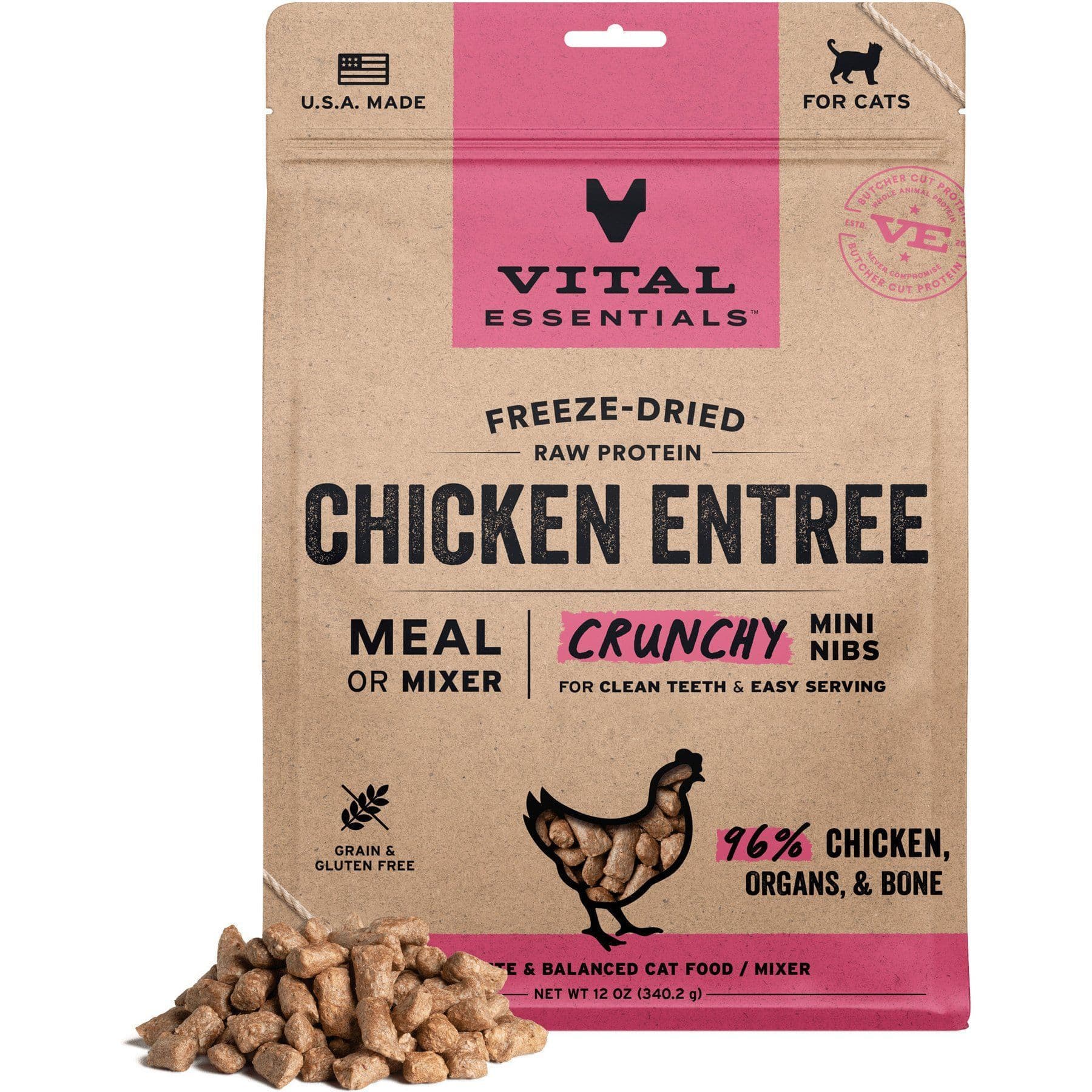
This is an optional cat treat. Review its current label, ingredients, calories, and feeding directions, and count it within the total daily extras.
Webvet may earn a commission when you click through to Chewy, at no extra cost to you.
Why Cats Do Not Need Kale
Cats have species-specific requirements for protein, amino acids, fatty acids, and vitamins. Those facts do not prove kale is filler, reveal a cat's food motives, or make meat-based treats automatically complete and safer. Cats have mandatory requirements for nutrients such as taurine, arachidonic acid, preformed vitamin A, and an appropriate amino-acid balance. Complete feline food is formulated to supply those needs. That biology does not mean a cat gains literally nothing from every plant ingredient, nor does it show that a small kale exposure is toxic. Kale is unnecessary because it is not needed to fill a gap in a complete diet. If it displaces balanced food, the problem is dietary dilution, not that a leaf is chemically empty. Treats should be chosen for the whole cat, including calorie needs, chewing behavior, preferences, and any prescribed diet.
The Real Risks of Kale for Cats
Feline calcium-oxalate urolithiasis is multifactorial. Kale's oxalate content does not establish that an occasional exposure causes crystals, stones, kidney disease, thyroid disease, or predictable gastrointestinal illness. Feline calcium-oxalate urolithiasis is a multifactorial disease, not a direct one-food equation. Urine concentration and chemistry, individual history, anatomy, diet, and other factors influence risk. A cat with prior stones or crystals should follow the veterinarian's specific prevention plan, which may include a prescription diet and monitoring. Owners should not add kale, spinach, supplements, or other unapproved extras to that plan simply because a general list labels one food high or low in oxalate. Likewise, a small kale taste in a cat with no known urinary disease does not establish that stones will form. Urinary straining remains an emergency sign regardless of the food history.


This is an optional cat treat. Review its current label, ingredients, calories, and feeding directions, and count it within the total daily extras.
Webvet may earn a commission when you click through to Chewy, at no extra cost to you.
How to Safely Offer a Tiny Bit of Kale
Wash produce and size it for the cat's chewing behavior. Cooking changes texture, but cooked kale has not been shown to be universally gentler or to lower oxalate-related disease risk. Cooking is best presented as a texture option. Steaming or boiling can soften a leaf, while removing a fibrous stem and chopping can make the piece easier for an individual cat to manage. Available evidence does not show that cooking lowers a clinically meaningful oxalate burden, prevents stones, or guarantees better digestion. Raw kale should not be called toxic merely because it is crisp, and cooked kale should not be described as medically protective. If kale is offered at all, keep it plain and do not add onion or garlic. Butter, oil, and salt raise separate calorie or sodium questions and are not interchangeable with allium toxicology.
How Much Kale Can a Cat Have?
There is no evidence-based pea-size serving or daily kale dose for cats. Any optional taste should fit the individual calorie and medical plan and must not displace complete feline food. There is no evidence-based pea-size feline serving. A pea comparison may sound conservative, but it still invents a dose that has not been validated for a kitten, adult, senior, or cat with disease. Any optional taste must fit alongside every other treat in the individual calorie budget and must not replace complete food. Cats eating a therapeutic diet should receive only extras approved by the treating team. For a cat that has no interest in kale, there is no reason to coax or hide it in food. For a cat that steals a small plain piece, the useful response is observation and symptom-based triage, not a scheduled vegetable routine.

What If My Cat Ate Kale?
After a small plain exposure, note the amount and monitor the individual cat. Signs and recovery time vary; seek veterinary advice for persistent illness or urinary straining. When the exposure involves a prepared dish, identify every ingredient. Onion and garlic can cause dose-dependent red-blood-cell injury in cats, while a salty sauce, rich fat, or swallowed packaging creates different concerns. Save the label or recipe, estimate the amount, and note when it happened. Repeated vomiting, persistent diarrhea, refusal to eat, marked lethargy, abdominal pain, pale gums, dark urine, or urinary straining deserves veterinary advice. Do not induce vomiting unless a veterinarian or poison-service clinician directs it. A normal cat after a small plain-kale bite is usually assessed very differently from a symptomatic cat that ate seasoned greens.
Better Treats for Cats
Choose extras by the cat's complete diet, calorie allowance, urinary plan, and tolerance. Plain cooked animal foods may fit some cats, but kale alternatives are not automatically complete or universally safer.
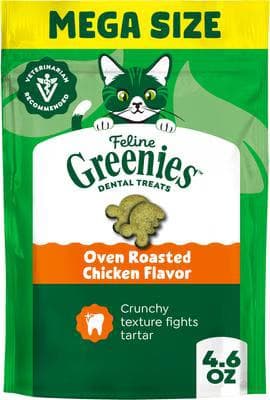
This is a dental cat treat. Follow the current label and ask your veterinarian how it fits alongside tooth brushing and professional dental care.
Webvet may earn a commission when you click through to Chewy, at no extra cost to you.
Frequently Asked Questions
Can kale kill a cat?
A small plain exposure is unlikely to poison a cat, but severe illness requires veterinary assessment.
Can cats eat kale and spinach?
Neither kale nor spinach has an evidence-based feline serving. A cat with urinary disease should follow the prescribed diet.
Can cats eat raw kale?
Raw and cooked kale differ in texture; no cited evidence proves cooking lowers stone risk or digestive effects.
Why does my cat try to eat kale or other greens?
An individual cat's interest cannot be inferred from carnivore biology or sweet-taste receptors.
Is kale in commercial cat food safe?
Commercial food safety depends on the complete formulation and quality controls, not one ingredient viewed in isolation.

More safe treats
More vegetables for cats
Sources
- Merck Veterinary Manual: Urolithiasis in Cats
Feline calcium-oxalate urolithiasis is multifactorial and managed with an individualized plan.
- Merck Veterinary Manual: Nutrition in Disease Management in Small Animals
Therapeutic diets and food restrictions should be selected for the individual diagnosis and patient.
- Merck Veterinary Manual: Overview of Nutrition in Small Animals
Complete and balanced feeding and patient-specific calorie planning are the nutritional baseline for dogs and cats.
- WSAVA: Feeding Treats to Your Cat
All treats share an individual calorie allowance and should not displace complete feline nutrition.
- Merck Veterinary Manual: Garlic and Onion Toxicosis in Animals
Allium risk depends on the ingredient, concentration, dose, and susceptible patient.
Reviewed by Dr. Athena Gaffud, DVM
General guidance based on credible veterinary sources; not a diagnosis or a substitute for your veterinarian. If your pet ate something toxic or is unwell, contact your vet or a pet poison line right away.