
Can cats eat crab?
Safe in moderationPlain fully cooked shell-free crab can be an occasional cat treat, but it is not a complete diet and raw or mixed products need review.


Medically reviewed by Dr. Athena Gaffud, DVM · Last reviewed
Can Cats Eat Crab?
Plain fully cooked, shell-free crab can be an occasional cat treat when it fits the complete diet. Crab is animal protein but not a complete feline diet, and a small amount is still nutrition rather than a substance with no nutritional value. Raw crab, shell, sauces, and surimi need separate assessment.
- 1Assess crab by its exact form, amount, added ingredients, and the individual cat.
- 2There is no evidence-based household-size, mass, volume, or body-weight serving. If the treating team approves a plain taste, use its calories and the cat's total treat allowance. No comparative evidence shows that cats have a universally lower crab tolerance than dogs.
- 3Prepare crab plainly and choose a size and texture suited to how this cat eats.
- 4Crab risks depend on product form, amount, texture, and the individual cat.
- 5Call for persistent illness, swallowing trouble, a possible foreign body, or a hazardous co-ingredient.


Treats should stay under 10% of your cat's daily calories. Smalls makes the rest, built around the meat an obligate carnivore actually needs.
- Human-grade ingredients, protein first
- Built for obligate carnivores
- Fresh meals delivered to your door
Webvet may earn a commission when you click through to Smalls, at no extra cost to you.
Is Crab Safe for Cats?
FDA recommends thoroughly cooking seafood to reduce foodborne-illness risk and says cooked crab flesh becomes firm, pearly, and opaque. Offer discussions should distinguish plain cooked crab meat from raw crab, shell, cartilage, canned meat, imitation crab, crab cakes, dip, and seasoned boil leftovers. Shell pieces are a swallowing or foreign-body concern, while raw seafood adds microbial risk. Imitation and prepared products can contain substantial sodium, starch, dairy, onion, garlic, or other ingredients. Do not serve raw or spoiled crab. Use clean utensils, prevent raw-to-ready-food cross-contamination, and refrigerate leftovers promptly. For mixed products containing crab, keep the package and report every ingredient, amount, time, cat's weight, history, and signs. Crab supplies protein, fat, vitamins, minerals, and energy, but it does not provide all required feline nutrients in the correct proportions. Treat-level nutrients do not establish coat, joint, immune, thyroid, or other health benefits. The complete cat food remains the nutritional foundation.
This food adds optional calories and nutrients, but the complete cat food remains responsible for meeting dietary requirements; crab meat cannot replace a complete feline meal, and its protein or minerals do not establish coat, joint, or immune benefits. Cats on food trials, sodium restriction, or renal diets should receive only seafood additions approved for that plan.
How to Prepare Crab
There is no evidence-based household-size, mass, volume, or body-weight serving. If the treating team approves a plain taste, use its calories and the cat's total treat allowance. No comparative evidence shows that cats have a universally lower crab tolerance than dogs. Use the calories in crab and the individual cat's remaining treat allowance; body weight alone is not a serving chart. Related guidance: garlic.
Cook the meat thoroughly, let it cool, remove every identifiable shell fragment, and serve it without butter, garlic, onion, alcohol, sauce, or seasoning. Check canned crab for brine and added ingredients. Store and discard seafood according to safe handling directions. Sharp shell can injure the mouth or digestive tract, and a larger piece can become a foreign body. The cited evidence does not establish shell as a common feline blockage or predict the outcome of every fragment. Piece size, cat, timing, amount, and signs matter.

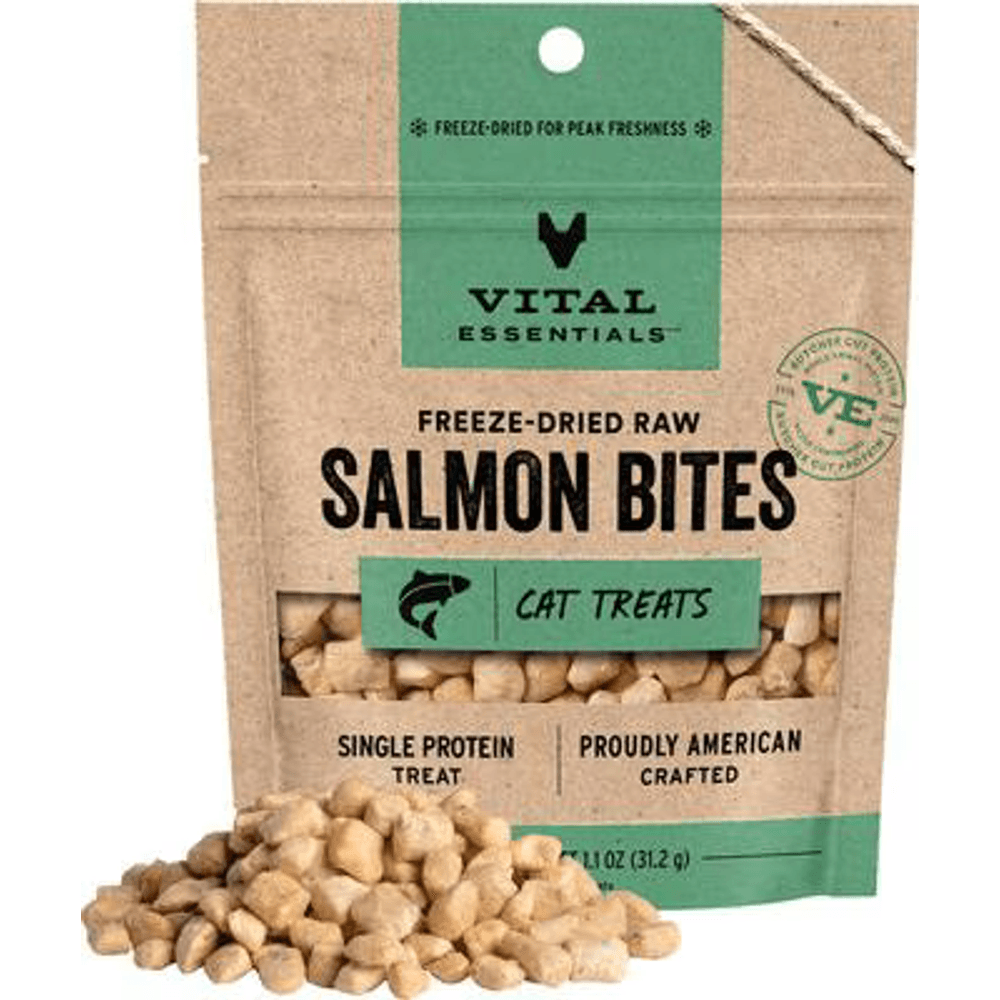
This is an optional cat treat. Review its current label, ingredients, calories, and feeding directions, and count it within the total daily extras.
Webvet may earn a commission when you click through to Chewy, at no extra cost to you.
| Decision point | Evidence-based guidance |
|---|---|
| Plain food | Assess plain crab by form, amount, tolerance, and the individual cat. |
| Portion | Use the individual calorie allowance, not a fixed piece or spoon table |
| Preparation | Serve it plain and choose a manageable size and texture. |
| Mixed product | Read every ingredient and keep the package or recipe for advice. |
| Medical diet | Do not exclude every kitten, senior, kidney patient, heart patient, thyroid patient, or cat with pancreatitis from crab by diagnosis alone. The treating team decides whether an extra fits the therapeutic goal. Allergy claims also require a controlled food-trial process. |
| Concerning signs | Call for persistent illness, swallowing trouble, or a hazardous co-ingredient. |
Why imitation crab is a no for cats
A trivial amount of plain crab does not prove sodium or iodine toxicosis. Product and dose matter. A brined or seasoned item may add more sodium, while therapeutic kidney, heart, or thyroid plans may have specific nutrient targets set by the treating veterinarian.
Risks and When to Call
Surimi varies by product. It commonly combines fish with starch and other ingredients, but starch or sugar is not a feline toxin by itself. Read calories, sodium, flavoring, egg or other allergens, and seasoning on the exact label instead of issuing a categorical ban. Do not exclude every kitten, senior, kidney patient, heart patient, thyroid patient, or cat with pancreatitis from crab by diagnosis alone. The treating team decides whether an extra fits the therapeutic goal. Allergy claims also require a controlled food-trial process. Related guidance: vomiting; diarrhea.

This is an optional cat treat. Review its current label, ingredients, calories, and feeding directions, and count it within the total daily extras.
Webvet may earn a commission when you click through to Chewy, at no extra cost to you.
Call for breathing or swallowing difficulty, facial swelling, repeated vomiting, marked lethargy, pain, bleeding, a concerning shell amount, spoiled seafood, or a mixed product containing a hazardous ingredient. Refrigerate cooked crab promptly and discard seafood that smells spoiled or has remained at an unsafe temperature. A cat that reaches garbage may also swallow shell, string, foil, or absorbent packaging, so inventory the discarded items. Bring the package and describe amount, timing, cat weight, and signs.
Choosing Other Treats
Raw seafood may carry pathogens, while parasite claims need product- and species-specific evidence. The safe consumer recommendation is to cook crab thoroughly without expanding the warning into unsupported lists or predicting that every raw taste causes infection. If this food does not fit the plan, choose another veterinarian-approved treat and count it within the same calorie allowance. Related guidance: plain cooked chicken; plain cooked salmon; cooked egg.
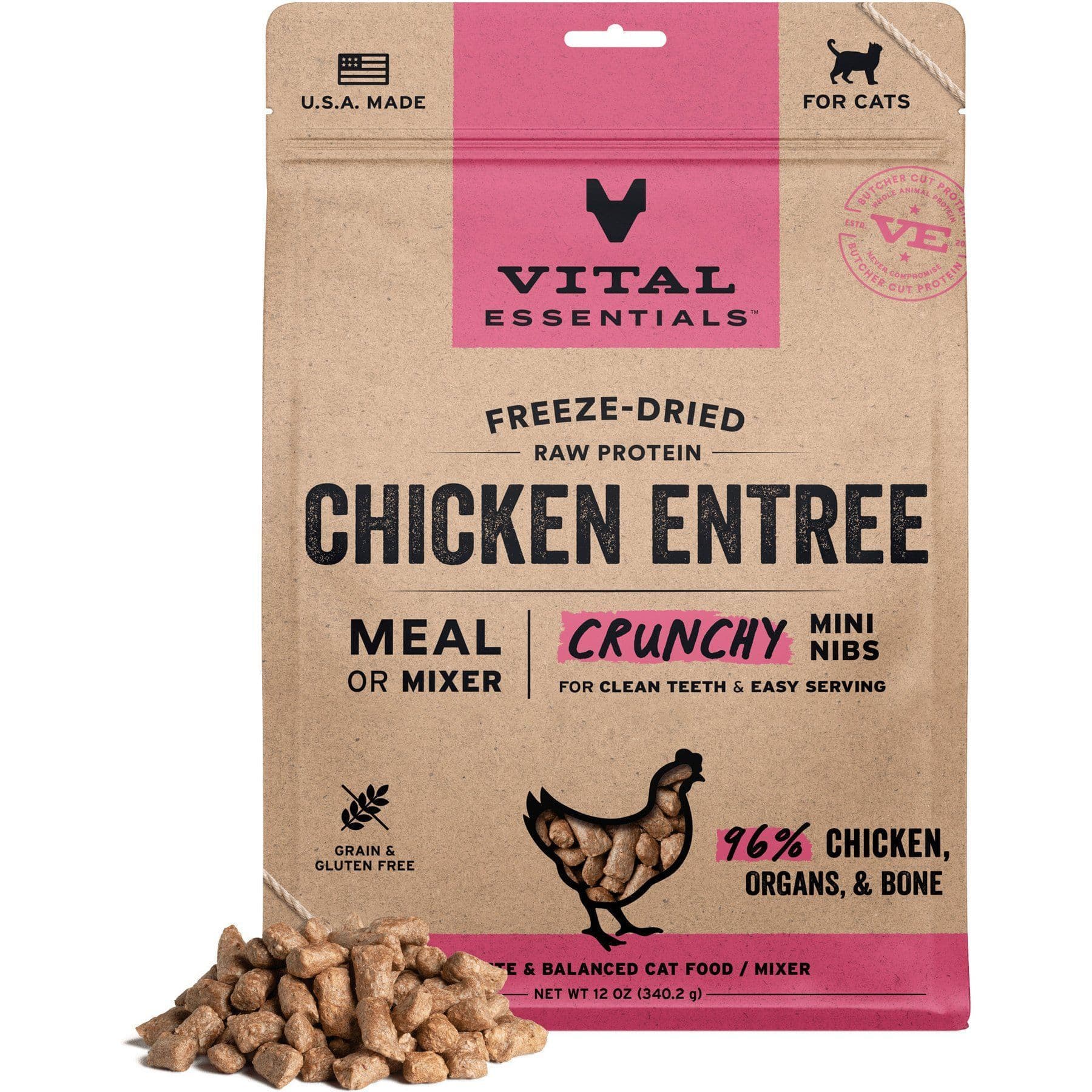
This is an optional cat treat. Review its current label, ingredients, calories, and feeding directions, and count it within the total daily extras.
Webvet may earn a commission when you click through to Chewy, at no extra cost to you.
Frequently Asked Questions
Can cats eat plain cooked crab?
Plain fully cooked shell-free crab may fit as an occasional calorie-counted treat when it contains no hazardous seasoning.
Is crab nutrition or only a treat?
Crab is animal protein and contains nutrients, but it is not a complete feline diet and has no proven treat-level clinical benefit.
Will every shell fragment cause a blockage?
No. Shell can cut or lodge, but risk and outcome depend on fragment size, amount, cat, timing, and signs.
Is imitation crab toxic to cats?
No categorical rule fits every surimi. Read the exact label for calories, sodium, flavoring, allergens, and other ingredients.
Must every heart or kidney patient avoid crab?
Not automatically. Their treating team should decide whether the exact product fits the therapeutic diet's goals.

Cooked shell-free crab can be an occasional feline extra, but it is not a complete diet. If crab was eaten accidentally, keep the label and note whether any shell, skewer, wrapper, or seasoning is missing. Repeated vomiting, gagging, swallowing trouble, abdominal pain, breathing difficulty, facial swelling, collapse, or marked lethargy requires prompt veterinary assessment. Do not assume every reaction is an allergy or that every shell exposure requires surgery; the clinician will assess the specific patient and object. Avoid fixed portions, sodium or iodine alarmism, and categorical surimi bans; assess shell, cooking, label, and the individual medical plan. The practical decision is individualized: confirm the exact food, use a manageable texture, keep extras within the calorie plan, and watch the actual cat rather than a fixed schedule. Contact a veterinarian for persistent vomiting or diarrhea, marked lethargy, pain, breathing or swallowing trouble, inability to pass stool or urine, neurologic signs, or any ingredient-specific toxicology concern.
More safe treats
More meat & seafood for cats
Sources
- FDA: Selecting and Serving Fresh and Frozen Seafood Safely
Recommends thorough cooking to minimize foodborne illness and states that crab flesh should become firm, pearly, and opaque when cooked.
- FDA: Raw Pet Food Diets Can Be Dangerous to You and Your Pet
Reports that tested raw pet foods were more likely than other tested foods to contain disease-causing bacteria and recommends thorough cooking of raw ingredients.
- Merck Veterinary Manual: Gastrointestinal Obstruction in Small Animals
Supports patient-specific foreign-body assessment and urgent evaluation when obstruction signs develop.
- Merck Veterinary Manual: Overview of Nutrition in Small Animals
Supports complete and balanced feeding and patient-specific nutrition; it does not establish clinical benefit from a treat portion.
- Merck Veterinary Manual: Nutritional Requirements of Small Animals
Supports species-specific nutrient requirements, including the feline need for preformed vitamin A and the distinction between digestibility and essential nutrient source.
- Merck Veterinary Manual: Nutrition in Disease Management in Small Animals
Supports clinician-directed therapeutic diets and careful diagnosis of adverse food reactions rather than blanket food exclusions.
- Merck Veterinary Manual: Salt Toxicosis in Animals
Supports dose- and hydration-dependent salt toxicosis rather than treating one salted bite as a defined toxic dose.
- WSAVA: Feeding Treats to Your Cat
Supports keeping cat treats within about 10% of daily calories without imposing universal piece, spoon, or frequency tables.
Reviewed by Dr. Athena Gaffud, DVM
General guidance based on credible veterinary sources; not a diagnosis or a substitute for your veterinarian. If your pet ate something toxic or is unwell, contact your vet or a pet poison line right away.