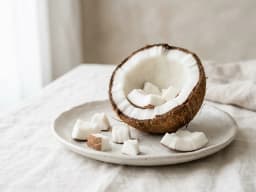
Can cats eat coconut?
Safe in moderationA small plain coconut taste is unlikely to seriously harm a cat, but rich products can upset the gut and coconut water is unsuitable.


Medically reviewed by Dr. Athena Gaffud, DVM · Last reviewed
Can Cats Eat Coconut?
A small taste of plain coconut flesh is unlikely to cause serious harm to a cat, but coconut products differ. Oils in flesh or milk may cause stomach upset or loose stool, and coconut water should not be offered because it is high in potassium. No cited evidence makes every exposure a toxic dose. A modest nibble may cause no signs, while a rich or unfamiliar product can cause nonspecific vomiting, diarrhea, or appetite change in an individual cat. Those outcomes are possible rather than expected after every taste. Assess the exact form, amount, cat, diet, and symptoms. For mixed products containing coconut, keep the package and report every ingredient, amount, time, cat's weight, history, and signs. Related guidance: vomiting.
- 1Assess coconut by its exact form, amount, added ingredients, and the individual cat.
- 2There is no evidence-based coconut spoon, flake count, or frequency schedule. If the veterinary team considers a plain taste compatible, use its actual calories within the total treat allowance and protect the complete feline diet. Concentrated oil adds calories rapidly.
- 3Prepare coconut plainly and choose a size and texture suited to how this cat eats.
- 4Rich foods can cause gastrointestinal upset, but a coconut nibble does not predict pancreatitis. Feline pancreatitis is complex and cannot be diagnosed from one food exposure. Persistent vomiting, anorexia, pain, hiding, or lethargy requires veterinary evaluation rather than an online ingredient conclusion.
- 5Call for persistent illness, swallowing trouble, a possible foreign body, or a hazardous co-ingredient.

Treats should stay under 10% of your cat's daily calories. Smalls makes the rest, built around the meat an obligate carnivore actually needs.
- Human-grade ingredients, protein first
- Built for obligate carnivores
- Fresh meals delivered to your door
Webvet may earn a commission when you click through to Smalls, at no extra cost to you.
Is Coconut Safe for Cats?


This is an optional cat treat. Review its current label, ingredients, calories, and feeding directions, and count it within the total daily extras.
Webvet may earn a commission when you click through to Chewy, at no extra cost to you.
Cats require specific animal-derived nutrients, but they can digest and use dietary fat from more than one source. Coconut is unnecessary and calorie-dense, yet broad claims that all plant-derived fat is unusable are inaccurate. Composition does not prove a clinical benefit from a taste. This food adds optional calories and nutrients, but the complete cat food remains responsible for meeting dietary requirements. Related guidance: garlic; chocolate; grapes.
There is no evidence-based coconut spoon, flake count, or frequency schedule. If the veterinary team considers a plain taste compatible, use its actual calories within the total treat allowance and protect the complete feline diet. Concentrated oil adds calories rapidly. Use the calories in coconut and the individual cat's remaining treat allowance; body weight alone is not a serving chart.
How to Portion Coconut
Remove hard shell and fibrous husk, keep edible flesh plain, and check packaged flakes, milk, cream, baked goods, and beverages for every added ingredient. Do not offer coconut water. Store opened products according to the label and discard food that smells spoiled or has unintended mold. Shell can injure teeth or act as a foreign body, while a fibrous piece may be awkward to swallow. The result is patient-specific and not automatically obstruction or surgery. Breathing trouble is urgent; repeated vomiting, pain, appetite loss, or absent stool after a concerning object needs assessment.

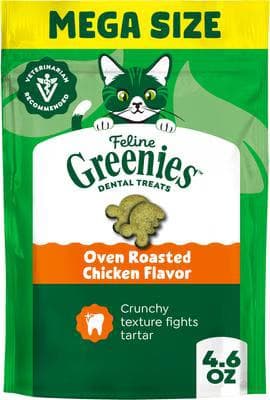
This is a dental cat treat. Follow the current label and ask your veterinarian how it fits alongside tooth brushing and professional dental care.
Webvet may earn a commission when you click through to Chewy, at no extra cost to you.
Rich foods can cause gastrointestinal upset, but a coconut nibble does not predict pancreatitis. Feline pancreatitis is complex and cannot be diagnosed from one food exposure. Persistent vomiting, anorexia, pain, hiding, or lethargy requires veterinary evaluation rather than an online ingredient conclusion. Flesh, oil, milk, cream, water, and topical products are different exposures. A cosmetic may contain fragrances or essential oils that change the risk. Do not let a cat lick a topical product, and do not apply coconut oil to skin disease as treatment without veterinary direction and evidence.
Coconut Oil, Milk, and Water: Which Forms Matter
Cats on kidney, heart, pancreatic, gastrointestinal, weight, allergy, or other therapeutic plans need patient-specific decisions. Coconut meat, flakes, milk, cream, oil, water, flour, shell, and husk have different fat, mineral, texture, and concentration profiles. Sweetened flakes and desserts add other ingredients, while shell or husk is a foreign-body question rather than a nutrition question. Identify the exact form and retain the label. The exact product may conflict through calories, fat, potassium, or other ingredients. Do not use coconut water for hydration or coconut oil as a home medication. Call for repeated gastrointestinal signs, marked lethargy, pain, breathing or swallowing difficulty, a swallowed shell or husk, substantial oil or water, skin exposure to a complex product, or a mixed food containing a hazardous ingredient. Keep the label for review.
Coconut Forms at a Glance
| Decision point | Evidence-based guidance |
|---|---|
| Plain food | Assess plain coconut by form, amount, tolerance, and the individual cat. |
| Portion | Use the individual calorie allowance, not a fixed piece or spoon table |
| Preparation | Serve it plain and choose a manageable size and texture. |
| Mixed product | Read every ingredient and keep the package or recipe for advice. |
| Medical diet | Cats on kidney, heart, pancreatic, gastrointestinal, weight, allergy, or other therapeutic plans need patient-specific decisions. The exact product may conflict through calories, fat, potassium, or other ingredients. Do not use coconut water for hydration or coconut oil as a home medication. |
| Concerning signs | Call for persistent illness, swallowing trouble, or a hazardous co-ingredient. |

Choosing Other Treats
Feline grape and raisin risk remains uncertain: canine renal toxicosis is established, while feline reports are anecdotal and unconfirmed. Precautionary avoidance is appropriate, but grapes should not be listed as a proven feline poison when comparing coconut with other foods. If this food does not fit the plan, choose another veterinarian-approved treat and count it within the same calorie allowance. Related guidance: plain cooked chicken; cooked egg; cooked fish.
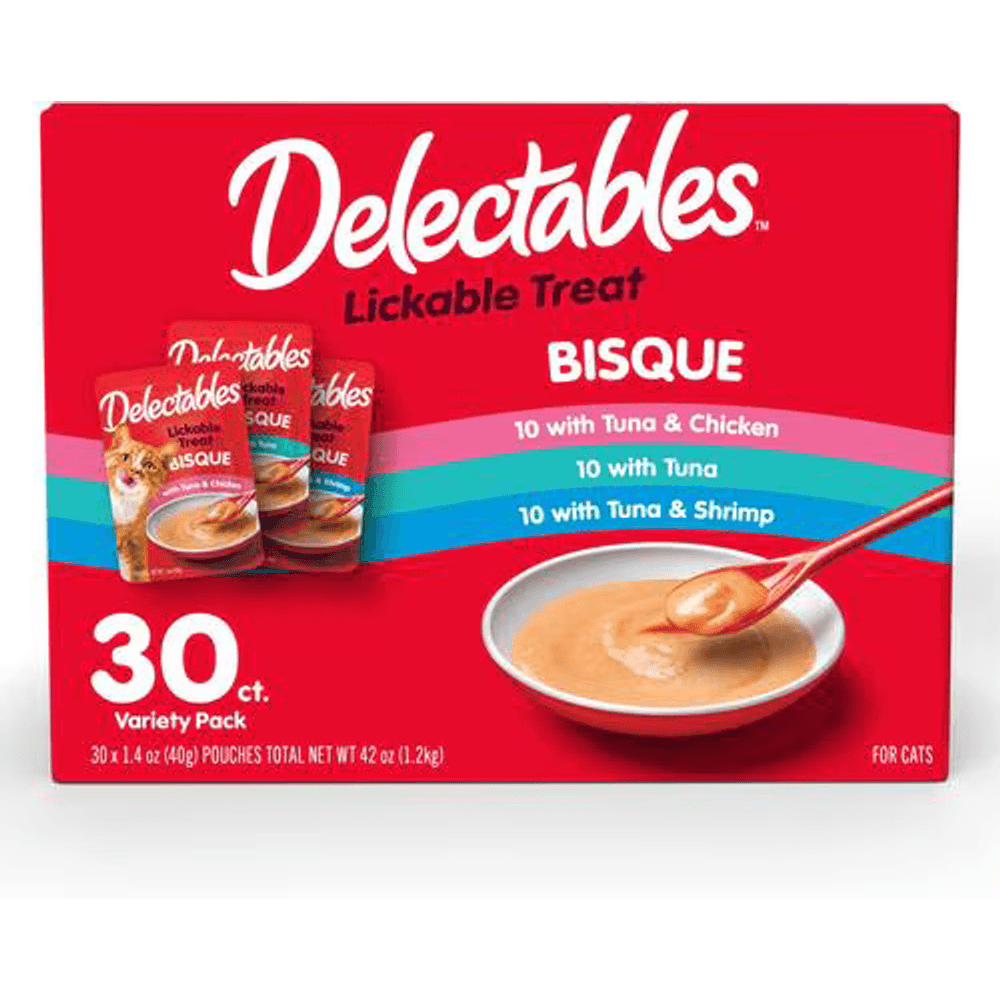
This is an optional cat treat. Review its current label, ingredients, calories, and feeding directions, and count it within the total daily extras.
Webvet may earn a commission when you click through to Chewy, at no extra cost to you.
Coconut can be a low-poisoning-risk nibble in its plain flesh form, but it is optional and not a skin, digestive, or hydration treatment. Separate each product form, avoid coconut water, and keep feline grape claims species-accurate. The practical decision is individualized: confirm the exact food, use a manageable texture, keep extras within the calorie plan, and watch the actual cat rather than a fixed schedule. Contact a veterinarian for persistent vomiting or diarrhea, marked lethargy, pain, breathing or swallowing trouble, inability to pass stool or urine, neurologic signs, or any ingredient-specific toxicology concern.
Frequently Asked Questions
Can cats eat plain coconut flesh?
A small plain taste is unlikely to cause serious harm, though oils in the flesh may cause gastrointestinal upset in an individual cat.
Is coconut water safe for cats?
ASPCA advises that coconut water should not be offered because it is high in potassium. It is not a feline hydration treatment.
Can cats digest coconut fat?
Cats can digest and use dietary fat from more than one source, but coconut remains unnecessary and calorie-dense.
Does a coconut taste cause pancreatitis?
No. A rich food may cause gastrointestinal upset, but no coconut-specific dose predicts feline pancreatitis.
Are grapes proven feline poisons?
No. The canine syndrome is established, while feline grape and raisin risk remains anecdotal and uncertain. Avoid exposure and seek advice.

More safe treats
More fruits for cats
Sources
- ASPCA: People Foods to Avoid Feeding Your Pets
Supports checking flavored or mixed coconut products for separate ingredients that may be hazardous to cats.
- Merck Veterinary Manual: Overview of Nutrition in Small Animals
Supports complete and balanced feeding and patient-specific nutrition; it does not establish clinical benefit from a treat portion.
- Merck Veterinary Manual: Nutritional Requirements of Small Animals
Supports species-specific nutrient requirements, including the feline need for preformed vitamin A and the distinction between digestibility and essential nutrient source.
- Merck Veterinary Manual: Pancreatitis in Dogs and Cats
Supports dietary indiscretion as a canine risk factor while not establishing a food-specific dose or predictable outcome from one exposure.
- Merck Veterinary Manual: Gastrointestinal Obstruction in Small Animals
Supports patient-specific foreign-body assessment and urgent evaluation when obstruction signs develop.
- VCA Animal Hospitals: Household Hazards, Toxic Hazards for Cats
States that whether grapes and raisins produce the canine renal syndrome in cats is unknown and recommends precautionary professional advice after exposure.
- Merck Veterinary Manual: Grape, Raisin, and Tamarind Toxicosis in Dogs
Establishes canine grape and raisin renal toxicosis without establishing the same detailed syndrome in cats.
- WSAVA: Feeding Treats to Your Cat
Supports keeping cat treats within about 10% of daily calories without imposing universal piece, spoon, or frequency tables.
Reviewed by Dr. Athena Gaffud, DVM
General guidance based on credible veterinary sources; not a diagnosis or a substitute for your veterinarian. If your pet ate something toxic or is unwell, contact your vet or a pet poison line right away.