Do Dogs Go to Heaven? Comfort for Grieving Owners
A compassionate, belief-neutral guide for grieving dog owners, with honest limits, gentle ways to preserve a bond, and trusted pet-loss support resources.

This article contains affiliate links. Webvet may earn a commission when you buy through them, at no extra cost to you.
Science cannot prove what happens after death, and faith traditions do not all answer the question in the same way. If you are asking, "Do dogs go to heaven?" you do not have to settle that mystery today. The love, safety, companionship, and care you shared with your dog were real, and grief is a natural response to losing that bond.
 Sponsored
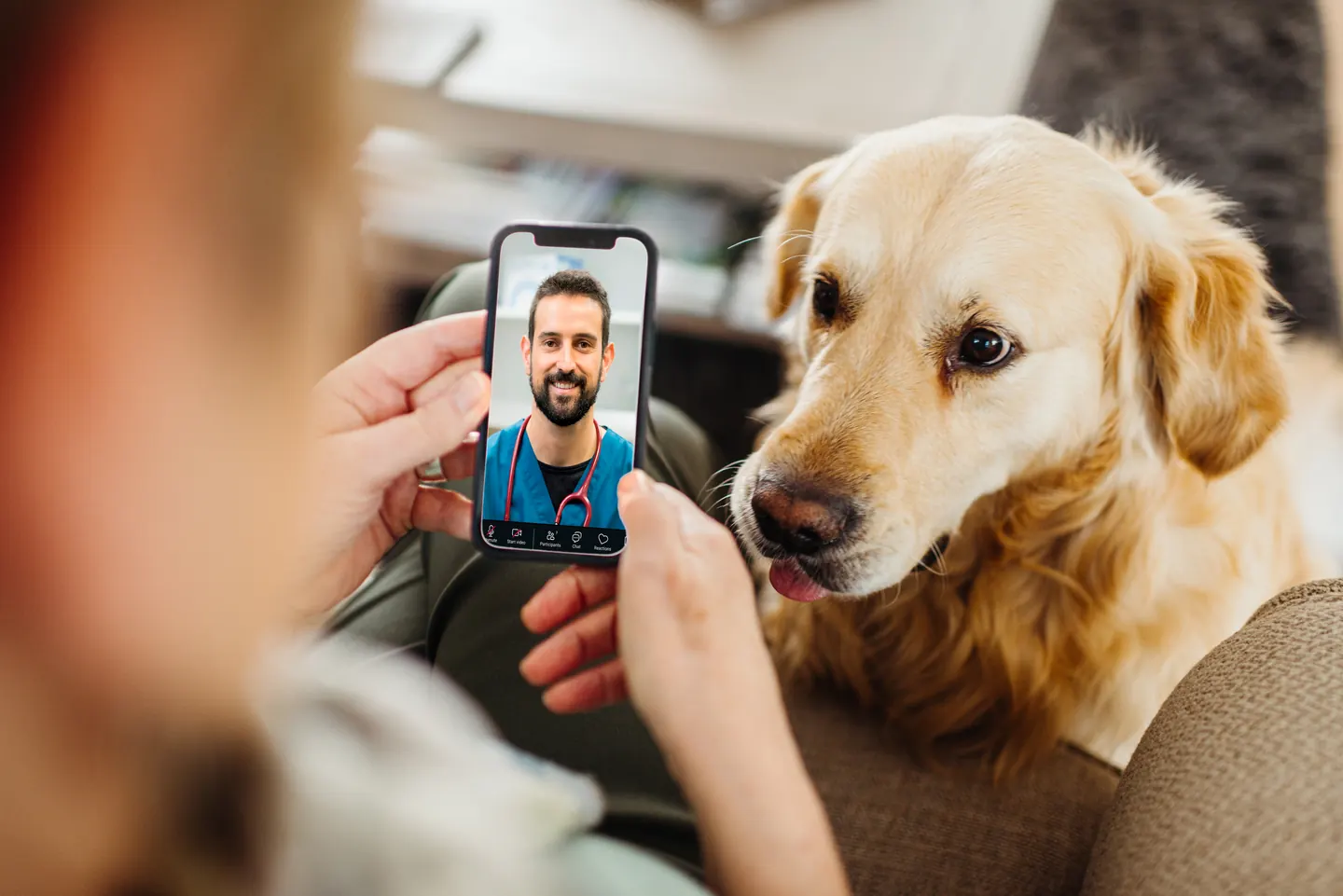
Want a vet's help with your dog's anxiety or behavior?
Talk to a licensed vet at Dutch over video, often the same day. They can recommend treatment and prescribe it when it's appropriate.
Use code Pets60
Plans start at $12/month · covers up to 5 pets
- Licensed vets in most states
- Rx for 150+ conditions
- 4.7 on Trustpilot
Can anyone know whether dogs go to heaven?
There is no scientific proof that dogs do or do not go to heaven, and different beliefs reach different conclusions. The bond still matters whether you hold a confident faith, a private hope, or no belief in an afterlife. You can honor your dog's life without turning uncertainty into proof.
There is no scientific test that can show whether dogs go to heaven, whether dogs have souls, or whether people and pets reunite after death. Science can study bodies, behavior, attachment, stress, memory, and grief. It cannot observe an afterlife. That boundary is not a judgment about anyone's faith or hope. It simply distinguishes a measurable finding from a belief about what may happen beyond life.
People also ask whether a dog actually goes to heaven, what a pet heaven might be like, or whether a beloved dog is waiting for an owner. Those are different forms of the same unknowable afterlife question. No living person can know whether dogs and humans share a destination or whether souls or spirits continue. A hopeful answer can comfort you without being presented as proof.
Why grief makes the question urgent
That limit does not make the question foolish. People often ask whether pets go to heaven because a dog's death has created a painful break in a close relationship. The question can mean, "Is my dog safe?" "Did our bond matter?" or "Will I ever feel close to my dog again?"
If your dog is still with you: comfort-focused care
For families facing anticipatory grief while a dog is still with them, a supportive bed can help preserve a familiar resting place.

An orthopedic sofa bed with three bolstered sides for dogs who like to rest their head and joints against a cushion. The supportive foam base cradles hips and elbows, a comforting spot for an older or shaky dog to settle.
Webvet may earn a commission when you click through to Chewy, at no extra cost to you.
A soft bolstered bed can support quiet, comfort-focused time together.

A plush, long-fur donut bolster bed with a raised rim that gives a recovering pet a secure, cushioned place to curl up during the crucial 10 to 14 days after surgery.
Webvet may earn a commission when you click through to Chewy, at no extra cost to you.
A familiar waterproof pet blanket can protect a preferred resting place when mobility or bladder control changes.

A plush, waterproof sherpa blanket that gives a cold or shivering dog a warm, cozy layer to curl into. The hidden waterproof lining protects the bed, couch, or car seat, and the whole thing is machine washable.
Webvet may earn a commission when you click through to Chewy, at no extra cost to you.
If your dog still seeks gentle play, a familiar soft dog toy can be offered without pressure and put away when your dog wants to rest.

No-stuffing squeaky plush toys that satisfy a dog's urge to shake and carry prey, with no stuffing to shred and scatter.
Webvet may earn a commission when you click through to Chewy, at no extra cost to you.
Comfort items cannot treat pain, breathing trouble, nausea, anxiety, or other medical problems. Ask your veterinarian how to support comfort and when a change needs urgent care.
Whether you phrase it as "Do dogs go to heaven when they die?", "Do pets go to heaven?", or "Will my dog go to heaven?", the evidence limit is the same. Questions such as "Do dogs have souls?" and "Will I see my dog in heaven?" can be held as sincere matters of faith or hope, but not resolved by a scientific test.
Different people answer those questions through religion, spirituality, philosophy, or a belief that death is the end of consciousness. None of those views can be established as a universal fact. A compassionate answer makes room for the reader's belief without requiring everyone else to share it. Belief pluralism matters here because two grieving people can love their dogs equally while holding different convictions about souls, heaven, reunion, or whether consciousness continues.
Hope without certainty
Questions such as "Do all dogs really go to heaven?" or "Where do dogs go when they die?" do not have a testable answer. The image of a dog waiting in heaven for an owner can be a personally meaningful belief, but it remains a hope rather than evidence.
It is also reasonable not to know. You can say, "I hope I will see my dog again," without claiming certainty. You can say, "I do not believe in an afterlife, but this relationship changed me," without reducing the dog's life to something unimportant. Hope and honesty can exist together.
Where does a dog's soul go after death?
The answer depends on what a person means by a soul and which spiritual or philosophical tradition they follow. Some people believe every living being has a soul that continues after death. Others reserve that idea for humans, understand soul in a symbolic way, or do not believe consciousness continues.
There is no evidence-based timeline or destination that can resolve those differences. If the language of a soul helps you express your dog's personality and the bond you shared, it can be personally meaningful. It should not be presented as a measurable conclusion.

 Sponsored
Vet care that's always there
Unlimited video calls and messaging with licensed vets for less than a typical vet visit. One membership covers up to five pets.
Use code Pets60
Plans start at $12/month · covers up to 5 pets
- Licensed vets in most states
- Rx for 150+ conditions
- 4.7 on Trustpilot
What different beliefs say about dogs and heaven
Religious communities do not offer one uniform teaching about dog heaven. Even people within the same faith tradition can interpret scripture, tradition, and the nature of animals differently. A faith tradition may give a grieving owner language for hope, creation, soul, or reunion, but individual clergy and members may still disagree. The most accurate approach is to describe that variation without claiming one official answer for every believer.
Some Christians point to biblical images of a renewed creation that includes animals and take comfort in the possibility that animals are part of life to come. Others note that the Bible does not directly promise that an individual pet will enter heaven or reunite with an owner. Catholic writers and clergy also express more than one view, often balancing the special status of human beings in Catholic teaching with hope in God's care for all creation.
Why there is no single Christian answer
Christian beliefs about dogs in heaven therefore are not one uniform answer. The same caution applies to questions such as whether dogs go to heaven according to the Bible or whether Catholics believe dogs go to heaven: people interpret scripture and tradition differently, and this article does not choose among those interpretations.
Jewish, Muslim, Hindu, Buddhist, and other traditions have their own teachings about animals, souls, creation, rebirth, judgment, or the world to come. Within each broad label, practice and interpretation vary. A short internet article cannot speak for every community or family.
Does the Bible say dogs go to heaven?
Does the Bible say dogs go to heaven? The Bible does not give a direct statement that a particular dog goes to heaven after death. Passages that include animals in creation or restoration can support hope for some readers, but they do not function as scientific evidence or an explicit promise about one pet. Christian readers can hold hope while acknowledging that scripture is interpreted differently and does not settle the question in one sentence.
If scripture is central to your grief, consider speaking with a trusted clergy member who understands both your tradition and the importance of your relationship with your dog. That conversation may be more supportive than a debate among strangers about a single verse.
What your dog could know about your love
We cannot know a dog's final private thoughts. We can, however, recognize that dogs form attachment relationships, learn familiar voices and routines, seek comfort from trusted people, and respond to touch, scent, and presence. Human-dog attachment is built through repeated daily experiences rather than one final moment. Those observable signs of recognition and safety support what we can say about the relationship, while claims about a spirit, afterlife, or exact final thought remain outside scientific measurement.
Where do dogs go when they die? Some owners ask the same question as, "Do dogs go to heaven when they die?" or "When dogs die, do they go to heaven?" The honest answer is that science cannot identify an afterlife destination. Whether dogs really go to heaven when they die belongs to personal belief, while veterinary care and attachment evidence can address only the dog's lived experience before death.
If you fed your dog, protected them, sought veterinary care, spoke gently, played, rested nearby, and made difficult decisions with their welfare in mind, those actions created a lived pattern of safety and care. You do not need proof that your dog formed the human sentence "I am loved" for that care to have mattered.
Did my dog know I loved him when he died?
Did my dog know I loved him when he died? No one can retrieve a dog's thoughts from a final moment, but a dog can recognize a familiar person and respond to a long history of care. Familiar scent, voice, touch, routines, and protection can become learned signals of safety. Your relationship was built across ordinary days, not judged by one perfect goodbye, and the care you repeatedly gave did not depend on your dog forming a human sentence about love.
People often replay the last appointment, the last breath, or the fact that they were not present. Grief can make one moment feel as if it erased years of companionship. It did not. If your dog was sedated, confused, very ill, or separated from you at the end, that does not cancel the repeated comfort you provided throughout life.
Do dogs know when it is their last day?
There is no evidence that dogs understand a "last day" as humans do. A dog may notice pain, weakness, changes in breathing, a new location, or the emotional state of people nearby. That is different from understanding death as a future event on a calendar.
Focus on what was possible: relief from suffering, a familiar voice, gentle handling, a favorite blanket, or simply the absence of further pain. If the final day was not peaceful, it can help to remember that a life is larger than its ending.
Will my dog remember me after death?
Will my dog remember me when he died? Science cannot test memory after death. During life, dogs can remember familiar people, places, odors, routines, and learned associations, so your presence could be part of a deeply familiar pattern while your dog was alive. Whether any memory continues after death is a spiritual question, not a finding from canine cognition research, and no one can verify a post-death memory for an individual dog.
What grief can feel like after losing a dog
The American Veterinary Medical Association's pet-loss guidance acknowledges that grief after an animal dies can include sadness, anger, guilt, loneliness, and changes in ordinary routines. A systematic review of pet bereavement research likewise identified the relationship, grief, guilt, support, and adjustment as recurring themes. Pet bereavement can be profound even when other people do not understand the depth of the relationship.

You may hear the dog's tags when the house is quiet, reach for a leash automatically, or feel the absence most sharply at feeding time. You may feel relief that suffering ended and then feel guilty about that relief. You may cry unexpectedly or feel numb. Grief does not follow a neat order, and the intensity of your response is not a competition with anyone else's loss.
Children may return to the same question many times. Honest, age-appropriate language is usually kinder than a confusing euphemism. It is okay to say that the dog's body stopped working, that the dog died, and that the family can still remember and love them. A family's spiritual belief can be added as a belief: "We believe..." or "We hope..." rather than as a fact every child must understand the same way.
If another pet in the household changes behavior after the loss, this guide to how cats may mourn another cat explains why surviving animals may also need stable routines and observation. Similar principles of routine, veterinary attention for persistent changes, and gentle support can help other household pets.
Coping with pet loss and keeping a bond
Continuing bonds do not mean refusing to accept the death. They describe ways the relationship can remain part of your life through memory, values, stories, or private rituals. Research on continuing bonds after companion-animal loss suggests that these bonds and a person's attachment style can shape grief severity. A continuing bond can coexist with accepting the physical loss and gradually rebuilding daily life.
Practical grief help may include addressing guilt, choosing continuing bonds that feel supportive, speaking honestly with children, finding trained pet-loss support, and using crisis help when needed. These options are not a checklist that every grieving owner must complete. They are different forms of care for the emotional, family, practical, and safety needs that can follow the death of a dog.
What can help on the first day?
On the first day, reduce the number of decisions if you can. Contact one trusted person, drink water, eat something simple, and write down veterinary or aftercare information you may need later. Choose one immediate remembrance action, such as saving a photograph or writing a specific memory. You do not have to sort every belonging, explain the loss to everyone, or decide what grief should look like before sleeping.
What can help during the first week?
During the first week, protect basic routines while allowing them to change. Tell supportive people what happened, include children with honest age-appropriate language, and consider a pet-loss group or counselor if isolation is growing. Revisit guilt with the veterinarian when medical facts may help. Keep a remembrance practice only if it comforts you, and change it if it begins to feel like an obligation.
You might:
- Write down one specific memory before details fade.
- Make a small photo album or share stories with someone who knew your dog.
- Keep a collar, tag, paw print, or favorite photograph in a place that feels comforting.
- Donate time or supplies in your dog's name if service fits your values.
- Create a private ritual on an anniversary or favorite walking day.
- Put away belongings gradually if doing everything at once feels too painful.
There is no correct schedule for these choices. Some people need to remove bowls immediately because seeing them is unbearable. Others need them to remain for a while. Neither response proves greater love.
Try to separate guilt from responsibility. If you made an end-of-life decision, you probably made it with limited information under emotional pressure. Ask the veterinarian to explain the medical situation again if you are stuck on whether you acted too soon or too late. A clearer account cannot remove grief, but it can correct assumptions that grief has turned into certainty.
When grief feels too heavy to carry alone
Grief deserves support before it becomes a crisis. The Cornell University College of Veterinary Medicine pet-loss resources include support options and guidance for adults and families. Cornell's pet-loss resources can be one starting point rather than the only acceptable form of help. A veterinarian may also know local pet-loss groups, grief counselors, or mental-health professionals who respect the significance of an animal relationship and understand why this loss can disrupt daily life.
Seeking help does not mean the bond was unhealthy. It means the loss is heavy enough to deserve care.
Frequently Asked Questions
Will you see your dog in heaven?
No one can promise whether you will see your dog in heaven. Many people hold reunion as a personally meaningful belief, while other people understand death differently. It cannot be scientifically verified. You can let that hope comfort you without presenting it as certainty, and you can honor your relationship through memories and choices that remain real now.
Will my dog visit me after he dies?
Will my dog visit me after he dies? Some grieving people experience vivid dreams, familiar sounds, coincidences, or sudden memories as a visit from a dog after death. Interpreting that experience is a personally meaningful belief, but a dog visiting after he dies cannot be scientifically verified. You do not have to dismiss a comforting moment, and you do not have to prove it. Let it carry the meaning that feels honest without making it a test of your bond.
How to tell if your deceased dog is with you?
There is no reliable sign or test that can tell whether your deceased dog is with you. A dream, familiar sound, sensed presence, or timely memory may support a personally meaningful belief, but it cannot be scientifically verified as contact. You may accept the comfort of the experience without feeling pressure to decode it, repeat it, or persuade anyone else that it was proof.
How long do dog spirits stay with you?
How long do dog spirits stay with you? No evidence establishes that dog spirits stay with you for a particular length of time, and traditions answer differently. A continuing spiritual presence can be a personally meaningful belief, but it cannot be scientifically verified or timed. What can remain in an observable way is your dog's influence through memory, routines, relationships, and the care you give other living beings.
The mystery of what comes after death does not erase what came before it. Your dog had a life shaped by your care, and your grief reflects a relationship worth honoring.

Editor
The Webvet Editorial Team is the in-house group of pet-care editors and writers behind Webvet, operated by Smart Pet Collective. The team researches, writes, and maintains Webvet's pet health, behavior, and medication content. Every article follows a defined editorial process: research from reputable veterinary and scientific sources, careful drafting, mandatory review of medical content by a credentialed veterinarian, and dated publication. Health and medication articles are medically reviewed by a licensed veterinary professional before they go live and are kept current over time.


