Animax Ointment for Dogs: Uses, How to Apply and Side Effects
Animax ointment for dogs is a prescription combination of nystatin, neomycin, thiostrepton and triamcinolone. Learn what it treats, how to apply it in ears and on skin, licking risks, side effects and alternatives.
Medically reviewed by Dr. Athena Gaffud, DVM · Last reviewed

Drug facts
Animax Ointment
Animax Ointment is a prescription topical medication for dogs and cats combining two antibiotics (Neomycin, Thiostrepton), an antifungal (Nystatin), and a corticosteroid (Triamcinolone). It treats ear infections, skin irritations, cysts, and anal gland infections.
Treats
 $65 · no membership
Need a prescription for Animax Ointment?
A licensed vet can assess your dog over video and prescribe Animax Ointment online when it's appropriate.
 Talk to a vet
- Licensed vets
- All 50 states
- same-day Rx
Webvet may earn a commission if you book.
Animax ointment for dogs is a prescription medication from Dechra that treats ear infections, hot spots and other inflamed skin, interdigital cysts and infected anal glands. One tube combines four drugs: an antifungal (nystatin), two antibiotics (neomycin sulfate and thiostrepton) and a steroid (triamcinolone acetonide).
It pairs a steroid with an antibiotic that can harm hearing if it gets past a damaged eardrum, which is one reason Animax ointment for dogs is sold only with a veterinarian's prescription.
What Is Animax Ointment Used For in Dogs?
Veterinarians use Animax to treat ear infections (otitis externa), inflamed or infected skin, interdigital cysts between the toes and anal gland infections, especially when bacteria, yeast and inflammation strike together. The FDA-approved label covers dermatitis caused, complicated or threatened by bacteria or Candida yeast.
- 1Animax is prescription only, for dogs and cats, and no over-the-counter version exists.
- 2It treats ear infections, hot spots and other itchy, inflamed skin, interdigital cysts and anal gland infections involving bacteria or Candida yeast.
- 3Your vet must confirm the eardrum is intact before it goes in the ear.
- 4The usual amount is a thin film on skin or three to five drops in a cleaned ear canal, as often as your vet directs.
- 5Itching may ease within a few days, but finish the full course.
- 6Stop and call your vet if your dog develops a head tilt, loss of balance, circling or trouble hearing.
| Condition | What Animax does | What your vet does first |
|---|---|---|
| Ear infections (acute or chronic otitis) | Treats bacteria and Candida yeast while calming swelling and itching | Checks the eardrum with an otoscope and clears out wax and debris |
| Hot spots and other inflamed dermatitis | Soothes red, itchy, weepy skin and treats secondary infection | Clips and cleans the area and checks for pus or deeper infection |
| Yeast (Candida) skin infections | Nystatin targets Candida while the steroid eases itching | Often confirms yeast or bacteria with skin cytology |
| Interdigital cysts (bumps between the toes) | Treats infection and inflammation inside the lesion | Drains the cyst, then fills it with the ointment |
| Anal gland infections | Treats the infected sac from the inside | Drains or flushes the gland, then fills it with the ointment |
| Eczematous, contact and seborrheic dermatitis | Reduces inflammation and treats bacterial or yeast complications | Looks for the underlying trigger, such as allergies |
If your dog's skin infections keep coming back, your vet may pair a course of Animax with medicated baths between flare-ups. A chlorhexidine shampoo with an antifungal, such as MiconaHex+Triz Shampoo or Pet Honesty Chlorhexidine Dog Shampoo, helps control surface bacteria and yeast on the schedule your vet sets.
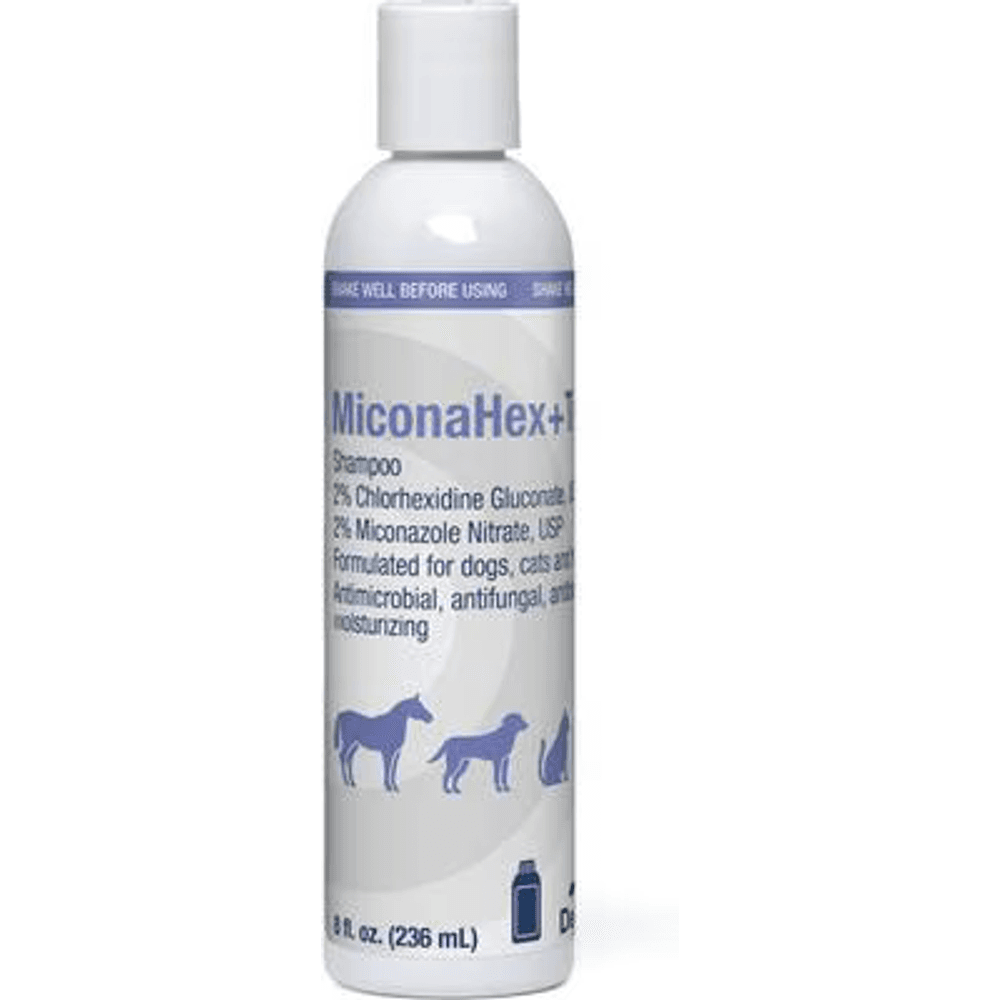
A vet-strength medicated shampoo pairing 2% chlorhexidine and 2% miconazole, a potent antifungal and antibacterial combination widely used to help clear ringworm and yeast or bacterial skin infections.
Webvet may earn a commission when you click through to Chewy, at no extra cost to you.
Can You Use Animax Ointment for Hot Spots on Dogs?
Yes, when your vet prescribes it. Hot spots (acute moist dermatitis) fall under the label's inflamed, weeping dermatitis indication, and the steroid eases the itching that keeps a dog chewing the spot. Your vet usually clips the hair and cleans the hot spot first so the ointment reaches the skin.
One label caution matters here: do not use Animax where pus is present, because it may let the infection spread. An oozing, spreading or very painful spot needs an exam first. Our guide to hot spots on dogs covers the wider care plan.
How Animax Ointment Works
As a combination medication, Animax works because each of its four active ingredients covers a different part of the problem: the antibiotics and antifungal treat infection while the steroid quiets redness, swelling and itching. Each milliliter contains the amounts below, per the DailyMed veterinary label.
| Active ingredient | Amount per mL | Drug class | What it does |
|---|---|---|---|
| Nystatin | 100,000 units | Antifungal | Stops Candida yeast from growing |
| Neomycin sulfate | 2.5 mg (as neomycin base) | Aminoglycoside antibiotic | Kills many common skin bacteria |
| Thiostrepton | 2,500 units | Antibiotic | Adds coverage against gram-positive bacteria |
| Triamcinolone acetonide | 1 mg | Corticosteroid | Calms inflammation, swelling, redness and itching |
In short, the medicine does three jobs at once. One federal regulation sets its active ingredients, uses and application steps, so every same-formula ointment brand is used the same way.
Is Animax a Steroid, an Antibiotic or an Antifungal?
All three. Of its four active ingredients, triamcinolone acetonide makes it a steroid, neomycin sulfate and thiostrepton make it an antibiotic, and nystatin makes it an antifungal (see our guide to nystatin for dogs). That mix is why it is not a simple first-aid cream: both the steroid and neomycin's potential to harm hearing need a vet's oversight.
Tube Sizes and Cream Versions
Animax comes as an ointment in 7.5 mL, 15 mL and 30 mL tubes (pharmacies often list them as 7.5ml, 15ml and 30ml), in a polyethylene and mineral oil base. The federal regulation for this formula also approves a vanishing cream base for skin use only, so you may see an equivalent described as a cream. There is no lotion form.
How to Use and Apply Animax Ointment on Dogs
To use Animax ointment on a dog, clean and dry the area, then apply a thin film to the skin or three to five drops into a cleaned ear canal, as often as your vet directs. Keep your dog from licking it for 20 to 30 minutes.
The label gives separate directions for ears, skin and glands, covered below. Wear disposable gloves or wash your hands afterward, and keep the tube tip from touching your dog.

How Often and How Much to Apply
Dosing is based on frequency and coverage, not your dog's weight. The label allows once daily to once weekly for mild inflammation and up to two or three times daily for severe cases, with frequency decreased as your dog improves.
| Treatment site | Amount per application | Label frequency range |
|---|---|---|
| Ear canal | Three to five drops after cleaning | Once weekly to three times daily, as your vet directs |
| Skin and hot spots | A thin film, applied sparingly | Once weekly to three times daily, as your vet directs |
| Interdigital cyst or anal gland | Enough to fill the drained cyst or gland | Usually done by your vet in the clinic |
Extra applications only add steroid exposure, so follow the instructions on your prescription label.
How to Apply Animax Ointment in Your Dog's Ears
Your vet must confirm the eardrum is intact before anything goes in the ear canal. Neomycin is an aminoglycoside antibiotic, a class the Merck Veterinary Manual warns can damage hearing, which is why that check comes first. Then the home routine looks like this:
- Clean the ear first if your vet told you to, using the cleaner they recommend, such as Virbac Epi-Otic Advanced Ear Cleaner or Vetnique Labs OticBliss Ear Flush, and let the canal dry for a few minutes.
- Lift the ear flap and hold the tube tip at the opening of the canal without pushing it inside.
- Squeeze in three to five drops, or the dosage on your prescription label.
- Gently massage the base of the ear so the ointment spreads down the canal.
- Wipe excess off the ear flap with a soft wipe such as Pet MD Aloe Vera and Eucalyptus Dog Ear Wipes, then keep your dog calm for at least 20 minutes.
The label directs cleaning out impacted wax before ear treatment, so the cleaner you choose matters. Ask your vet which one suits your dog's ears, and see our guide on how to clean a dog's ears safely if you have never done it. Petful compares vet-approved dog ear cleaners and wipes if you are still choosing one.
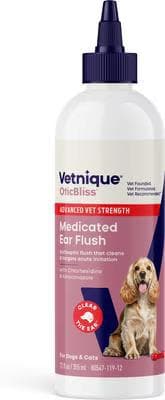
Vet-strength medicated ear flush that clears wax, debris, and odor while its antibacterial and antifungal formula targets the yeast and bacteria behind ear infections. For dogs and cats.
Webvet may earn a commission when you click through to Chewy, at no extra cost to you.
How to Apply Animax Ointment to Skin
For hot spots and other inflamed skin:
- Clean the area as your vet directed, removing crusts, discharge and loose hair.
- Pat the skin completely dry.
- Apply a thin film over the affected skin only.
- Keep your dog from licking or rubbing the spot for 20 to 30 minutes while it absorbs.
The label says to apply it sparingly. Covering a large area raises how much steroid your dog absorbs, which is why VCA Animal Hospitals urges caution in toy breeds and when a large area needs treatment.
Paws, Anal Glands and Interdigital Cysts
For interdigital cysts on the paws and infected anal glands, the label directs draining the cyst or gland first, then filling it with ointment. That is a clinic procedure. Your vet may send you home with paw care between visits, while anal gland infusions are typically done at the hospital.
In a 2022 study of 33 dogs with anal sac infections, vets flushed the sacs and infused an ointment: this four-drug combination in nine dogs, a gentamicin-based one in the rest. Dogs averaged 2.9 treatments about two weeks apart, and 72.7% of all dogs reached complete clinical resolution, with no apparent difference between ointments.
Many so-called interdigital cysts are really deep, inflamed furuncles, as our guide to cysts on dogs explains. If your dog scoots or licks under the tail, read about dog anal gland problems.
Does Animax Ointment Sting?
Animax is not designed to sting or burn. The label describes its polyethylene and mineral oil base as non-irritating, so most flinching comes from sore skin or an inflamed ear being touched.
The exception is an allergic reaction to neomycin: the label says to stop if redness, irritation or swelling persists or gets worse. Pain every time you medicate the ear also deserves a call, because a ruptured eardrum or deeper infection can cause it.
Is It Okay If a Dog Licks Animax Ointment?
No. Try not to let your dog lick Animax, especially before it has absorbed. A lick or two is unlikely to cause an overdose, which PetMD describes as uncommon, but licking wipes the medicine off before it can work and can slow healing.
Ointment on the paws, legs, flanks or tail base is the hardest to protect. Ears are out of tongue range, but a dog can scratch or shake the medicine out, so the same distraction window helps. PetMD advises keeping pets off the spot until it dries, which usually takes 20 to 30 minutes.
How to Keep Your Dog From Licking the Ointment
Pick the option that matches where the ointment is:
- Distraction: apply it right before a meal, a walk or a food puzzle so your dog stays busy for the first 20 to 30 minutes.
- An inflatable collar: a donut-style collar such as the KONG Cloud Collar works for many treated flanks and legs, though some dogs can still reach their paws.
- A recovery suit: for the belly, chest or flanks, a breathable bodysuit such as the Suitical Recovery Suit for Dogs covers the area without a cone.
- A cone: for paws, legs and hot spots on the face, an Elizabethan collar is still the most reliable barrier.

Soft fabric cones are a middle ground: they block reaching like a plastic cone but are lighter for sleeping and eating. Our guide to cone alternatives compares recovery collars and suits in more detail.
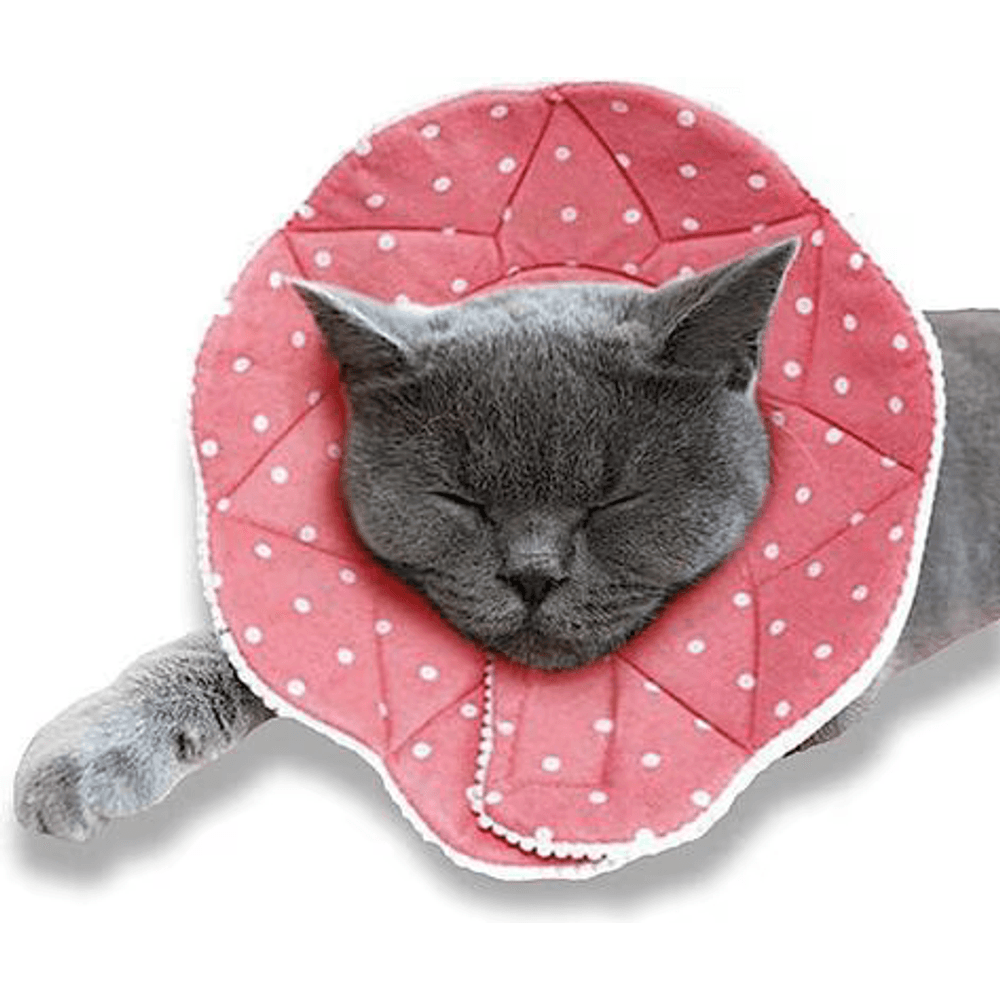
A lightweight, padded fabric cone that gently blocks a pet from pawing, scratching, or rubbing a healing eye, wound, or hot spot, and it is far softer and less stressful than a hard plastic cone.
Webvet may earn a commission when you click through to Chewy, at no extra cost to you.
What If My Dog Ate Animax Ointment?
If your dog licked a little from the skin, wipe off what is left, ask your vet whether to reapply and watch for stomach upset. Small licks are not usually toxic. A chewed tube or a large amount is different: PetMD notes that swallowing a lot can cause fluid retention, heavy thirst and urination.
In that case, call your vet or the ASPCA Animal Poison Control Center at (888) 426-4435 (a consultation fee may apply). Bring the tube so the vet knows the strength and roughly how much is missing.
Can You Buy Animax Ointment Over the Counter?
No. You cannot buy Animax ointment over the counter or without a vet prescription. Federal law restricts it to use by or on the order of a licensed veterinarian, and every same-formula generic carries the same restriction.
That rule has a practical reason. Only an exam can confirm the eardrum is intact, tell yeast from bacteria or ear mites, and decide whether a steroid is safe for your dog. An ear infection treated with the wrong product can linger and become chronic.
Once your vet approves a prescription, fill it at the clinic, a local pharmacy that stocks veterinary drugs, or a verified online pet pharmacy. To find Animax near you, start with your vet's own pharmacy. Price varies with tube size and seller, and your vet can approve a same-formula generic if cost matters.
Can I Buy Animax Ointment at PetSmart?
Yes, with a prescription. Animax is listed by The Pharmacy at PetSmart, and its pharmacy page states that a licensed veterinarian's prescription is required for these medications.
The same applies at Petco, Chewy, Walmart, Tractor Supply, Amazon or any other seller: Animax is never an off-the-shelf item. A site that lists Animax for sale without verifying a prescription is a red flag, not a shortcut.
Is There an OTC Version of Animax Ointment for Dogs?
No. There is no over-the-counter version or OTC equivalent of Animax, because every product with its four ingredients needs a prescription. The products you can buy without one do narrower jobs, and they work best after your vet has examined the problem.
For ears, the closest over-the-counter option is an enzymatic treatment such as Zymox Plus with 1% Hydrocortisone, which is labeled for outer ear infections in dogs and cats. Its label says not to use it in pregnant or nursing pets or alongside other ear products or ear cleaners, and not to use it with a punctured eardrum.
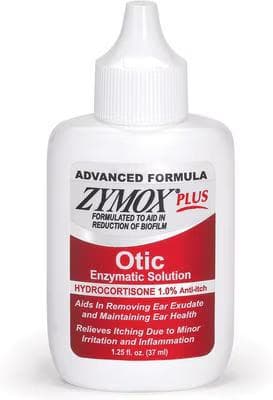
Webvet may earn a commission when you click through to Chewy, at no extra cost to you.
For maintenance between infections, a medicated shampoo or a vet-recommended cleaner such as Veterinary Formula Clinical Care Ear Therapy can help reduce yeast and bacteria. Neither treats an active infection the way a prescription does.
What Can I Use Instead of Animax Ointment for My Dog?
The only true substitutes for Animax are prescription products with the same four ingredients. Beyond those, your vet may choose a different prescription for the specific problem, and some over-the-counter products can support treatment. Here is how the main alternatives compare:
| Option | Prescription needed? | Active ingredients | Best fit | Main limit |
|---|---|---|---|---|
| Animax (Dechra) | Yes | Nystatin, neomycin, thiostrepton, triamcinolone | Mixed bacterial and yeast problems of ears, skin, cysts and anal glands in dogs and cats | Not for a ruptured eardrum or where pus is present |
| Derma-Vet, Dermalone, Panolog, Quadritop | Yes | The same four ingredients | The same uses as Animax | The same warnings as Animax |
| Otomax | Yes | Gentamicin, betamethasone, clotrimazole | Ear infections with yeast or bacteria | Ears only, dogs only; not for a perforated eardrum |
| Zymox Plus with 1% hydrocortisone | No | Enzymes plus 1% hydrocortisone | Outer ear infections in dogs and cats once a vet rules out a ruptured eardrum | Not with other ear products or cleaners; not for pregnant or nursing pets |
| Chlorhexidine medicated shampoos | No | Chlorhexidine, often with miconazole or ketoconazole | Controlling surface bacteria and yeast between skin flare-ups | Support only; does not treat an ear infection |
| Neosporin | No (human product) | Neomycin, polymyxin B, bacitracin | First aid for minor human cuts | No antifungal or steroid; not labeled for dogs |
Otomax details come from its DailyMed label. Whether you choose Otomax vs Animax, or a generic substitute, is your vet's call based on what the ear or skin sample shows. Our medicated dog shampoo guide explains how chlorhexidine baths fit in.
What Is the Generic Name for Animax?
The generic name is nystatin-neomycin sulfate-thiostrepton-triamcinolone acetonide ointment. Several brands contain the identical formula, including Derma-Vet Ointment, Dermalone, Quadritop, Dermalog and Panolog (often searched as Panalog). An older equivalent, EnteDerm, has been discontinued by its manufacturer.
Because the ingredients are identical, the core guidance here applies to those equivalents in dogs and cats: the prescription requirement, uses in ears and on skin, and the eye and eardrum limits. Each product's own label sets its storage range and shelf life. Cream-base versions are approved for skin use only. If you are weighing Derma-Vet vs Animax, the difference is the brand on the tube, not the medicine inside.
Is Animax Ointment the Same as Neosporin?
No. Neosporin is an over-the-counter human first-aid ointment with three antibiotics: neomycin, polymyxin B and bacitracin. Animax shares neomycin but adds an antifungal and a steroid, which is what lets it treat mixed yeast, bacterial and inflammatory problems in dogs.
Do not swap one for the other. Neosporin cannot treat yeast or inflammation and is not labeled for dogs. If a wound or rash looks infected, have your vet check it instead of reaching for a human product.
How Long Does It Take for Animax Ointment to Work?
You may see less scratching and redness within a few days, because the steroid starts calming inflammation while the antibiotics and antifungal work on the infection. Clearing the infection takes longer. Merck notes that ear infection treatment can last from 7 to 10 days to several months, depending on the cause.
Finish the full course, even if the skin or ear looks better early. For ear infections, Merck recommends rechecks with cytology weekly to every other week until no infection remains, so expect at least one recheck visit. Call your vet sooner if:
- The itching, redness or discharge is not improving by the time your vet said it should.
- Anything gets worse at any point during treatment.
- New signs appear, such as a head tilt, circling or hearing loss.
How Long Can a Dog Be on Animax Ointment?
As long as your vet prescribes, and no longer. The label sets no fixed maximum, but it warns that Cushing's syndrome has been reported with prolonged or repeated steroid therapy in dogs, and it allows the frequency to be reduced as the problem improves. How long to use it is a decision for each recheck.
During long or repeated courses, watch for drinking more, urinating more and weight gain, which can mean the steroid is being absorbed. Report them, and ask whether chronic flare-ups need a longer-term plan, such as allergy control.
Animax Ointment Side Effects and Warnings
Most pets have no side effects when Animax is used as directed, according to PetMD. The common side effects of this veterinary medicine are local: redness, irritation or itching where it is applied. The rarer, more serious risks are hearing loss after ear use and steroid effects when the drug is absorbed.
Hearing Loss and Balance Problems
Hearing loss, with varying degrees of recovery, has been reported with Animax. The label tells vets to examine the ear canal and confirm the eardrum (tympanic membrane) is intact before any ear treatment, to avoid spreading infection to the middle ear or damaging the cochlea and balance organs.
If you notice hearing changes or balance signs such as a head tilt, circling or stumbling during treatment, stop the ointment and call your vet the same day.
Steroid Side Effects With Long or Repeated Use
Triamcinolone can be absorbed through the skin and ear, especially with frequent use or over large areas. The label asks owners to watch for increased thirst, increased urination and weight gain. Prolonged or repeated steroid therapy has been linked to Cushing's syndrome in dogs.
Per the label, corticosteroids given by mouth or injection in the last trimester of pregnancy can trigger early labor, and steroids given to pregnant dogs have been linked to cleft palate and other birth defects in puppies. Tell your vet if your dog is pregnant or nursing.
When Not to Use Animax Ointment for Dogs
Do not use Animax in these situations unless your vet specifically directs it:
- In an ear with a ruptured eardrum, or one that has not been checked.
- Where pus is present, because it may let the infection spread.
- On deep or puncture wounds, serious burns, deep abscesses or deep-seated infections.
- On open wounds and cuts as a general first-aid ointment, in dogs or cats.
- In or near the eyes, nose or mouth. VCA advises avoiding contact with these areas, and Animax is not an eye ointment.
- In a dog allergic to any of its four ingredients.
If ointment gets in your dog's eyes, call your vet for advice. Eye problems need an ophthalmic product chosen for that eye, not a skin and ear ointment.
Animax Ointment for Cats
Yes, Animax ointment for cats is FDA-approved. Vets use it for the same problems in cats: ear infections, interdigital cysts and inflamed or infected skin. The label's anal gland indication is specific to dogs, so use in a cat's anal glands is your vet's call.
To apply it to a cat's ears, your vet first confirms the eardrum is intact; then you place three to five drops in the cleaned canal, or a thin film on skin. A cat's small size makes a large treated area matter more, matching VCA's caution about small patients.

Licking is the bigger challenge because cats groom constantly, and Animax is no safer for cats to lick than for dogs. Keep your cat from grooming the spot for 20 to 30 minutes, and for body areas ask your vet about a cone or a cat recovery suit such as the Suitical Recovery Suit for Cats.
What if your cat licks Animax ointment anyway? Wipe the area, watch for stomach upset and call your vet if your cat ate more than a lick. Side effects in cats mirror those in dogs, including local irritation and, rarely, hearing loss after ear use. See our guide to cat ear infection treatment for the wider plan.
How to Store Animax Ointment
Keep the tube tightly capped in its original box at room temperature, protected from light and out of reach of children and pets. The label warns against excessive heat, flagging 104°F (40°C), so do not leave it in a hot car.
Should Animax Ointment Be Refrigerated?
No. Animax does not need to be refrigerated. The label calls for room-temperature storage, and PetMD recommends keeping it below 86°F (30°C).
How Long Does Animax Ointment Last?
Check the expiration date printed on the tube or box and do not use it past that date. Kept capped at room temperature, a tube is good for use until then. If the ointment looks changed or the tube sat somewhere hot, ask your pharmacist whether to replace it.
Animax Ointment FAQs
Frequently Asked Questions
Can I use leftover Animax Ointment from a previous infection?
Only if your vet says so. Leftover ointment might not match the new problem, because ringworm, ear mites, a ruptured eardrum or pus all change the treatment. Check the expiration date too, and ask for a quick recheck before you reuse an old tube.
What if I miss a dose of Animax Ointment?
Apply it when you remember, then return to the normal schedule. If it is almost time for the next application, skip the missed one. Never double up, since extra ointment means extra steroid exposure.
Can humans use Animax Ointment?
No. Animax is labeled for use in dogs and cats only and is not approved for people, so it is not considered safe for humans to use on their own skin, in ointment or cream form. Wear gloves or wash your hands after applying it, keep it away from children, and if a person swallows it, call Poison Control at 800-222-1222.
Does Animax Ointment treat ringworm?
No. Ringworm is caused by dermatophyte fungi, and the Merck Veterinary Manual notes that nystatin, the antifungal in Animax, is inactive against dermatophytes. Ringworm needs a different antifungal plan, covered in our guide to ringworm treatment in dogs.
Can Animax Ointment treat ear mites or mange?
Not on its own. Ear mites and mange are parasites that need an antiparasitic product. The label lists Animax only as an adjunct for dermatitis caused by parasites: the steroid can calm itchy skin, but it will not clear the mites, so ask your vet about ear mite treatment for dogs.
$65 · no membershipNeed a prescription for Animax Ointment?
A licensed vet can assess your dog over video and prescribe Animax Ointment online when it's appropriate.
Talk to a vet- Licensed vets
- All 50 states
- same-day Rx
Webvet may earn a commission if you book.

Editor
The Webvet Editorial Team is the in-house group of pet-care editors and writers behind Webvet, operated by Smart Pet Collective. The team researches, writes, and maintains Webvet's pet health, behavior, and medication content. Every article follows a defined editorial process: research from reputable veterinary and scientific sources, careful drafting, mandatory review of medical content by a credentialed veterinarian, and dated publication. Health and medication articles are medically reviewed by a licensed veterinary professional before they go live and are kept current over time.

Veterinarian · DVM
Athena Gaffud, DVM, is a licensed veterinarian and writer based in the Cagayan Valley of the northern Philippines. She runs the website countryvetmom.com. Dr. Gaffud earned her Doctor of Veterinary Medicine degree from the University of the Philippines Los Baños in 2011, ranking in the top 10 and receiving the Best Undergraduate Thesis Award in Large Animals. With over a decade of experience, she has worked as a researcher, a practitioner for small and large animals, and in veterinary technical sales, marketing, and pet insurance. A published author, Dr. Gaffud promotes responsible pet ownership and combats misinformation on animal care through her platforms, including the DocAthena Facebook Page and DocAthena YouTube channel. She is a writer and editor for various pet-related websites such as Total Vet, Honest Paws, PangoVet, Dogster, Catster, My Best PH, Paw Origins, Bully Max, Not a Bully, Paws and Claws CBD, many others. She was also cited in different pet-related media articles such as The Dog People, USA Today, Newsweek, New York Post, Reader’s Digest, Smithsonian Magazine, Woman’s World, Dog Time, Patch, Kinship, Martha Stewart, and many others. Moreover, she is also a published fiction author on Kindle.


