Dog symptom
Red or runny eyes in dogs
Reviewed by the Webvet Veterinarian Team · Last reviewed June 22, 2026
Redness, discharge, squinting, or pawing at the eye. Eyes can deteriorate quickly, so eye problems should be seen promptly.
Common causes of red or runny eyes in dogs
- Conjunctivitis (irritation or infection)
- A scratch or ulcer on the surface of the eye
- Allergies or irritants
- Glaucoma or other internal eye disease
Who's most at risk
- Brachycephalic breeds (prominent eyes)
- Outdoor or active pets (trauma, foreign bodies)
- Pets that rub or paw at the face
- Breeds prone to glaucoma or dry eye
What you can do at home
- Gently wipe discharge away with a clean, damp cloth (one wipe per eye)
- Stop your pet from rubbing the eye (a recovery collar can help)
- Do not use leftover, human, or steroid-containing eye drops without veterinary advice
When to see a vet
- Squinting, holding the eye shut, or obvious pain
- A cloudy, bulging, or visibly injured eye
- Thick or colored discharge, or no improvement within a day
When it's more serious
- A cloudy, bulging, or injured eye can threaten vision — urgent care now.
- Pain and squinting suggest a scratch, ulcer, or pressure problem — see a vet today.
- That points to infection or a deeper problem — get it checked promptly.
What your vet may do
- Stain the eye to check for a scratch or ulcer
- Measure eye pressure (glaucoma) and tear production
- Treat infection, ulcer, or pain and protect the eye
- Refer to an eye specialist for serious cases
Questions to ask your vet
- Is the surface of the eye scratched or ulcerated?
- Is the eye pressure normal?
- Is vision at risk?
- Which drops are safe, and how often?

Frequently asked questions
What causes red or runny eyes in dogs?
Redness, discharge, squinting, or pawing at the eye. Eyes can deteriorate quickly, so eye problems should be seen promptly. Common causes include: Conjunctivitis (irritation or infection); A scratch or ulcer on the surface of the eye; Allergies or irritants; Glaucoma or other internal eye disease.
Is red or runny eyes in dogs an emergency?
See a vet today. See a vet right away if: Squinting, holding the eye shut, or obvious pain; A cloudy, bulging, or visibly injured eye; Thick or colored discharge, or no improvement within a day.
What can I do at home for a dog with red or runny eyes?
Gently wipe discharge away with a clean, damp cloth (one wipe per eye). Stop your pet from rubbing the eye (a recovery collar can help). Do not use leftover, human, or steroid-containing eye drops without veterinary advice.
A closer look at red or runny eyes in dogs
A red or runny eye in a dog is one of those signs that looks minor but should never be treated casually, because the eye is a delicate organ that can lose vision in a matter of days when a problem is left alone. Redness, watering, squinting, or pawing can come from something as simple as a speck of dust or as serious as a corneal ulcer or rising pressure inside the eye, and you usually cannot tell them apart by looking. The safest rule is simple: an eye that is painful, cloudy, bulging, or not clearly better within a day deserves a same-day veterinary exam, not a wait-and-see at home.
- 1Eyes deteriorate fast. A red, weepy eye that is painful, cloudy, or bulging is urgent, so call your vet the same day.
- 2Squinting, holding the eye shut, or pawing at it usually signals pain from a scratch, ulcer, or pressure problem.
- 3Never put leftover, human, or steroid-containing eye drops in your dog's eye without your vet's say-so; the wrong drop can make an ulcer far worse.
- 4Flat-faced breeds with prominent eyes are especially prone to injury, dryness, and infection.
- 5Clear watering is often irritation or allergy, while thick yellow or green discharge points toward infection.
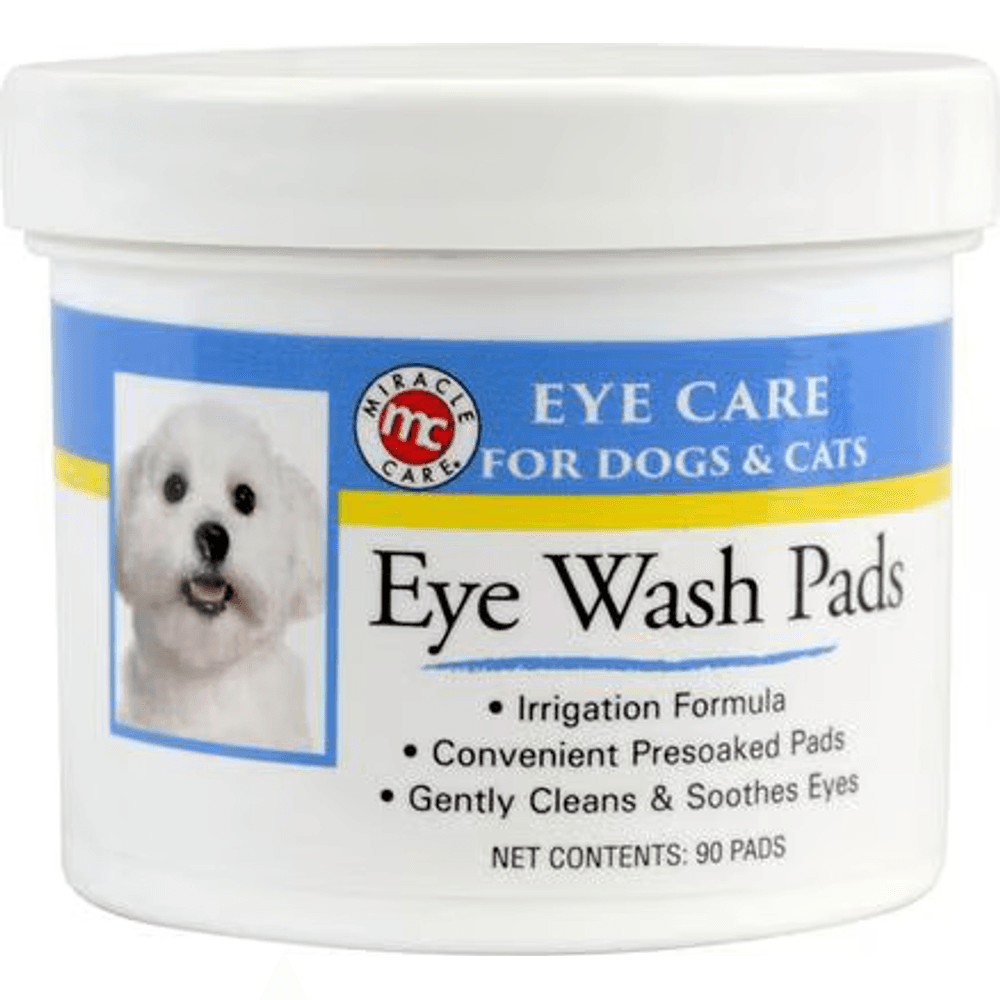
Sterile pads to gently clear discharge on the way to the vet. Never use leftover or steroid drops on an eye you have not had looked at.
Webvet may earn a commission when you click through to Chewy, at no extra cost to you.
What is actually happening behind a red or runny eye
Redness means blood vessels in or around the eye have become engorged and inflamed, and watering is the eye's built-in defense flushing away irritation. Both are the surface of the story, not the diagnosis. The same red, teary appearance can come from inflamed conjunctiva (the pink lining of the lids), a scratch or ulcer on the clear cornea, dryness because the eye is not making enough tears, or a deeper problem such as glaucoma, where fluid pressure builds inside the globe. Because so many different conditions produce the same outward look, a dog's eye is one place where guessing is genuinely risky. What feels like a minor irritation to you can be an early ulcer that erodes deeper by the hour, which is exactly why vets treat eyes with more urgency than most other minor complaints.
The most common reasons a dog's eye turns red or weepy
Conjunctivitis, sometimes called pink eye, is the everyday culprit and can be triggered by allergies, irritants, viruses, or bacteria. Environmental allergies are extremely common and often show up alongside sneezing and face rubbing. A foreign body such as a grass seed, an eyelash, or a fleck of dirt can lodge under a lid and scratch the cornea, making the eye water profusely as a protective reflex. Corneal ulcers and scratches are painful and can worsen quickly, and dry eye (a shortfall of tear production) leaves the surface irritated and prone to thick discharge. Glaucoma and other internal eye diseases are less common but more serious, since sustained pressure can permanently damage vision. Anatomical issues like eyelids that roll inward and rub the surface also keep an eye chronically red. Owners often ask why only one eye is affected: a one-sided red eye more often points to a local problem such as a scratch, foreign body, or early glaucoma, while both eyes together lean toward allergies or infection, though this is a clue, not a diagnosis.

| Likely cause | Other signs you might notice | How urgent |
|---|---|---|
| Allergy or irritant | Clear watery tearing, mild redness, often both eyes, sneezing or itching | See a vet soon if it lingers |
| Conjunctivitis (infection) | Thick yellow or green discharge, red inner lids, one or both eyes | Same-day to next-day vet visit |
| Scratch or corneal ulcer | Squinting, holding the eye shut, pawing, watery eye, often one eye | Urgent, see a vet today |
| Glaucoma or internal disease | Cloudy or bluish eye, bulging, dilated pupil, obvious pain | Emergency, go now |
| Dry eye | Recurrent thick mucus, dull surface, chronic redness | Vet visit for tear testing |
What the discharge is telling you
The character of the eye discharge offers useful clues while you decide how fast to act. Thin, clear, watery tearing most often reflects irritation or allergies and tends to affect both eyes. Thick, ropey, yellow or green discharge suggests infection and usually warrants a prompt visit. A grayish or bluish haze over the surface, a change in the eye's color, or a pupil that looks different from the other side are red flags for a deeper, sight-threatening problem. Reddish-brown tear staining down the face, common in light-colored and flat-faced dogs, is usually cosmetic and driven by chronic tearing rather than an emergency, but persistent tearing still deserves a check to rule out a blocked tear duct or ongoing irritation. When the picture is anything beyond mild, brief, clear watering, err toward calling your vet.
Why flat-faced and other at-risk dogs need extra caution
Brachycephalic breeds such as Pugs, French Bulldogs, Boston Terriers, Shih Tzus, and Boxers carry more risk because their large, prominent eyes sit in shallow sockets with less protection. That exposure makes them more prone to dryness, irritation, corneal scratches, and slow-healing ulcers, and some cannot fully close their lids over the surface. Outdoor and highly active dogs face more trauma and foreign bodies, dogs that habitually rub or paw at their faces can injure themselves, and certain breeds are predisposed to glaucoma or dry eye. If your dog falls into one of these groups, treat even a modest red eye as a reason to check in early rather than watch and wait, since these are the dogs in which a small problem tends to escalate fastest.
How your vet finds the cause

An eye exam is quick, painless, and remarkably informative. Your vet will typically apply a harmless fluorescein stain that glows under blue light to reveal scratches or ulcers you cannot see with the naked eye. They may measure the pressure inside the eye to check for glaucoma and run a simple tear test to see whether your dog is producing enough tears. They will look under the lids for a trapped foreign body, assess the pupils and the deeper structures, and note whether one or both eyes are involved. This step-by-step approach matters because the treatment for an infection is very different from the treatment for an ulcer or glaucoma, and the wrong medication (particularly a steroid on an ulcer) can do harm. If the case is complex or vision is at stake, your vet may refer you to a veterinary ophthalmologist.
What treatment and recovery usually look like
Treatment depends entirely on the diagnosis. A simple conjunctivitis may resolve with prescribed antibiotic or anti-inflammatory drops, while an allergy-driven eye often improves once the underlying trigger is managed. A corneal ulcer typically needs medicated drops, pain relief, and protection from rubbing, and deeper ulcers occasionally require a minor surgical procedure. Glaucoma is treated as an emergency aimed at lowering pressure and saving sight. Whatever your vet prescribes, giving every drop exactly as directed and finishing the full course is what protects the eye; you can read more about common veterinary medications in the medication database. Recovery for a mild, well-treated eye can be just a few days, while ulcers and internal disease may need one or more recheck visits so your vet can confirm the surface is healing and the pressure is controlled. Follow-up matters: a re-stain often reveals whether an ulcer has closed even when the eye already looks better from the outside.
How to help at home safely, and what never to do
While you arrange a visit, you can gently wipe away discharge with a clean, damp cloth, using a fresh area for each eye to avoid spreading infection, and prevent rubbing with a recovery collar. Keep the face clean, avoid dusty or smoky environments, and note whether the trouble started with a new plant, groomer visit, or bout of itching so you can tell your vet. What you should not do is just as important. Do not flush the eye with anything other than plain saline, do not try to remove an object stuck to the surface yourself, and never use human eye drops, old prescriptions, or anything containing a steroid or redness reliever without veterinary guidance. Owners sometimes ask whether an antihistamine like Benadryl will help watery eyes; because dosing and safety depend on your individual dog and human eye drops can be harmful, this is a call to make with your vet rather than on your own.
How to lower the risk of future eye trouble


A lubricating gel that soothes irritation between vet-directed treatments. It masks nothing serious, so see the vet first.
Webvet may earn a commission when you click through to Chewy, at no extra cost to you.
You cannot prevent every eye problem, but you can stack the odds in your dog's favor. Keep long facial hair trimmed away from the eyes, wipe the area clean regularly, and avoid letting your dog hang its head out of a moving car window, where wind and debris cause many corneal scratches. Protect the eyes during rough play and in dense brush, manage known allergies with your vet's help, and keep up with routine wellness exams so early dryness or pressure changes are caught before they cause damage. For flat-faced breeds, ask your vet whether a lubricating eye drop is worth using during dry weather or travel. Most importantly, build the habit of acting quickly: the single best thing you can do for your dog's eyes is to treat a painful, cloudy, or non-improving eye as a same-day priority.
The reassuring bottom line is that most red or runny eyes in dogs are treatable, and many are minor, but the eye simply does not give you the luxury of waiting to find out which kind you are dealing with. When you match a calm, careful home check with a low threshold for calling your vet, you give your dog the best possible chance of a fast, full recovery and healthy vision for years to come.
Sources
Reviewed by the Webvet Veterinarian Team
This guide is general information, not a diagnosis, and does not replace an exam by your veterinarian. If your pet is in distress, contact your vet or an emergency clinic right away.