Dog symptom
Eye discharge or goopy eyes in dogs
Reviewed by the Webvet Veterinarian Team · Last reviewed June 22, 2026
Watery, mucky, or crusty discharge from one or both eyes. Often mild irritation or allergies, but thick or colored discharge — especially with squinting or redness — can mean infection or a scratch that needs care.
Common causes of eye discharge or goopy eyes in dogs
- Conjunctivitis (irritation or infection)
- Allergies, wind, or dust
- Blocked tear ducts (tear staining)
- A scratch or ulcer; in cats, viral infections (herpesvirus)
Who's most at risk
- Brachycephalic and prominent-eyed breeds
- Cats (upper respiratory viruses)
- Allergic or outdoor pets
- Breeds prone to dry eye or blocked ducts
What you can do at home
- Wipe discharge away gently with a clean, damp cloth (one wipe per eye)
- Keep hair trimmed away from the eyes and avoid irritants
- Don't use leftover or human eye drops without veterinary advice
When to see a vet
- Thick yellow/green discharge, redness, or swelling
- Squinting, pawing, or holding the eye shut (possible pain or ulcer)
- A cloudy or visibly injured eye
- No improvement within a day or two
When it's more serious
- Pain, or a cloudy or injured eye, suggests a scratch or ulcer — see a vet today.
- That points to infection — book a vet visit soon.
What your vet may do
- Eye exam, tear test, and a stain to check for a scratch or ulcer
- Identify infection vs allergy vs blocked duct
- Prescribe the right drops or ointment
- Treat an ulcer or refer if serious
Questions to ask your vet
- Is this infection, allergy, or a scratch?
- Is the eye surface damaged?
- Which drops are safe, and for how long?
- Could this be a cat virus that recurs?

Frequently asked questions
What causes eye discharge or goopy eyes in dogs?
Watery, mucky, or crusty discharge from one or both eyes. Often mild irritation or allergies, but thick or colored discharge — especially with squinting or redness — can mean infection or a scratch that needs care. Common causes include: Conjunctivitis (irritation or infection); Allergies, wind, or dust; Blocked tear ducts (tear staining); A scratch or ulcer; in cats, viral infections (herpesvirus).
Is eye discharge or goopy eyes in dogs an emergency?
Book a veterinary visit soon. See a vet right away if: Thick yellow/green discharge, redness, or swelling; Squinting, pawing, or holding the eye shut (possible pain or ulcer); A cloudy or visibly injured eye; No improvement within a day or two.
What can I do at home for a dog with eye discharge or goopy eyes?
Wipe discharge away gently with a clean, damp cloth (one wipe per eye). Keep hair trimmed away from the eyes and avoid irritants. Don't use leftover or human eye drops without veterinary advice.
A closer look at eye discharge in dogs
A little crust in the corner of your dog's eye after a nap is usually nothing, but the color, texture, and thickness of eye discharge are one of the most useful things you can learn to read as an owner. Clear and watery tends to point toward irritation or allergies, thick yellow or green usually means infection, and a stringy grey mucus can signal a tear-film problem. The single most important habit is to watch for pain: if your dog is squinting, pawing at the eye, or the surface looks cloudy, that is no longer a wait-and-see situation and warrants a same-day vet visit.
- 1Learn the discharge read: clear and watery leans toward allergies or irritation, thick yellow or green leans toward infection, stringy grey mucus can mean dry eye.
- 2One eye affected often points to a local problem like a foreign body or scratch; both eyes together lean toward allergies or a virus.
- 3Squinting, holding the eye shut, cloudiness, redness, or obvious pain means see a vet the same day, not tomorrow.
- 4Never use leftover or human eye drops, and never a steroid drop, without your vet confirming the eye surface is not scratched.
- 5Flat-faced breeds and dogs with prominent eyes are prone to tear staining and chronic weepy eyes for anatomical reasons.
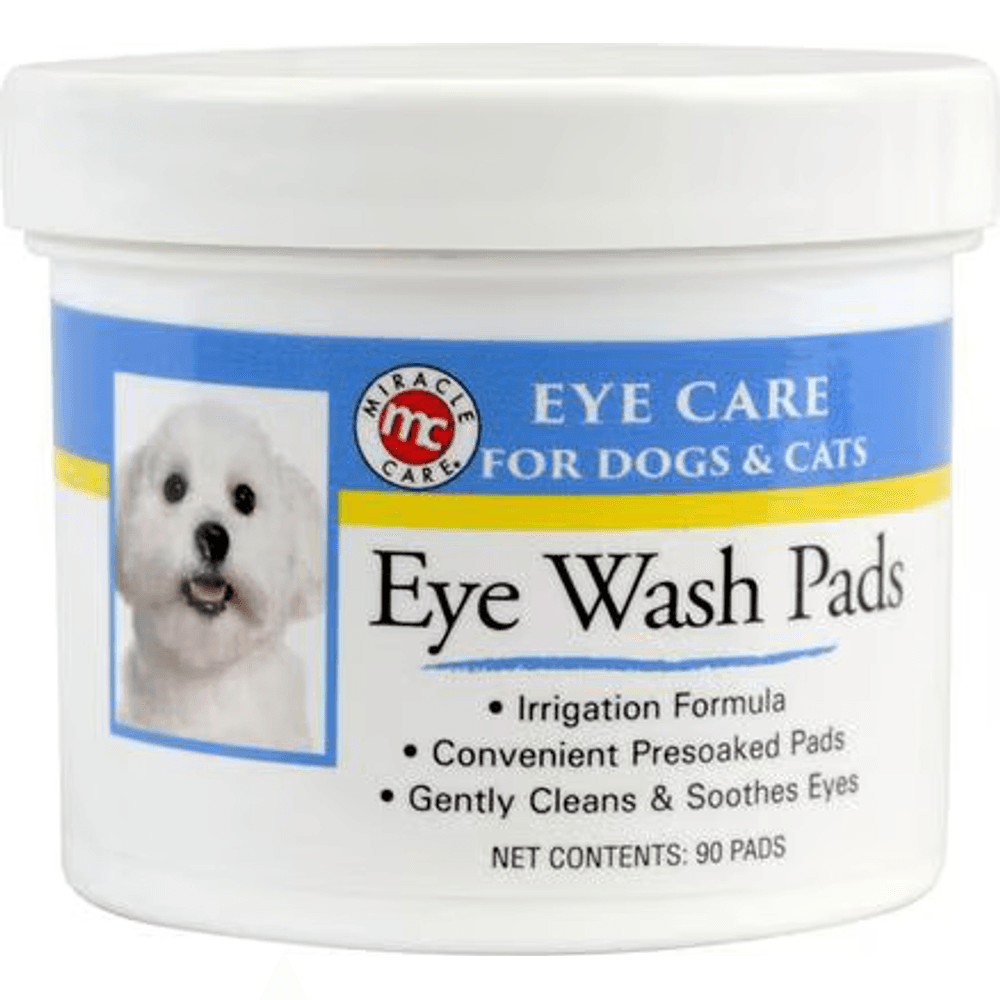
Sterile pads for gently clearing daily discharge without introducing anything new to the eye.
Webvet may earn a commission when you click through to Chewy, at no extra cost to you.
What the discharge is actually telling you
Tears are not just water. A healthy tear film has three layers: an oily layer that stops evaporation, a watery layer that nourishes and rinses the surface, and a mucus layer that helps everything stick to the eye. When the eye is bothered, it responds by making more of one of these components, and that is why the look of the discharge is such a good clue. Reading it well does not replace a diagnosis, but it helps you judge how quickly you need to act and gives your vet a useful starting point.
Clear, watery discharge is the eye flushing itself. It shows up with allergies, wind, dust, smoke, a stray eyelash, or a tear duct that is not draining properly, and the dog is usually otherwise comfortable. Thick discharge that is yellow or green is different: that color comes from white blood cells and pus, which means an active infection such as conjunctivitis, and it often travels with redness and a dog who wants to rub the eye. Stringy, ropey grey or greyish mucus, especially when the surface looks dull rather than glossy, can be a sign of dry eye, where the eye is not making enough of the watery layer and overproduces mucus to compensate. Reddish-brown staining down the fur, by contrast, is usually just tears oxidizing on the coat rather than a fresh problem.
| What you see | Most likely meaning | Other signs to look for | How fast to act |
|---|---|---|---|
| Clear and watery, one or both eyes | Allergy, irritant, wind, or a blocked tear duct | Dog comfortable, no squinting, maybe sneezing or itchy skin | Monitor a day or two, book a visit if it lingers |
| Thick yellow or green | Infection such as conjunctivitis | Redness, swelling, rubbing, eye gunk that keeps returning | Book a vet visit soon |
| Stringy grey mucus, dull surface | Possible dry eye (low tear production) | Recurring goo, red eye, frequent blinking | See a vet, this needs a tear test |
| Any discharge with squinting or cloudiness | Possible scratch, ulcer, or painful eye | Holding eye shut, pawing, light sensitivity | Same-day veterinary care |
| Reddish-brown fur staining, no other signs | Tear staining (cosmetic) | Wet fur under the eyes, no pain | Routine, ask your vet at the next visit |
What is happening inside the eye
Behind most weepy eyes is a simple plumbing story. Tears are made by glands above the eye, sweep across the surface to keep it clean and moist, and then drain out through two tiny holes in the inner corner of the eyelids into a duct that empties into the nose. That is why a dog with a runny eye sometimes also has a wet nose on the same side. When anything in that system is off, tears back up and spill over the lower lid. Allergies and irritants make the glands overproduce; a blocked or narrow duct stops normal tears from draining; and infection or a scratch adds inflammation and debris that thicken the discharge. Some dogs simply have shallow drainage anatomy from birth, which is why the problem can be lifelong and manageable rather than something that ever fully cures.

Why one eye and not both
Whether one eye or both are affected is one of the fastest clues to sort out at home. A problem in a single eye usually means something local: a grass seed or bit of debris trapped under the lid, a scratch from rough play or a bush, an inturned eyelash, or a blocked duct on that side. A problem in both eyes at once leans more toward a whole-body cause such as environmental allergies, an airborne irritant, or, in some dogs, a viral infection. If a single eye suddenly becomes red, weepy, and squinty, treat it as more urgent than a mild symptom in both eyes, because a foreign body or scratch left in place can turn into an ulcer. You can read more in our guide to red or runny eyes in dogs.
Flat-faced breeds, prominent eyes, and tear staining
Some breeds live with a low-grade weepy eye their whole lives, and it is usually about facial shape rather than illness. Flat-faced, or brachycephalic, breeds like Pugs, Shih Tzus, Bulldogs, Pekingese, and Boston Terriers have shallow eye sockets and prominent eyes, so the tear drainage holes sit at an awkward angle and tears spill onto the face instead of draining into the nose. The result is chronic wetness and the familiar reddish-brown tear staining in the fur below the eyes. That staining itself is cosmetic, caused by tears oxidizing in the light, and is not painful. What matters is telling harmless staining apart from a new problem: a dog whose baseline is a bit of clear tearing should still be checked if the discharge suddenly turns thick and colored, the eye reddens, or they start squinting. Prominent eyes also sit more exposed, so these breeds are more prone to scratches and to their eyelashes or facial folds rubbing the surface.
How your vet pinpoints the cause
An eye exam moves quickly and is not something to dread. Your vet starts by looking at the whole eye and lid under magnification, checking for a stray hair, an inturned lid, or debris. A common early test measures tear production with a small paper strip tucked briefly against the lower lid, which tells the vet whether the eye is making too few tears, the setup for dry eye. Next comes a fluorescein stain, a harmless orange dye that glows under a blue light and clings to any scratch or ulcer on the cornea, so a defect you cannot see with the naked eye lights up clearly. Depending on what they find, your vet may also check pressure inside the eye or take a swab. These few minutes are what separate an allergy from an infection from a scratch, and it is exactly why guessing with a leftover drop at home can go wrong.
What to expect at the visit, and afterward

Treatment follows the diagnosis. A straightforward infection is often handled with a course of antibiotic drops or ointment, an allergy flare may be managed with soothing or anti-inflammatory drops once a scratch has been ruled out, and a blocked duct or dry eye is treated on its own track, sometimes with long-term tear-stimulating medication. Most simple cases improve within a few days of starting the right drops, though your vet will usually want a recheck to confirm a scratch has healed. The practical challenge for many owners is simply getting drops into a wiggly dog several times a day, so ask for a demonstration before you leave. If your dog is prescribed eye medication, you can look up how it works in our medication database. Finish the full course even after the eye looks normal, because stopping early is a common reason infections come back.
How to help at home safely
For a mild, clear weepy eye in a dog who is otherwise bright and comfortable, gentle basic care is reasonable while you watch. Wipe discharge away with a clean, damp cloth or a cotton pad moistened with plain warm water, using a fresh section for each eye so you do not carry anything from one to the other, and always wipe from the inner corner outward. Keep the hair around the eyes trimmed so it does not wick tears or poke the surface, and cut down on obvious triggers like dusty walks, cigarette smoke, or a car window your dog loves to hang out of. Sterile saline made for eyes can flush out a bit of dust, but skip any medicated or human product unless your vet has said yes. If the tearing comes with sneezing or seasonal itch, our guide to sneezing in dogs covers the allergy angle. Give home care a day or two, and escalate to the vet if it is not clearly improving or any warning sign appears.

Presoaked wipes for routine tear staining and daily debris. For cleaning only, never for an eye that is squinting, cloudy, or painful.
Webvet may earn a commission when you click through to Chewy, at no extra cost to you.
Lowering the risk of the next flare-up

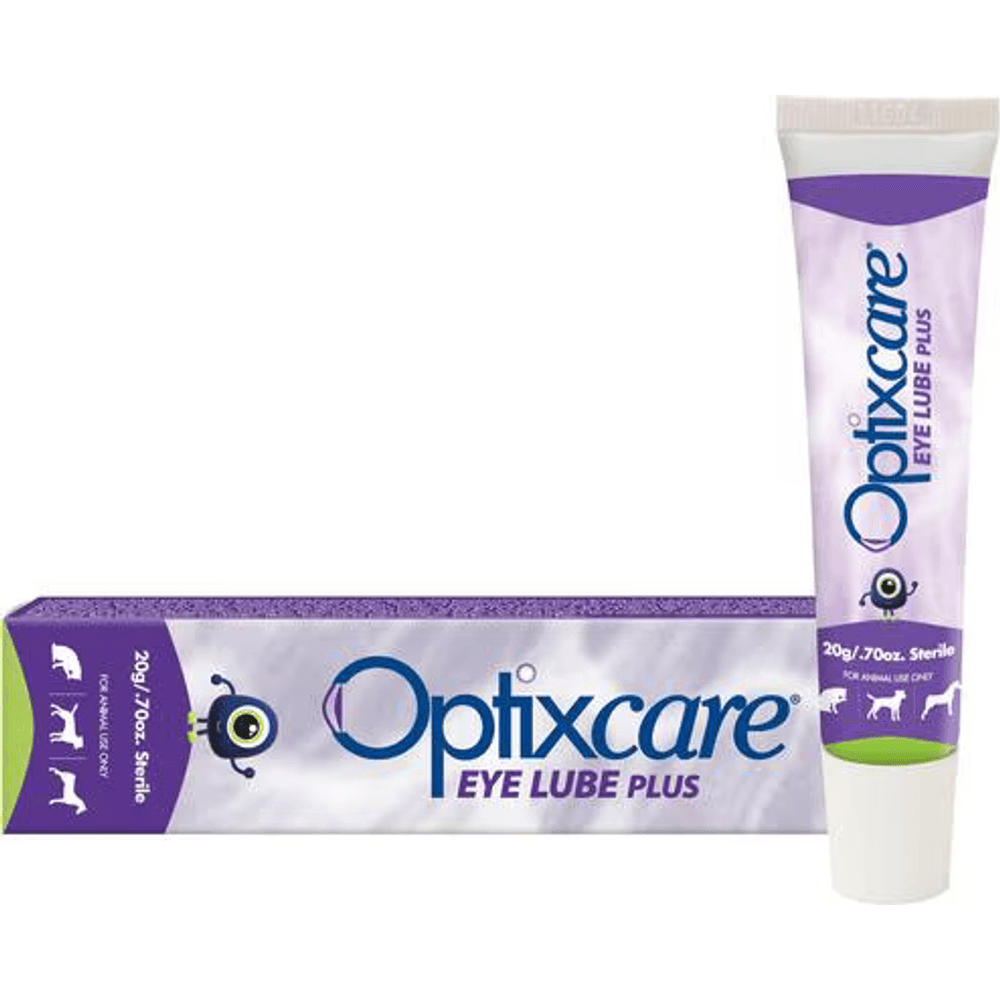
A lubricating gel for dry, irritated eyes. Ask your vet first, since dry eye needs diagnosing rather than masking.
Webvet may earn a commission when you click through to Chewy, at no extra cost to you.
You cannot change your dog's face shape, but you can cut down how often eyes get irritated. Keep facial hair trimmed away from the eyes, wipe tear-prone breeds daily to stop moisture and stain building up in the folds, and rinse the face after dusty or pollen-heavy walks. Roll the window down only partway so wind and grit do not blast the eyes at speed, and keep your dog away from long grass and seed heads in late summer, when grass awns are a classic cause of a suddenly painful single eye. For dogs with known allergies, staying on top of the underlying itch reduces eye flares too. Finally, mention any recurring weepiness at routine checkups so your vet can catch a slow problem like early dry eye before it becomes a stubborn one.
Eye discharge in dogs runs the full range from a harmless morning speck to an early warning of a painful ulcer, and the good news is that the clues you need to tell them apart are things you can see: the color and thickness of the goo, whether one eye or both are involved, and above all whether your dog is comfortable or in pain. Treat clear and painless as watch-and-wait, treat thick and colored as book-a-visit, and treat squinting, cloudiness, or a shut eye as go-today. When the signs are mixed or you are simply not sure, your vet would always rather take a two-minute look at a healthy eye than see one a week too late.
Sources
Reviewed by the Webvet Veterinarian Team
This guide is general information, not a diagnosis, and does not replace an exam by your veterinarian. If your pet is in distress, contact your vet or an emergency clinic right away.