Cat symptom
Ear scratching or head shaking in cats
Reviewed by the Webvet Veterinarian Team · Last reviewed June 22, 2026
Pawing at the ears, head shaking, or an odor from the ear usually means an ear problem. Ear issues are uncomfortable and tend to worsen without treatment.
Common causes of ear scratching or head shaking in cats
- Ear infection (bacterial or yeast)
- Ear mites (especially in cats and young pets)
- Allergies (a very common underlying cause of recurring ear infections)
- A foreign object such as a grass seed, or trapped water
Who's most at risk
- Floppy-eared and hairy-eared breeds
- Swimmers and frequently-bathed pets
- Allergic pets (recurring ear infections)
- Young pets and cats (ear mites)
What you can do at home
- Look (don't poke) — check for redness, discharge, or odor
- Only clean with a vet-approved ear cleaner; never use cotton swabs deep in the ear canal
- Keep ears dry after baths and swimming
When to see a vet
- Discharge, a strong smell, redness, or swelling
- Your pet is in pain, tilting the head, or off balance
- Repeated ear infections (the underlying allergy needs addressing)
When it's more serious
- Head tilt or balance loss can mean a deep or middle-ear problem — see a vet promptly.
- These signs point to infection — book a vet visit soon.
- That can be an aural hematoma from head shaking — your vet should treat it.
What your vet may do
- Otoscope exam and a swab of the discharge
- Identify yeast, bacteria, or mites under the microscope
- Clean the ear and prescribe the right medication
- Address the underlying allergy for repeat cases
Questions to ask your vet
- What's causing it — yeast, bacteria, or mites?
- Is the eardrum intact (which cleaners are safe)?
- Could an allergy be the real driver?
- How do I prevent it coming back?

Frequently asked questions
What causes ear scratching or head shaking in cats?
Pawing at the ears, head shaking, or an odor from the ear usually means an ear problem. Ear issues are uncomfortable and tend to worsen without treatment. Common causes include: Ear infection (bacterial or yeast); Ear mites (especially in cats and young pets); Allergies (a very common underlying cause of recurring ear infections); A foreign object such as a grass seed, or trapped water.
Is ear scratching or head shaking in cats an emergency?
Book a veterinary visit soon. See a vet right away if: Discharge, a strong smell, redness, or swelling; Your pet is in pain, tilting the head, or off balance; Repeated ear infections (the underlying allergy needs addressing).
What can I do at home for a cat with ear scratching or head shaking?
Look (don't poke) — check for redness, discharge, or odor. Only clean with a vet-approved ear cleaner; never use cotton swabs deep in the ear canal. Keep ears dry after baths and swimming.
A closer look at ear scratching and head shaking in cats
If your cat keeps pawing at one ear, shaking its head, or you have noticed a new smell drifting from the ear canal, the odds are high that something inside the ear is bothering it. Ear scratching and head shaking are not a diagnosis on their own, but in cats they point reliably toward a short list of treatable ear problems, and the single most useful thing you can do is look without poking and get the ear checked before your cat scratches hard enough to cause a second injury. Ear trouble is uncomfortable, it rarely clears up on its own, and it tends to get worse the longer it waits.
- 1Head shaking plus ear scratching almost always means an ear problem, not a passing itch.
- 2Ear mites are extremely common in cats and highly contagious to other cats and dogs in the home.
- 3Dark, dry, coffee-ground debris suggests mites; a moist, foul, waxy discharge points more toward infection.
- 4A head tilt, loss of balance, or circling is a red flag that needs a same-day vet visit.
- 5Never dig into the ear canal with a cotton swab, and never use leftover or human ear products.
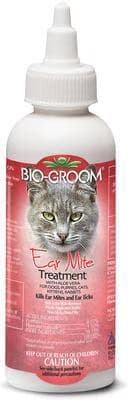
A second mite-treatment option; whichever you use, treat every pet in the house or the mites just circulate.
Webvet may earn a commission when you click through to Chewy, at no extra cost to you.
What ear scratching and head shaking actually mean
A cat's ear canal is long and bends like an L, which makes it very good at trapping moisture, wax, mites, and debris deep down where you cannot see. When the lining of that canal becomes itchy or inflamed, your cat does the only things it can: it scratches at the ear with a back paw, rubs its head along the floor or furniture, and shakes its head to try to fling the irritation out. That head shake is a mechanical reflex, and it is also part of the problem, because vigorous shaking can rupture a small blood vessel in the ear flap and cause a swelling called an aural hematoma. In other words, the behavior you are seeing is your cat's attempt to relieve discomfort, and left alone it can create a fresh injury on top of the original cause.
The usual suspects behind an itchy ear in cats
In cats, a handful of causes account for the vast majority of itchy, shaky ears. Ear mites lead the list, especially in kittens, outdoor cats, and any multi-pet household, because they spread easily from animal to animal. Bacterial and yeast infections come next, often producing a strong odor and a brown or waxy discharge. Underlying allergies, whether to food or something in the environment, are a quieter but very common driver, and they are the reason some cats seem to get ear infections again and again no matter how carefully each one is treated. Less often, a blade of grass or other foreign object lodges in the canal, or a benign growth called an inflammatory polyp develops, which is more typical of young cats. Rarely, a tumor of the ear canal is to blame, which is one more reason a persistent problem deserves a proper look rather than guesswork.

| Likely cause | Other signs you might notice | How soon to act |
|---|---|---|
| Ear mites | Dark, dry, coffee-ground debris; both ears; other pets itchy too | Book a routine vet visit |
| Yeast or bacterial infection | Strong odor, brown or waxy discharge, redness | See a vet soon |
| Allergies | Recurring ear flare-ups, itchy skin or paws, face rubbing | Routine, but ask about the root cause |
| Foreign object or polyp | Sudden fixation on one ear, tilting toward that side | See a vet promptly |
| Aural hematoma | Ear flap suddenly swollen like a small balloon | Have your vet treat it |
Ear mites: the very contagious itch
Ear mites deserve a special mention because they are so common in cats and so easily missed. These tiny parasites live in the ear canal and feed on skin debris and wax, and the classic clue is a crumbly, dark brown to black discharge that looks a lot like coffee grounds. The itch they cause can be intense, which is why mite-infested cats often scratch until the skin around the ear is raw. Because mites crawl from one animal to another through direct contact and shared bedding, one infested kitten can pass them to every cat and dog in the house, so your vet will usually recommend treating all the pets at once. Resist the urge to reach for a homemade or natural mite remedy you found online; oils and other folk cures rarely clear the infestation, can irritate an already inflamed canal, and waste time while your cat stays itchy.
How your vet pinpoints the cause in cats
The reason ear problems are so satisfying to treat is that the cause is usually visible with the right tools, so your vet does not have to guess. The exam starts with an otoscope, a lighted magnifier that lets the vet see down the canal to check whether the eardrum is intact and whether there is a foreign object, a polyp, or swelling. Next comes a swab of the discharge, which is smeared onto a slide and examined under the microscope. That single step tells the vet whether they are looking at mites, budding yeast, bacteria, or a mix, and it is what separates an educated guess from a targeted treatment. Knowing whether the eardrum is intact matters too, because some cleaners and medications are unsafe if the drum is ruptured. For a cat with repeated infections, the vet will look past the ear itself and start asking about the allergy or other condition underneath.

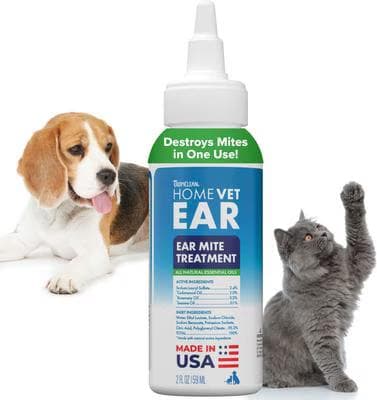
Ear mites are the classic cause in cats, and the dark coffee-ground debris is the giveaway. Confirm with your vet first, since mites spread to other pets in the house.
Webvet may earn a commission when you click through to Chewy, at no extra cost to you.
What to expect at the visit and during recovery
Most ear cases are handled in a single outpatient visit. After the exam and swab, the vet typically cleans the canal to remove the debris that is feeding the problem, then dispenses the right medication for what they found, which might be an anti-parasite treatment for mites or a combined ear preparation that tackles infection and inflammation together. Many products are given as ear drops at home over a week or two, though some clinics offer a long-acting medication applied in the office so you do not have to wrestle drops into an unhappy cat every day. Recovery from a straightforward infection or mite case is usually quick, with the scratching easing within a few days once treatment takes hold. The cases that drag on are almost always the ones with an untreated allergy underneath, which is why following through on any recheck appointment matters; your vet needs to confirm the ear has fully cleared rather than just quieted down.
How to help at home safely
While you wait for the appointment, your job is comfort and observation, not treatment. Look at the ears in good light without poking anything inside, and note redness, discharge, odor, or whether your cat flinches when the ear is touched. Keep the ears dry, especially after any bath, since trapped moisture encourages yeast. If you also notice itchy skin elsewhere on the body, mention it to your vet, because it can be part of the same allergic picture. If your vet has already prescribed an ear cleaner, use only that product and only as directed, wiping the visible part of the ear rather than probing the canal. A soft recovery collar can stop a cat from scratching the ear raw while you wait, which protects the skin and helps prevent a hematoma from repeated trauma. Above all, do not try to flush the ear or apply anything until a vet has confirmed the eardrum is intact.
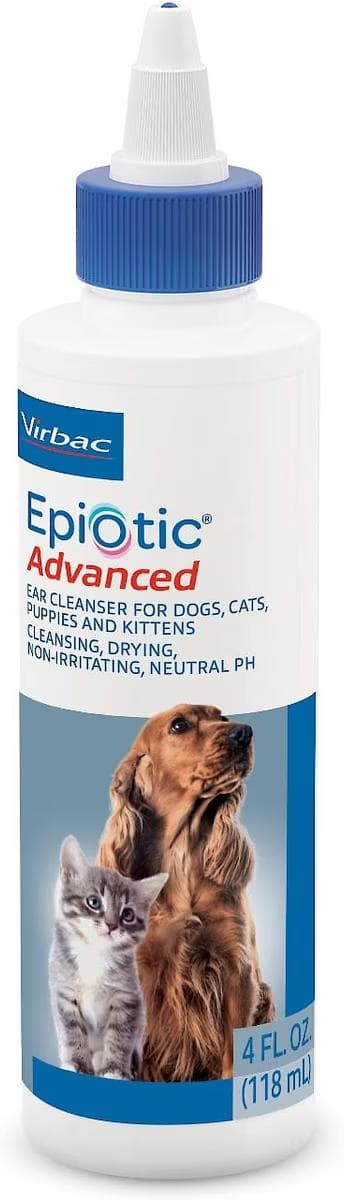
A gentle vet-standard cleaner for the ear flap and outer canal. Only after your vet has looked inside, and never with cotton swabs.
Webvet may earn a commission when you click through to Chewy, at no extra cost to you.
Lowering the odds it comes back


An alcohol-free cleaner for routine upkeep of the outer ear once your vet has ruled out infection.
Webvet may earn a commission when you click through to Chewy, at no extra cost to you.
Prevention in cats comes down to catching problems early and dealing with the root cause. For mites, that means treating every pet in the home together and washing bedding, so a lingering population cannot bounce back and forth. For recurring infections, the honest answer is usually that the ear is not really the problem; it is a symptom of an allergy that flares in the skin and ears alike, and controlling that allergy with your vet's help is what finally breaks the cycle. Routine flea and parasite prevention, keeping the ears dry, and a quick monthly glance inside each ear all help you spot trouble before your cat is miserable. If your cat has had one infection, it is worth asking your vet how to monitor for the next one rather than waiting for the head shaking to return.
When ear scratching becomes urgent
Most itchy ears are a routine problem, but a few signs mean you should not wait. A head tilt, a loss of balance, circling, or rapid flicking eye movements can signal that the middle or inner ear is involved, which is more serious than a surface infection and needs prompt care. An ear flap that swells up suddenly like a small balloon is an aural hematoma from all that shaking, and your vet should treat it before it scars. Scratching so intense that your cat breaks the skin, or a cat that is also feverish, withdrawn, and in obvious pain, also warrants a prompt call. When in doubt, a phone call to your veterinary clinic is quick and free, and it is always the right move for a problem that is getting worse rather than better.
Sources
Related reading from Webvet
Reviewed by the Webvet Veterinarian Team
This guide is general information, not a diagnosis, and does not replace an exam by your veterinarian. If your pet is in distress, contact your vet or an emergency clinic right away.