
Can cats eat raspberries?
Safe in moderationPlain raspberries are not recognized feline toxins, but direct cat feeding data and serving limits are sparse; check calories, texture, and tolerance.


Medically reviewed by Dr. Athena Gaffud, DVM · Last reviewed
Can Cats Eat Raspberries?
Plain raspberries are not recognized as feline toxins, and veterinary poison-control guidance includes them among fruits generally safe for pets in moderation. Direct cat-specific raspberry feeding data remain limited.
- 1Plain raspberries are not recognized feline toxins, but direct cat-specific feeding data are limited.
- 2A study in six healthy cats did not reproduce the canine xylitol syndrome.
- 3The small feline study is reassuring but does not establish unlimited safety for every sweetened product.
- 4Canine xylitol guidance is not a reason for a one-berry feline rule.
- 5No evidence-based feline raspberry serving exists; mixed products require their actual labels and amounts.


Treats should stay under 10% of your cat's daily calories. Smalls makes the rest, built around the meat an obligate carnivore actually needs.
- Human-grade ingredients, protein first
- Built for obligate carnivores
- Fresh meals delivered to your door
Webvet may earn a commission when you click through to Smalls, at no extra cost to you.
Are plain raspberries safe for cats?
A small fresh plain exposure is generally treated as an optional food rather than a characteristic poisoning. Individual gastrointestinal tolerance, calories, chewing, spoilage, and the complete diet still matter.
Direct feline raspberry feeding research is limited. That uncertainty supports cautious, optional guidance rather than a guaranteed serving or a claim that fruit is toxic because cats are carnivores. Current evidence does not establish a routine feline raspberry serving or long-term benefit. Plain fruit is not recognized as a feline poison, but a cat on a therapeutic diet, calorie restriction, food trial, or disease-management plan may need no unplanned extras.
What raspberries contain, and what that does not prove
Raspberries contain water, fiber, natural sugar, vitamins, minerals, plant compounds, and calories. A nutrient list does not prove a meaningful feline immune, digestive, urinary, coat, or antioxidant benefit from a taste. Food-composition values describe the fruit, not the clinical effect of one taste in a cat. Water content does not make raspberries a hydration treatment; fiber content does not make them a constipation or hairball remedy; vitamin and plant-compound content does not establish immune or antioxidant benefit. Complete cat food and veterinarian-directed care should meet those needs.
Obligate carnivory describes species-specific nutrient requirements; it does not make every fruit nutrient unusable or reveal whether an individual cat will show interest. Safety must be assessed separately.

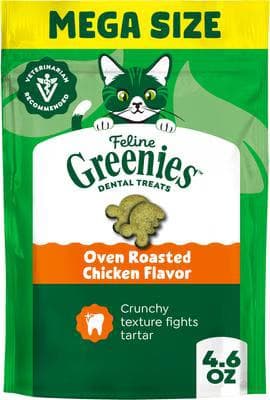
This is a dental cat treat. Follow the current label and ask your veterinarian how it fits alongside tooth brushing and professional dental care.
Webvet may earn a commission when you click through to Chewy, at no extra cost to you.
Cats should receive required nutrition from complete feline food. An optional raspberry need not be framed as meat replacement, and a meat treat is not automatically suitable for every calorie plan or prescription diet.
How much raspberry can a cat have?
There is no evidence-based feline berry count or body-size serving. If a plain taste fits the cat, count it with all other treats and avoid displacing complete food.
| Cat or exposure | How to assess it | Why |
|---|---|---|
| Healthy adult, plain fruit | Optional only; use total treat calories and tolerance | No validated berry serving exists |
| Kitten | Keep complete growth food primary | Age does not create a raspberry toxicity rule |
| Senior or medical diet | Ask the treating veterinarian about any extra | Calorie and nutrient plans vary |
| Sweetened or mixed product | Check all ingredients, concentration, package, and amount | It is not equivalent to plain fruit |
A one-berry ceiling is not evidence based. Fruit size, cat energy need, every other treat, product ingredients, medical history, and clinical response are more useful than a universal piece count. A cat's daily calorie allowance may already include lickable treats, dental products, toppers, and food used for medication. Repeated small extras can therefore matter even without poisoning. If fruit is offered, it should be a planned part of that total. Kittens need complete growth nutrition, while senior status alone does not prove either intolerance or benefit.

Preparing an optional plain taste
Wash fresh fruit, remove spoilage and foreign material, and use a texture the individual cat can manage. Frozen fruit should be checked for blend ingredients and prepared to avoid a hard clump.
Do not force interest or hide fruit in complete food. A cat that refuses raspberries is not demonstrating a toxicologic fact, and a cat that likes them is not demonstrating a nutritional need. For an accidental exposure, record the cat's weight, health conditions, product amount, timing, and current behavior. Include stems, leaves, mold, frozen clumps, skewers, wrappers, lids, or plastic that may have been swallowed. Repeated vomiting, pronounced lethargy, tremors, breathing difficulty, collapse, abdominal pain, or refusal of normal food warrants veterinary advice. Cats on elimination, renal, urinary, gastrointestinal, diabetic, or weight-management diets may need fruit excluded even when toxicology risk is low. Maintain the regular complete diet and avoid hydrogen peroxide, salt, oil, milk, charcoal, or human medication unless a veterinarian directs treatment.
Sweetened and processed raspberry products
Jam, jelly, syrup, yogurt, desserts, drinks, gummies, and sugar-free foods vary in sugar, sweeteners, chocolate, alcohol, raisins, dairy, calories, and packaging. Review the exact label and amount. Sugar-free does not always mean xylitol, and a sweet product does not automatically contain it. Read the full label and contact the maker when ingredients are unclear. The six-cat study should not be used to dismiss chocolate, alcohol, raisins, excessive calories, dairy intolerance, packaging, or another hazard that may be present in a processed raspberry food. Identify the exact raspberry form. Fresh plain fruit differs from jam, syrup, yogurt, smoothies, baked goods, chocolate coatings, gummies, liqueur, trail mix, and products labeled sugar-free. Review chocolate, alcohol, raisins, caffeine, dairy, sweeteners, nuts, calories, and packaging separately. Sugar-free marketing does not establish that xylitol is present, and sweetness does not establish that it is absent. Keep the label and contact the manufacturer if an ingredient list is incomplete. The small feline xylitol study cannot answer every mixed-product scenario.

Choosing another optional feline treat
Choose treats for calorie fit, complete nutrition, ingredients, texture, and individual tolerance. Plain animal protein may suit some cats but is not automatically appropriate for every medical or prescription diet.

This is an optional cat treat. Review its current label, ingredients, calories, and feeding directions, and count it within the total daily extras.
Webvet may earn a commission when you click through to Chewy, at no extra cost to you.
A different fruit is not automatically safer or more useful. Familiar veterinarian-approved treats within the cat's limited calorie allowance are easier to assess than rotating foods for unproven benefits. Discard fermented or moldy berries promptly and keep blender blades, skewers, lids, and small containers outside the cat's reach.
The bottom line
Plain raspberries are not recognized feline toxins, and canine xylitol guidance does not justify a one-berry rule. Keep fruit optional and evaluate mixed products from their actual ingredients. A cat that repeatedly seeks sweetened dairy or baked raspberry foods may be attracted to fat, texture, or another ingredient rather than the fruit. Secure those products and packaging instead of using them as routine rewards. For a planned taste, fresh plain fruit is simpler to identify and track, but refusal is entirely acceptable and complete feline food remains the appropriate nutritional base.

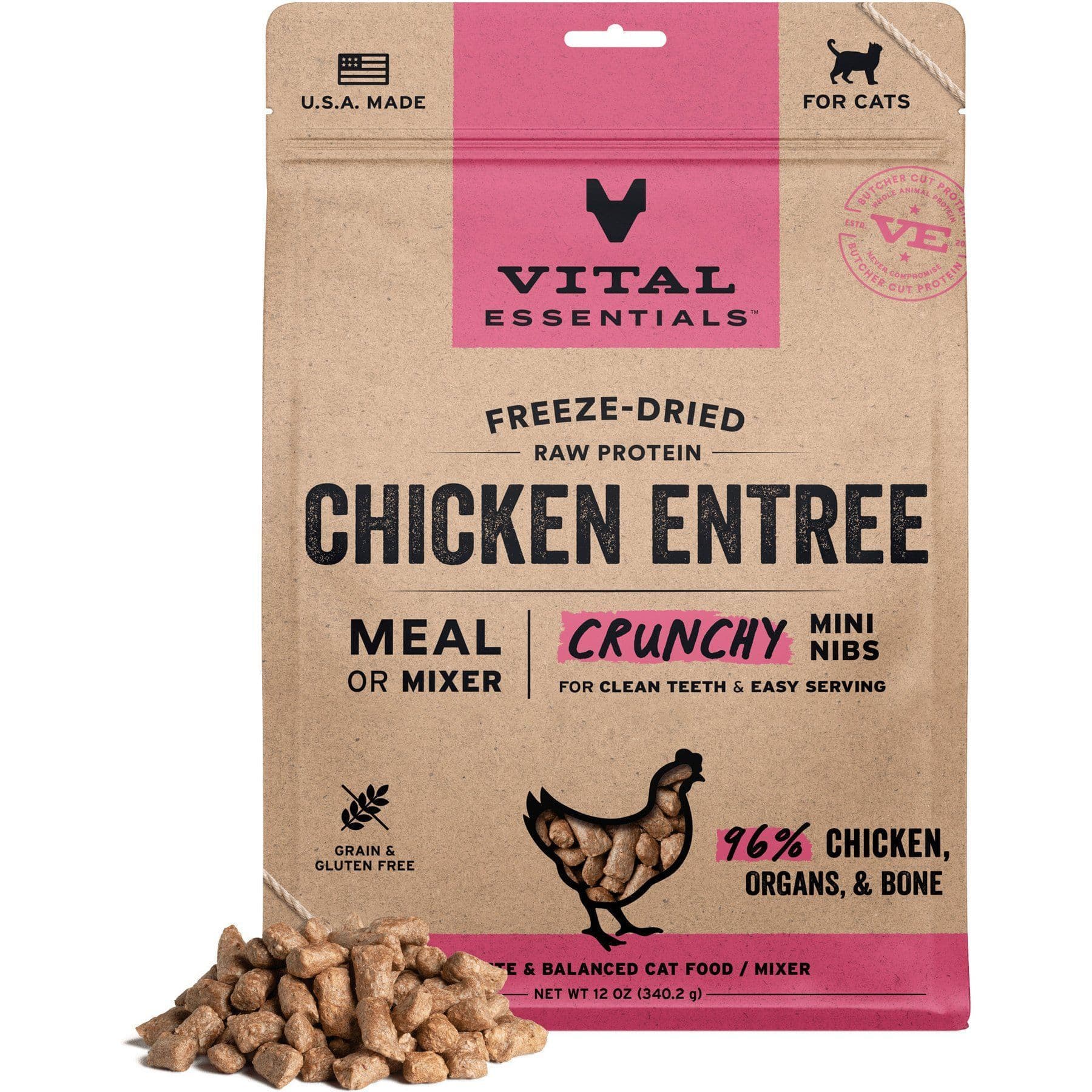
This is an optional cat treat. Review its current label, ingredients, calories, and feeding directions, and count it within the total daily extras.
Webvet may earn a commission when you click through to Chewy, at no extra cost to you.
Frequently Asked Questions
Are raspberries toxic to cats?
Plain raspberries are not recognized feline toxins, but direct cat-specific feeding data and serving limits are sparse.
How many raspberries can a cat eat?
A study in six healthy cats did not reproduce the canine xylitol syndrome. Its small size does not establish unlimited product safety.
Do cats even like raspberries?
No evidence-based one-berry rule exists. Count any optional plain fruit within the cat's total treat-calorie allowance.
Can kittens eat raspberries?
Processed products vary. Check sugar, sweeteners, chocolate, alcohol, raisins, dairy, packaging, and amount.
What should I do if my cat eats a lot of raspberries?
A small plain exposure is generally monitored. Seek advice for a concerning mixed product, package ingestion, or clinical signs.
More safe treats
More fruits for cats
Sources
- Pet Poison Helpline: Labor Day Pet Tips
Veterinary poison-control guidance includes raspberries among fruits that are generally safe for pets in moderation, while mixed products need ingredient review.
- Journal of Veterinary Pharmacology and Therapeutics: Xylitol in Cats
A controlled study in six healthy cats did not reproduce canine hypoglycemia or liver injury, but the small study does not establish unlimited product safety.
- Cornell Feline Health Center: Feeding Your Cat
Cats need complete feline nutrition; treats should remain limited, and dairy tolerance varies because many adult cats are lactose intolerant.
- AAHA: Nutritional Risk Factors
Noncomplete foods above 10 percent of daily calories can dilute essential nutrients; individual medical and life-stage factors require assessment.
- Merck Veterinary Manual: Gastrointestinal Obstruction in Small Animals
Foreign-body and choking concerns depend on object and patient characteristics; a food texture does not guarantee obstruction.
Reviewed by Dr. Athena Gaffud, DVM
General guidance based on credible veterinary sources; not a diagnosis or a substitute for your veterinarian. If your pet ate something toxic or is unwell, contact your vet or a pet poison line right away.