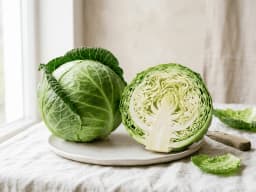
Can cats eat cabbage?
Safe in moderationA tiny plain cabbage taste is not a recognized cat poison, but it is optional and should fit the cat's complete calorie plan.


Medically reviewed by Dr. Athena Gaffud, DVM · Last reviewed
Can Cats Eat Cabbage?
A tiny amount of plain cabbage is not recognized as a feline poison. It is optional, may not interest the cat, and should not displace a complete feline food. Thyroid concern should remain proportional: one small taste is not an established clinically important goitrogen exposure.
A small plain exposure may cause no signs. Unfamiliar food or a larger amount can cause nonspecific gas, vomiting, loose stool, or reduced appetite in an individual cat. Small body size alone does not establish a clinically meaningful dose and should not guide triage. For mixed products containing cabbage, keep the package and report every ingredient, amount, time, cat's weight, history, and signs.
- 1Assess cabbage by its exact form, amount, added ingredients, and the individual cat.
- 2A treat portion of cabbage must fit the complete diet and the cat's remaining calorie allowance.
- 3Prepare cabbage plainly and choose a size and texture suited to how this cat eats.
- 4Cabbage risks depend on product form, amount, texture, and the individual cat.
- 5Call for persistent illness, swallowing trouble, a possible foreign body, or a hazardous co-ingredient.


Treats should stay under 10% of your cat's daily calories. Smalls makes the rest, built around the meat an obligate carnivore actually needs.
- Human-grade ingredients, protein first
- Built for obligate carnivores
- Fresh meals delivered to your door
Webvet may earn a commission when you click through to Smalls, at no extra cost to you.
Is Cabbage Safe for Cats?
Cats need a complete diet that meets their indispensable animal-derived nutrient requirements, but they can digest and absorb some plant-derived nutrients. Cabbage is unnecessary, yet it is not reduced to fiber alone and plant ingredients can contribute digestible nutrients. This food adds optional calories and nutrients, but the complete cat food remains responsible for meeting dietary requirements.
There is no universal spoon, leaf, or frequency allowance. If a veterinarian approves a taste, use the actual calories and total treat allowance while protecting the complete diet. Patient size matters, but it does not create a precise threshold without food amount, diet, health, and tolerance.
Nutritional Context for Cabbage
Use the calories in cabbage and the individual cat's remaining treat allowance; body weight alone is not a serving chart.
Wash cabbage and offer only a plain, manageable piece if appropriate. Cabbage may be raw, cooked, fermented, stuffed, or mixed into slaw, and those forms should not be treated as one food. Plain tender leaf differs from a hard core or long strip in texture. Sauerkraut and slaw can add substantial salt, sugar, dressing, onion, garlic, raisins, or other ingredients. Save the label or recipe and report the form actually eaten. Plain cooking can soften it and heating destroys the goitrogenic substance discussed by Merck. Raw cabbage is not categorically toxic, and a tiny taste is not a demonstrated thyroid hazard. Tough leaves and dense pieces can be awkward for an individual cat to chew. Cut the food for the actual cat and supervise. No cabbage-specific choking or obstruction threshold is established, so persistent vomiting or swallowing difficulty matters more than an arbitrary piece size.

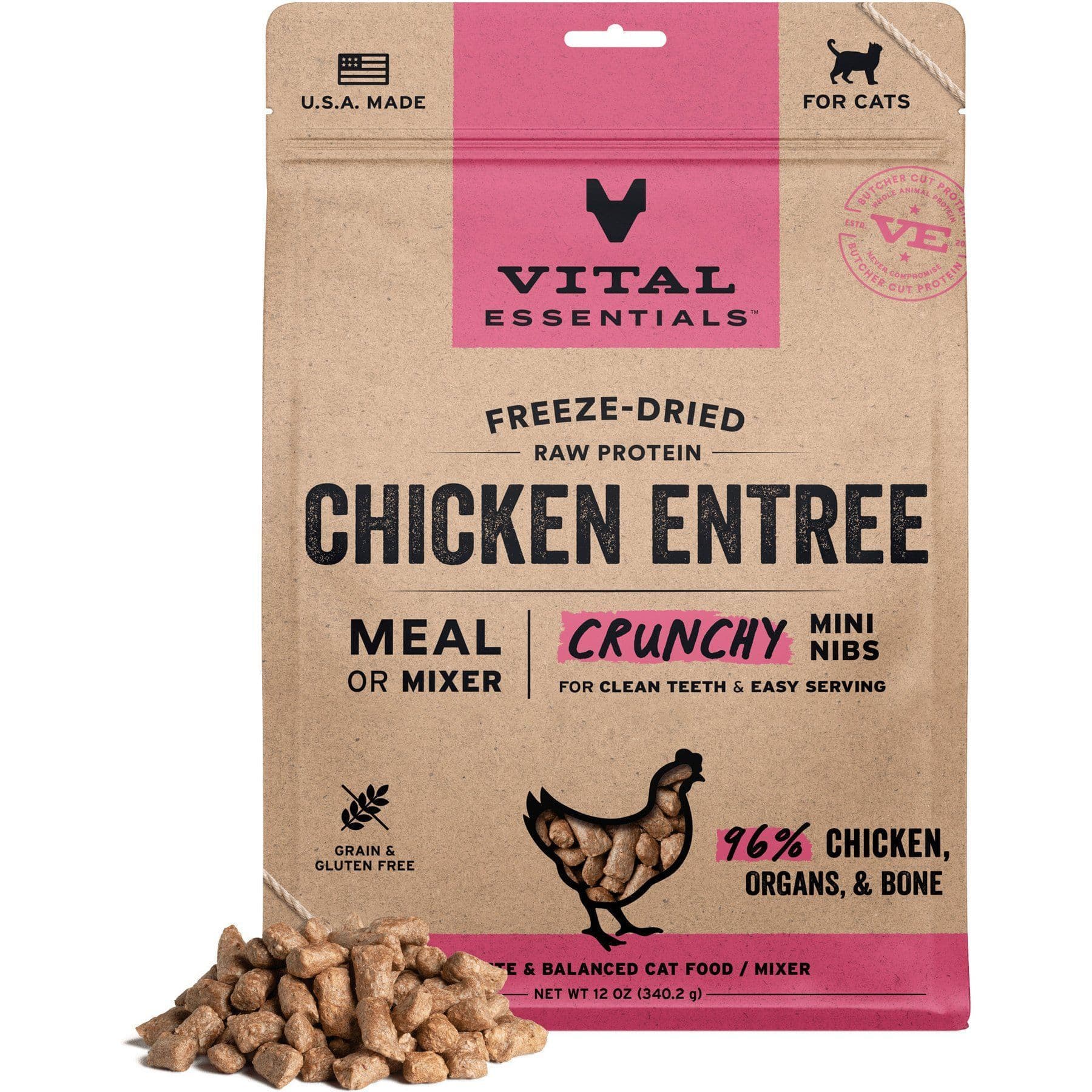
This is an optional cat treat. Review its current label, ingredients, calories, and feeding directions, and count it within the total daily extras.
Webvet may earn a commission when you click through to Chewy, at no extra cost to you.
How to Portion Cabbage
Goitrogen effects concern sufficient repeated intake and iodine balance. Merck notes that adult-animal disease is usually not clinically important and that heating destroys the goitrogenic substance. This is not evidence for frightening owners about an occasional tiny taste.
| Decision point | Evidence-based guidance |
|---|---|
| Plain food | Assess plain cabbage by form, amount, tolerance, and the individual cat. |
| Portion | Use the individual calorie allowance, not a fixed piece or spoon table |
| Preparation | Serve it plain and choose a manageable size and texture. |
| Mixed product | Read every ingredient and keep the package or recipe for advice. |
Sauerkraut, coleslaw, soups, and cooked dishes vary widely. Allium ingredients are the primary toxic concern. Salt, mayonnaise, vinegar, sugar, dairy, and oil can be unsuitable in quantity or conflict with a diet, but they do not make every prepared cabbage dish uniformly poisonous. Related guidance: garlic.
Risks and When to Call
Kittens, seniors, and cats with thyroid, gastrointestinal, kidney, diabetes, or other conditions should follow the treating veterinarian's complete feeding plan. Cabbage should not be used as a home treatment for hairballs, constipation, weight loss, or thyroid disease. A complete feline diet already has to meet nutrient requirements, and adding a vegetable can disrupt a prescribed elimination or therapeutic plan. If stool, appetite, or body weight is a concern, the useful next step is a patient-specific nutrition assessment rather than a recurring cabbage schedule. Avoid blanket exclusions. The therapeutic diet's purpose and iodine or calorie balance determine whether optional extras fit. Contact a veterinarian for meaningful garlic or onion exposure, significant or persistent gastrointestinal signs, weakness, pale gums, breathing or swallowing trouble, or a substantial amount of a mixed product. Report the exact ingredients and amount rather than assuming all cabbage dishes have the same risk.

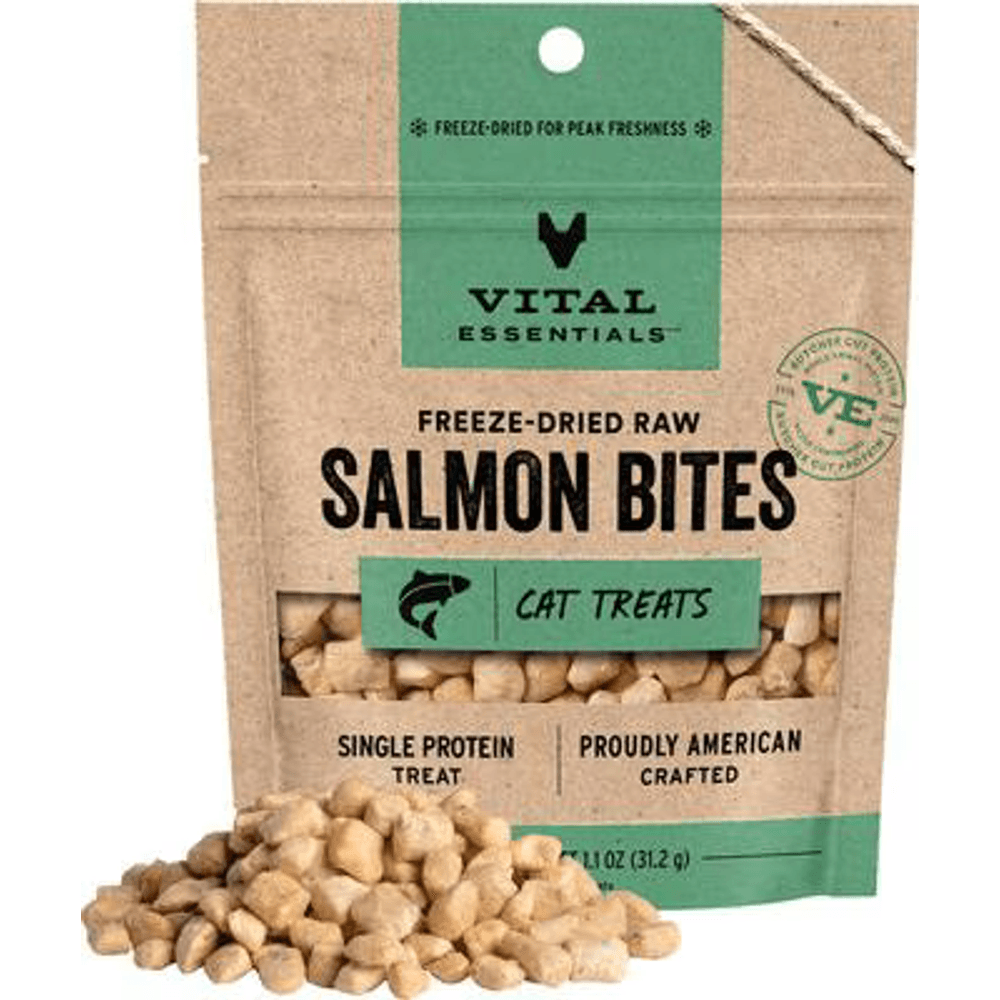
This is an optional cat treat. Review its current label, ingredients, calories, and feeding directions, and count it within the total daily extras.
Webvet may earn a commission when you click through to Chewy, at no extra cost to you.
Obligate carnivory explains essential nutrient requirements; it does not mean no vegetable-derived nutrient can be digested or used. The clinically relevant question is whether optional cabbage is safe, tolerated, and compatible with the complete diet, not whether it is a nutritional building block. Related guidance: vomiting; diarrhea.
Choosing Other Treats
If this food does not fit the plan, choose another veterinarian-approved treat and count it within the same calorie allowance. Related guidance: chicken; egg; fish.
This is a dental cat treat. Follow the current label and ask your veterinarian how it fits alongside tooth brushing and professional dental care.
Webvet may earn a commission when you click through to Chewy, at no extra cost to you.
Plain cabbage can be low risk as a tiny optional taste, but it is unnecessary. After access to a cabbage dish, estimate both the vegetable and the sauce or filling that disappeared. Note repeated vomiting, abdominal pain, appetite loss, marked lethargy, drooling, or swallowing difficulty, and call if the recipe contained Allium ingredients or another known hazard. Do not give oil, fiber powder, or extra cabbage to push a swallowed core through the digestive tract. A suspected foreign object requires professional advice based on the cat and the piece involved. Keep goitrogen language tied to sufficient repeated exposure and iodine balance, assess mixed dishes ingredient by ingredient, and defer medical-diet decisions to the treating team. The practical decision is individualized: confirm the exact food, use a manageable texture, keep extras within the calorie plan, and watch the actual cat rather than a fixed schedule. Contact a veterinarian for persistent vomiting or diarrhea, marked lethargy, pain, breathing or swallowing trouble, inability to pass stool or urine, neurologic signs, or any ingredient-specific toxicology concern.
Frequently Asked Questions
Is plain cabbage toxic to cats?
A tiny plain cabbage taste is not a recognized cat poison, but it is optional and should fit the cat's complete calorie plan.
How much cabbage can a cat have?
There is no universal cabbage serving. Use the food's calories and the individual cat's remaining treat allowance.
How should cabbage be prepared?
Serve cabbage plainly and choose a size, texture, and form suited to how this cat eats.
Does cabbage provide a health benefit?
Cats need a complete diet that meets their indispensable animal-derived nutrient requirements, but they can digest and absorb some plant-derived nutrients. Cabbage is unnecessary, yet it is not reduced to fiber alone and plant ingredients can contribute digestible nutrients.
When should an owner call a veterinarian?
Call with the exact form of cabbage, amount, time, package, medical history, and signs; urgent symptoms need prompt care.

More safe treats
More vegetables for cats
Sources
- Merck Veterinary Manual: Overview of Nutrition in Small Animals
Supports complete and balanced feeding and patient-specific nutrition; it does not establish clinical benefit from a treat portion.
- Merck Veterinary Manual: Nutritional Requirements of Small Animals
Supports species-specific nutrient requirements, including the feline need for preformed vitamin A and the distinction between digestibility and essential nutrient source.
- WSAVA: Feeding Treats to Your Cat
Supports keeping cat treats within about 10% of daily calories without imposing universal piece, spoon, or frequency tables.
- Merck Veterinary Manual: Goiter in Animals
Supports that sufficient repeated intake of goitrogenic plants can matter with iodine balance, heating destroys the substance, and adult disease is usually not clinically important.
- Merck Veterinary Manual: Garlic and Onion Toxicosis in Animals
Supports dose-dependent oxidative red-cell injury from Allium ingredients and separates that toxicology from ordinary fats, salt, or dairy ingredients.
- Merck Veterinary Manual: Salt Toxicosis in Animals
Supports dose- and hydration-dependent salt toxicosis rather than treating one salted bite as a defined toxic dose.
Reviewed by Dr. Athena Gaffud, DVM
General guidance based on credible veterinary sources; not a diagnosis or a substitute for your veterinarian. If your pet ate something toxic or is unwell, contact your vet or a pet poison line right away.