Christmas pet safety: plants, trees, tinsel and treats
Christmas fills the house with new plants, a tree, glass ornaments, tinsel and tins of cookies and chocolate. Cats are drawn to the tree, the ribbon and the plants, while dogs tend to find the food. Lilies are the holiday plant that is an emergency for cats, and tinsel or ribbon can block a cat's intestine. Use the guides below to check a plant, decoration or treat, and call your vet or a pet poison line if your pet has eaten something.
Medically reviewed by Dr. Athena Gaffud, DVM · Last reviewed Oct 7, 2026
Pet ate something toxic? Call now.
Pet Poison Helpline855-764-7661ASPCA Animal Poison Control888-426-4435US poison services, open 24/7. Consultation fees may apply.
Holiday plants
Decorations
Holiday food and drink
- Can dogs eat chocolate?Toxic: do not feedStocking chocolate and baking chocolate are within easy reach.
- Can dogs eat macadamia nuts?Toxic: do not feedMacadamia nuts turn up in holiday cookies and nut tins.
- Can dogs eat raisins?Toxic: do not feedRaisins hide in fruitcake, mince pies and holiday cookies.
- Can dogs eat ham?Not recommendedHoliday ham is fatty and salty, and trimmings tempt dogs.
- Chocolate toxicity calculatorToolEstimate how concerning a chocolate exposure is from the type, amount and your pet's weight.
Shopping for your pet this year?
Petful's holiday gift guides cover toys, treats, stocking stuffers and advent calendars for dogs and cats.
Questions
Are poinsettias poisonous to cats?
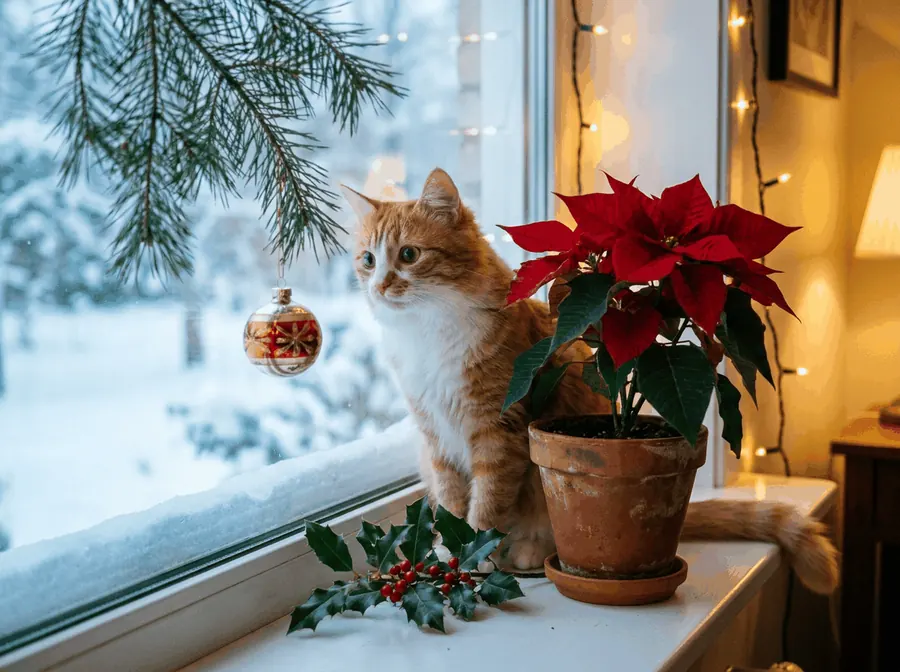
Poinsettias are mildly toxic to cats. The milky sap can irritate the mouth and stomach, causing drooling, lip licking, vomiting and sometimes diarrhea, and it can irritate skin and eyes. Call your vet or a pet poison line promptly after your cat chews one, especially if signs develop or foil wrap or plant food was swallowed too.
Are Christmas trees toxic to cats?
Fir, pine and spruce trees are mildly toxic to cats. Oils in the needles can irritate the mouth and stomach and cause drooling or vomiting, and the sharp needles are hard to digest. The water in the stand can hold fertilizer, preservatives and bacteria. Pieces of artificial trees can be swallowed too. Call your vet if your cat is vomiting, not eating or chewed a lot.
How do I keep my cat out of the Christmas tree?
Anchor the tree so it cannot fall, and put it in a room you can close when no one is watching. Leave it undecorated for a few days so the novelty wears off, then hang breakable and dangling ornaments high. Skip tinsel, cover the stand and wrap the base with a tree collar or foil. A cat tree nearby gives your cat another place to climb.
Why is tinsel dangerous for cats?
Cats love to play with tinsel, ribbon and string, and the rough barbs on a cat's tongue make it hard to spit out. Swallowed, a strand can anchor under the tongue or in the stomach while the intestine bunches along it, which can cut through the intestinal wall. Go to a vet now if your cat swallowed tinsel, and never pull a strand from the mouth or rear.
Can dogs eat gingerbread?
Gingerbread is best kept away from dogs. It is high in sugar and fat, and it often contains nutmeg, which can cause problems in larger amounts. Some recipes and gingerbread house kits add xylitol, chocolate, raisins or macadamia nuts, and houses are often decorated with candy and non-food items. If your dog ate a gingerbread house or a plate of cookies, call your vet.
Is mistletoe toxic to dogs?
Yes. Mistletoe can cause vomiting, diarrhea and drooling in dogs. Larger amounts, especially of European mistletoe, can slow the heart, lower blood pressure and cause wobbliness, and berries that drop to the floor are easy to eat. It is often hard to tell which species is in a sprig, so call your vet or a poison line if your dog eats any mistletoe.
Is holly toxic to dogs and cats?
Holly is toxic to dogs and cats. The leaves and berries can cause vomiting, diarrhea and drooling, and the spiny leaves can injure the mouth, which may make a pet shake its head or smack its lips. Keep wreaths and garlands with holly out of reach, sweep up dropped berries, and call your vet or a poison line if your pet eats holly.
Are lilies dangerous for cats at Christmas?
Yes. Lilies are a life-threatening emergency for cats. Any contact with a true lily or daylily, including pollen groomed off the fur or a sip of vase water, can cause kidney failure. Lilies are common in holiday bouquets and arrangements. If your cat has touched or chewed a lily, call a pet poison line or an emergency vet right now. Early treatment matters.
Are Christmas cactus and amaryllis toxic to pets?
Christmas cactus is not considered toxic to dogs or cats, but chewing it can upset the stomach, so check for swallowed packaging or potting products and call your vet if vomiting continues. Amaryllis is different. It is toxic to dogs and cats and can cause vomiting, drooling, diarrhea and belly pain, and the bulb is the most toxic part. Call your vet after any amaryllis exposure.
Can dogs eat candy canes?
Candy canes are best kept away from dogs. Regular candy canes are mostly sugar and can cause vomiting or diarrhea, and the hard pieces and plastic wrappers can injure the mouth or block the gut. Sugar-free candy canes may contain xylitol, which can cause dangerously low blood sugar quickly. If your dog ate a sugar-free candy cane, call your vet or a poison line now.