Fresh Dog Food vs Kibble: What Veterinarians Recommend
Compare fresh dog food and kibble through nutrition, moisture, research, cost, and daily portions. Learn how to choose an appropriate recipe and make a measured transition.

BVMS MRCVS
Medically reviewed by Dr. Pippa Elliott, BVMS MRCVS · Last reviewed
This article contains affiliate links. Webvet may earn a commission when you buy through them, at no extra cost to you.
This article is sponsored by JustFoodForDogs. WebVet maintains editorial control and may earn a commission from qualifying purchases, at no extra cost to you.
Fresh dog food vs kibble is best approached as a choice between specific recipes for a specific dog. A suitable cooked fresh diet can offer moisture and a soft texture; a suitable kibble can offer convenient dry storage and compact servings. Neither format replaces the need for complete nutrition and an appropriate daily portion.
Veterinary guidance becomes useful when it connects those differences to your dog's health, life stage, body condition, and feeding routine. Here is how to compare the options without confusing a format preference with proof that one food is universally healthier.
Fresh dog food vs kibble: how veterinarians decide
- 1Choose a complete and balanced food for the dog's life stage before choosing by texture.
- 2Compare recipes on the same daily calorie target.
- 3A sustainable feeding routine matters as much as a persuasive format claim.
Is fresh dog food better than kibble? It may be a better fit for a particular household or dog, but that conclusion needs a reason. The useful pros and cons of fresh dog food include its moist serving texture and prepared-meal convenience, alongside storage requirements and ongoing cost. Kibble has a different practical balance.
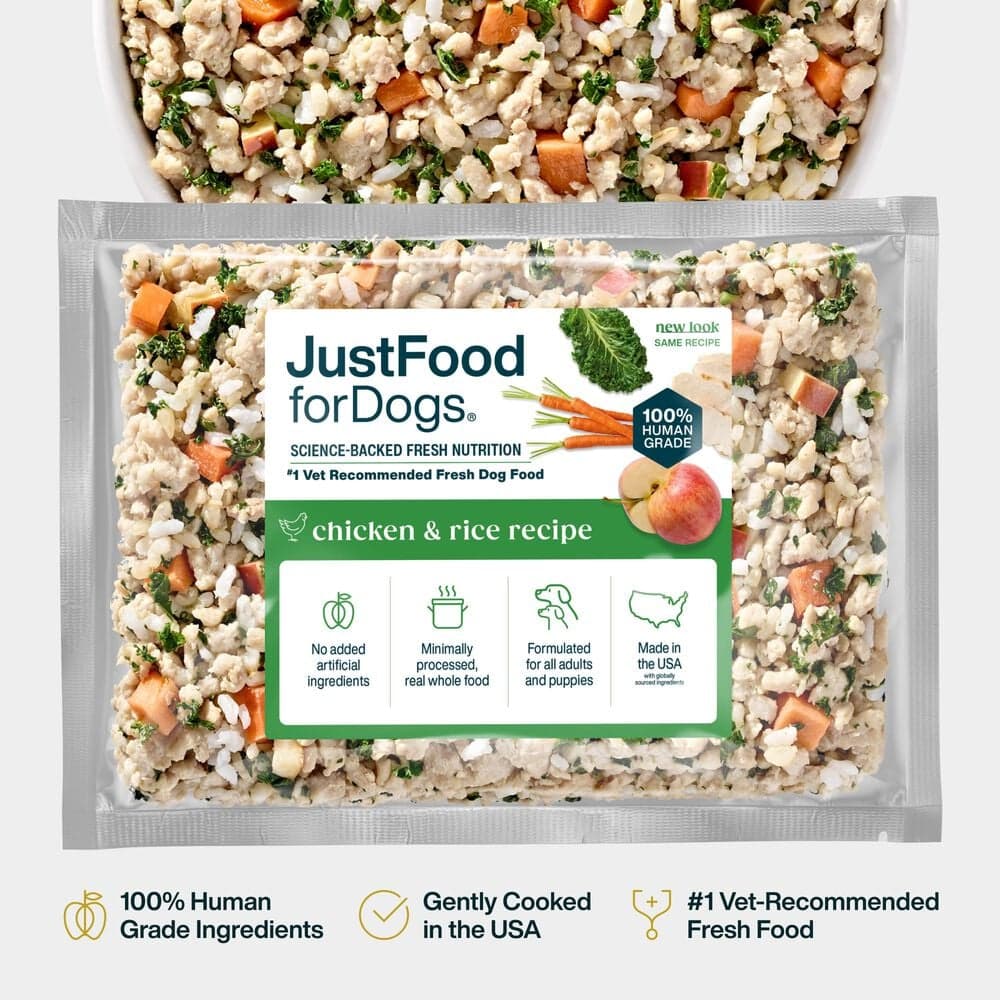
Want fresh food without raw-meat risk? Explore the gently cooked recipes mentioned in this guide.
- Chicken with rice and whole-food ingredients
- Fresh Frozen recipe
- View the recipe and feeding guide
Webvet may earn a commission when you click through to JustFoodForDogs, at no extra cost to you.
The question “Is fresh food better for dogs than kibble?” also needs the word “better” defined. Are you comparing meal acceptance, nutritional suitability, cost, convenience, or evidence for a particular outcome? These are separate decisions, and one recipe may not lead in every category.
Start with the dog, then the food
- Life stage and expected adult size for a growing puppy.
- Current body condition, activity, and daily intake.
- Medical conditions or a prescribed nutritional plan.
- Appetite, digestive tolerance, and chewing comfort.
- Household budget, storage, and preparation time.
JustFoodForDogs Chicken & Rice is a cooked Fresh Frozen recipe to compare against those needs. Read the current recipe's label and feeding guidance rather than treating its format or protein source as a universal recommendation.
Moisture, texture, and processing
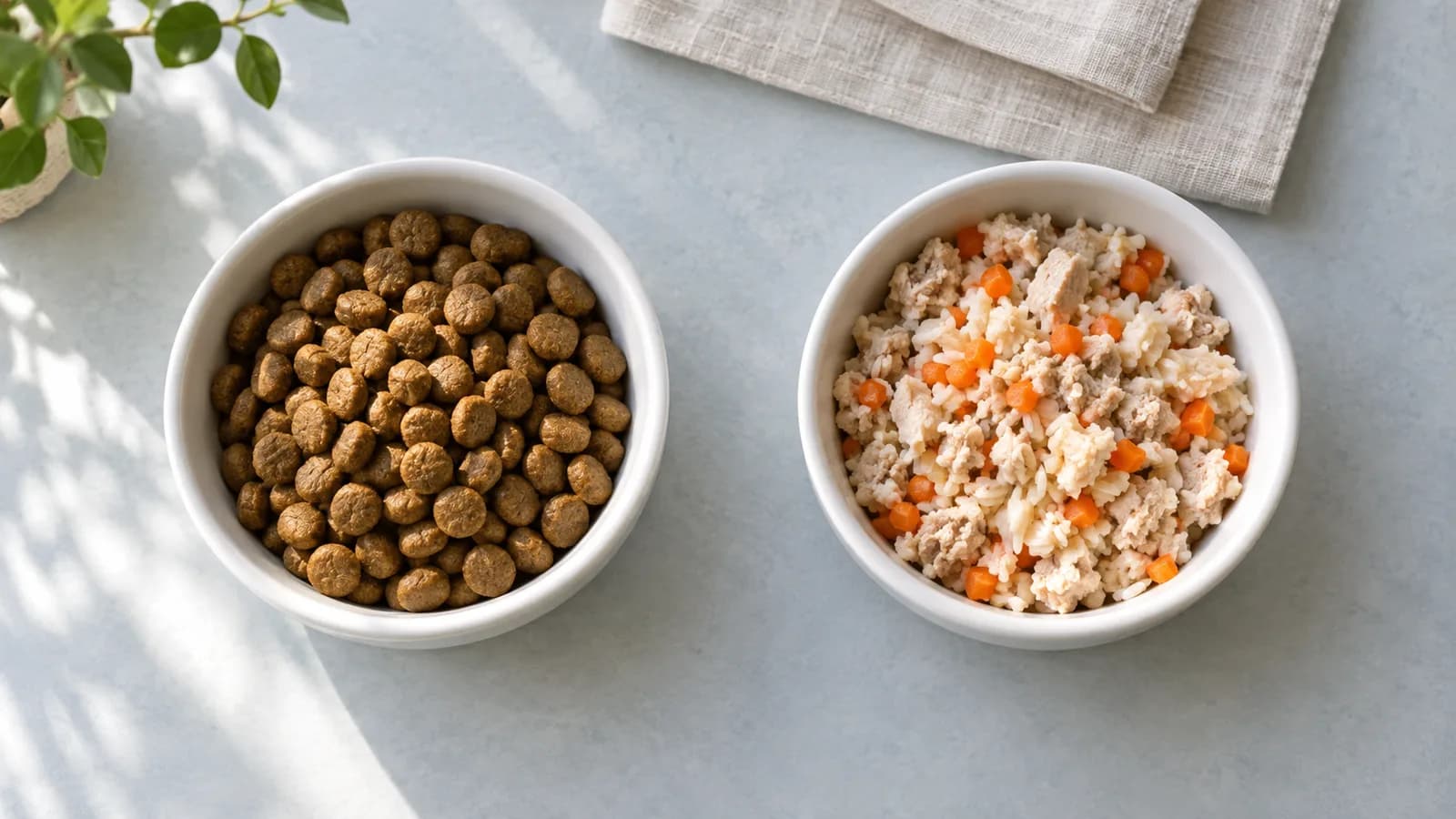
Cooked fresh food contains water as part of the meal and generally has a soft texture. Kibble is dry and usually crunchy. Those visible differences affect serving weight and storage, but they do not establish the nutritional quality of the finished food.
Fresh also needs a definition. In this comparison it means cooked fresh meals, not raw meat. Our guide to raw meat safety for dogs explains why uncooked animal ingredients introduce a different set of concerns. Refrigerated appearance alone cannot tell you whether a food is cooked.
Want fresh food without raw-meat risk? Explore the gently cooked recipes mentioned in this guide.
- #1 vet-recommended fresh food
- 10+ years of feeding trials & studies
- Recipes for all breeds, needs and life stages
Webvet may earn a commission when you click through to JustFoodForDogs, at no extra cost to you.
| Consideration | Cooked fresh food | Kibble |
|---|---|---|
| Texture | Soft and moist | Usually dry and crunchy |
| Storage | Usually chilled or frozen; shelf-stable products differ | Cool, dry storage as directed |
| Serving weight | Often more food weight for the same calories | Often a smaller food weight for the same calories |
| Adequacy | Check the exact recipe and life stage | Check the exact recipe and life stage |
| Routine | Plan opened food and thawing where needed | Measure accurately and keep the bag fresh |
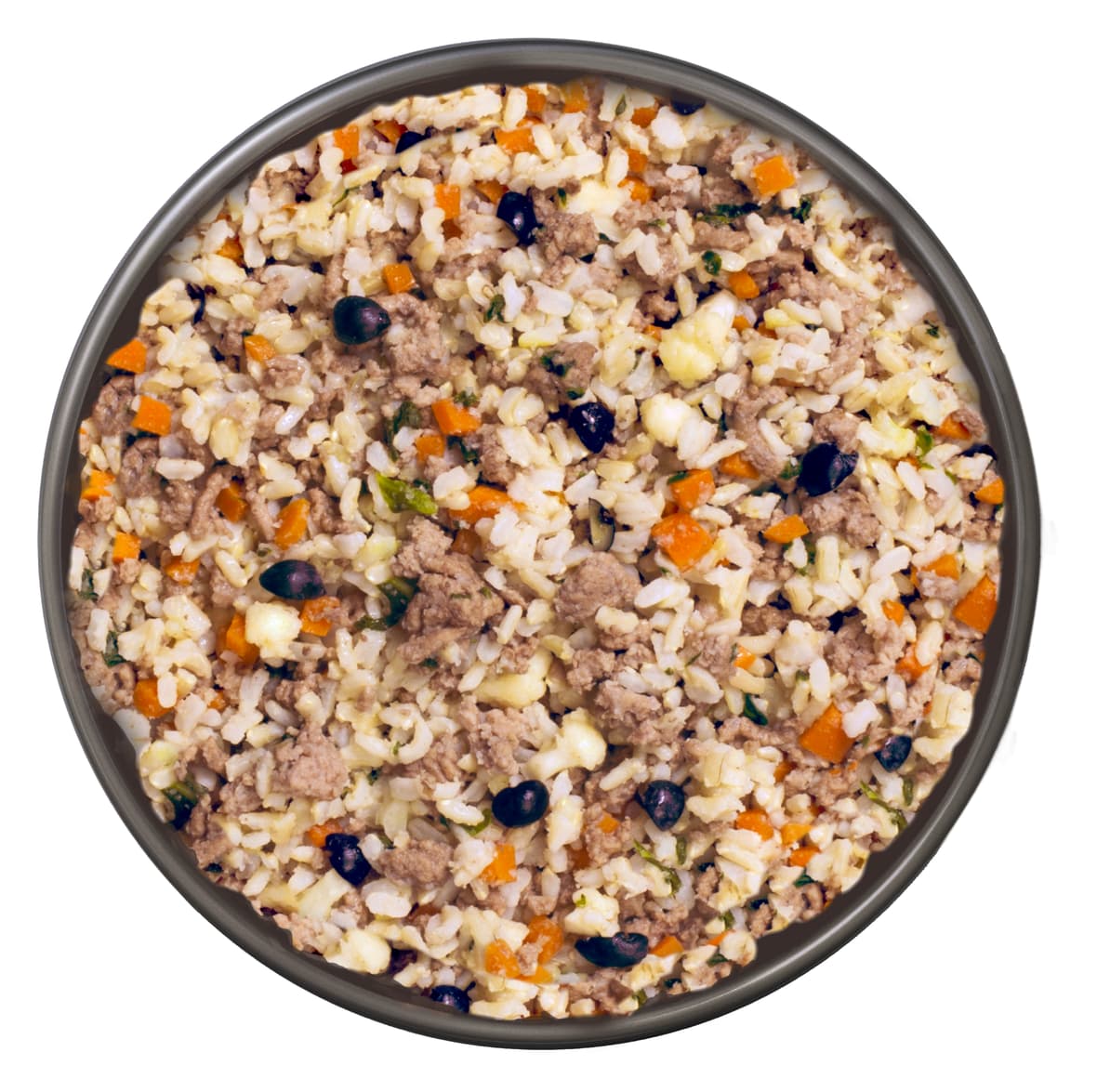
The JustFoodForDogs Fresh Frozen range can fit an owner who wants prepared cooked meals and has a workable freezer routine. A moist meal may be appealing, but it should not be presented as treatment for a chewing problem or unexplained appetite loss.
 $65 · no membership
Have a health question about your pet?
A licensed vet can assess your pet over video and prescribe online when it's appropriate.
 Talk to a vet
- Licensed vets
- All 50 states
- same-day Rx

Webvet may earn a commission if you book.
What digestibility research actually shows
Digestibility research asks how much of the food's nutrients or energy is apparently absorbed rather than passed in feces. That is a useful outcome, but it is not the same as measuring lifespan, disease prevention, or the best food for every dog.
A University of Illinois research summary reports differences in digestibility and fecal output among the specific human-grade and other diets studied. The relevant conclusion is about those tested recipes and outcomes. It should not become a guarantee that all fresh foods outperform all dry diets.
Useful evidence questions
- Were dogs fed the exact recipe being discussed, or a different formula?
- Did the study measure digestion, adequacy, symptoms, or another outcome?
- How closely does the study population resemble the dog being advised?
You can value a soft cooked meal without making an unsupported longevity claim. You can also use study findings as one part of recipe selection while considering manufacturer expertise, nutrient information, and the dog's individual needs.
Compare nutrition and cost on equal terms
Begin with nutritional adequacy and calorie density. The FDA explains complete-and-balanced claims through nutrient-profile and feeding-trial substantiation. There is no category of “AAFCO approved fresh dog food”: AAFCO does not approve individual products. Read the actual label statement instead.
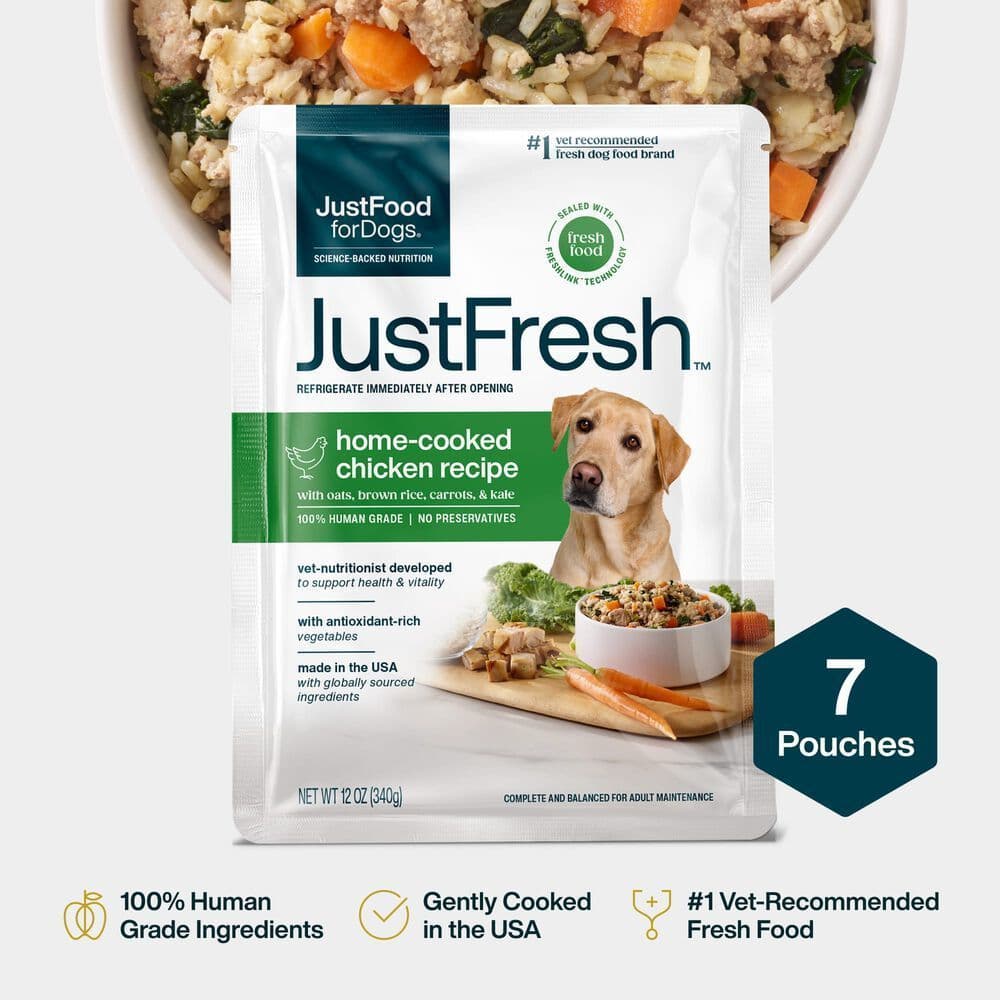
Comparing fresh brands? Explore the JustFoodforDogs recipes and formats covered in this comparison.
- Home-cooked chicken recipe
- Shelf-stable pouches before opening
- Fresh-food convenience without freezer space
Webvet may earn a commission when you click through to JustFoodForDogs, at no extra cost to you.
For fresh dog food vs kibble cost, give both diets the same daily calorie target. Divide each recurring package price by its total calories, then multiply by that daily target. This avoids treating water weight or a large-looking fresh serving as a nutritional disadvantage or a bargain.
A hypothetical comparison
If a dry food costs $0.003 per calorie and a fresh food costs $0.012 per calorie, a 500-calorie day would cost $1.50 or $6.00 respectively. These are example inputs, not current prices for a named product. Your dog's calorie needs, recipe, package size, and ordering terms determine the actual result.
- Use repeat-order prices as well as any introductory offer.
- Include unavoidable shipping at your intended order size.
- Consider food discarded because opened packs are too large for the serving routine.
- Keep topper portions separate from full-diet cost comparisons.
If freezer space is the main concern, JustFoodForDogs JustFresh Chicken offers a shelf-stable cooked format to evaluate. Check its life-stage suitability and opened-package directions; shelf-stable does not mean an opened meal can be stored indefinitely without refrigeration.
Calorie density explains why fresh and dry portions should not be exchanged scoop for scoop. A moist cooked meal may need a different weight or volume to supply the same energy as a dry recipe. Use the calories on each exact label and the dog’s daily target, then measure the corresponding amount of food rather than judging the bowl by appearance.
Recovery feeding is a veterinary decision; use these calorie-dense options as talking points with your vet.
- Enter your dog’s weight and activity
- Compare fresh-food feeding options
- Use your vet’s calorie target for medical needs
Webvet may earn a commission when you click through to JustFoodForDogs, at no extra cost to you.
Affordability follows the feeding amount
The most affordable fresh dog food for a particular household is not necessarily the one with the lowest package price. Compare recurring cost at the calories the dog needs, including whether a plan supplies the whole diet or a measured portion of it. A fresh dog food vs kibble cost calculation should use the same energy target for both foods and account for any delivery charge.
There is also no AAFCO approved fresh dog food list that substitutes for reading labels. AAFCO sets model standards and nutrient profiles; it does not approve individual foods. Inspect the nutritional adequacy statement and ask the manufacturer about its evidence. This gives you a more useful basis for comparison than an unsupported approval claim on a retailer's page.
Who may do well staying on kibble?
A dog comfortable on a suitable complete kibble, with an appropriate body condition and a manageable feeding routine, may have no particular need to change. The same applies when a veterinarian has selected a therapeutic dry diet for a nutritional purpose that casual substitutions could disrupt.
Budget and consistency matter too. A diet that is nutritionally suitable and affordable over time can be a responsible choice. Choosing fresh food should not depend on shaming owners for serving a different complete format.

Before changing a successful routine
Ask what problem the change is meant to solve. If you prefer a moist cooked meal, that is a clear preference to explore. If the concern is a health symptom, assess the symptom first. If the goal is variety, consider whether mixed feeding can be measured and whether both recipes fit the dog.
Nutritional adequacy describes the food’s intended role and life stage. A main diet must provide complete nutrition for the dog’s needs; an appealing topper cannot automatically replace it. Read the exact statement on both fresh and dry foods, and ask your veterinarian about restrictions when a puppy, medical condition, or therapeutic feeding plan changes what is appropriate.
How to introduce fresh food without guessing portions
Plan one total calorie allowance, then allocate it between foods during the transition. Replacing a portion of kibble with fresh food means replacing calories, not matching the scoop volume. A cup of one recipe can supply a very different amount of energy from a cup of another.
The JustFoodForDogs feeding calculator can help establish a starting estimate. Review it alongside the dog's actual intake and condition rather than adding its full recommendation on top of the existing diet.
Keep the first weeks simple
- Confirm the exact recipe is suitable.
- Follow gradual-transition guidance and measure portions.
- Keep track of opened packs and thaw the next pack as directed.
- Monitor appetite, digestion, weight, and body condition.
Seek veterinary advice for persistent digestive upset, appetite loss, or unexplained weight change. The best comparison ends with a food and routine that suit the individual dog, whether that is cooked fresh, kibble, or an appropriate measured combination.
Frequently asked questions
What do vets say about fresh dog food?
Vets assessing fresh dog food look for qualified formulation, an appropriate life stage, quality controls, and a recipe suited to the individual dog. Fresh is not an approval category. Bring the exact food, label, and planned serving to the conversation. A cooked fresh diet can be an appropriate option when its nutrition and handling routine fit, rather than merely because it looks less processed.
What is the healthiest food to feed your dog?
The healthiest food to feed your dog needs to provide complete nutrition for the dog’s life stage and individual requirements. A specific cooked fresh recipe may suit one dog well, while another dog may do well on a different complete diet. The format label cannot resolve that decision on its own. Medical conditions and growth needs make individualized veterinary guidance particularly useful.
Do dogs live longer on fresh food?
A digestibility study does not establish that dogs live longer on fresh food. Lifespan is a different research outcome and is influenced by many factors beyond whether food is fresh or dry. Do not choose a meal on the promise that the format guarantees more years. Evaluate appropriate nutrition, measured intake, and the practical benefits you can actually identify for the dog and household.
Can I feed fresh food and kibble together?
Suitable complete diets can be combined, using the same daily calorie target for the overall plan. Calculate each food's share and remove the corresponding calories when adding the other. A topper that is not complete needs different limits. Get advice before altering a therapeutic diet or a puppy's feeding plan, and make changes gradually while monitoring tolerance and body condition.
Does fresh dog food need a subscription?
Ordering options vary by brand, product, and retailer, so check the current terms before buying. Compare a one-time purchase and any subscription using the recurring cost, delivery quantity, and cancellation or adjustment rules. The practical question is whether the food arrives at a pace your dog can use and your storage can accommodate, not whether a subscription itself makes the recipe better.
$65 · no membershipHave a health question about your pet?
A licensed vet can assess your pet over video and prescribe online when it's appropriate.
Talk to a vet- Licensed vets
- All 50 states
- same-day Rx
Webvet may earn a commission if you book.

Editor
The Webvet Editorial Team is the in-house group of pet-care editors and writers behind Webvet, operated by Smart Pet Collective. The team researches, writes, and maintains Webvet's pet health, behavior, and medication content. Every article follows a defined editorial process: research from reputable veterinary and scientific sources, careful drafting, mandatory review of medical content by a credentialed veterinarian, and dated publication. Health and medication articles are medically reviewed by a licensed veterinary professional before they go live and are kept current over time.
Veterinarian · BVMS MRCVS
Dr. Pippa Elliott, BVMS, MRCVS, is a veterinarian with nearly 30 years of experience in companion animal practice. Dr. Elliott earned her Bachelor of Veterinary Medicine and Surgery from the University of Glasgow. She was also designated a Member of the Royal College of Veterinary Surgeons. Married with 2 grown-up kids, Dr. Elliott has a naughty Puggle named Poggle, 3 cats and a bearded dragon.