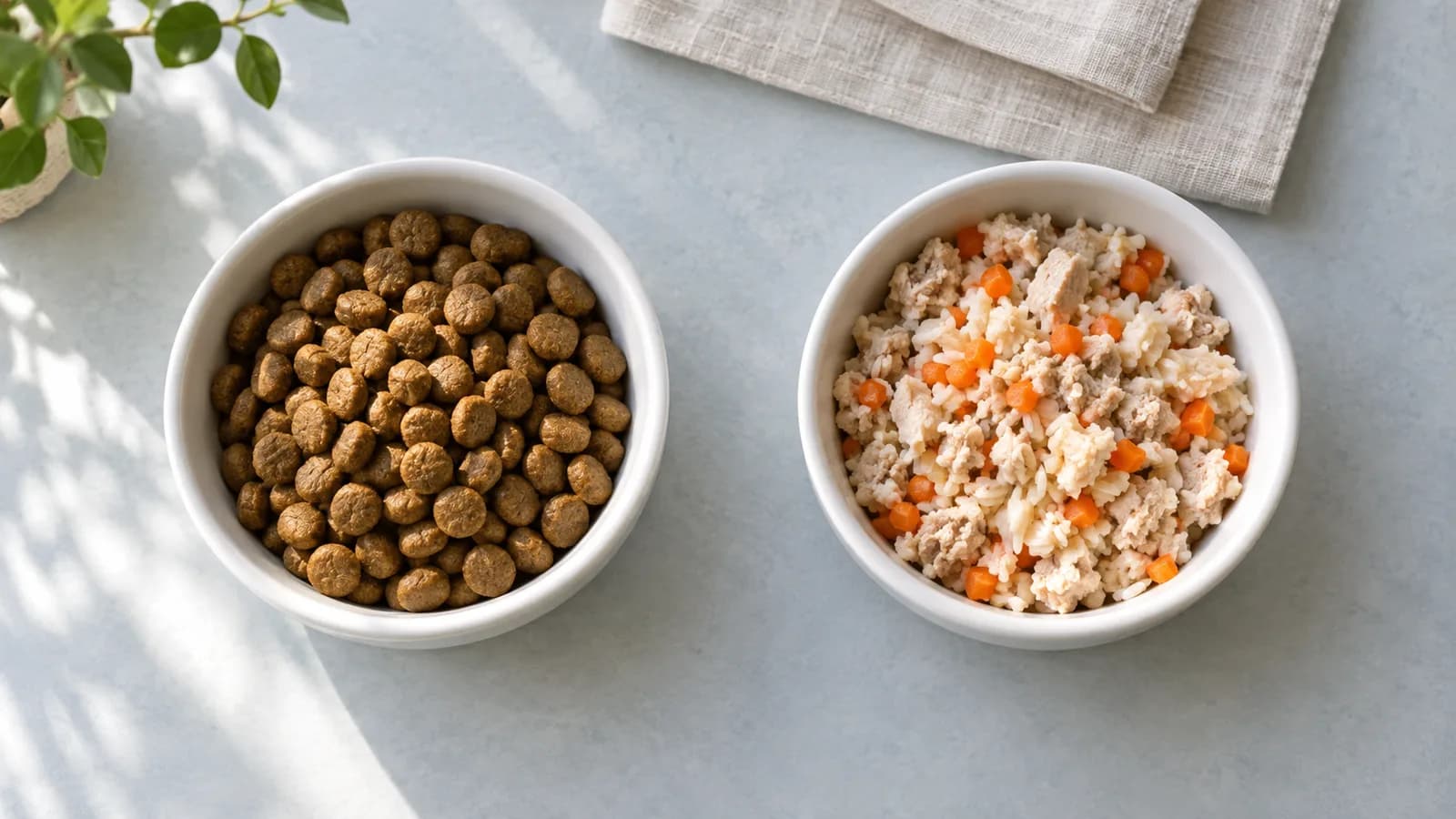
Fresh Dog Food for Puppies: Is It Better Than Puppy Kibble?
Fresh puppy food needs a complete growth formulation, appropriate minerals, and measured portions. Learn how to check the label and compare cooked fresh meals with puppy kibble.

BVMS MRCVS
Medically reviewed by Dr. Pippa Elliott, BVMS MRCVS · Last reviewed

This article contains affiliate links. Webvet may earn a commission when you buy through them, at no extra cost to you.
This article is sponsored by JustFoodForDogs. WebVet maintains editorial control and may earn a commission from qualifying purchases, at no extra cost to you.
Fresh dog food for puppies can be a suitable choice when the exact recipe is complete for growth, including the appropriate large-breed qualification where needed. A moist texture or fresh appearance alone is not enough. Puppies need a diet designed for development, served in amounts that support a healthy growth pattern.
The comparison with puppy kibble is therefore about two suitable growth diets, not fresh food versus an assumed inferior alternative. Check the full adequacy statement, the recipe's calories, and your puppy's changing needs before deciding which feeding routine works best.
Fresh meals during puppy growth
- 1Puppies can eat an appropriate complete and balanced fresh diet for growth.
- 2Adult-maintenance food is not interchangeable with puppy food.
- 3Use measured growth and body condition to review portions as the puppy develops.
Yes, puppies can eat a cooked fresh recipe designed to meet their growth needs. The words “fresh,” “human-grade,” and “all-natural” do not answer that question on their own. Read the nutritional adequacy statement for the exact product you will serve.
The best fresh dog food for puppies is a recipe that fits the individual puppy's size, health, growth needs, and household routine. It should also have clear formulation and feeding information. Choosing the smallest pouch or the softest-looking meal is not a reliable substitute for those checks.
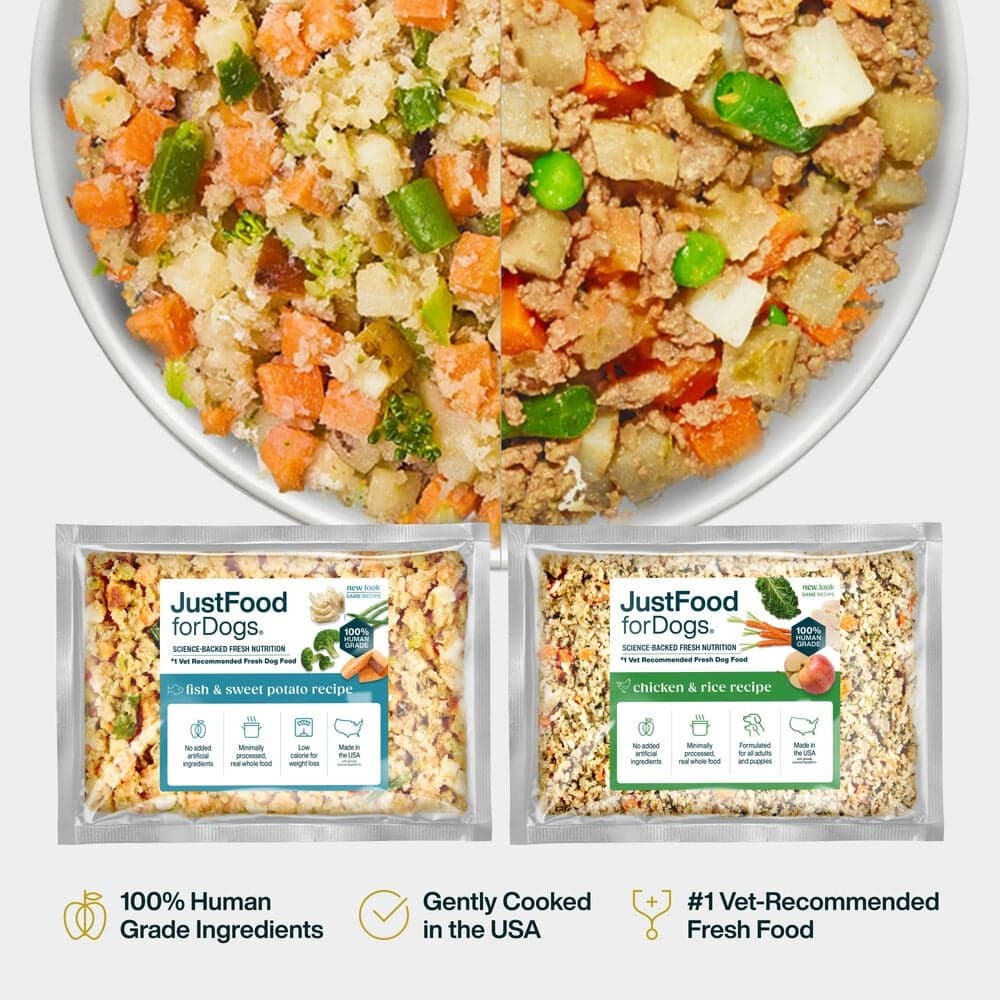
Feeding a puppy fresh? Start with the growth-substantiated recipes covered in this guide.
- Chicken & Rice plus Fish & Sweet Potato
- Both recipes meet AAFCO growth profiles
- Seven 18 oz packages per small box
Webvet may earn a commission when you click through to JustFoodForDogs, at no extra cost to you.
Before the first order
- Confirm the food is intended as a complete growth diet.
- Check the large-size-dog qualifier when relevant.
- Record the calories per measured weight or serving.
- Plan cold storage and the use of opened packs.
The JustFoodForDogs Puppy Variety Pack provides a puppy-focused place to begin evaluating the brand's Fresh Frozen options. Check each included recipe's current label and calorie information rather than assigning one serving size to the entire variety pack.
Read the complete growth statement first
Look for growth or all-life-stages suitability, then read the qualification that follows it. Adult maintenance and intermittent or supplemental feeding do not mean the same thing. A fresh food intended for an adult dog should not become a puppy's main diet merely because the puppy enjoys it.
The Tufts guide to choosing puppy food emphasizes complete growth nutrition and the additional consideration needed for large breeds. Your veterinarian can help interpret the wording alongside the puppy's expected adult size and growth pattern.
| Label wording | Practical meaning |
|---|---|
| Adult maintenance | Intended for adult needs, not a substitute for a growth diet |
| Growth | Check the full statement and large-size-dog qualification |
| All life stages | Read the growth qualification and feeding instructions |
| Intermittent or supplemental feeding | Not a complete everyday growth diet |
| Including growth of large-size dogs | Relevant qualification for puppies expected to reach the specified large adult size |
AAFCO language is not an approval seal
The nutritional statement may refer to meeting AAFCO nutrient profiles or to appropriate feeding trials. AAFCO does not approve individual foods. The useful evidence is the specific statement on the food, supported by the manufacturer's formulation and quality controls.
For a vet recommended fresh dog food, ask what makes the recommendation suitable for this puppy. A general endorsement of a brand cannot replace the growth qualification on the exact recipe. Bring the label to the appointment if the wording is unclear.
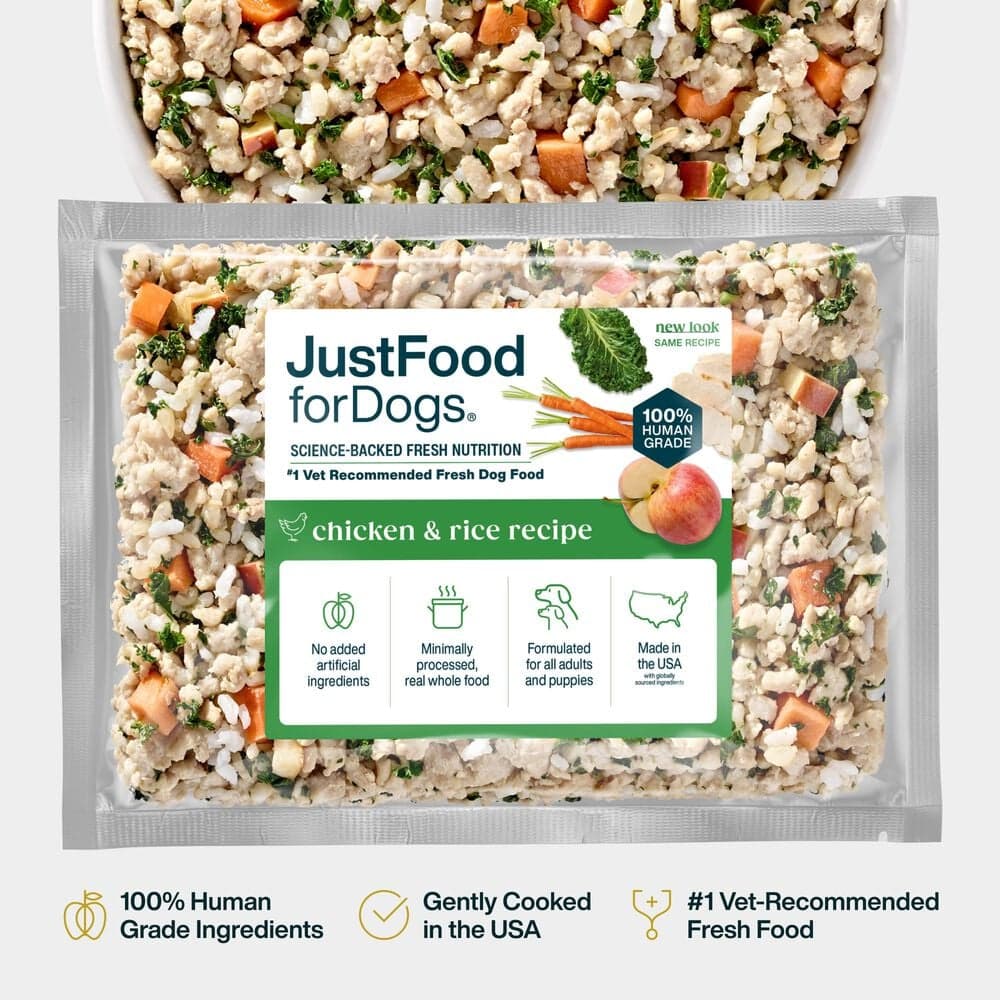
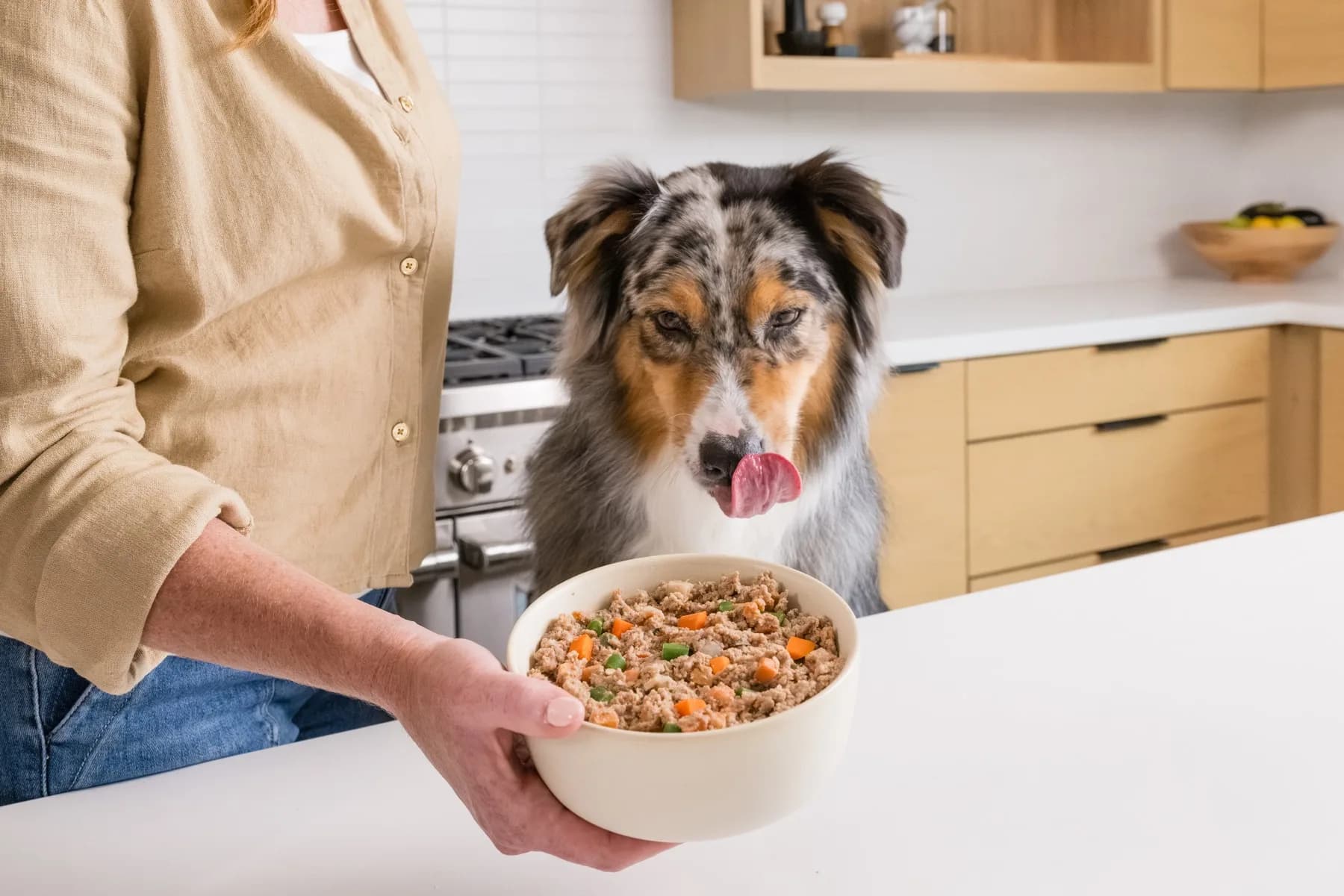
Want fresh food without raw-meat risk? Explore the gently cooked recipes mentioned in this guide.
- Chicken with rice and whole-food ingredients
- Fresh Frozen recipe
- View the recipe and feeding guide
Webvet may earn a commission when you click through to JustFoodForDogs, at no extra cost to you.
Confirm the main diet’s intended use
The nutritional adequacy statement is the key label evidence for the food’s intended use. A claim such as “fresh,” a puppy pictured on the package, or an attractive meat ingredient does not replace it. Read the complete statement, including any large-size growth exclusion, before selecting a food as the puppy’s main daily diet.
 $65 · no membership
Have a health question about your pet?
A licensed vet can assess your pet over video and prescribe online when it's appropriate.
 Talk to a vet
- Licensed vets
- All 50 states
- same-day Rx

Webvet may earn a commission if you book.
Calcium, phosphorus, and large-breed growth
Growing puppies need carefully balanced minerals and energy. More calcium is not automatically better, and adding supplements to a complete growth diet can disturb the intended balance. Large and giant breeds deserve particular attention because of their growth patterns.
AAHA's age-specific nutrition guidance emphasizes maintaining a lean body condition and avoiding excessive calcium intake in large and giant-breed puppies. That is a different goal from feeding as much as possible to maximize growth speed.
Avoid these well-intended changes
- Adding calcium powder or bone meal to an already complete puppy diet without veterinary direction.
- Replacing a large share of the food with plain meat or other unbalanced extras.
- Feeding an adult-maintenance recipe in larger amounts and assuming that makes it a growth diet.
- Choosing a serving simply because the puppy continues to ask for food.
Use the puppy's growth pattern and body condition to guide follow-up, rather than chasing the largest possible puppy. Your veterinarian can explain when a diet should change as growth slows. The right timing is influenced by breed size and maturity; it is not always one fixed birthday for every dog.
Choosing a JustFoodForDogs recipe for a puppy
JustFoodForDogs Chicken & Rice is a Fresh Frozen option with a growth-relevant label statement. The current product page states that the recipe is formulated to meet AAFCO nutrient profiles for all life stages, including growth of large-size dogs that reach 70 pounds or more as adults.
Recovery feeding is a veterinary decision; use these calorie-dense options as talking points with your vet.
- Enter your dog’s weight and activity
- Compare fresh-food feeding options
- Use your vet’s calorie target for medical needs
Webvet may earn a commission when you click through to JustFoodForDogs, at no extra cost to you.
That is a specific recipe statement, not permission to feed every product in the catalog to a puppy. Check the package you receive, and ask the company or your veterinarian about any difference between online information and the label. Recipe names and formulations can change.
Compare the recipe, not just the protein
A puppy needing chicken avoidance should not receive a chicken recipe simply because it has a growth statement. Likewise, a different protein does not automatically solve a digestive problem. Individual suitability still matters after the growth check is complete.
- Verify the exact recipe name and life-stage statement.
- Read calorie information for each recipe in a mixed pack.
- Check current storage and thawing directions.
- Discuss health concerns before making substitutions.
Fresh Frozen is a prepared cooked format. It is distinct from raw feeding, which introduces additional household and animal safety concerns. Our guide to raw meat and dogs explains why a raw meal should not be treated as equivalent to a cooked puppy diet.
The best fresh dog food for puppies is the specific complete growth recipe that meets the puppy’s needs. A vet recommended fresh dog food should come with an explanation of that fit, including the growth statement, expected adult size, and daily feeding amount. Bring the exact label to the discussion rather than relying on an endorsement of fresh food as a whole category.
Feeding a puppy fresh? Start with the growth-substantiated recipes covered in this guide.
- Chicken & Rice plus Fish & Sweet Potato
- Both recipes meet AAFCO growth profiles
- Seven 18 oz packages per small box
Webvet may earn a commission when you click through to JustFoodForDogs, at no extra cost to you.
Portions, meals, and a gradual transition
To identify the most affordable fresh dog food for your puppy, compare only recipes that pass the growth and suitability checks first. Calculate each option at the puppy’s current daily calorie amount, using its recurring price. An inexpensive adult formula or incomplete topper is not an equivalent alternative to a suitable complete growth diet.
Plan the daily portions
A puppy's portion is a starting estimate that needs review as the puppy grows. Use the recipe's calorie density, the feeding guide, and individualized veterinary advice. Keep track of the amount actually eaten rather than only the amount offered.
The JustFoodForDogs feeding calculator can help you begin, but it does not replace monitoring growth and body condition. Make sure the information entered reflects the puppy, and confirm the result if the tool's options or instructions are unclear.

Make measured growth part of the routine
- Record weight at suitable intervals using your veterinary team's advice.
- Review body condition rather than judging only whether the puppy is getting heavier.
- Update the daily portion as needs change.
- Divide the day's allowance among an age-appropriate number of meals.
Meal frequency depends on age, size, and individual needs. Very young and small puppies may need more frequent meals than older puppies. Ask for a specific schedule rather than importing an adult dog's twice-daily routine without checking.
Introduce a new diet gradually according to the relevant feeding guidance. If the puppy has vomiting, diarrhea, poor appetite, weakness, or an unexpected growth pattern, contact your veterinarian. Young animals can need prompt assessment; repeated food experiments are not a substitute.
Calorie density determines how much food delivers the puppy’s planned energy. Two growth recipes can have different calories per ounce or gram, so switching foods can require a different measured portion even when the daily calorie target stays the same. Check the label, weigh the appropriate amount, and revise the plan as the puppy’s growth and body condition change.
Fresh food, puppy kibble, and mixed feeding
Suitable puppy kibble and suitable cooked fresh food can both supply growth nutrition. Compare the full statements and feeding instructions, then consider which routine you can follow consistently. Fresh feeding adds an opened-pack and storage routine, while kibble needs accurate measurement and proper dry storage.
The most affordable fresh dog food for your puppy is not identified by the lowest pouch price. Calculate the recurring daily cost using the puppy's current calorie allowance, then expect the amount to change during growth. A small trial order can also reveal whether the household's freezer and meal schedule work before committing to a larger supply.
If you combine two complete foods
- Confirm that both are suitable for the puppy's growth needs.
- Divide one calorie allowance between them.
- Convert each calorie share into that recipe's serving units.
- Keep treats and training rewards within the overall plan.
Do not assume that adding a puppy food to an adult-maintenance food automatically creates a balanced growth diet. The combined formulation may not provide the intended nutrient balance. Ask your veterinarian about mixed feeding when growth needs or health concerns complicate the plan.
Homemade fresh dog food recipes deserve the same care. A bowl of cooked meat, rice, and vegetables is not automatically complete for growth. If you want to cook, use a qualified formulation with exact ingredients and supplements rather than altering an online recipe by eye.
For a prepared route, review the JustFoodForDogs Puppy Variety Pack with the growth and portion checks above. The goal is a complete diet and measured feeding routine that support the puppy's development, not a claim that every fresh meal is better than every puppy kibble.
Frequently asked questions
What is the healthiest dog food for puppies?
The healthiest dog food for puppies must be a complete growth diet suited to their individual requirements. For large-size dogs, read the full growth qualification and discuss the expected adult size with your veterinarian. Fresh appearance, price, or a popular protein does not establish suitability. Monitor body condition and growth after choosing, since the correct serving changes as the puppy develops.
What should you never feed a puppy?
You should never feed a puppy an adult-maintenance food or supplemental topper as a substitute for a complete growth diet. Avoid adding calcium supplements to an already balanced puppy food unless your veterinarian specifically directs it. There are also toxic human foods and unsafe objects puppies may swallow, so ask your veterinary team for household-specific guidance. This label check is about choosing the main diet, not a complete poisoning-prevention list.
Do vets recommend fresh dog food?
Vets may recommend an appropriate cooked fresh dog food after checking the exact recipe and the individual dog’s requirements. Calorie intake and follow-up are part of that recommendation. A general fresh-food label does not establish that every recipe fits every puppy. Bring the exact package statement and planned feeding amount so the advice applies to the meal you will actually serve.
Can puppies eat fresh dog food?
Puppies can eat fresh dog food when the recipe is complete and balanced for growth and appropriate to the individual puppy. Check any large-breed qualification and use measured portions. A cooked fresh commercial recipe is different from an improvised meat-and-rice meal or a fresh topper. Follow storage and transition directions, and ask your veterinarian about suitability if the puppy has digestive signs, a medical condition, or an unusual growth pattern.
At what age can puppies eat fresh food?
Puppies transition toward suitable solid food during weaning, but the appropriate timing and texture should follow the veterinarian's or responsible caregiver's plan. A complete cooked growth recipe may be an option when the puppy is ready; a general adult fresh meal is not interchangeable. Do not use ordinary dog food as a substitute for the appropriate milk or milk-replacer support of an unweaned puppy.
Is 2 meals a day enough for a puppy?
Meal frequency depends on age, size, and the puppy's health. Small puppies and younger puppies may need more frequent meals, while some older puppies can follow a different schedule. Ask your veterinarian for a plan and divide the measured daily allowance accordingly. Changing meal frequency should not accidentally double the day's food or leave a vulnerable young puppy with inappropriate gaps between meals.
$65 · no membershipHave a health question about your pet?
A licensed vet can assess your pet over video and prescribe online when it's appropriate.
Talk to a vet- Licensed vets
- All 50 states
- same-day Rx
Webvet may earn a commission if you book.

Editor
The Webvet Editorial Team is the in-house group of pet-care editors and writers behind Webvet, operated by Smart Pet Collective. The team researches, writes, and maintains Webvet's pet health, behavior, and medication content. Every article follows a defined editorial process: research from reputable veterinary and scientific sources, careful drafting, mandatory review of medical content by a credentialed veterinarian, and dated publication. Health and medication articles are medically reviewed by a licensed veterinary professional before they go live and are kept current over time.
Veterinarian · BVMS MRCVS
Dr. Pippa Elliott, BVMS, MRCVS, is a veterinarian with nearly 30 years of experience in companion animal practice. Dr. Elliott earned her Bachelor of Veterinary Medicine and Surgery from the University of Glasgow. She was also designated a Member of the Royal College of Veterinary Surgeons. Married with 2 grown-up kids, Dr. Elliott has a naughty Puggle named Poggle, 3 cats and a bearded dragon.