Are Cat Nail Caps Safe? Pros, Cons, Fit and Alternatives
Cat nail caps can suit some indoor cats, but fit, gentle handling and regular checks matter. Learn when to stop, how to handle retained caps and which scratching alternatives help.

BVMS MRCVS
Medically reviewed by Dr. Pippa Elliott, BVMS MRCVS · Last reviewed

This article contains affiliate links. Webvet may earn a commission when you buy through them, at no extra cost to you.
If you're wondering, “are cat nail caps safe?”, the answer depends on your cat and how the caps are used. Correctly fitted caps can reduce claw damage for some indoor cats that tolerate paw handling. Wrong sizing, excess adhesive, prolonged wear or a distressed cat can turn a furniture-protection idea into a welfare problem.
Nail caps cover the claw tips; they do not remove the claws or stop the need to scratch. The useful decision is whether your cat can wear them comfortably while you check its paws regularly. If that routine is unrealistic, nail trimming, suitable scratching surfaces and furniture protection may be a better choice.
Are cat nail caps safe for your cat?
A nail cap is a small hollow cover attached over a claw with adhesive. It blunts the tip that would otherwise catch fabric or skin. Some veterinary practices offer application, including Burlington Animal Hospital, but that does not establish that every cat benefits from caps or will accept them. Suitability comes before color, brand or price.
- 1Check fit on the individual claw before adhesive is used.
- 2Choose caps only for an indoor cat that tolerates handling and ongoing paw checks.
- 3Keep scratching surfaces available and monitor comfort, claw growth and skin.
If your veterinarian agrees caps are a reasonable option, Purrdy Paws Soft Cat Nail Caps in clear, medium size are one product to consider. Medium is a product size, not a guarantee of fit for an adult cat. Compare the current chart with your cat's actual claws, check the supplied instructions and try the fit without glue before committing to an application.
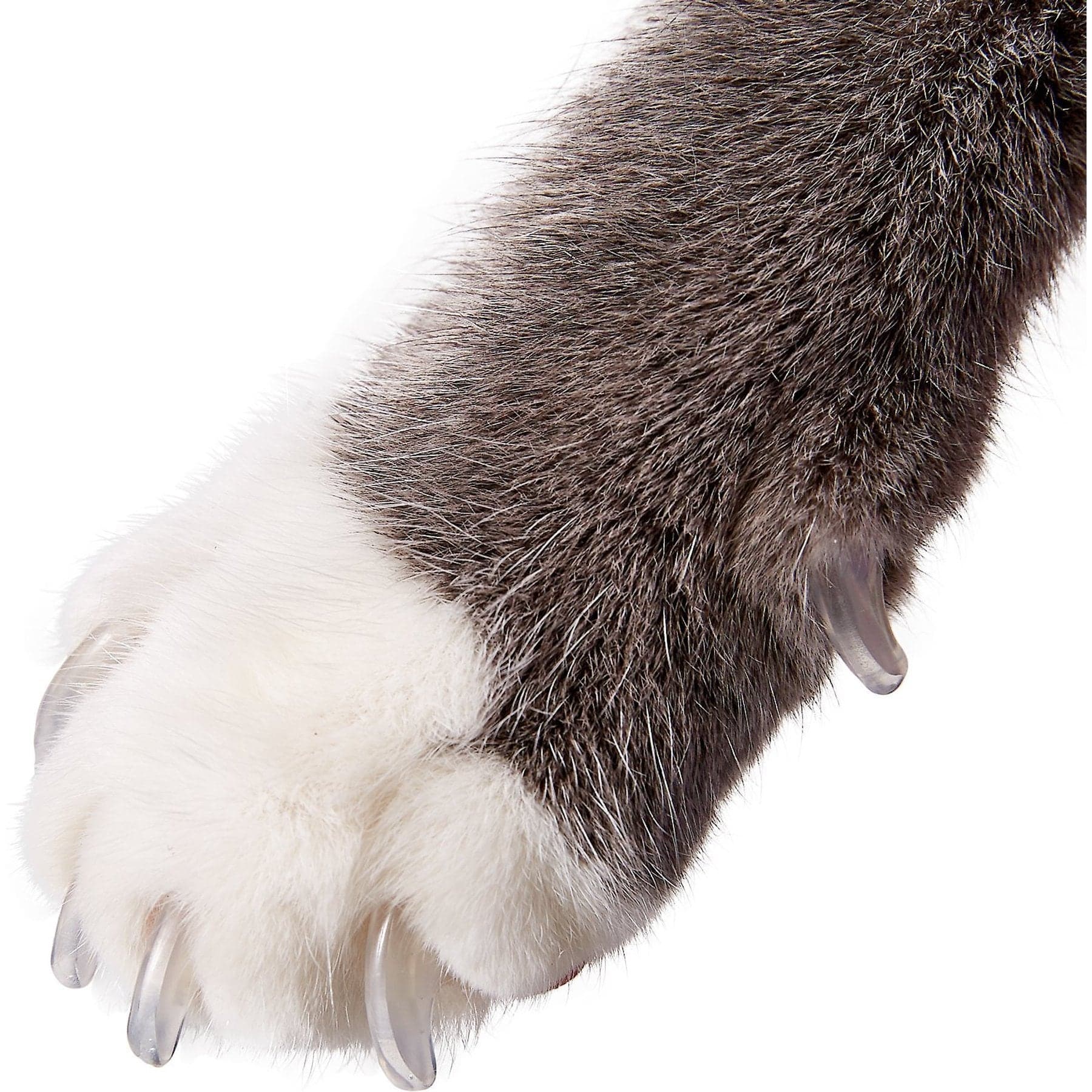
Consider this clear medium option only after checking the current size chart, a dry fit and your cat's tolerance of paw handling.
Webvet may earn a commission when you click through to Chewy, at no extra cost to you.
Weigh the benefit against the work
The potential benefit is less damage from the covered claw tips while the cat keeps its claws. The tradeoff is repeated handling, checking, replacement and attention to caps that remain attached too long. A cap that falls off leaves that claw uncovered, so caps do not make a cat permanently scratch-proof. Nor do they solve biting, fear or rough interactions with children.
- A calm indoor cat with healthy paws and a caregiver able to inspect them may be a candidate.
- A cat that panics, bites or struggles during paw handling needs another approach or professional assessment.
- An outdoor cat needs its claws for climbing and defense; caps are not an appropriate outdoor solution.
- A painful, swollen, damaged or infected-looking nail needs veterinary assessment before anything is glued onto it.
Cats vary in how they use climbing and scratching surfaces. Even indoors, observe whether the added covering changes grip or confidence rather than assuming the same result for every cat. If your cat repeatedly chews at caps, walks differently or stops using familiar activities, reconsider the choice. A manufacturer's broad safety claim cannot replace that observation of your own animal.
How fit and application affect comfort
The cap should fit the claw without pressing into the skin at its base. Weight-based sizing is a starting guide, not an exact measurement of every toe. A cap that is too large, too tight or too long should not be made to “work” by adding glue or forcing it down. Have a veterinarian or experienced cat groomer demonstrate the fit if you are unsure.

For an adult cat that needs a small tip trim before application, Frisco Nail Clippers for Cats & Small Dogs are a simple scissor-style option. You need a clear view of the claw and its pink quick, not simply sharp clippers. Our cat nail clippers guide explains tool choices. Trim only what you can confidently identify as the tip, keeping well away from living tissue.
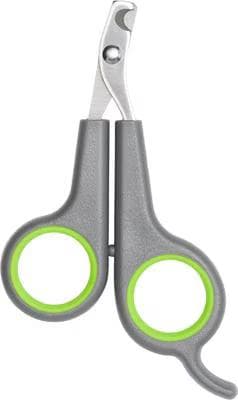
Scissor-style clippers for cats and small dogs. Trim only the visible claw tip and keep well away from the quick.
Webvet may earn a commission when you click through to Chewy, at no extra cost to you.
Follow the directions for the product you actually have
As a specific example, Soft Paws' application instructions call for trimming adult claw tips, filling each cap about one-third with its adhesive, distributing it inside and removing excess before fitting. Glue overflowing from the cap means too much was used. The instructions also specify observing the cat for five minutes after application.
Those are Soft Paws directions, not a universal label for Purrdy Paws, Soft Claws, Kitty Caps or another brand. Check the actual kit's adhesive, amount and setting instructions. Do not substitute craft glue, household superglue or human manicure products, and do not infer that different clear vinyl caps have identical sizing. Kittens can also have different trimming instructions; Soft Paws specifically advises against a pre-application kitten trim.
Before the first application, check:
- The cat is relaxed enough to let you touch and briefly examine a paw.
- The claw and surrounding skin look healthy and dry.
- The selected size fits without adhesive and does not crowd the skin.
- You understand the kit's adhesive directions and can avoid overflow.
- You can observe the cat afterward and inspect the claws during wear.
Front claws are often the focus when the problem is scratching furniture. Do not automatically cap the back paws as well. Discuss the purpose and fit separately if hind claws are causing injury. A cat scratching its own skin excessively needs the cause investigated; covering claws is not a treatment for the itch.
How to trim an unwilling cat's claws?
Stop if the cat becomes frightened, struggles or threatens to bite. Build tolerance gradually with brief, rewarded paw touches when the cat is relaxed, without trying to complete every claw in one sitting. Ask a veterinary team or experienced cat groomer to demonstrate gentle handling. If that is still too stressful, the veterinarian can plan appropriate care; forcing a trim to make nail caps possible defeats the comfort goal.
 $65 · no membership
Have a health question about your cat?
A licensed vet can assess your cat over video and prescribe online when it's appropriate.
 Talk to a vet
- Licensed vets
- All 50 states
- same-day Rx
Webvet may earn a commission if you book.
Check the caps as claws grow and shed
Claws continue growing under nail caps. The outer claw sheath normally sheds, and an attached cap may fall away with it. Caps do not reliably detach together, so note the application date and check individual toes rather than assuming the whole set is finished when you find one on the floor. Look at the dewclaws too, not only the most visible front toes.
Soft Paws' claw-care guidance describes excess adhesive as one reason caps can stay on too long. It also warns that a growing curved claw can approach or enter the paw pad. The relevant question is whether each claw still has safe clearance and healthy surrounding skin, not whether the cap still looks tidy.
| What to inspect | Reassuring observation | Finding that needs action |
|---|---|---|
| Walking and everyday movement | Usual comfortable stride and normal activities | Limping, reluctance to jump or repeated slipping: arrange assessment |
| Claw growth and cap position | Cap stays clear of skin and pad | Claw curling toward pad, crowded cap or retained cap: get removal advice |
| Licking and chewing | No persistent focus on the capped toes | Repeated biting, pulling or licking: inspect for discomfort and seek help |
| Skin around each claw | No new redness or swelling | Irritation, swelling, discharge, odor or bleeding: contact the veterinarian |
| Missing or loose caps | Shed cap found and remaining claw looks healthy | Unclear swallowed cap or a damaged claw: ask for case-specific guidance |
Use normal activity as one part of monitoring. Watch your cat walk, stretch and use its usual scratching surfaces without prompting difficult jumps as a test. A stable SmartCat Ultimate 32-inch Sisal Scratching Post gives a vertical scratching option if that matches your cat's preference. Its height and texture may suit a full stretch, but the cat's willingness and comfortable movement matter more than the product dimensions.
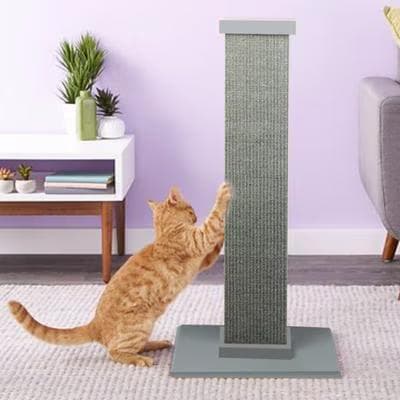
A 32-inch sisal option for cats that prefer vertical scratching. Use stable placement and watch your cat's comfort.
Webvet may earn a commission when you click through to Chewy, at no extra cost to you.
Retraction should remain comfortable
Manufacturers design caps to allow normal claw extension and retraction. A visible cap tip alone does not prove the claw is stuck, because the covering is thicker and easier to see than the bare nail. However, toes held awkwardly, a cap pressing on skin or a change in gait is not something to dismiss as “getting used to it.” Ask the person who applied it or your veterinarian to check.
A practical routine is a quick look at movement and paw attention each day, plus a closer regular check of every claw the cat tolerates. Soft Paws recommends at least weekly nail-length checks. If your cat cannot comfortably allow that inspection, the monitoring requirement itself is a reason to reconsider continued use. Do not hide a growing problem beneath repeated fresh adhesive.
When to remove a cap or call the vet
Do not pull an attached cap off the claw. Pulling can injure the claw or sensitive tissue underneath. Removal should follow the exact manufacturer's instructions and your cat's tolerance. If you cannot clearly see the claw, the cat resists, or the cap is stuck close to the skin, have a veterinary professional handle it rather than cutting blindly or trying household solvents.
For retained Soft Paws, the manufacturer's guidance describes clipping the very tip of the cap to help release the adhesive bond and seeking further advice if it does not come away. That is not permission to snip through a hidden quick or yank on the remaining cap. A painful or damaged toe needs assessment before another cap is applied.
If your cat may have swallowed a cap, keep the package and tell the clinic the cap's size, material, how many may be missing and whether adhesive was involved. Although some product makers describe their caps as harmless if swallowed, that is not an individual assessment of your cat. Ask what to monitor; do not induce vomiting or assume repeated vomiting, poor appetite or distress is unrelated.

Scratching alternatives and household choices
Scratching is normal feline behavior, so protect the furniture while offering acceptable places to do it. Match both texture and position to what your cat already chooses. A cat stretching up a sofa arm may appreciate a tall stable post nearby; a cat scratching a rug may prefer a horizontal surface. Reward use of the chosen scratcher and avoid forcing the cat's paws against it.

For cats that prefer cardboard, the PetFusion Vertical Cat Scratcher offers another texture and angled scratching surface. It is the standard vertical scratcher, not the brand's lounge model. Place it where it stays steady during use, and watch whether your cat actually chooses it. Changing location or texture can be more useful than buying another version of an ignored shape.
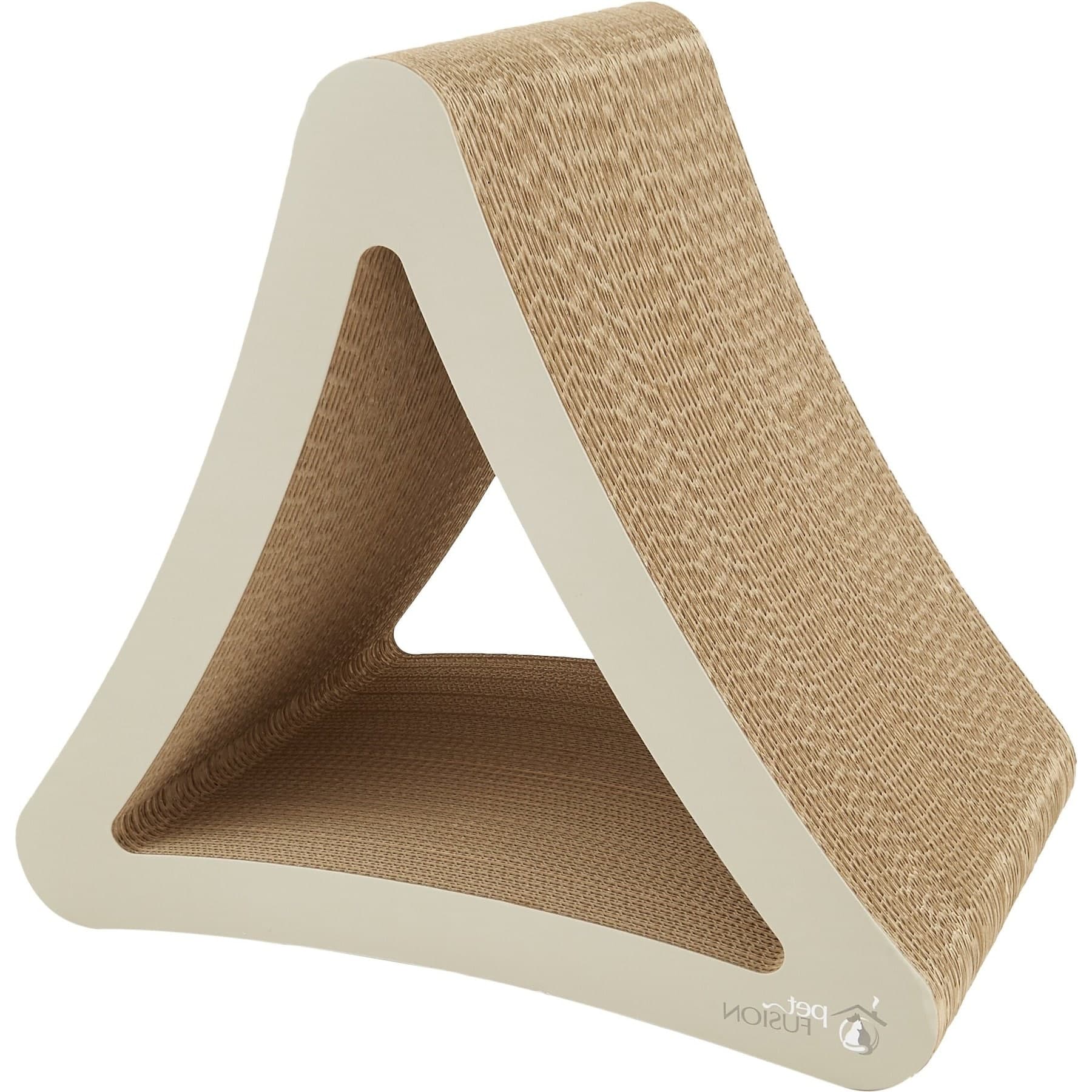
A vertical cardboard scratching option with a different texture. Choose stable placement near the area your cat already scratches.
Webvet may earn a commission when you click through to Chewy, at no extra cost to you.
Combine small changes before deciding on caps
An effective furniture plan may use several simple measures:
- Put a suitable scratcher beside the place being scratched rather than hiding it in another room.
- Offer more than one orientation when the cat's preference is unclear.
- Protect vulnerable upholstery with a suitable cover while the cat learns the alternative.
- Keep up with comfortable nail-tip trims when needed.
- Reassess stress or sudden behavior changes with the veterinary team.
Nail caps and declawing are fundamentally different procedures: caps cover an existing claw, while declawing is surgery that removes the claw-bearing end of the toe. Choosing against caps does not force a choice of declawing. Routine claw care and a better scratching setup remain available, and a veterinary team can help address a household where scratching is creating a serious problem.
Compare products on what you can verify: the actual size chart, material, complete instructions and support for application questions. Clear, colored or glitter versions do not establish different welfare outcomes. Customer reviews may describe one cat's response, but they cannot prove your cat will tolerate a product or that a particular brand is safest. A cat-specific fit and monitoring plan is more useful than a universal “best nail caps” label.
Decide what would make you stop
Before trying caps, agree on a practical stopping point with everyone who cares for the cat. A session that requires stronger restraint each time is not succeeding merely because all the caps eventually stay on. Likewise, repeated chewing should lead to a check of fit and comfort, not another round of glue to make the product harder to remove.
Use a short record that you can share with the groomer or veterinary team:
- Date of application and the exact brand and size used.
- Which paws were treated and any toes that were left uncovered.
- How the cat handled the appointment and the first hours afterward.
- Any change in walking, climbing, grooming or scratching choices.
- Dates when individual caps shed or needed professional removal.
This helps distinguish a fit problem affecting one toe from general intolerance of the process. It also makes the next decision easier: adjust the setup under professional guidance, allow the current caps to shed while monitoring, or arrange removal and use other furniture protection. The right outcome is a comfortable cat and a routine the household can maintain, even if that means deciding caps are not worthwhile for this particular animal.
Cat nail-cap questions
Frequently Asked Questions
Do vets recommend cat nail caps?
Some veterinarians offer or recommend caps for selected cats, but there is no blanket recommendation that every cat should wear them. Ask your own veterinarian about your cat's paws, handling tolerance and lifestyle. A recommendation should include application and monitoring advice, plus what to do if a cap stays attached or causes irritation. “Do not pull” is an important removal boundary.
Is it good to put nail caps on cats?
It can be a useful choice when an indoor cat tolerates the process and the reduction in scratch damage justifies ongoing care. It is a poor choice when application requires force or the cat becomes persistently distressed. Keep scratching opportunities available either way, and judge success by comfortable everyday behavior as well as the condition of your sofa.
How long can you keep cat nail caps on?
Soft Paws describes a typical wear period of four to six weeks, with individual caps shedding at different times. That is a product expectation, not a reason to ignore a retained or uncomfortable cap until week six. Follow your own kit's instructions, monitor nail growth throughout wear and seek removal advice when a cap remains attached beyond the recommended period.
Will groomers put nail caps on cats?
Some cat groomers and veterinary practices provide this service; availability varies. Ask whether the person regularly handles cats, how they assess fit and what they do if the cat becomes stressed. Confirm whether trimming and the caps themselves are included. A professional appointment should improve handling and fit, not mean that an unwilling cat must undergo the application regardless of its response.
How much does it cost to get caps put on cat's nails?
A professional application needs a local quote; the sources reviewed do not establish a reliable nationwide service price. Ask whether the fee includes the kit, a trim, front or all paws, and any follow-up. For a separate materials example, Soft Paws lists a home kit at $19.95 on its FAQ page. That kit price does not include professional application or establish another brand's price.
Is it okay to never trim your cat's nails?
Some active cats wear their claws more effectively than others, but “never trim” should not mean “never inspect.” Claws can grow too long or curve toward the pad, especially when normal wear is limited. Check each claw, including dewclaws, and ask the veterinarian what care your cat needs. Caps do not stop growth and therefore do not remove the need for nail assessment.
Do cats feel better after nails clipped?
A careful trim can help when overlong tips snag or interfere with comfortable use, but a cat with normal-length claws may not show any obvious change. Cutting into the quick hurts, and stressful restraint can make future care harder. If limping or sensitivity prompted the trim, do not assume trimming alone solves it; the claw and surrounding paw may need a veterinary examination.
How to keep cat's nails short without clipping?
Suitable scratching surfaces and normal activity help maintain claws and shed their outer layers, but they do not guarantee every claw stays at a safe length. Offer stable surfaces your cat chooses and keep inspecting the paws. A retained sheath, an overgrown dewclaw or a claw curling toward the pad may still need trimming or professional attention. Nail caps themselves are not a shortening method.
$65 · no membershipHave a health question about your cat?
A licensed vet can assess your cat over video and prescribe online when it's appropriate.
Talk to a vet- Licensed vets
- All 50 states
- same-day Rx
Webvet may earn a commission if you book.
Veterinarian · BVMS MRCVS
Dr. Pippa Elliott, BVMS, MRCVS, is a veterinarian with nearly 30 years of experience in companion animal practice. Dr. Elliott earned her Bachelor of Veterinary Medicine and Surgery from the University of Glasgow. She was also designated a Member of the Royal College of Veterinary Surgeons. Married with 2 grown-up kids, Dr. Elliott has a naughty Puggle named Poggle, 3 cats and a bearded dragon.


