Roundworms in Dogs: Signs, Worms in Poop, and Treatment
Roundworms in dogs look like pale spaghetti in poop or vomit. Learn the symptoms, which over-the-counter and prescription dewormers work, the puppy deworming schedule, and how to protect your family.
Medically reviewed by Dr. Athena Gaffud, DVM · Last reviewed

This article contains affiliate links. Webvet may earn a commission when you buy through them, at no extra cost to you.
Roundworms in dogs are the most common intestinal worms veterinarians find, and puppies carry them most often. Adult roundworms are pale, spaghetti-like strands about 2 to 6 inches long that you may spot in poop or vomit. Many infected dogs pass only microscopic eggs, so a normal-looking stool does not rule them out.
The good news is that roundworms in dogs are easy to treat and prevent. A dewormer labeled for roundworms, repeated about two weeks later, clears most infections, and several effective products are sold without a prescription. Prompt cleanup matters too, because the eggs can survive in soil for years and can infect people.
What Are Roundworms in Dogs?
Roundworms are round, unsegmented worms that live in a dog's small intestine and feed on digesting food. Two species of canine roundworm infect dogs, and their scientific names are Toxocara canis and Toxascaris leonina. According to the Merck Veterinary Manual, adult T. canis worms reach 10 to 15 cm (about 4 to 6 inches), while T. leonina reaches 5 to 10 cm.
- 1Adult roundworms are pale, round, and 2 to 6 inches long; tapeworm segments are flat and rice-like.
- 2Over-the-counter fenbendazole and pyrantel treat roundworms, but praziquantel alone does not.
- 3Many dewormers kill only adult worms, so plan a second dose about two weeks later and a follow-up fecal test.
- 4Puppies need deworming every 2 weeks starting at 2 weeks of age.
- 5Eggs need 2 to 4 weeks in soil before they can infect, so picking up poop promptly protects people and pets.
Toxocara canis is the species that matters most. Its larvae can hide in a dog's tissues, pass to puppies before birth, and infect people. The Companion Animal Parasite Council (CAPC) reports that more than 30% of dogs younger than 6 months shed T. canis eggs, and some studies suggest virtually all pups are born infected.
How bad are roundworms for a dog? Healthy adult dogs often show mild signs or none at all. Heavy infections in young puppies are more dangerous: they can stunt growth, cause pneumonia and, in rare cases, block the intestine, which Cornell University notes can be deadly. For a week-by-week plan, see Petful's puppy deworming schedule.
What Do Roundworms Look Like in Dog Poop?
Roundworms in dog poop look like cooked spaghetti: long, smooth, round strands that are white, cream, or light tan and taper at both ends. They are often coiled and may still move when freshly passed. You may also see them in vomit, especially in puppies with heavy infections.
Seeing no worms does not mean your dog is clear. Adult worms are passed only now and then, and the eggs are too small to see without a microscope. Young worms passed by puppies can be much shorter than adults, and dead or limp worms are common for a few days after a dewormer.
What to Do If You Find Roundworms in Your Dog's Poop
Finding worms is unpleasant, but it is rarely an emergency in a dog that is eating, drinking, and acting normally. If your dog has roundworms, work through these steps today:
- Put on gloves, bag the stool, and clean up right away. If your dog has roundworms and pooped in the house, wipe the spot with hot, soapy water.
- Save a fresh sample, or a clear photo of the worms, in a sealed bag for your veterinarian.
- Call your vet first for a puppy younger than 6 weeks, a pregnant or nursing dog, or any dog that is vomiting repeatedly, weak, or bloated.
- Not sure they are roundworms? Compare them with the identification table in the next section.
- Choose a dewormer labeled for roundworms and mark your calendar for the repeat dose about two weeks later.

For a healthy adult dog with visible roundworms, an over-the-counter fenbendazole dewormer such as Safe-Guard is a common first choice. It is mixed into food once a day for 3 days in a row, and its FDA-listed label covers roundworms, hookworms, whipworms, and Taenia tapeworms in dogs 6 weeks and older.
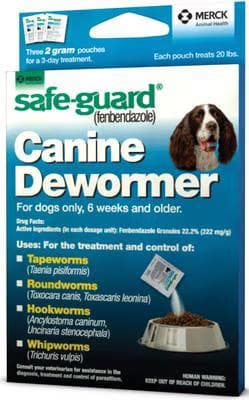
Fenbendazole 3-day dewormer that treats tapeworms (Taenia), roundworms, hookworms, and whipworms. Over the counter, for dogs 6 weeks and older.
Webvet may earn a commission when you click through to Chewy, at no extra cost to you.
Roundworms vs. Tapeworms, Hookworms, and Whipworms
The worm you find decides which medicine works, so compare what you see before buying a dewormer. Tapeworm segments are the most common look-alike, and many roundworm products do not treat them.
| What you see | Likely cause | Size and shape | What it means for treatment |
|---|---|---|---|
| Long, round, pale strands, often coiled like spaghetti | Adult roundworms (Toxocara canis or Toxascaris leonina) | About 2 to 6 inches, smooth, tapered at both ends | Fenbendazole, pyrantel, milbemycin, or moxidectin covers them; praziquantel alone does not |
| Flat, rice-like tapeworm segments near the tail or on the stool, sometimes moving; dried ones resemble sesame seeds | Tapeworms, usually Dipylidium caninum spread by fleas | About the size of a rice grain | Needs praziquantel or another tapeworm drug plus flea control |
| No visible worms, but diarrhea, mucus, or blood in the stool | Hookworms or whipworms, or a non-worm cause such as Giardia | Hookworms are under an inch long; whipworms are thread-thin and rarely passed | Needs a fecal test first; whipworms need a product labeled for them |
| Short, segmented, fast-moving larvae in stool that sat outside | Fly larvae that arrived after the poop hit the ground | About half an inch or less | Not a dog parasite; check a freshly passed sample instead |
| Pale, stringy material that never moves | Undigested food, grass, or mucus | Varies | Usually not worms; bag a fresh sample for your vet if unsure |
Hookworms and roundworms often infect the same puppy, and most roundworm dewormers also cover hookworms. For the anemia and skin risks that set hookworms apart, see WebVet's guide to hookworms in dogs.
If you have seen both roundworms and rice-like tapeworm segments, a combination dewormer covers both in one dose. Elanco Quad Dewormer is an over-the-counter option whose FDA-listed label covers roundworms, hookworms, whipworms, and tapeworms from 3 weeks of age and 2 pounds. Elanco advises against using it in pregnant dogs.
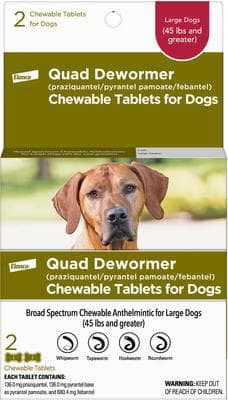
Broad-spectrum chewable dewormer (praziquantel, pyrantel, febantel) that treats tapeworms, roundworms, hookworms, and whipworms in one course. For large dogs 45 lbs and over.
Webvet may earn a commission when you click through to Chewy, at no extra cost to you.
Roundworm Symptoms in Dogs
The first signs of roundworms are often subtle, and many adult dogs show none. VCA Animal Hospitals notes that adult dogs may have only soft stool or occasional vomiting. Puppies and heavily infected dogs show clearer symptoms:
- Worms in the stool or vomit
- A pot-bellied look, especially in puppies
- Diarrhea, often with mucus
- Vomiting
- Weight loss or poor growth
- A dull, dry coat
- Reduced appetite
- Coughing, when larvae travel through the lungs
Can roundworms cause diarrhea in dogs? Yes, and mucus is common. Bloody diarrhea is more typical of hookworms, whipworms, and other illnesses, so it needs a fecal test rather than a guess.
Loose stool, poor growth, and digestive upset can occur with several intestinal parasites. WebVet's guide to symptoms of Giardia in dogs explains the overlapping signs, stool-testing limits, and red flags that need prompt veterinary care.
Roundworm larvae pass through the liver and lungs before settling in the intestine, which is why an infected puppy may cough. When lung signs appear, treatment pairs a dewormer with whatever supportive care your vet recommends.
When Roundworms Become an Emergency
Can roundworms kill a puppy? Rarely, but yes. The Merck Veterinary Manual lists verminous pneumonia among the complications of severe puppy infections, and a mass of worms can block the intestine. There is no set timeline, but a small puppy has little reserve, so a bad case of roundworms with vomiting, diarrhea, or refusing food can turn serious quickly.
With prompt treatment, most dogs recover fully. Left untreated, roundworms keep shedding eggs that reinfect the dog and contaminate the yard for years.
 $65 · no membership
Need flea, tick, or heartworm prevention for your dog?
A licensed vet can recommend and prescribe the right preventive for your dog online when it's appropriate.
 Talk to a vet
- Licensed vets
- All 50 states
- same-day Rx

Webvet may earn a commission if you book.
How to Get Rid of Roundworms in Dogs
To get rid of roundworms in dogs, give a dewormer labeled for Toxocara canis and Toxascaris leonina, repeat it about two weeks later, and confirm success with a follow-up fecal test. Cornell and Merck both note that repeat treatment is often needed because many dewormers kill adult worms but not larvae still migrating through the body.
Treatment is simple for most dogs, but a veterinarian should guide it for puppies under 6 weeks, pregnant or nursing dogs, dogs that are sick, and any dog with severe signs. For dosing technique, see WebVet's step-by-step guide on how to deworm a dog.
Over-the-Counter vs. Prescription Dewormers
You do not always need a prescription. Fenbendazole and pyrantel pamoate, two drugs commonly used for roundworms, are both sold over the counter for dogs, and CAPC lists both among the treatments for roundworms. Prescription products add monthly convenience or broader parasite coverage.
| Active ingredient | Example products | Prescription needed? | Covers roundworms? | Notes |
|---|---|---|---|---|
| Fenbendazole | Safe-Guard Canine, Panacur C | No, for the canine packets | Yes | Given daily for 3 days; also covers hookworms, whipworms, and Taenia tapeworms; dogs 6 weeks and older |
| Pyrantel pamoate | Pyrantel liquids and chewables | No, for most canine forms | Yes | Single dose that removes adult roundworms and hookworms; the usual first puppy dewormer |
| Praziquantel, pyrantel, and febantel | Elanco Quad Dewormer, Drontal Plus | Quad: no; Drontal Plus: yes | Yes | One dose covers roundworms, hookworms, whipworms, and tapeworms |
| Praziquantel alone | Tapeworm-only tablets | Varies by product | No | Treats tapeworms only |
| Milbemycin oxime or moxidectin (some add pyrantel) | Interceptor Plus, Sentinel Spectrum, Advantage Multi, Simparica Trio, NexGard PLUS | Yes | Yes | Monthly heartworm preventives that also treat and control roundworms |
| Ivermectin with pyrantel | Heartgard Plus | Yes | Yes, through the pyrantel | Plain ivermectin at heartworm-prevention doses is not labeled for roundworms |
Fenbendazole is also sold as Panacur C, and WebVet's fenbendazole for dogs guide covers dosing by weight. The pyrantel pamoate guide explains pyrantel's single-dose schedule. Drontal Plus, the prescription counterpart to Elanco Quad, requires a veterinarian's prescription.
Some prescription heartworm preventives also treat an existing infection. Simparica Trio's label covers treatment of immature adult and adult Toxocara canis with a single dose, and monthly use then controls later roundworm and hookworm infections along with fleas, ticks, and heartworm. It is labeled for dogs from 8 weeks and 2.8 pounds and needs a prescription from your veterinarian.
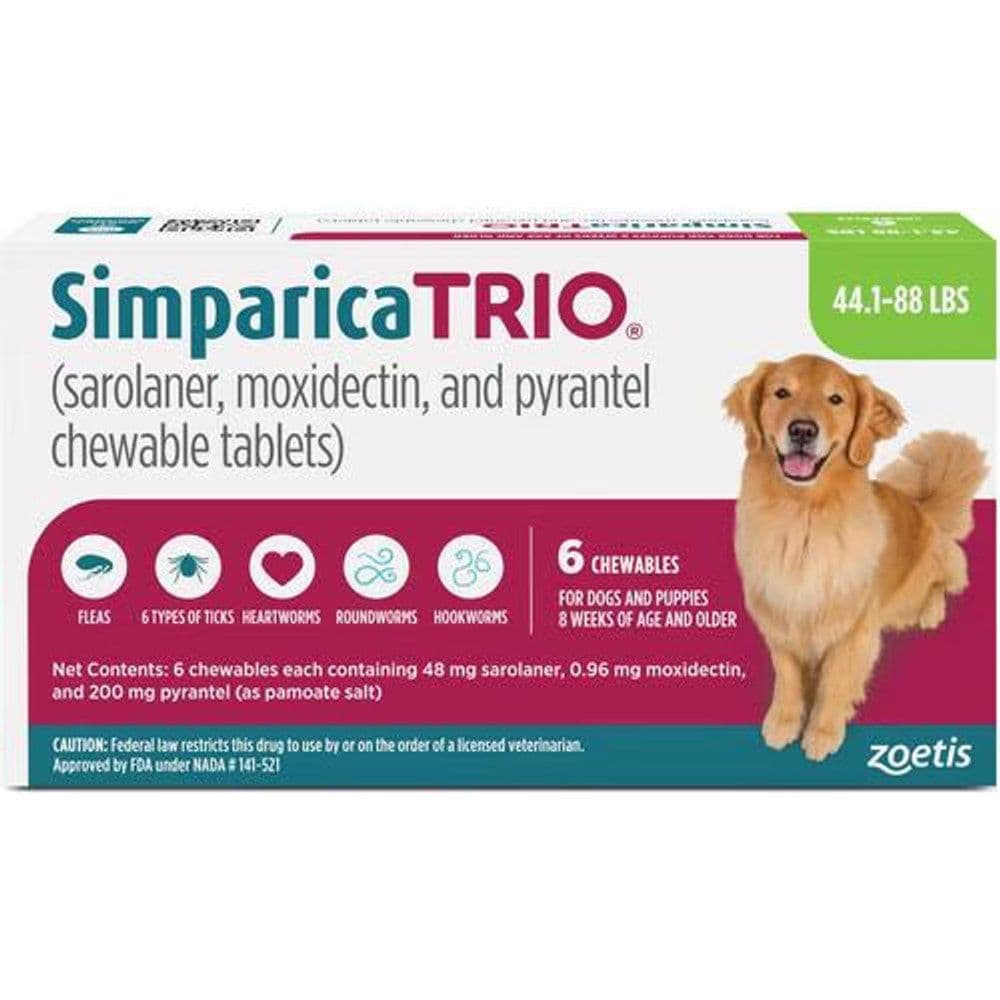
A monthly prescription chew that treats and controls roundworms and hookworms, prevents heartworm disease, and kills fleas and ticks. One dose treats an existing roundworm infection; your vet must authorize it.
Webvet may earn a commission when you click through to Chewy, at no extra cost to you.
What kills roundworms in dogs instantly? No dewormer does. Pyrantel paralyzes adult worms so the dog passes them, and fenbendazole works across its 3-day course. Neither reaches every larva hidden in the tissues, which is why the repeat dose matters.
WebVet's over-the-counter dewormer guide compares retail options in more depth, and the dog dewormer comparison matches products to each worm type.
How Long Roundworms Last and Why One Dose Is Not Enough
How long roundworms last in dogs depends on treatment. Adult worms usually die or pass soon after a dewormer, and you may see dead or even moving worms in your dog's poop for a few days afterward. That is expected, including live roundworms in puppy stool after deworming, and it does not mean the medicine failed.
The catch is timing. Larvae that were migrating during the first dose keep maturing into new adults, so a second dose catches them. Merck lists two treatments 10 to 14 days apart for drugs that affect only adult worms. A typical plan looks like this:
- Day 1: first dose (a single pyrantel dose, or the first of 3 daily fenbendazole doses)
- First few days: dead or dying worms may appear in the stool
- About 2 weeks later: second dose
- 1 to 2 weeks after the second dose: a follow-up fecal test
Without treatment, adult worms can keep living in the intestine and laying eggs, and larvae that went dormant in an adult dog's tissues can reactivate during a later pregnancy.
Do Home Remedies Work, or Will Roundworms Go Away on Their Own?
Roundworms rarely go away on their own in dogs. Some adult dogs carry few worms and show no signs, but that is not the same as being clear: dormant larvae remain in the tissues, and every egg passed keeps the yard contaminated.
If you hoped to get rid of roundworms in dogs naturally, no natural treatment has the evidence behind it. Pumpkin seeds, diatomaceous earth, and apple cider vinegar are not FDA-approved dewormers, and none has shown the reliable results of the approved drugs. For an otherwise healthy dog, the practical way to treat roundworms in dogs at home is an over-the-counter dewormer from the table above, given as labeled.
How to Prevent Roundworms in Dogs
The most reliable roundworm prevention for dogs is a year-round monthly parasite preventive with roundworm activity, which is what CAPC recommends for adult dogs to control Toxocara canis. Many heartworm preventives already do this, so check your dog's current product before buying anything extra.
Interceptor Plus is one of the broadest choices: its milbemycin oxime treats and controls roundworms, hookworms, and whipworms, and its praziquantel adds tapeworms. It is labeled for dogs from 6 weeks of age and 2 pounds, including puppies finishing their deworming series, and requires a veterinarian's prescription.
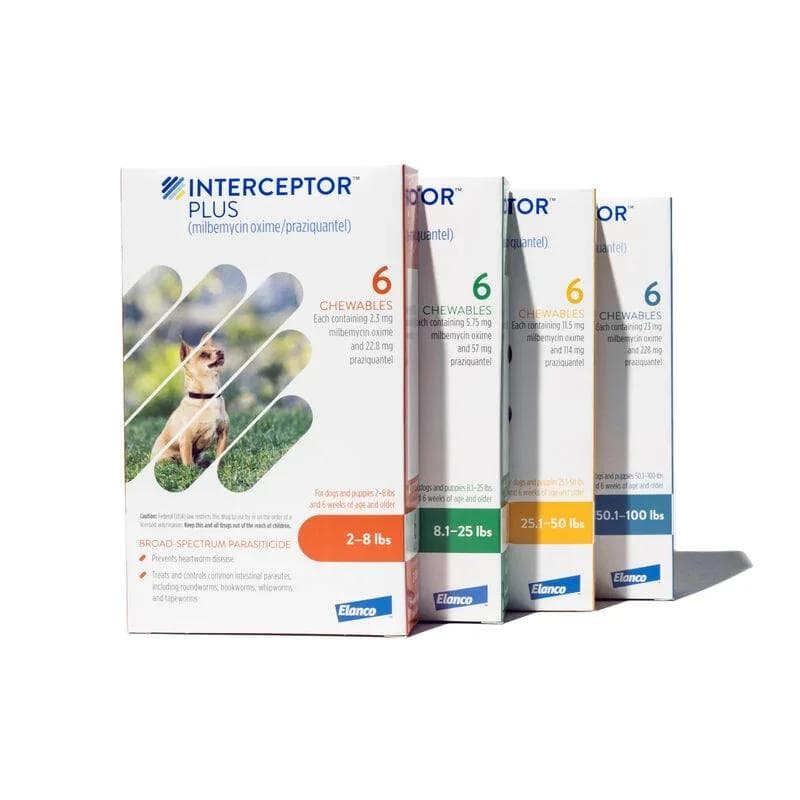
A monthly prescription chew (milbemycin oxime and praziquantel) that prevents heartworm disease and treats and controls roundworms, hookworms, whipworms and tapeworms. For dogs and puppies 6 weeks and older with your vet's authorization; choose the pack for your dog's weight.
Webvet may earn a commission when you click through to Chewy, at no extra cost to you.
| Monthly preventive | Active ingredients | Worms covered besides heartworm | Minimum age and weight |
|---|---|---|---|
| Heartgard Plus | Ivermectin, pyrantel | Roundworms, hookworms | 6 weeks |
| Interceptor Plus | Milbemycin oxime, praziquantel | Roundworms, hookworms, whipworms, tapeworms | 6 weeks, 2 lb |
| Sentinel Spectrum | Milbemycin oxime, lufenuron, praziquantel | Roundworms, hookworms, whipworms, tapeworms | 6 weeks, 2 lb |
| Advantage Multi (topical) | Imidacloprid, moxidectin | Roundworms, hookworms, whipworms | 7 weeks, 3 lb |
| Trifexis | Spinosad, milbemycin oxime | Roundworms, hookworms, whipworms | 8 weeks, 5 lb |
| Simparica Trio | Sarolaner, moxidectin, pyrantel | Roundworms, hookworms | 8 weeks, 2.8 lb |
| NexGard PLUS | Afoxolaner, moxidectin, pyrantel | Roundworms, hookworms | 8 weeks, 4 lb |
| Revolution for dogs | Selamectin | None; the dog label does not include intestinal worms | 6 weeks |
Does Heartgard kill roundworms in dogs? Heartgard Plus does, through its pyrantel, but plain Heartgard (ivermectin only) is labeled for heartworm alone. Does Interceptor kill roundworms? Yes, and Interceptor Plus adds praziquantel for tapeworms. Does Revolution kill roundworms in dogs? No: its canine label covers heartworm, fleas, ear mites, sarcoptic mange, and one tick species, while roundworm claims appear only on the cat label.
All of these require a veterinarian's prescription and a current heartworm test. Other options with roundworm coverage include Heartgard Plus, Sentinel Spectrum, Trifexis, Advantage Multi, and NexGard PLUS. WebVet's flea, tick, and heartworm prevention comparison breaks down the trade-offs, and Simparica Trio vs NexGard PLUS compares those two chews directly.
Everyday habits close the remaining gaps:
- Pick up poop daily, before eggs have time to become infective.
- Test your dog's stool at least twice a year, or more often for puppies.
- Keep your dog from hunting rodents and eating other animals' poop.
- Cover sandboxes and keep children's play areas separate from the dog's bathroom spot.
How Vets Diagnose Roundworms and Confirm They Are Gone
Vets diagnose roundworms with a fecal test. A small stool sample is mixed with a flotation solution and checked under a microscope for the thick-shelled eggs, which are invisible to the naked eye. According to CAPC, a single adult T. canis can produce as many as 85,000 eggs a day, so eggs usually show up readily.

Some clinics add an antigen or PCR test. CAPC notes these can detect roundworms even when eggs are scarce, and VCA adds that more than one fecal exam is sometimes needed. To get the most from the visit:
- Bring the freshest stool sample you can, sealed in a clean bag or container.
- Bring any worms you found, or a photo of them.
- Mention whether your dog hunts rodents, eats poop, or recently joined the household.
A repeat fecal test 1 to 2 weeks after the second dose confirms the worms are gone. Fecal tests also screen for other parasites, and if the result shows Giardia instead, WebVet's Giardia treatment guide for dogs explains veterinarian-selected medicine, cleaning, and rechecks.
Roundworms in Puppies
Roundworms in puppies are extremely common. Toxocara canis larvae lying dormant in the mother's tissues reactivate late in pregnancy and cross into the unborn puppies, and more arrive through her milk. According to CAPC, a puppy infected before birth can start shedding eggs at 2.5 to 3 weeks of age.
Signs of Roundworms in Puppies
Puppies usually show roundworm symptoms more clearly than adult dogs, because a heavy worm load takes a bigger toll on a small, growing body. Watch for:
- A round, pot-bellied look with thin hips and ribs
- Slow growth or weight loss compared with littermates
- Diarrhea or soft stool, sometimes with visible roundworms in the puppy's poop
- A puppy vomiting roundworms, which can look alarming but is a common sign of a heavy load
- A dull, rough coat
- Coughing from larvae moving through the lungs
Signs often lag behind infection, so deworm on schedule even when your puppy looks healthy, and bring a stool sample to the first puppy visit even if you have not seen worms. A puppy that also seems weak, stops eating, or has a swollen, painful belly needs same-day care.
Puppy Deworming Schedule
CAPC, Cornell, and the CAPC owner site Pets & Parasites all recommend starting at 2 weeks of age and repeating every 2 weeks, then moving to a monthly preventive. This schedule is the standard Toxocara canis treatment for puppies, and the nursing mother should be treated at the same time as her litter.
| Puppy age | What to give | Why it matters |
|---|---|---|
| 2 weeks | First dewormer dose, commonly pyrantel; treat the nursing mother too | Puppies infected before birth can shed eggs by 2.5 to 3 weeks |
| 4, 6, and 8 weeks | Repeat the dewormer every 2 weeks | Each dose clears worms that matured since the last one |
| 8 weeks to 3 months | Keep deworming every 2 weeks or start a monthly preventive labeled for roundworms | Merck lists 2-week dosing to 3 months, then monthly to 6 months |
| Adult dogs | Year-round monthly preventive plus a fecal test at least twice a year | CAPC recommends year-round control with roundworm activity |
Pyrantel is the usual first puppy dewormer because CAPC notes it comes in a palatable liquid suited to nursing animals; fenbendazole products such as Safe-Guard are labeled from 6 weeks. Worms in a 7-week-old puppy's stool are common and usually mean staying on schedule. WebVet's puppy dewormer guide covers product choice by age, and heartworm prevention for puppies explains when to start a monthly preventive from the table above.
How Do Dogs Get Roundworms?
Toxocara canis transmission happens in four main ways, according to CAPC and VCA:
- Swallowing eggs from soil, grass, water, or anything contaminated with infected feces, often while sniffing, licking paws, or eating dirt
- Eating prey or transport hosts that carry larvae, such as mice and other rodents, birds, earthworms, or cockroaches
- Before birth, when dormant larvae in the mother cross the placenta (T. canis only)
- Through the mother's milk while nursing
Eating poop can also spread roundworms, especially older stool whose eggs have had time to become infective. WebVet's guide to why dogs eat poop explains how to stop the habit. A dog can also pick up roundworms at home from a contaminated yard or by catching mice.
Are roundworms contagious between dogs? Not directly. CAPC notes that eggs need 2 to 4 weeks in the environment before they can infect (as little as 1 week for T. leonina), so a dog does not catch roundworms by sniffing another dog. Shared yards, kennels, and parks are where the risk builds, and mature eggs can stay infective for years.
The Roundworm Life Cycle in Dogs
The roundworm life cycle explains both how dogs get infected and how fast roundworms grow into egg-laying adults. CAPC and Merck describe these stages:
| Stage | What happens | Typical timing |
|---|---|---|
| Eggs in the environment | An infected dog passes eggs in its stool, and each egg develops an infective larva in the soil | 2 to 4 weeks (about 1 week for Toxascaris leonina) |
| Infection | A dog swallows infective eggs, or eats a rodent or other animal carrying larvae | Any time after the eggs mature; eggs stay infective for years |
| Migration in young puppies | Larvae travel through the liver and lungs, are coughed up and swallowed, and mature in the small intestine | Coughing can occur while larvae pass through the lungs |
| Dormancy in older dogs | Many larvae stop in muscles and organs, then reactivate late in pregnancy and infect the puppies | Larvae can stay dormant until a later pregnancy |
| Egg laying | Adult worms start laying eggs that show up on a fecal test | About 4 weeks after swallowing eggs; as little as 2 weeks after eating infected prey; 2.5 to 3 weeks of age in puppies infected before birth |
That incubation timeline is why symptoms and positive fecal tests can lag several weeks behind the exposure.
Can Humans Get Roundworms from Dogs?
Yes. Toxocara canis is zoonotic, and people become infected by swallowing eggs from contaminated dirt or unwashed hands, according to the CDC. The CDC notes that toxocariasis does not spread from person to person, and severe cases are most likely in young children who play in or eat contaminated dirt.
How contagious is roundworm from dog to human? It is not caught like a cold, but exposure is common. Your chances of getting roundworms from a dog you care for are low with good hygiene, yet a national US survey found Toxocara antibodies in 5.1% of people aged 6 and older (Farmer and colleagues, 2017). When larvae migrate, the CDC lists two main forms:
- Visceral toxocariasis: fever, cough, wheezing, abdominal pain, and an enlarged liver
- Ocular toxocariasis: eye redness, seeing spots or flashes, vision loss, usually in one eye
Can I Touch My Dog If He Has Roundworms?
Yes. Petting a dog with roundworms is low risk, because freshly passed eggs cannot infect anyone until they spend 2 to 4 weeks in the environment. The small risk comes from older eggs picked up on the coat. A review of 14 studies found Toxocara eggs on the fur of 2.9% to 67% of dogs tested, with only a small share infective (Maurelli and colleagues, 2019). Wash your hands after petting, especially before eating.
Can I Get Roundworms from My Dog Licking Me?
The risk is low. Roundworm eggs come from stool, not saliva, and fresh eggs are not yet infective. A dog that licks its paws or rear after walking through a contaminated yard could carry older eggs, so skip face licks while your dog is under treatment, keep licks away from young children's mouths, and wash licked skin before eating.
Can My Dog Sleep with Me If He Has Worms?
The risk from sharing a bed is low, but it is sensible to keep your dog off the bed until the full treatment course, including the repeat dose, is done. Be stricter if young children or anyone with a weakened immune system shares the bed.
How to Clean Your House and Yard After Roundworms
Do you need to clean your house if your dog has roundworms? Focus on the yard first. Eggs build up outdoors where your dog relieves itself, and they become infective only after 2 to 4 weeks, so daily pickup removes most of the risk before it starts. Indoors, a quick cleanup of any accidents is usually enough.
- Pick up yard poop daily with gloves or a scooper and bag it for the trash.
- Clean indoor accidents promptly with hot, soapy water, then dry the area.
- Wash dog beds, blankets, and soft toys in hot water and dry them on high heat.
- Mop hard floors and wash food and water bowls.
- Wash your hands afterward, even if you wore gloves.

Keep up the yard pickup through the whole treatment course, since treated dogs may pass worms and eggs for several days.
Do You Need to Disinfect Your House?
Disinfecting your house is less useful than most people expect. CAPC warns that common disinfectants are not effective against roundworm eggs, which can remain infective in soil for years. Removing stool and dirt does most of the work indoors, and steam helps on hard surfaces and kennel runs.
Outdoors, soil cannot practically be sterilized, so prompt pickup and a dewormed dog are the realistic plan for a home yard.
Roundworm Questions from Dog Owners
Frequently Asked Questions
Does ivermectin kill roundworms in dogs?
Not at the doses in heartworm preventives. Plain ivermectin at heartworm-prevention doses is labeled only for heartworm, which is why Heartgard Plus adds pyrantel to control roundworms and hookworms. Never give livestock ivermectin: higher doses can cause nervous system toxicity, especially in herding breeds with the MDR1 gene mutation, according to Washington State University.
Does praziquantel treat roundworms in dogs?
No. Praziquantel targets tapeworms, not roundworms. Combination products add pyrantel, febantel, or milbemycin oxime for roundworm coverage, so read the active ingredients before you buy. WebVet's praziquantel guide explains when a tapeworm-only product is the right choice.
Can dogs get raccoon roundworm?
Yes, occasionally. Baylisascaris procyonis, the raccoon roundworm, can infect dogs that eat raccoon feces or infected prey. The Merck Veterinary Manual notes that intestinal infections are uncommon in dogs but that larvae occasionally cause nervous system disease in young dogs. The CDC warns that human infections are rare but can be severe, so keep dogs away from raccoon latrines and ask your vet about testing and treatment if your dog roams where raccoons live.
Do adult dogs get roundworms?
Yes, though less often than puppies. Adult dogs usually pick them up from contaminated soil or by eating rodents, and many show no signs. In adult dogs, many swallowed larvae go dormant in the tissues instead of maturing. CAPC recommends a fecal test at least twice a year plus a year-round preventive for adult dogs.
Should every dog in the house be dewormed?
Usually it is wise to treat or test them all. Roundworms do not pass directly between dogs, but dogs that share a yard share its eggs, and one untreated dog can keep reseeding the soil. Ask your vet whether to deworm every dog in the household at the same time, and keep them all on a preventive with roundworm coverage.
$65 · no membershipNeed flea, tick, or heartworm prevention for your dog?
A licensed vet can recommend and prescribe the right preventive for your dog online when it's appropriate.
Talk to a vet- Licensed vets
- All 50 states
- same-day Rx
Webvet may earn a commission if you book.

Veterinarian · DVM
Athena Gaffud, DVM, is a licensed veterinarian and writer based in the Cagayan Valley of the northern Philippines. She runs the website countryvetmom.com. Dr. Gaffud earned her Doctor of Veterinary Medicine degree from the University of the Philippines Los Baños in 2011, ranking in the top 10 and receiving the Best Undergraduate Thesis Award in Large Animals. With over a decade of experience, she has worked as a researcher, a practitioner for small and large animals, and in veterinary technical sales, marketing, and pet insurance. A published author, Dr. Gaffud promotes responsible pet ownership and combats misinformation on animal care through her platforms, including the DocAthena Facebook Page and DocAthena YouTube channel. She is a writer and editor for various pet-related websites such as Total Vet, Honest Paws, PangoVet, Dogster, Catster, My Best PH, Paw Origins, Bully Max, Not a Bully, Paws and Claws CBD, many others. She was also cited in different pet-related media articles such as The Dog People, USA Today, Newsweek, New York Post, Reader’s Digest, Smithsonian Magazine, Woman’s World, Dog Time, Patch, Kinship, Martha Stewart, and many others. Moreover, she is also a published fiction author on Kindle.


