Dog symptom
Ear scratching or head shaking in dogs
Reviewed by the Webvet Veterinarian Team · Last reviewed June 22, 2026
Pawing at the ears, head shaking, or an odor from the ear usually means an ear problem. Ear issues are uncomfortable and tend to worsen without treatment.
Common causes of ear scratching or head shaking in dogs
- Ear infection (bacterial or yeast)
- Ear mites (especially in cats and young pets)
- Allergies (a very common underlying cause of recurring ear infections)
- A foreign object such as a grass seed, or trapped water
Who's most at risk
- Floppy-eared and hairy-eared breeds
- Swimmers and frequently-bathed pets
- Allergic pets (recurring ear infections)
- Young pets and cats (ear mites)
What you can do at home
- Look (don't poke) — check for redness, discharge, or odor
- Only clean with a vet-approved ear cleaner; never use cotton swabs deep in the ear canal
- Keep ears dry after baths and swimming
When to see a vet
- Discharge, a strong smell, redness, or swelling
- Your pet is in pain, tilting the head, or off balance
- Repeated ear infections (the underlying allergy needs addressing)
When it's more serious
- Head tilt or balance loss can mean a deep or middle-ear problem — see a vet promptly.
- These signs point to infection — book a vet visit soon.
- That can be an aural hematoma from head shaking — your vet should treat it.
What your vet may do
- Otoscope exam and a swab of the discharge
- Identify yeast, bacteria, or mites under the microscope
- Clean the ear and prescribe the right medication
- Address the underlying allergy for repeat cases
Questions to ask your vet
- What's causing it — yeast, bacteria, or mites?
- Is the eardrum intact (which cleaners are safe)?
- Could an allergy be the real driver?
- How do I prevent it coming back?

Frequently asked questions
What causes ear scratching or head shaking in dogs?
Pawing at the ears, head shaking, or an odor from the ear usually means an ear problem. Ear issues are uncomfortable and tend to worsen without treatment. Common causes include: Ear infection (bacterial or yeast); Ear mites (especially in cats and young pets); Allergies (a very common underlying cause of recurring ear infections); A foreign object such as a grass seed, or trapped water.
Is ear scratching or head shaking in dogs an emergency?
Book a veterinary visit soon. See a vet right away if: Discharge, a strong smell, redness, or swelling; Your pet is in pain, tilting the head, or off balance; Repeated ear infections (the underlying allergy needs addressing).
What can I do at home for a dog with ear scratching or head shaking?
Look (don't poke) — check for redness, discharge, or odor. Only clean with a vet-approved ear cleaner; never use cotton swabs deep in the ear canal. Keep ears dry after baths and swimming.
A closer look at ear scratching and head shaking in dogs
When a dog paws at an ear or shakes its head over and over, the cause is almost always inside the ear canal, and the most useful thing to know is that these problems rarely settle on their own. An occasional shake to clear water or an itch is normal, but repeated scratching, a head held at a tilt, a bad smell, or dark or waxy discharge means the ear is inflamed and needs a vet to look inside. The good news is that ear trouble in dogs is common, very treatable, and usually resolved quickly once the right cause is identified.
- 1Head shaking and ear scratching almost always trace back to something irritating the ear canal, not the outer flap.
- 2Ear infections (yeast or bacteria), ear mites, trapped water, and grass seeds are the usual triggers.
- 3Recurring ear infections are usually a symptom of an underlying allergy, so treating only the ear lets the problem come back.
- 4A head tilt, loss of balance, obvious pain, or a suddenly swollen ear flap all warrant a prompt vet visit.
- 5Never poke cotton swabs deep into the canal, and never use leftover or human ear products without a vet's say-so.
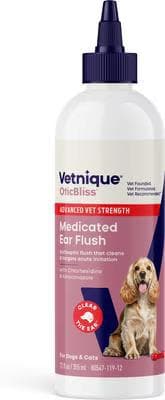
A vet-strength antibacterial and antifungal flush for ears that get gunky and smelly between infections.
Webvet may earn a commission when you click through to Chewy, at no extra cost to you.
What is actually happening inside the ear
A dog's ear canal is shaped like an L, running down and then inward toward the eardrum. That deep, warm, narrow shape traps moisture and wax, which makes it an easy place for yeast and bacteria to multiply once the balance is disturbed. When the lining becomes inflamed, it swells, produces more discharge, and sends a strong itch and pain signal, so the dog scratches with a hind paw and shakes the head to try to fling out whatever feels wrong. This is why the two signs so often travel together.
The medical name for this inflammation is otitis externa, meaning inflammation of the outer ear canal. It is one of the most frequent reasons dogs are brought to the vet. Importantly, the redness, smell, and discharge are the visible result of an underlying trigger rather than the root problem itself. A vet's real job is not only to calm the current flare but to work out why the ear became inflamed in the first place, because that answer decides whether the problem stays gone or keeps returning every few weeks.

The cause owners most often miss: allergies
If your dog gets ear infections again and again, allergies are the single most likely reason. Environmental allergies to pollen, dust mites, or mold, and less commonly food allergies, inflame the skin all over the body, and the thin lining of the ear canal is simply skin in a warm, enclosed space. That inflammation changes the canal's chemistry and lets normal yeast and bacteria overgrow. This is why so many allergic dogs also lick their paws, rub their faces, or scratch their bellies. If you see that wider pattern, the ears are often just the loudest symptom of a whole-body itch problem.
Moisture is the other quiet culprit. Dogs that swim often or are bathed frequently end up with water sitting in that L-shaped canal, and floppy-eared or hairy-eared breeds such as Cocker Spaniels, Basset Hounds, Labradors, and many doodles trap heat and humidity under the ear flap. Foreign material matters too: a grass seed or foxtail working its way into the canal causes sudden, frantic, one-sided head shaking and needs removal. When infections keep coming back despite good ear care, your vet may look harder at diet and consider whether food triggers are feeding the cycle.
| Likely cause | Other signs you might notice | How urgent |
|---|---|---|
| Yeast or bacterial infection | Odor, brown or yellow discharge, redness, warmth | See a vet soon |
| Ear mites | Dark crumbly debris like coffee grounds, intense itch, often both ears | See a vet soon |
| Allergy-driven flare | Paw licking, face rubbing, recurring ear infections | Book a vet visit |
| Grass seed or foreign object | Sudden frantic shaking, usually one ear only | See a vet promptly |
| Head tilt or loss of balance | Stumbling, circling, eyes flicking side to side | Urgent, see a vet the same day |
Ear mites versus a yeast or bacterial infection
Owners often try to tell these apart at home, and there are some clues, but the honest answer is that they can look alike and only a vet's microscope settles it. Ear mites tend to produce dry, dark, crumbly debris that looks like coffee grounds, cause intense itching, and are far more common in puppies and in pets that spend time around cats. A yeast or bacterial infection more often brings a distinct smell along with brown, waxy, or yellowish discharge and redness deep in the canal. Because the treatments are different, guessing wrong wastes time and lets the ear stay sore, which is exactly why a quick swab is worth it.
What to expect at the vet visit
The visit is usually straightforward and calming to see in advance. Your vet starts with an otoscope to look down the canal and check whether the eardrum is intact, which matters because some cleaners and medications are unsafe if the eardrum is damaged. They then take a swab and examine it under the microscope to identify yeast, bacteria, or mites. This step is what turns guesswork into a targeted plan, because a yeast overgrowth, a bacterial infection, and a mite infestation each call for a different medication.

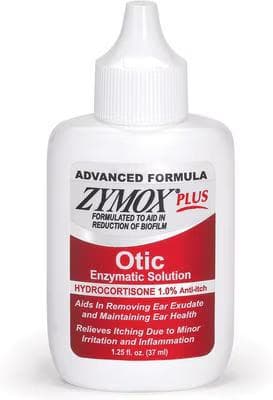
An enzymatic ear solution with hydrocortisone that many vets recommend for active infections. Confirm the eardrum is intact first.
Webvet may earn a commission when you click through to Chewy, at no extra cost to you.
Treatment typically involves a thorough professional cleaning to clear out the debris that shields the germs, followed by the right ear medication to use at home for a set number of days. Simple infections often improve within a few days and clear within a week or two, though your vet may want a recheck to confirm the canal has fully settled before you stop. For dogs with repeated infections, expect a longer conversation about the underlying allergy, because controlling that root cause is what finally breaks the cycle. Most owners find the cost of an uncomplicated ear infection modest compared with the repeat visits that follow when the real driver is left unaddressed.
How to help at home without making it worse
The most useful home rule is look, do not poke. Lift the ear flap and check for redness, discharge, swelling, or a smell, but never push a cotton swab down into the canal. Swabs pack debris deeper, can damage the delicate eardrum, and often make a sore ear worse. If your vet has prescribed a cleaner, apply it into the canal, gently massage the base of the ear, and let your dog shake the loosened material out, then wipe only what you can reach on the outer ear.
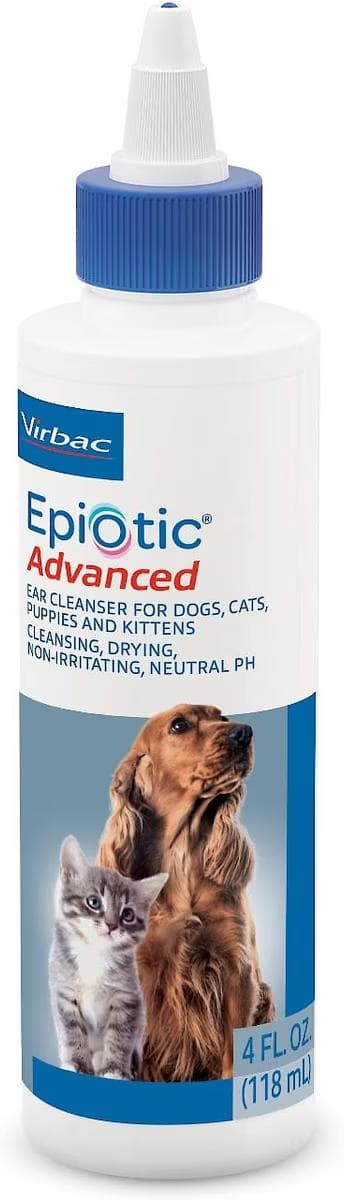
The ear cleaner most vets hand out. Use it only once your vet has confirmed the eardrum is intact, and never push cotton swabs down the canal.
Webvet may earn a commission when you click through to Chewy, at no extra cost to you.
Just as important is what to avoid. Do not reach for home remedies like vinegar, hydrogen peroxide, or human ear drops, which can sting raw skin, upset the canal further, or be dangerous if the eardrum is not intact. Do not reuse medication left over from a previous infection, because the cause this time may be different. And resist the urge to clean an already painful ear aggressively. Gentle care plus the correct prescription almost always beats a cupboard full of well-meant remedies.
Stopping the cycle: prevention and recurring infections
Prevention is mostly about keeping the canal dry and catching flares early. Dry the ears well after swimming and baths, ask your vet whether your breed benefits from routine cleaning and how often, and check the ears weekly so you notice a problem while it is still mild. For a dog that keeps getting infections, the durable fix lives outside the ear: identifying and managing the allergy that keeps inflaming the canal. If your dog also shows broader signs of itching and scratching, mention it, because an allergy plan that calms the whole dog is usually what finally quiets the ears for good.


Alcohol-free wipes for routine upkeep between deep cleans, handy for floppy-eared dogs and after swimming.
Webvet may earn a commission when you click through to Chewy, at no extra cost to you.
The reassuring bottom line is that a dog scratching its ears and shaking its head is telling you something specific and fixable. Catching it early, resisting the urge to poke around inside the canal, and letting your vet identify the real cause turns a miserable, itchy ear back into a comfortable one, usually within days. And when the same ear keeps flaring, that is your cue to look past the ear itself to the allergy underneath, which is where lasting relief is found.
Sources
Reviewed by the Webvet Veterinarian Team
This guide is general information, not a diagnosis, and does not replace an exam by your veterinarian. If your pet is in distress, contact your vet or an emergency clinic right away.