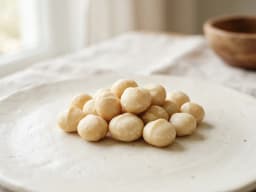
Can cats eat macadamia nuts?
Not recommendedDo not give cats macadamias. The dog-specific syndrome is not reported in cats, so assess the complete product and physical hazards.


Medically reviewed by Dr. Athena Gaffud, DVM · Last reviewed
Can Cats Eat Macadamia Nuts?
Do not make macadamia nuts a cat treat. Merck reports the characteristic macadamia toxicosis syndrome only in dogs; a corresponding feline syndrome is not established. Macadamias are calorie-dense and unnecessary in a complete feline diet, while a whole nut, a mixed product, or packaging may create separate physical or ingredient hazards.
- 1Macadamia nuts are best avoided for cats: the risk is documented in dogs and there is no reason to test it in cats.
- 2A substantial fatty exposure or a predisposed cat may develop gastrointestinal illness or pancreatitis, but one nut does not predict that outcome.
- 3A whole hard nut may choke or lodge, with risk depending on its size, the cat, timing, and signs.
- 4Macadamias are often baked with chocolate, which is toxic to cats and compounds the danger.
- 5Macadamias contain nutrients but are calorie-dense, unnecessary in a complete feline diet, and poor practical treats.

Treats should stay under 10% of your cat's daily calories. Smalls makes the rest, built around the meat an obligate carnivore actually needs.
- Human-grade ingredients, protein first
- Built for obligate carnivores
- Fresh meals delivered to your door
Webvet may earn a commission when you click through to Smalls, at no extra cost to you.

Are macadamia nuts safe for cats?
The characteristic syndrome is documented in dogs, and Merck says clinical signs have been reported only in that species. There is no established feline toxic dose or dog-like course. Avoid macadamias as unnecessary human food, but do not use a cat's smaller body size as proof of susceptibility to an unreported feline toxin.
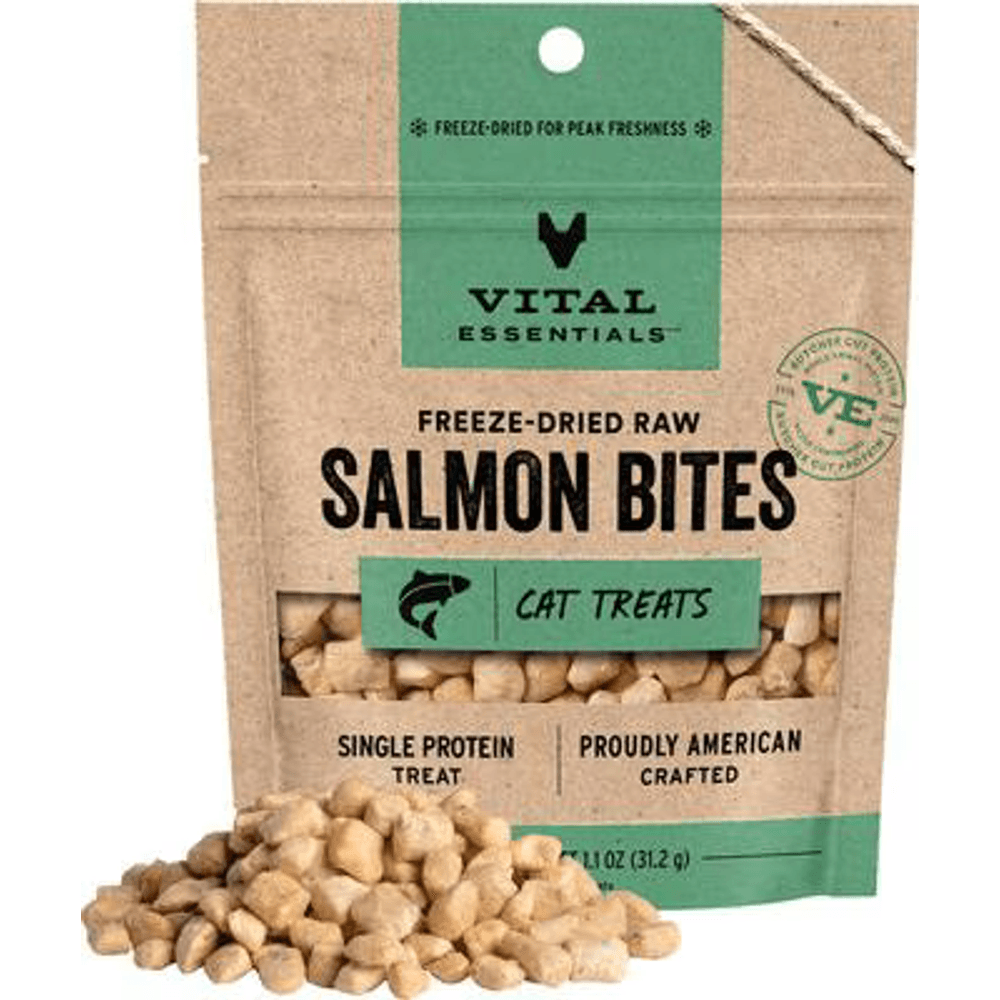
This is an optional cat treat. Review its current label, ingredients, calories, and feeding directions, and count it within the total daily extras.
Webvet may earn a commission when you click through to Chewy, at no extra cost to you.
Macadamias are calorie-dense and high in fat. A substantial fatty exposure or a predisposed patient may raise gastrointestinal or pancreatitis concern, but a single nut is not an established common pancreatitis trigger. A whole hard nut can create choking or obstruction risk; a cat-versus-dog tendency to swallow unusual objects is not established.
Why macadamia nuts are a bad fit for cats
Cats are obligate carnivores, meaning their entire nutritional design revolves around meat. They rely on animal protein and animal-based fats for the amino acids and nutrients they cannot make themselves, and they get little to no benefit from plant foods like nuts, grains, or fruit. Cats cannot even taste sweetness, so the appeal a buttery, slightly sweet macadamia holds for a person is largely lost on them. When a cat sniffs at a nut, it is usually the smell of oil or salt, the crunch, or plain curiosity driving the interest, not a nutritional craving. Offering a macadamia adds fat and calories while supplying nothing your cat actually needs.
Assess the whole product. Chocolate or cocoa, caffeine, alcohol, Allium seasoning, medications, wrappers, and excessive fat may matter. Raisins warrant precautionary feline avoidance because kidney-injury reports are anecdotal and true risk is unknown. Merck describes cats as resistant to dog-like xylitol hypoglycemia and liver injury, but feline evidence is limited and co-ingredients may still require care.

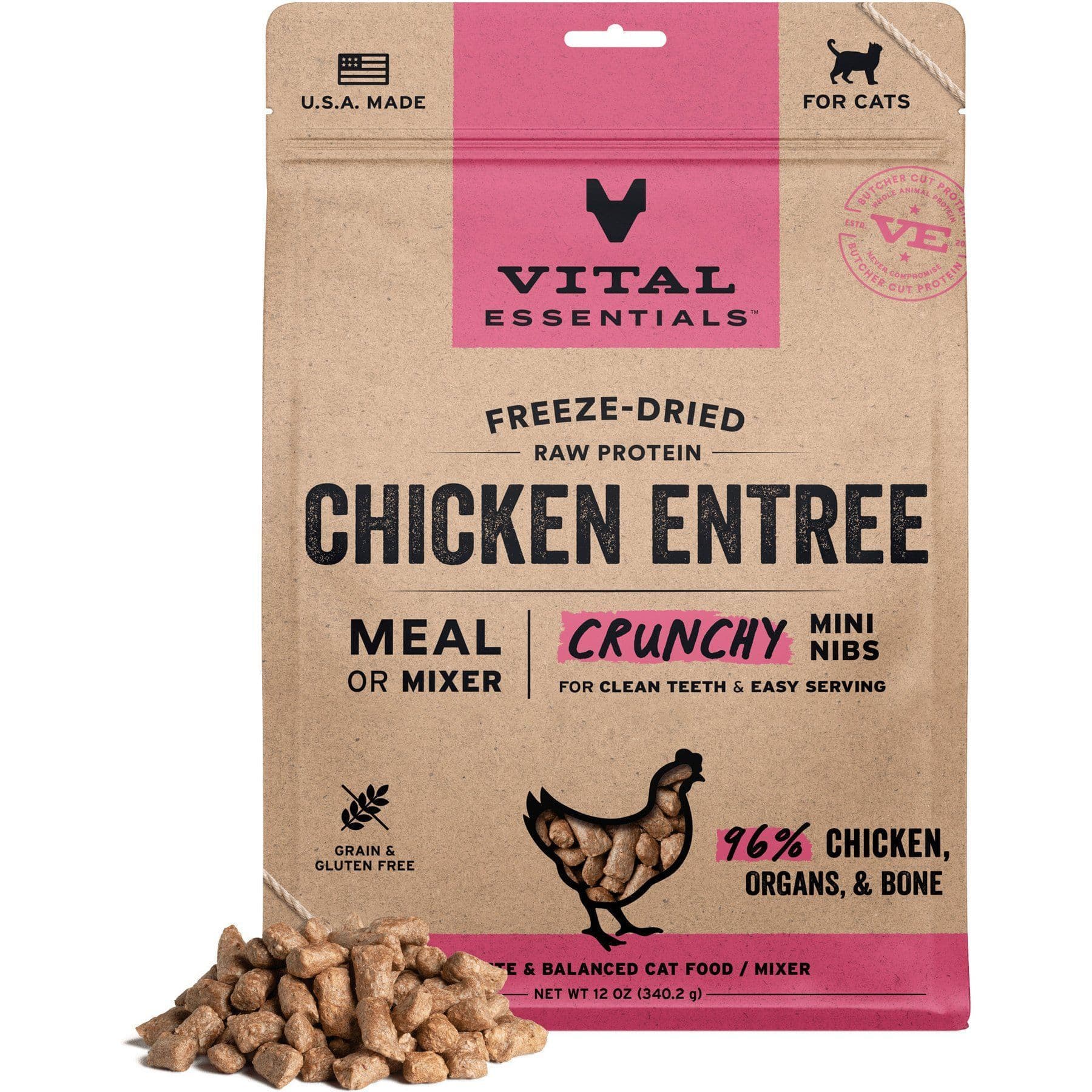
This is an optional cat treat. Review its current label, ingredients, calories, and feeding directions, and count it within the total daily extras.
Webvet may earn a commission when you click through to Chewy, at no extra cost to you.
What about macadamia cookies, milk, and butter?
Turning a macadamia into another product does not turn it into cat food, and in the case of baked goods it usually makes things worse. A white chocolate macadamia cookie is the most common way a cat runs into these nuts, and it is a stacked hazard: the nut, the fat and sugar of the dough, and the chocolate all at once. Even white chocolate, which is lower in theobromine, still brings fat and sugar a cat does not need, and darker chocolates are far more dangerous. If your cat has eaten any chocolate-containing baked good, that is the part to worry about most, and it is worth a call to your vet or a poison line rather than a wait-and-see approach.
Macadamia milk and macadamia butter are more concentrated forms of the same fat. Macadamia butter is thick, sticky, and extremely rich, easy to smear across the roof of a cat's mouth, and often salted. Plain macadamia milk is dairy-free, so it skips the lactose that upsets many adult cats, but it is still fat and water with no value for a meat-eater, and flavored versions add sweeteners you do not want. It is a common myth that a saucer of any milk is a treat for cats; in reality most adult cats digest dairy poorly, and even non-dairy nut milks earn no place in the bowl. Across every form, the answer is the same: these are human ingredients, not cat treats.
What to do if your cat eats a macadamia nut
Remove access and identify the amount and complete product. Watch for vomiting, appetite change, pain, drooling, gagging, breathing difficulty, or signs of obstruction. Do not use a small-versus-large-animal comparison to infer toxic susceptibility; call based on the product, amount, symptoms, patient history, and any physical hazard.

Call your vet promptly if your cat ate several nuts, if the nut was part of a chocolate treat, if you see repeated vomiting, weakness, or tremors, or if there are any signs of a blockage such as ongoing vomiting with no stool. Choking or difficulty breathing is an emergency, so get to a vet right away. Do not try to make your cat vomit at home unless a professional tells you to, because doing so can cause more harm than the nut. When you cannot reach your own vet, the poison lines below can walk you through whether to watch and wait or head in.
Better treats for cats
If an optional animal-food treat fits the cat's complete diet, one possible choice is a small piece of plain cooked chicken with no salt, butter, garlic, or onion is a reliable favorite. A little cooked egg offers protein in a soft, easy-to-chew form, and a flake of plain cooked fish such as salmon makes an occasional treat most cats adore. Keep any of these boneless, unseasoned, and small, and treat them as extras rather than a meal.
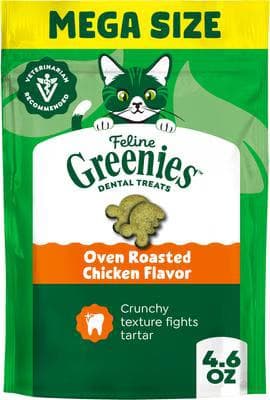
This is a dental cat treat. Follow the current label and ask your veterinarian how it fits alongside tooth brushing and professional dental care.
Webvet may earn a commission when you click through to Chewy, at no extra cost to you.
If cooking is not your thing, a lick of plain meat-based baby food (again, with no onion or garlic in the ingredients) or a proper commercial cat treat does the same job with zero guesswork. Whatever you choose, remember the ten percent rule: treats should make up no more than about a tenth of your cat's daily calories, with a complete and balanced cat food covering the rest. Fresh water, not nut milk or any other beverage, should always be available. Choose any alternative according to the individual cat's complete diet, calories, medical needs, and tolerance.
Frequently Asked Questions
Can macadamia nuts hurt cats?
The characteristic macadamia toxicosis syndrome has been reported only in dogs. Do not use macadamias as cat treats, but assess a feline exposure by the complete product, amount, symptoms, patient history, and any choking or obstruction concern rather than claiming a proven feline toxin.
Which nuts are toxic for cats?
The characteristic macadamia syndrome is reported only in dogs. Do not intentionally offer nuts to cats; after an exposure, assess the exact nut, amount, texture, spoilage, coating, other ingredients, packaging, and the individual cat's signs.
My cat ate a macadamia nut cookie, should I worry?
A cookie requires full-label triage. Chocolate or cocoa, caffeine, alcohol, Allium ingredients, medications, wrappers, and a substantial fat load may matter. Raisin risk in cats is anecdotal and uncertain, and current limited evidence suggests resistance to dog-like xylitol toxicosis. Call with the exact ingredients, amount, symptoms, and cat history.
How much macadamia is toxic to a cat?
There is no established feline macadamia toxic dose because the dog-specific syndrome has not been reported in cats. Do not intentionally offer the nuts, but do not use feline body size to manufacture susceptibility. Assess the complete product, amount, symptoms, and physical hazards.
Why do cats seem interested in macadamia nuts?
Cats cannot taste sweetness, so it is not the buttery flavor drawing them in. Usually it is the smell of oil or salt, the crunch, or simple curiosity about whatever you are eating. That interest does not mean a macadamia is good for them, and it is easy to redirect with an optional veterinarian-approved treat that fits the cat's calorie and medical plan.

Safe alternatives
More nuts & seeds for cats
Sources
- Merck Veterinary Manual: Macadamia Nut Toxicosis in Dogs
Reports clinical signs only in dogs and does not establish a corresponding feline syndrome.
- Merck Veterinary Manual: Xylitol Toxicosis in Dogs
Summarizes limited evidence that cats appear resistant to dog-like xylitol hypoglycemia and liver injury; feline data remain sparse.
- Effects of p.o. administered xylitol in cats
A six-cat controlled study found no toxic effects at 100, 500, or 1,000 mg/kg, which is reassuring but too small to establish unlimited safety.
- VCA: Grape, Raisin, and Currant Poisoning in Dogs
Supports describing feline grape and raisin kidney risk as anecdotal and unconfirmed rather than established.
Reviewed by Dr. Athena Gaffud, DVM
General guidance based on credible veterinary sources; not a diagnosis or a substitute for your veterinarian. If your pet ate something toxic or is unwell, contact your vet or a pet poison line right away.