Cat Brain vs. Human Brain: An In-Depth Look at Our Cats’ Cognitive Abilities
Dive into the complex world of feline brains. Explore how they compare to human brains and unravel the mysteries of cat cognitive abilities.


BVMS MRCVS

This article contains affiliate links. Webvet may earn a commission when you buy through them, at no extra cost to you.
When it comes to intelligence in the animal kingdom, the spotlight often falls on our beloved pets, particularly cats. These mysterious and agile creatures have a way of demonstrating smarts that leaves many of us wondering just how intelligent they truly are.
This article from Webvet takes a deep dive into the comparisons between a cat’s brain and a human brain, exploring how similar they are and how they differ.
Prepare for an enlightening exploration of feline intelligence.
The Fascinating Complexity of Cat Brains
A cat’s brain operates at an incredible speed, a million times faster than an iPad, and offers 1,000 times more data storage [1]. This is particularly remarkable given its compact size.
Several factors contribute to the complexity of the cat’s brain:
- Speed and Storage: A cat’s brain processes information at an astonishing rate, contributing to their agile, rapid responses and quick learning capabilities. The vast data storage facilitates their memory retention and learning processes.
- Intelligence: Cats are believed to be as intelligent as dogs, demonstrating cognitive abilities like problem-solving and adaptability. However, their expression of intelligence often manifests differently due to their inherent nature and environmental adaptations.
- Survival Instincts: Cats are adept survivors, displaying a high degree of independence. This self-sufficiency, powered by their brain’s capabilities, allows them to navigate and adapt to various environments effectively.
- Curiosity and Caution: Cats are innately curious, driven by their desire to explore and understand their surroundings. Yet, they remain cautious and calculated, evaluating situations before they act.
Similarities Between Cat Brains and Human Brains
The similarities between cat brains and human brains extend beyond basic structure, diving into shared emotional responses, cognitive processes, and memory functions [2].

A silvervine and catnip blend that excites even cats who ignore plain catnip, great for redirecting energy into healthy play.
Webvet may earn a commission when you click through to Chewy, at no extra cost to you.
For a medical perspective, our guide to stroke in cats explains warning signs, look-alikes, and veterinary care.
Emotional Similarities
Both cat and human brains have similar sectors that control emotions, hinting at a shared emotional landscape. This similarity suggests that cats may experience feelings like joy, fear, and even love, akin to their human counterparts.
Emotional Similarities
Both cat and human brains have similar sectors that control emotions, hinting at a shared emotional landscape. This similarity suggests that cats may experience feelings like joy, fear, and even love, akin to their human counterparts.
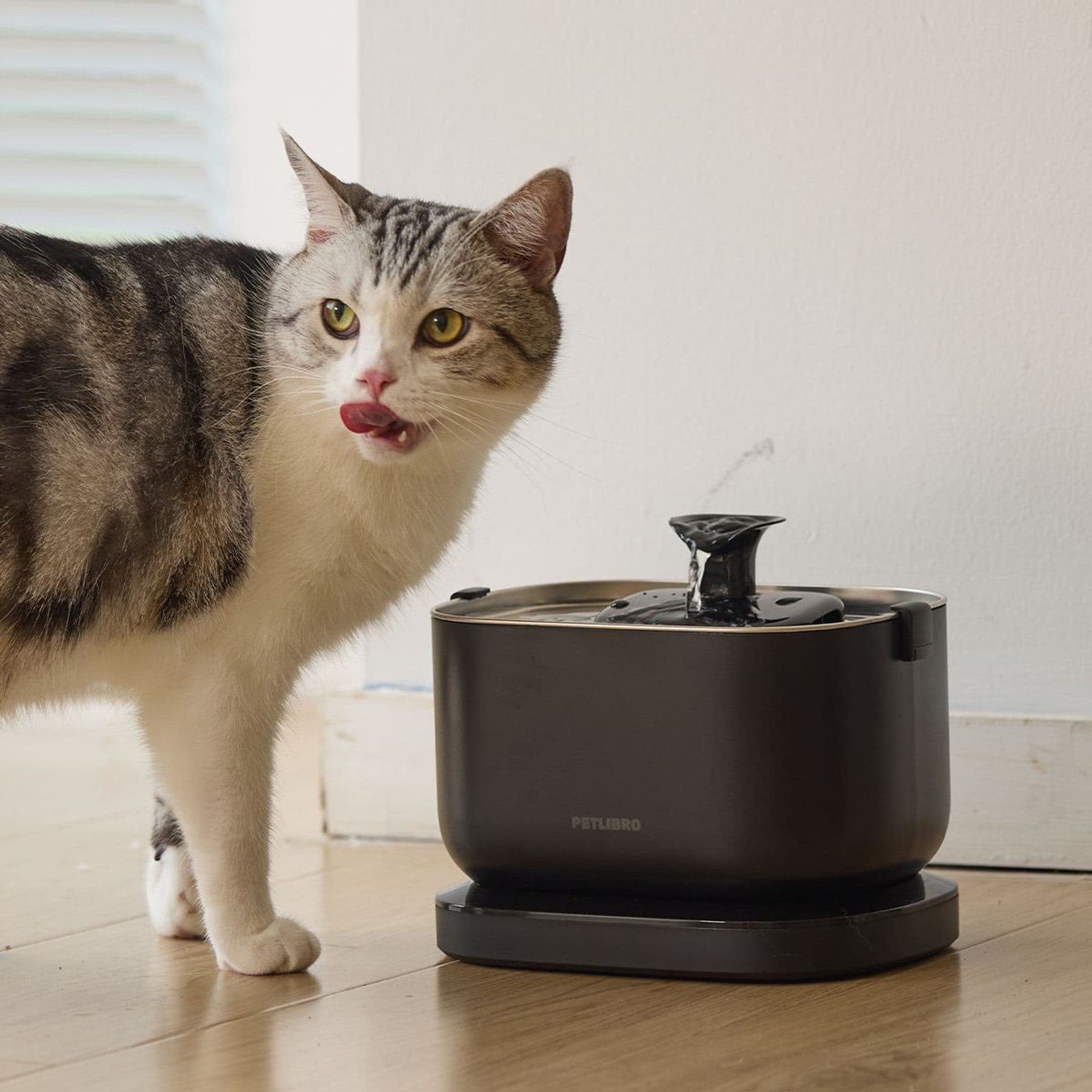
Webvet may earn a commission when you click through to Chewy, at no extra cost to you.
Structural Similarities
Structurally, our brains share much in common with those of our feline friends:
- Brain Composition: Both human and cat brains are composed of gray and white matter, contributing to various cognitive functions and neural connectivity.
- Cerebral Cortex Regions: The cerebral cortex, divided into temporal, occipital, frontal, and parietal lobes, is remarkably similar in humans and cats. These lobes govern sensory information, decision-making, and other cognitive functions.
Cognitive Processing
Cognitive processing in cats bears a striking resemblance to that in humans:
- Sensory Input: Cats process sensory information — sight, sound, smell, taste, and touch — much like humans, employing these senses to understand and navigate their world.
- Learning: Cats demonstrate complex learning behaviors, including observational learning and conditioning, much like humans. This capacity is powered by their advanced cognitive processing abilities.
Memory Functions
Cats exhibit both short-term and long-term memory functions:
- Short-Term Memory: Just like humans, cats have a working memory that allows them to hold and manipulate information over short periods. This ability is crucial for tasks like hunting and navigating their environment.
- Long-Term Memory: Cats can recall events years after they happen, indicating robust long-term memory. This function aids in remembering important locations, individuals, and learned behaviors.
Perceptions: The Cat’s-Eye View
Cats have a set of perceptual abilities that distinguish them from many other animals, including humans. These specialized abilities, tailored by evolution to meet their survival needs, provide cats with a distinctly different way of interpreting the world.
Compare coverage choices for your pet, then request a quote directly on Lemonade.
- Check a price for your pet
- Review available coverage choices
- See the terms before you decide
Eligibility, waiting periods, limits and exclusions apply.
Webvet may earn a commission when you click through to Lemonade, at no extra cost to you.
Color Perception
While it’s a common myth that cats see in black and white, the reality is more complex and intriguing. Unlike humans, who can perceive a broad spectrum of colors thanks to the three types of cone cells in our eyes, cats possess only two types of cone cells.
This difference makes their color vision akin to a human with red-green color blindness [3].
Despite this limitation, cats are not entirely devoid of color perception. They can differentiate between certain shades, particularly in the blue and yellow spectrum, allowing them to navigate their world more effectively.
However, their world is less colorful and less saturated than ours. Think of it as viewing a slightly faded color photograph.
Motion Tracking
One area where cats’ vision dramatically surpasses human capabilities is their motion-tracking abilities. A combination of high-speed eye movements and a wide field of view makes cats experts at detecting and following fast-moving objects, even in low-light conditions.
This proficiency, a testament to their hunting heritage, equips them to locate and capture prey swiftly and efficiently, even if the prey attempts to evade capture by darting rapidly or altering its course unexpectedly.
The feline ability to track motion is also bolstered by their excellent depth perception. Unlike humans who need both eyes to judge distances accurately, cats can gauge depth effectively with just one eye — which further enhances their precision in tracking and catching prey [4].
Distinguishing Factors: The Unique Sensory Systems of Cats
Cats’ sensory systems provide them with unique perceptual experiences:
Whiskers: A Cat’s Personal Scanner
A cat’s whiskers, packed with nerves and muscles, act as powerful sensory tools:
- Nearby Object Detection: Whiskers help cats detect nearby objects, even in darkness, allowing them to navigate their surroundings with accuracy.
- Air Movement Sensing: Minute changes in air currents can be detected by a cat’s whiskers, aiding in the prediction of movements in their environment, such as an approaching person or a scurrying mouse.
Catnip: A Feline-Only Experience
Catnip, a plant from the mint family, induces a unique reaction in cats not observed in humans:
- Euphoric Response: Upon exposure to catnip, many cats exhibit behaviors suggestive of euphoria, such as rolling, rubbing, purring, and leaping.
- Individual Variations: Not all cats respond to catnip. This reaction is inherited, with approximately 30% to 40% of cats lacking the sensitivity gene [5].
Size Doesn’t Matter: Brain Size and Intelligence
The notion that larger brains equate to greater intelligence is a common but oversimplified understanding of brain functioning. Yes, brain size does correlate to some extent with cognitive abilities; however, it’s far from being the sole determinant.
While larger animals, like elephants or dolphins, have bigger brains than smaller organisms such as insects, the gap in the complexity of their behaviors isn’t proportionate to the size difference. Studies have indicated that despite having a significantly larger brain, these bigger animals only exhibit about three times the number of behavioral functions compared to insects.
Cats, despite having a smaller brain compared to humans or certain larger animals, demonstrate an impressive degree of cognitive sophistication. Their keen senses, problem-solving skills, and advanced learning capabilities allude to the high efficiency of their compact brains.
So, in the realm of intelligence, it seems size doesn’t always matter — it’s what you do with it that counts.
Simulating the Cat Brain: A Scientific Perspective
Advancements in neuroscience and technology have opened the doors to a better understanding of the cat brain.

Webvet may earn a commission when you click through to Chewy, at no extra cost to you.
In a groundbreaking study, scientists from IBM simulated the cerebral activity of a cat’s brain using a supercomputer. This was not a mere replication of the physical structure of the brain. Instead, it mimicked the intricate and complex neuronal activity, providing an unprecedented view into how a cat’s brain functions.
While this achievement is impressive in its own right, it’s particularly exciting when viewed in the broader context of brain research. This project represents a substantial step toward an even grander scientific ambition — replicating the human brain, which is considerably more complex and capable.
The understanding gleaned from studying the cat brain and its simulation could serve as a vital stepping stone in this direction. By unlocking the secrets of the feline brain, we might be able to answer some of the most persistent and baffling questions about our own brains.
In Conclusion: Unraveling the Mysteries of the Feline Mind
From their emotional capacities to their cognitive processing and memory functions, cats have shown time and again that they share a fascinating number of similarities with human brains.
As we continue to uncover more about these wonderful creatures, we only deepen our appreciation for their complexity and the intricate workings of their minds.
Are you interested in learning more about the fascinating world of animals and their cognitive abilities? Click the link below for a wealth of knowledge on a variety of animals.
[Click Here To Learn More]
Callout Box:
🐾 Key Takeaways From Exploring the Cat Brain 🐾
- Cat brains are more complex and faster than an iPad, exhibiting a high degree of intelligence and independence.
- The emotional, structural, and cognitive aspects of cat and human brains share striking similarities.
- Cats have unique sensory systems, including their whiskers acting as personal scanners and their unique reaction to catnip.
- The size of the brain does not equate to superior intelligence, as shown by the differences between insects, larger animals, and cats.
- Understanding the cat’s brain can lead to significant scientific discoveries in neuroscience.
FAQs
What Are the Key Similarities Between Cat Brains and Human Brains?
Cat and human brains share emotional, structural, and cognitive similarities. They have similar regions controlling emotions, share similar brain structures, and process information from the basic five senses in similar ways.
What Is the Significance of a Cat’s Whiskers?
A cat’s whiskers are not just for show. They are deeply rooted sensory tools packed with nerves and muscles, acting as sophisticated scanners detecting nearby objects and slight air movements.
How Do Cat and Human Brains Differ in Terms of Size and Intelligence?
While a larger animal or human brain is significantly bigger than a cat’s, size does not equate to intelligence. Studies indicate that larger animals only have around three times the behavioral functions compared to insects, suggesting that intelligence is not solely dependent on brain size.
Why Do Cats React to Catnip but Humans Don’t?
The reaction to catnip is due to differences in brain physiology between cats and humans. Catnip induces a euphoric response in cats, while humans, due to different brain structures, remain immune to its effects.
How Do Cats Perceive Their Surroundings Differently than Humans?
While cats may not perceive colors as vibrant as humans do, they excel in motion tracking. Their whiskers also act as an additional sensory system, detecting nearby objects and even the slightest air movements.
References/External Links:
- [1] The Conversation
- [2] Hepper
- [3] Great Pet Care
- [4] Cats Herd You
- [5] Excited Cats
- Feature image: istockphoto

Wendy Toth is an entrepreneurial writer, editor, and mom of two humans, two dogs and one cat. She’s currently Content Director here at PetFul. For the last 15 years she has held positions at Parents Magazine, NBC, PetSmart, and GreatPetCare, where she was co-founder. Her writing has appeared in many national outlets including Pet Lab Co., Retail Me Not, Ask Men, Wild Society Nutrition, and The New York Times. Because she loves her work so much, she’s obsessed with helping others find career fulfillment, and covers it regularly at PowerSuiting.
Veterinarian · BVMS MRCVS
Dr. Pippa Elliott, BVMS, MRCVS, is a veterinarian with nearly 30 years of experience in companion animal practice. Dr. Elliott earned her Bachelor of Veterinary Medicine and Surgery from the University of Glasgow. She was also designated a Member of the Royal College of Veterinary Surgeons. Married with 2 grown-up kids, Dr. Elliott has a naughty Puggle named Poggle, 3 cats and a bearded dragon.


