Cat symptom
Wounds & bleeding in cats
Reviewed by the Webvet Veterinarian Team · Last reviewed June 22, 2026
A cut, bite, torn nail, or bleeding. Minor scrapes can be managed at home, but deep wounds, bites, heavy bleeding, or anything that won't stop needs veterinary care.
Common causes of wounds & bleeding in cats
- Bites or fights (often deeper than they look)
- Cuts, scrapes, or torn nails
- Foreign objects (glass, thorns)
- Surgical sites that have opened
Who's most at risk
- Outdoor and free-roaming pets
- Multi-pet households (fights)
- Active dogs (nails, cuts)
- Pets on blood-thinning medication
What you can do at home
- Apply gentle, steady pressure with a clean cloth to stop bleeding
- Keep your pet calm and prevent licking (a recovery collar helps)
- Rinse a minor surface graze with clean water; skip strong antiseptics and human ointments
When to see a vet
- Bleeding that won't stop after several minutes of pressure
- Bite wounds (high infection risk, even if small)
- Deep, gaping, or contaminated wounds, or anything embedded
- Heavy blood loss, pale gums, or weakness
When it's more serious
- Uncontrolled bleeding or pale gums is an emergency — keep pressure on and go now.
- Bites and deep wounds need cleaning and antibiotics today — they get infected fast.
- Keep it clean and watch for swelling or discharge; check with your vet if unsure.
What your vet may do
- Stop the bleeding and assess depth and contamination
- Clean, clip, and close or manage the wound
- Antibiotics and pain relief, especially for bites
- Imaging if a foreign object or deeper injury is suspected
Questions to ask your vet
- Does this need stitches or a drain?
- Is infection likely (especially a bite)?
- What wound care do I do at home?
- What signs of infection should I watch for?

Frequently asked questions
What causes wounds & bleeding in cats?
A cut, bite, torn nail, or bleeding. Minor scrapes can be managed at home, but deep wounds, bites, heavy bleeding, or anything that won't stop needs veterinary care. Common causes include: Bites or fights (often deeper than they look); Cuts, scrapes, or torn nails; Foreign objects (glass, thorns); Surgical sites that have opened.
Is wounds & bleeding in cats an emergency?
See a vet today. See a vet right away if: Bleeding that won't stop after several minutes of pressure; Bite wounds (high infection risk, even if small); Deep, gaping, or contaminated wounds, or anything embedded; Heavy blood loss, pale gums, or weakness.
What can I do at home for a cat with wounds & bleeding?
Apply gentle, steady pressure with a clean cloth to stop bleeding. Keep your pet calm and prevent licking (a recovery collar helps). Rinse a minor surface graze with clean water; skip strong antiseptics and human ointments.
A closer look at wounds and bleeding in cats
A wound on a cat is easy to underestimate, and that is exactly what makes it risky. Cats are stoic, their thick fur hides injuries, and the small puncture from a fight can seal over within hours while trouble brews underneath. If your cat is bleeding heavily, bleeding that will not stop after a few minutes of firm pressure, or has pale gums and seems weak, treat it as an emergency and get to a vet right now. For everything else, the single most important thing to know is that a wound looking minor on the surface does not mean it is minor underneath, especially with bite injuries.
- 1Apply gentle, steady pressure with a clean cloth for several minutes to control bleeding before anything else.
- 2Cat-bite punctures are the big hidden danger: they look tiny, seal fast, then abscess a few days later.
- 3Never use hydrogen peroxide, rubbing alcohol, or human ointments like Neosporin on a cat wound.
- 4Heavy or non-stop bleeding, deep or gaping wounds, and pale gums are emergencies, not wait-and-see situations.
- 5Even a small bite usually needs a vet visit and antibiotics because infection sets in quickly.
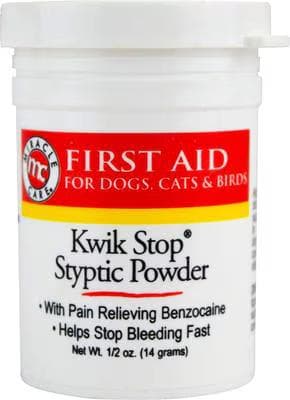
Useful for a nicked nail quick. It does nothing for a puncture or bite wound, which needs a vet before it abscesses.
Webvet may earn a commission when you click through to Chewy, at no extra cost to you.
What is actually happening under the fur

When your cat's skin is torn, cut, or punctured, the body reacts fast. Blood vessels at the site constrict and a clot begins to form, which is why many small grazes stop bleeding on their own within ten to fifteen minutes. At the same time, the immune system rushes cells to the area to fend off the bacteria that entered along with the injury. That self-defense is helpful, but it is not enough on its own for anything more than a superficial scratch, and it can be overwhelmed quickly when a wound is deep or heavily contaminated.
The location and depth matter more than the size you can see. A cat's loose, mobile skin slides over the muscle beneath it, so a puncture can drive bacteria into a pocket deep under the surface while the entry hole on top looks like nothing more than a scab. Wounds over joints, the chest, or the abdomen carry extra concern because the damage may reach structures below the skin. This is the reason vets judge a wound by its story, not just its appearance.
Why cat-bite wounds are the hidden danger
If your cat goes outdoors or shares a home with other cats, most of its wounds will come from fights, and cat-bite injuries deserve special attention. A cat's teeth are long and narrow, so a bite makes a deep, tiny puncture that injects mouth bacteria under the skin, then closes over almost at once. The surface heals within a day or two and you may never notice it. Underneath, the trapped bacteria multiply, and within two to five days the site turns into an abscess: a painful, swollen pocket of pus. Owners often first realize something is wrong when the cat develops a fever, goes off its food, becomes withdrawn, or starts limping on a leg that seemed fine yesterday.
This is why the guidance for a cat is different from what you might do for yourself with a small nick. Even a bite that looks like a pinprick usually needs a veterinary visit, because a course of antibiotics started early can stop an abscess before it forms. Once an abscess has developed, treatment often means sedation, draining the pocket, flushing it out, and sometimes placing a drain, which is a far bigger ordeal than a same-day antibiotic would have been. When in doubt after a fight, have the wound checked rather than waiting to see what happens.
| Type of wound | Other signs you might see | How urgent |
|---|---|---|
| Heavy or spurting bleeding | Pale gums, weakness, fast breathing, blood soaking through cloth | Emergency, go now |
| Bite or puncture (any size) | Small scab, later swelling, pain, fever, limping, off food | Same-day vet visit |
| Deep, gaping, or contaminated cut | Visible tissue, embedded debris, dirt or glass | Same-day vet visit |
| Torn nail | Bleeding from the nail bed, licking a paw, limping | Vet soon if bleeding or lame |
| Small surface graze, stopped bleeding | Minor scab, cat acting normally | Monitor, call vet if it swells or oozes |
How to help at home safely

Your first job with any bleeding wound is to stay calm and keep your cat calm, because a frightened or painful cat may scratch or bite. Wrap the cat gently in a towel if you need to, leaving the injured area accessible. Place a clean cloth or gauze over the bleeding site and hold firm, steady pressure for several minutes without lifting to peek, since lifting disturbs the forming clot and restarts the bleeding. If a limb is bleeding and does not appear broken, raising it slightly can help slow the flow. For a minor surface graze that has already stopped, you can rinse it with clean water or sterile saline to remove loose dirt.
Cats are relentless groomers, and a licked wound heals slowly and gets infected easily. A soft recovery collar, sometimes called a cone or an e-collar, is the simplest way to protect a healing wound, and most cats tolerate it once they settle. Keep an indoor cat indoors while it heals, check the wound at least twice a day, and watch for the warning signs that mean it is time to call: spreading redness or swelling, heat, a bad smell, discharge or pus, renewed bleeding, or a cat that is suddenly quiet, hiding, or refusing food.
What to expect at the vet visit
The vet's first priority is to control any active bleeding and check that your cat is stable, which may include a look at the gum color and, for a badly injured cat, checking for signs of shock such as pale gums. Once your cat is settled, the wound is examined closely. The fur around it is usually clipped away, because that is often the only way to reveal small punctures hiding in the coat and to see the true edges of the injury. The wound is then cleaned and flushed thoroughly to remove bacteria and debris, which does more for healing than any ointment.
How the wound is closed depends on how fresh and clean it is. A recent, clean cut may be stitched, while a contaminated or older wound is often left partly open, sometimes with a drain, so infection can escape rather than get sealed inside. For bites and dirty wounds, your vet will typically prescribe antibiotics and pain relief, and it matters that you finish the full course even after the wound looks better. If a foreign object or a deeper injury is suspected, imaging such as an X-ray may be needed. Give every medication exactly as directed, and never substitute anything from your own medicine cabinet.

Recovery, cost, and healing time
Most simple wounds and drained abscesses heal well over one to two weeks when they are cleaned properly, protected from licking, and treated with the prescribed medication. Your part at home is the quiet, consistent work: keeping the collar on, doing any bandage changes your vet demonstrates, giving medications on time, and keeping the cat rested and indoors. Watch appetite closely, because a cat that stops eating during recovery may be telling you the infection is not under control or is in pain, and both are reasons to check back in.

A soft donut collar keeps a cat from working at a healing wound while still letting them eat and sleep.
Webvet may earn a commission when you click through to Chewy, at no extra cost to you.
Cost varies widely with the severity of the wound, from an inexpensive same-day antibiotic for a fresh bite to a much larger bill if an abscess needs sedation, draining, and a drain placed, or if surgery and imaging are required. That gap is one more reason early care pays off: catching a bite before it abscesses is almost always cheaper, less painful for your cat, and less stressful for you than treating the complication later.
How to lower the risk
The most effective way to prevent wounds is to reduce the fights and hazards that cause them. Keeping cats indoors, or limiting outdoor time to a secure enclosure, dramatically cuts the number of bite injuries and encounters with cars, glass, and other animals. Spaying and neutering reduces the roaming and territorial fighting that drive so many cat-bite abscesses. In multi-cat homes, giving each cat enough space, plus separate feeding stations, litter boxes, and resting spots, lowers the tension that leads to scraps.
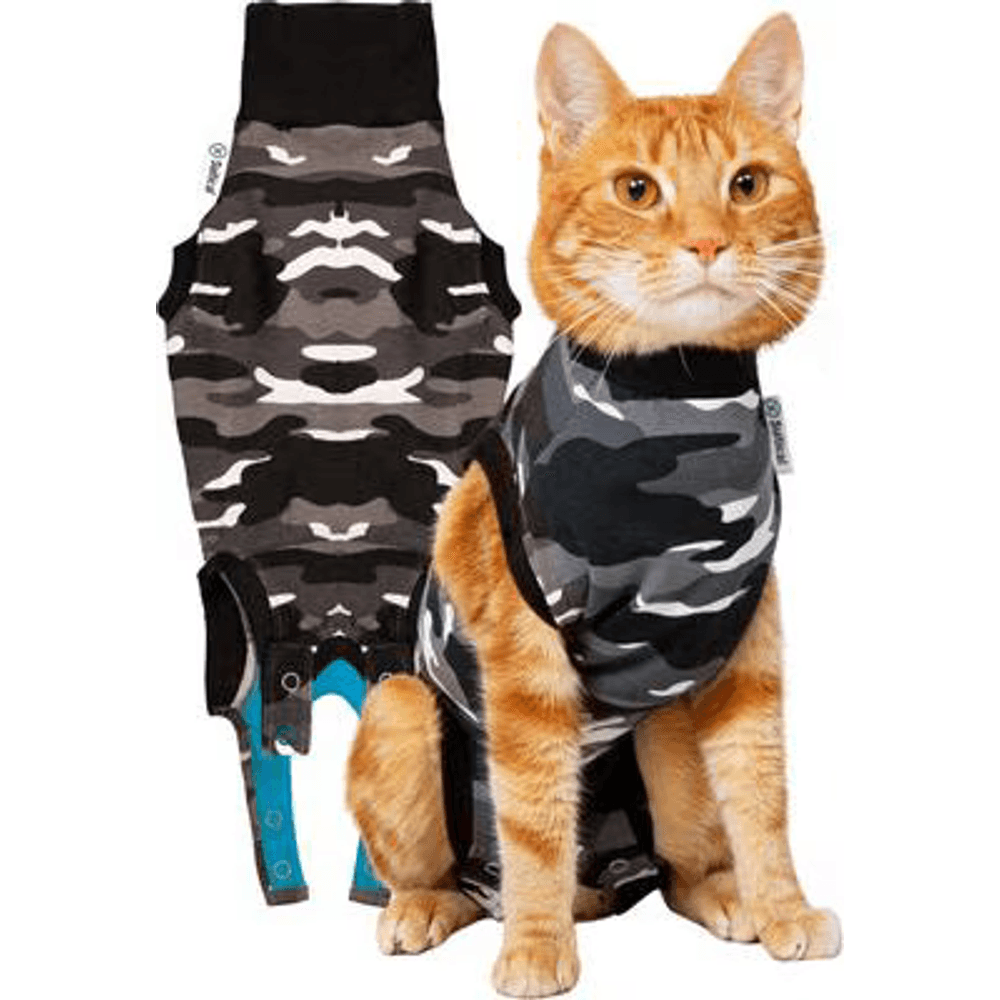
A recovery suit protects a torso wound or abscess site, and most cats settle in one faster than in a cone.
Webvet may earn a commission when you click through to Chewy, at no extra cost to you.
It also helps to keep up with routine care, since a cat that is current on vaccines and parasite prevention weathers an injury better, and a healthy claw and nail routine prevents the torn nails that cause their own bleeding. Do a quick hands-on check of your cat every few days, running your fingers through the coat to feel for scabs, swellings, or sore spots, especially after any outdoor adventure or a household squabble. Finding a puncture early, before it becomes an abscess, is one of the most useful things an owner can do.

The reassuring truth is that most feline wounds heal completely with prompt, sensible care. The mistakes that turn a small injury into a big problem are usually the avoidable ones: dismissing a bite because it looks tiny, reaching for peroxide or a human ointment, or letting a cat lick a wound open. Control the bleeding, keep it clean with nothing stronger than water, protect it from licking, and let your veterinarian make the call on bites and anything deep. This page is general guidance and not a diagnosis, so when something about your cat's wound worries you, your vet is always the right next step.
Sources
Reviewed by the Webvet Veterinarian Team
This guide is general information, not a diagnosis, and does not replace an exam by your veterinarian. If your pet is in distress, contact your vet or an emergency clinic right away.