Cat symptom
Bad breath in cats
Reviewed by the Webvet Veterinarian Team · Last reviewed June 22, 2026
Persistent bad breath is most often a sign of dental disease. Dental disease is common, painful, and can affect a pet's overall health if left untreated.
Common causes of bad breath in cats
- Plaque, tartar, and gum disease (the most common cause)
- A broken or infected tooth
- Oral growths or ulcers
- Occasionally a sign of internal disease (fruity/sweet breath can occur with diabetes; ammonia or urine-like breath can occur with kidney disease)
Who's most at risk
- Small breeds and brachycephalics (dental crowding)
- Senior pets
- Pets whose teeth are never brushed
- Cats (resorptive lesions and gum disease)
What you can do at home
- Brush your pet's teeth with pet-safe toothpaste (never human toothpaste)
- Offer vet-approved dental chews or diets
- Lift the lip and look for red gums, tartar, or broken teeth
When to see a vet
- Drooling, pawing at the mouth, or difficulty eating
- Very red or bleeding gums, or loose/broken teeth
- A sudden change in breath odor with other signs (drinking more, weight loss)
When it's more serious
- That breath change with other signs can indicate diabetes or kidney disease — see a vet.
- Mouth pain or trouble eating needs a vet visit — likely painful dental disease.
- Advanced gum disease or broken teeth should be treated soon.
What your vet may do
- Oral exam for tartar, gum disease, and broken teeth
- Recommend a dental cleaning under anesthesia
- Dental X-rays to assess below the gumline
- Check for kidney or metabolic disease if breath is unusual
Questions to ask your vet
- How advanced is the dental disease?
- Is a professional cleaning needed?
- Are any teeth painful or in need of removal?
- What home care keeps the teeth healthy?

Frequently asked questions
What causes bad breath in cats?
Persistent bad breath is most often a sign of dental disease. Dental disease is common, painful, and can affect a pet's overall health if left untreated. Common causes include: Plaque, tartar, and gum disease (the most common cause); A broken or infected tooth; Oral growths or ulcers; Occasionally a sign of internal disease (fruity/sweet breath can occur with diabetes; ammonia or urine-like breath can occur with kidney disease).
Is bad breath in cats an emergency?
Usually OK to monitor at home. See a vet right away if: Drooling, pawing at the mouth, or difficulty eating; Very red or bleeding gums, or loose/broken teeth; A sudden change in breath odor with other signs (drinking more, weight loss).
What can I do at home for a cat with bad breath?
Brush your pet's teeth with pet-safe toothpaste (never human toothpaste). Offer vet-approved dental chews or diets. Lift the lip and look for red gums, tartar, or broken teeth.
A closer look at bad breath in cats
A little fishy odor after a meal of wet food is one thing, but breath that is consistently unpleasant is not something cats simply grow into. In the overwhelming majority of cases, persistent feline halitosis traces back to dental disease building up under the gumline, and dental disease in cats is common, genuinely painful, and quietly progressive. The single most useful thing to know is that bad breath is a symptom worth acting on rather than tolerating, because the same odor that seems like a cosmetic nuisance is often the first outward clue that something in the mouth, or occasionally deeper in the body, needs attention.
- 1Ongoing bad breath in cats is not normal and is most often caused by plaque, tartar, and gum disease under the gumline.
- 2The specific odor gives clues: rotten or foul usually means dental or oral infection, ammonia or urine-like can signal kidney disease, and sweet or fruity can signal diabetes.
- 3Cats are prone to two painful conditions worth knowing by name: tooth resorption and gingivostomatitis.
- 4Because cats hide pain so well, many keep eating and acting normal even with advanced dental disease.
- 5Brush only with toothpaste made for pets, never human toothpaste, and let your vet decide whether a cleaning under anesthesia is needed.
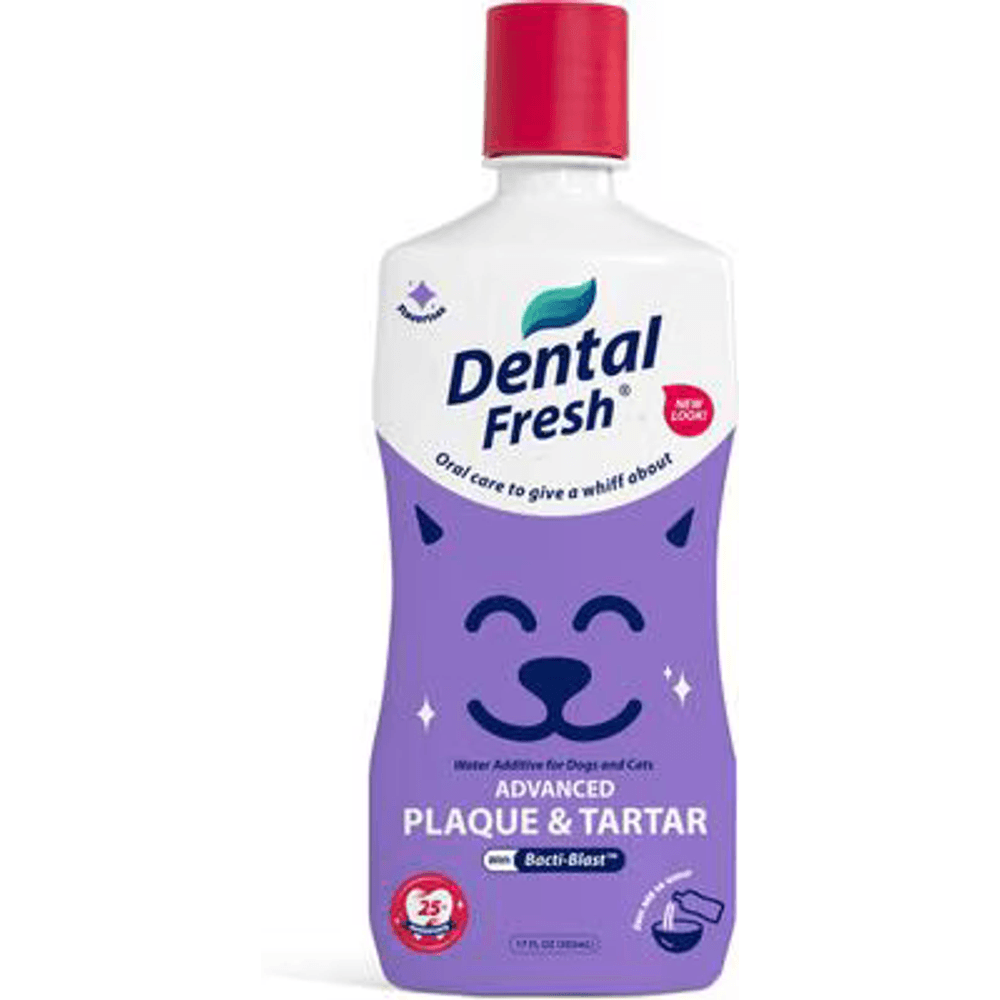
A tasteless water additive is the most realistic daily option for a brush-averse cat.
Webvet may earn a commission when you click through to Chewy, at no extra cost to you.
What is actually happening in your cat's mouth
Bad breath begins with bacteria. A soft film of plaque forms on the teeth every day, and when it is not disrupted it hardens into tartar, the yellow-brown crust you can sometimes see near the gumline. Bacteria thrive in that tartar and along the edge of the gums, releasing the sulfur compounds that produce that distinctive stale, rotten smell. Over time the gums become inflamed, a stage called gingivitis, and if it continues the infection works below the gumline into the tissues and bone that hold each tooth in place. That deeper stage is periodontal disease, and it is both the leading cause of odor and the reason dental problems in cats are painful rather than merely unsightly.
Cats also face a couple of mouth problems that dogs rarely deal with in the same way. Tooth resorption is a process in which the body slowly breaks down the structure of a tooth, exposing sensitive inner layers; it is remarkably common in adult cats and can be intensely painful even when the tooth looks nearly normal from the outside. Gingivostomatitis is a severe, immune-driven inflammation in which the cat's own immune system overreacts to plaque and turns large areas of the gums and mouth an angry red. Both conditions can drive strong breath odor, and both explain why a cat's mouth deserves a professional look rather than guesswork at home.
What the smell can tell you

One reason owners search for answers is that not all bad breath smells the same, and the character of the odor genuinely helps narrow the field. A rotten, foul, or decaying smell most often points to dental disease or an oral infection, and occasionally to something physically stuck in the mouth, such as a strand of string or a shard of food lodged against the gum. A breath that smells like ammonia or urine is the one that makes vets think about the kidneys, because failing kidneys stop clearing waste products from the blood and those toxins can show up on the breath. A sweet or fruity odor can be a sign of diabetes, where the body produces ketones that carry a distinctive smell. Use the table below as a starting point rather than a diagnosis, because the only way to confirm the cause is a proper exam.
| What the breath smells like | What it can suggest | How urgent |
|---|---|---|
| Rotten, foul, or decaying | Plaque, tartar, gum disease, tooth resorption, or an oral infection | See a vet soon, especially with red gums or trouble eating |
| Ammonia or urine-like | Possible kidney disease, more common in senior cats | Have it checked promptly, particularly with more drinking or weight loss |
| Sweet or fruity | Possible diabetes | Have it checked promptly, especially with increased thirst and appetite changes |
| Fishy after meals only, otherwise fine | Often just the food, especially fish-based wet diets | Monitor; mention it if it becomes constant |
How vets pinpoint the cause in cats
A veterinary visit for bad breath usually starts with a hands-on look inside the mouth. Your vet will lift the lips to check for tartar, red or receding gums, broken or wobbly teeth, and the telltale reddened craters of tooth resorption. Because cats are experts at masking discomfort, the exam matters even when your cat is still eating happily; many cats with sore mouths simply swallow food a little faster or favor one side and never make a fuss. If the odor or the exam raises a flag for a whole-body cause, your vet may recommend bloodwork and a urine test to evaluate the kidneys, check for diabetes, and look at overall organ health.
The mouth, though, only tells part of the story. Much of what a cat's dental disease is doing happens below the gumline where the eye cannot reach, which is why the real assessment often needs dental X-rays taken under anesthesia. Those images reveal hidden resorptive lesions, bone loss, and root problems that determine whether a tooth can be saved or should be removed. If your vet ties the breath to a systemic cause, watch also for the classic partner sign of increased drinking and urinating, which frequently accompanies both kidney disease and diabetes and gives your vet another thread to follow.
What to expect at the vet visit
If dental disease is the culprit, the most common recommendation is a professional cleaning performed under general anesthesia. Owners are sometimes nervous about anesthesia, but it is what allows a thorough, pain-free job: the team can scale away tartar above and below the gumline, take full-mouth X-rays, probe each tooth, and remove any that are diseased or painful. Anesthesia-free dental scaling, by contrast, only polishes the visible surface and leaves the harmful bacteria under the gums untouched, so it is not a substitute. Modern veterinary anesthesia is carefully monitored, and for most cats the pre-anesthetic bloodwork your vet runs is part of keeping it safe.
Recovery from a dental procedure is usually quicker than owners expect. Cats often go home the same day, sometimes with pain relief and occasionally a short course of antibiotics if infection was present, and many are back to normal within a day or two. When painful teeth are removed, owners are frequently surprised to see their cat become more playful and eat with more enthusiasm afterward, a clue to how much silent discomfort the mouth had been causing. If a whole-body condition such as kidney disease or diabetes is found, treatment shifts toward managing that condition, which is its own longer conversation with your vet but one that can dramatically improve how your cat feels.

How to help at home safely
The gold standard of home care is toothbrushing, and the golden rule is to use only toothpaste formulated for pets. Human toothpaste contains fluoride and foaming agents that are not meant to be swallowed, and some pet-marketed products contain xylitol, so always check that a paste is species-appropriate. Cats do best when brushing is introduced slowly, letting them lick a pea-sized dab of a poultry or malt flavored paste off your finger for a few days before you ever bring in a soft finger brush or small pet toothbrush, and keeping sessions short and calm. Daily is ideal, but even a few times a week meaningfully slows plaque.
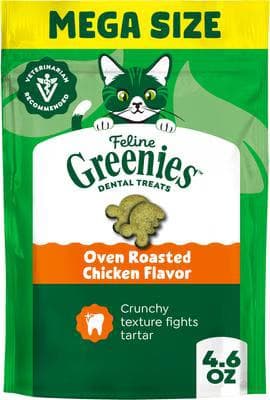
Crunchy dental treats with a texture that helps with tartar. Useful, but they will not fix an already painful mouth.
Webvet may earn a commission when you click through to Chewy, at no extra cost to you.
Between brushings, vet-approved dental treats, dental diets, and water additives can help, and choosing products carrying the Veterinary Oral Health Council seal is a reliable way to pick ones that actually work. What home care cannot do is reverse tartar that has already hardened or fix a resorptive lesion, so it complements professional care rather than replacing it. Keep a simple eye on the mouth by lifting the lip now and then to look for redness or buildup, and note any new signs such as excessive drooling, pawing at the face, dropping food, or chewing on only one side, all of which suggest the mouth has become painful and warrant a call to your vet.
How to lower the risk over the long term
Preventing bad breath is really about preventing dental disease, and a steady routine beats occasional heroics. Regular home brushing, dental products that carry the veterinary seal, and yearly veterinary checkups that include a mouth exam catch problems while they are still small and cheap to fix. Small breeds, flat-faced cats with crowded teeth, and senior cats are the most prone to trouble, so those cats especially benefit from closer attention. Because cats are so good at hiding illness, do not wait for your cat to stop eating before acting; a cat that is not eating is often telling you the mouth or the body has been struggling for a while, and in cats a sudden drop in appetite is itself an urgent concern.

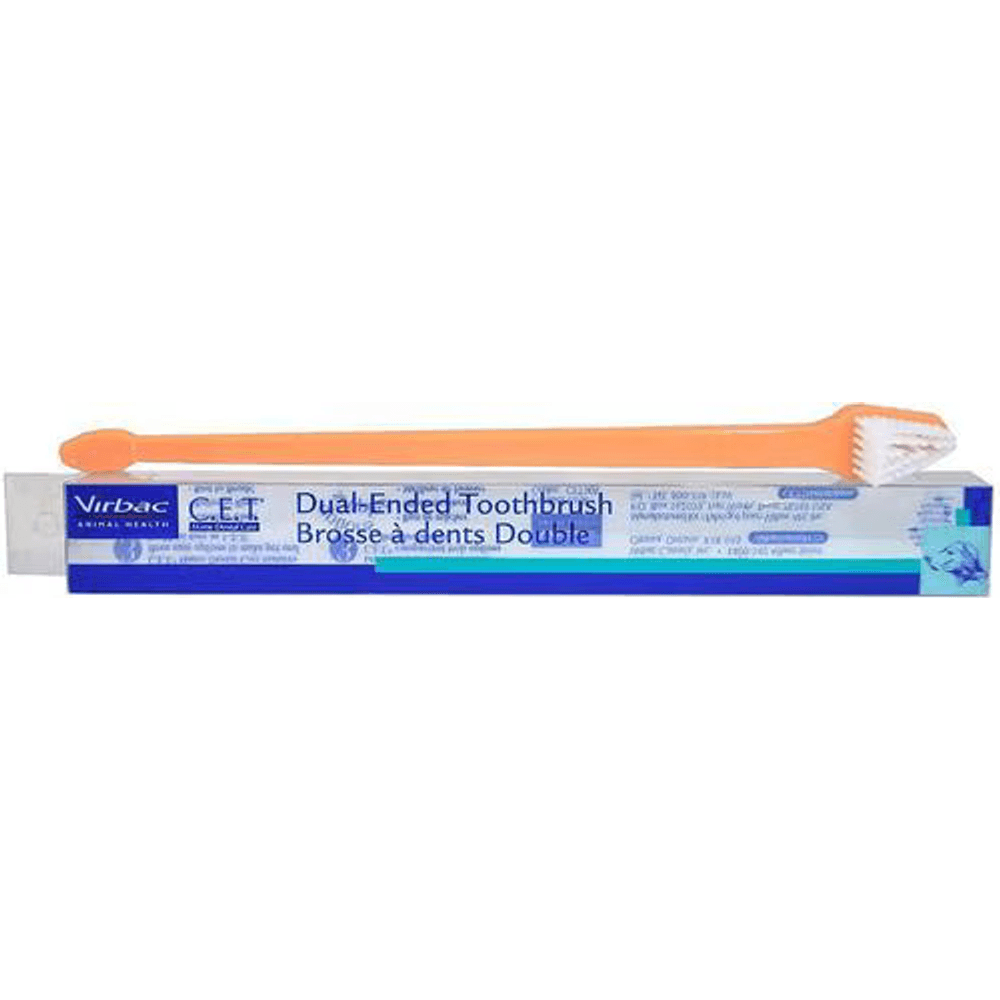
If your cat tolerates brushing at all, a pet-sized brush and enzymatic paste is the single best home step.
Webvet may earn a commission when you click through to Chewy, at no extra cost to you.
The bottom line for cat owners
Bad breath is rarely an emergency, but it is almost always a message. Most of the time that message is dental disease, which is treatable and, once addressed, often leaves cats visibly more comfortable and lively. Sometimes the odor is the body's way of flagging a kidney or metabolic problem that is far better caught early. Either way, the responsible move is the same: keep up gentle home care, learn your cat's normal, and let your veterinarian examine anything that lingers or changes. Your vet can turn a vague bad smell into a clear plan, and that is the surest path back to a fresh, healthy mouth.
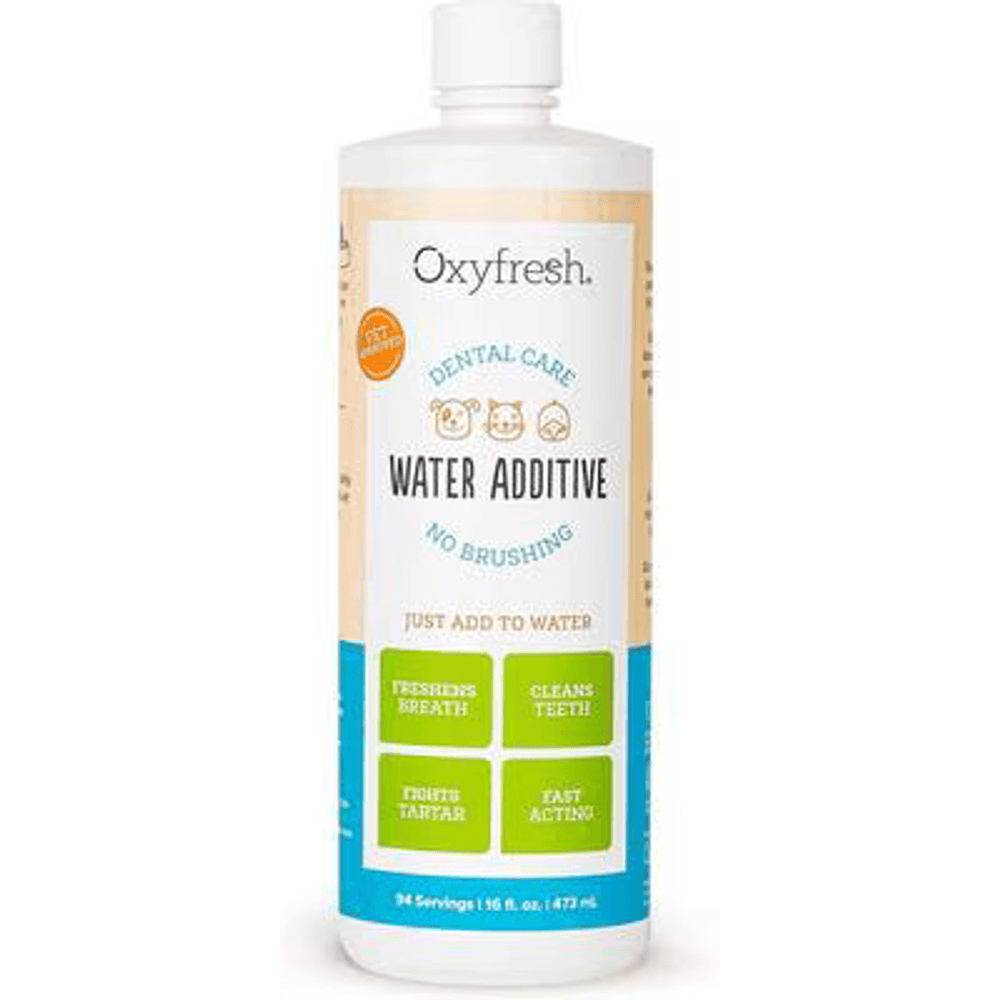
A tasteless water additive, the most realistic daily dental routine for a cat that refuses brushing.
Webvet may earn a commission when you click through to Chewy, at no extra cost to you.
Sources
Reviewed by the Webvet Veterinarian Team
This guide is general information, not a diagnosis, and does not replace an exam by your veterinarian. If your pet is in distress, contact your vet or an emergency clinic right away.