Keeping Dogs Safe: Tips and Tricks for Preventing Dog Collar Accidents
Learn how to train your dog and minimize collar-related issues

BVMS MRCVS
Medically reviewed by Dr. Pippa Elliott, BVMS MRCVS · Last reviewed

This article contains affiliate links. Webvet may earn a commission when you buy through them, at no extra cost to you.
Many people who have dogs believe their sole responsibility is to provide them with enough food and make sure they remain healthy, but there’s more to it than that.
Walks, exercising, socialization and training are fundamental for a dog’s well-being, and collars play a crucial role in many of these activities.
This article from Webvet explores the importance of proper dog collaring, how to prevent dog collar accidents, and much more.
Potential Risks of Bad Collaring
While they serve a critical purpose, especially when it comes to taking dogs for a walk and socializing them, a dog collar may cause several problems if used improperly or if the collar doesn’t fit the animal.
Here are some common risks to be aware of, especially if you have no experience when handling dogs:
- Choking: A collar that does not fit your dog may lead to choking, injuries, or strangulation. Dogs that pull excessively on their leashes, or get excited throughout their walks are particularly susceptible to this risk.
- Incidents While Exploring: While playing and venturing into the outside world, a loose collar is more likely to get caught on branches, fences, or other objects. This may result in injuries like cuts, sprains, or even fractures if your pup is running around and their momentum is abruptly stopped.
- Problems While Socializing: When dogs play with members of their own kind, sometimes they may engage in rough play. If things escalate, or a dog makes a bad move, a collar increases the risks of suffering injuries, more specifically, choking.
Being aware of any signs of discomfort in order to address them as soon as possible is essential for your dog’s physical and mental well-being. Choosing the right collar for your dog ensures the right fit, which can greatly reduce the chances of these issues happening.
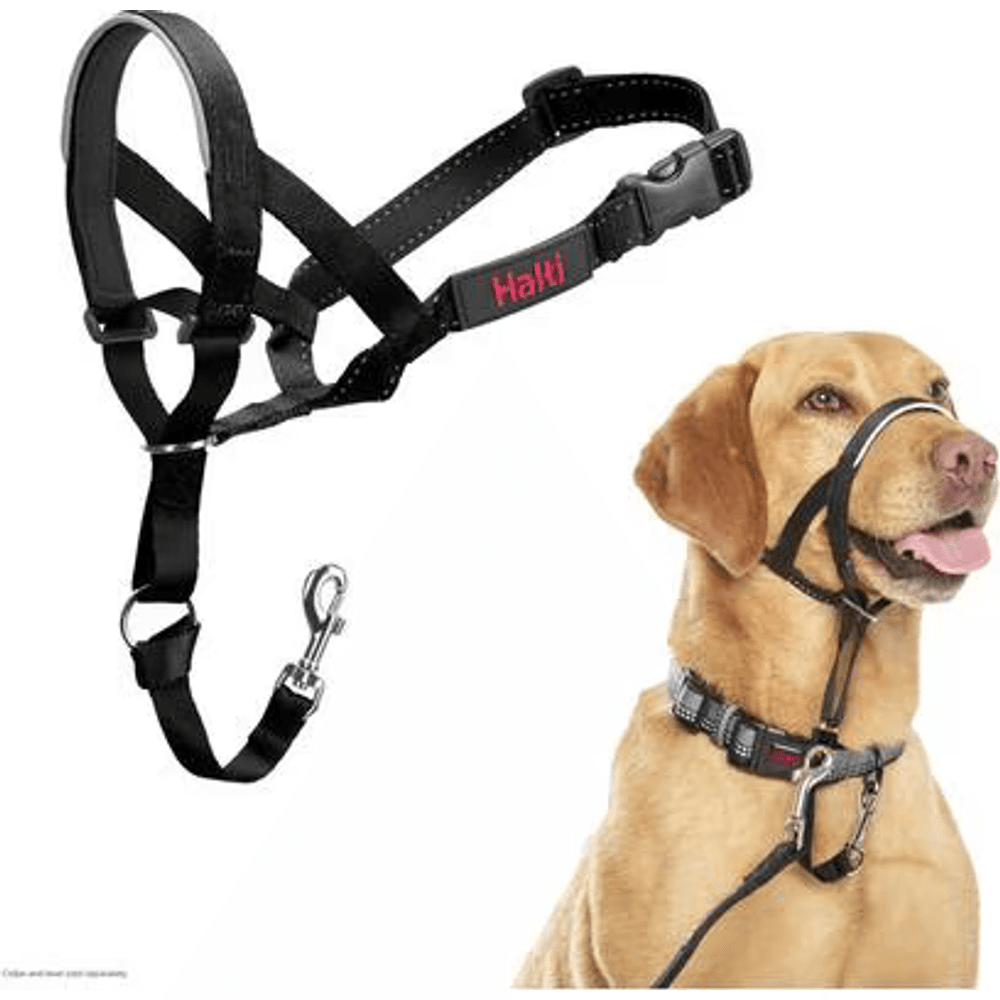
A padded head halter that gently steers a dog from the head, keeping all leash pressure off the neck and windpipe, a useful option for a dog whose cough or collapsing trachea flares when a collar tightens.
Webvet may earn a commission when you click through to Chewy, at no extra cost to you.
Signs of Discomfort
Many, if not all, of the signs of dog collar discomfort have to do with skin irritation. Here’s how to identify signs of discomfort:
- Skin Irritation: If you believe your dog’s collar is not a proper fit, check your dog’s neck for skin irritation or redness.
- Excessive Scratching: Dogs that constantly scratch their collars or the neck area may be suffering from skin irritation.
- Chafing or Collar Movements: Constant movement coming from your dog’s collar is an easy way to determine if the collar is too loose. A collar rubbing against the skin creates friction, which may cause skin irritation, redness, and in really bad cases, infections.
The best way to take care of collar-related problems is to find a proper fit.
Preventing Dog Collar Accidents
When selecting a collar, consider your dog’s size breed and specific needs.
One important thing is to ensure that the collar is not too tight. Ideally, you should be able to comfortably fit two fingers between the collar and your dog’s neck.
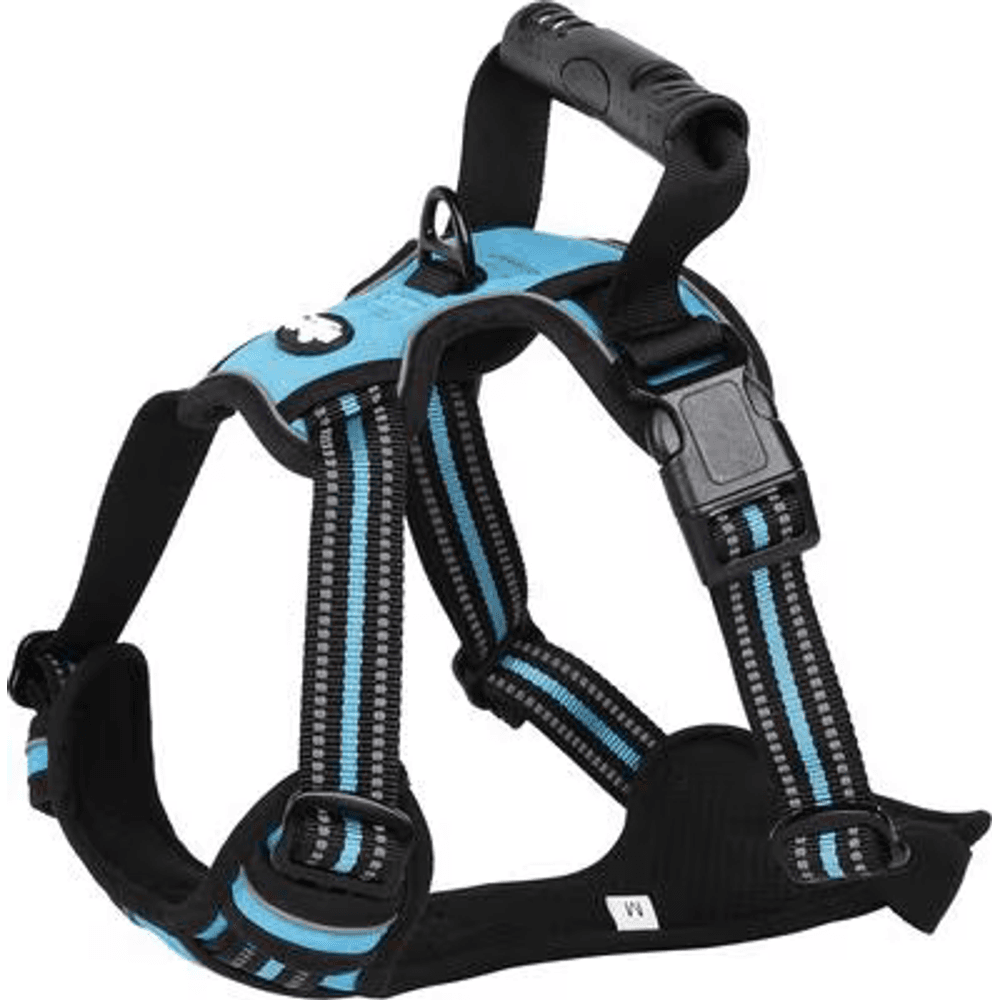
A padded, reflective no-pull harness that spreads leash pressure across the chest instead of the throat, the switch most vets recommend for a dog with a cough, a collapsing trachea, or any airway irritation so the leash never presses on...
Webvet may earn a commission when you click through to Chewy, at no extra cost to you.
We recommend investing in collars made from high-quality materials, as they tend to be more durable and comfortable.
Regularly check the collar for signs of wear and tear and replace it as needed, since the lifespan of a collar depends on too many factors to accurately predict how long it will last.
Compare coverage choices for your pet, then request a quote directly on Lemonade.
- Check a price for your pet
- Review available coverage choices
- See the terms before you decide
Eligibility, waiting periods, limits and exclusions apply.
Webvet may earn a commission when you click through to Lemonade, at no extra cost to you.
Now, there are different types of collars. The most common ones include:
- Flat Collars: Flat collars are the most commonly used dog collars. They consist of a simple band that fastens around the dog’s neck with a buckle or a clip. Although flat collars are perfect for most breeds, they are not the best choice for big breeds, or dogs that tend to pull a lot, as they offer reduced control, straining the dog’s back and neck.
- Martingale Collars: A martingale collar is designed to provide more control. They have a loop that tightens when the dog pulls, preventing the collar from slipping off without choking the furry companions. Martingale collars are particularly useful for dogs with narrow heads, like greyhounds or whippets, as they prevent the dog from slipping out of the collar.
Choosing the right collar and proper fit ensures your dog’s comfort, minimizes the risk of accidents or injuries, and promotes smoother and more enjoyable experiences with your pet.
Importance of Proper Collar Technique
Besides regularly inspecting the collar to make sure it is in good shape, there are some things you can do to enhance your experience, starting with measuring your dog’s neck to ensure a proper fit.
Start by measuring your dog’s neck circumference. By doing this, you guarantee an educated purchase, especially if your dog is of a small or big breed and has a collar size that is harder to find.
Secondly, during a walk, you should be aware of your surroundings. This includes other dogs, people, traffic, and any potential hazard. This helps ensure the safety of both you and your dog.
Avoid unnecessarily pulling or dragging your dog. This helps establish a rhythm and reduces the likelihood of leash tension, strain, and dog collar strangulation.
Collar Training
A proper collar fit for your dog is important, but training your dog to behave and knowing how to act during a walk is just as important.
Webvet may earn a commission when you click through to Chewy, at no extra cost to you.
By training your dog to behave during a walk, and by knowing how to act as you walk your them, you not only make the experience more satisfying for your dog, you also reduce the chances of incidents happening.
The most important things to consider, include:
- Gradual Introductions: Just as humans have to get used to things they find difficult to tackle, dogs also need to become used to the idea of being collared and leashed. The best start is to introduce your dog to their leash and collar at an early age. Engage in collar-wearing sessions, extending their duration with each session. If possible, pair these collar-wearing sessions with enjoyable activities, like playtime, walks, and mealtimes, to create positive associations.
- Positive Reinforcement: Every time your dog behaves while the collar is being put on or during a walk, reward them with a treat. Positive reinforcement helps them develop an optimistic attitude toward specific activities, including wearing a collar, taking a walk, or answering commands after training.
- Commands and Keywords: Words like “sit,” “stop,” “come here,” or “go” can help you control your dog during outdoor activities. Although the difficulty of training your dog depends on their breed and personality, all dogs can be trained to answer commands and keywords, and this helps minimize injuries, incidents, and misbehaviors.
Patience and consistency are key when it comes to collar training. Learning leash-walking skills requires time and a proactive approach. Be patient with your dog and with yourself, and be as consistent as you can with the training.
Alternative to Collars
You can find alternative tools available if you and your pet aren’t comfortable with collars, with harnesses being the most popular option.
Harnesses are designed to distribute the pulling force across the dog’s chest and shoulders instead of their neck. The advantages of a harness include:
- Reduced neck strain
- More control
- Reduced risks of dogs escaping and causing problems with other dogs
A harness offers an enhanced level of control so the owner can deal with situations without struggling too much. For this reason, harnesses are often recommended for dogs that are:
- Hyperactive
- Aggressive
- Reactive to other dogs and humans
Final Thoughts on Preventing Dog Collar Accidents
In conclusion, the safety and comfort of your dog hinge on choosing the right collar or harness, using it correctly, and investing time in training.
Remember, dogs aren’t just our pets, they’re family — and as with any family member, their well-being is paramount, extending far beyond basic needs like food and shelter to include proper collar techniques, regular checkups, and providing a safe, stimulating environment for them to thrive in.
Feature photo by cottonbro studio/Pexels
FAQs
How do I know if my dog’s collar is the right size?
A dog collar should fit comfortably around your dog’s neck. You should be able to fit two fingers between the collar and your dog. If the collar is too loose, it can slip off, and if it’s too tight, it can cause discomfort and breathing difficulties.
What should I do if my dog’s collar is causing irritation or redness?
If you notice signs of irritation or redness on your dog’s neck, immediately remove the collar and give the area time to heal. If the problem is too serious, contact a veterinarian for possible causes and solutions.
Can I leave the collar on all the time?
It’s recommended to remove your dog’s collar when they are unsupervised or at night. By doing so, you reduce the risk of accidents happening when the dog is unsupervised.

Editor
The Webvet Editorial Team is the in-house group of pet-care editors and writers behind Webvet, operated by Smart Pet Collective. The team researches, writes, and maintains Webvet's pet health, behavior, and medication content. Every article follows a defined editorial process: research from reputable veterinary and scientific sources, careful drafting, mandatory review of medical content by a credentialed veterinarian, and dated publication. Health and medication articles are medically reviewed by a licensed veterinary professional before they go live and are kept current over time.
Veterinarian · BVMS MRCVS
Dr. Pippa Elliott, BVMS, MRCVS, is a veterinarian with nearly 30 years of experience in companion animal practice. Dr. Elliott earned her Bachelor of Veterinary Medicine and Surgery from the University of Glasgow. She was also designated a Member of the Royal College of Veterinary Surgeons. Married with 2 grown-up kids, Dr. Elliott has a naughty Puggle named Poggle, 3 cats and a bearded dragon.