My dog ate acorns: what to do
Needs a vetAcorns can upset a dog's gut, obstruct the intestine, or cause more serious illness. Contact your vet promptly with the amount and signs, even if uncertain.
Contact your veterinarian or a pet poison line promptly
Describe the exposure and any signs so they can advise on care. Trouble breathing, collapse, seizures, or severe weakness needs immediate emergency care.


Medically reviewed by Dr. Athena Gaffud, DVM · Last reviewed
What to do right now
- Move your dog away from the acorns and pick up those within reach.
- Estimate the amount eaten, whether any were swallowed whole, and your dog's weight.
- Contact your veterinarian promptly with those details, even if your dog currently looks well.
- Save a sample or photograph, and mention any oak leaves, buds, mold, or decay that may also have been eaten.
What not to do
- Do not assume one or two acorns are a safe amount for every dog.
- Do not treat repeated vomiting, pain, poor appetite, or worsening condition as routine stomach upset. These signs need prompt assessment; do not wait for absent stool.
- Do not let your dog keep grazing under the oak while you watch for signs.
What to tell the vet or poison line
- How many acorns or how much oak leaf or bud material was eaten, and whether any acorns were swallowed whole.
- When it happened and your dog's weight.
- Any vomiting, diarrhea, or change in appetite or energy since then.
- Whether the acorns looked old, wet, or moldy.
- 1Acorns and oak material can cause digestive irritation; a whole acorn can also cause an obstruction.
- 2No reliable safe acorn count is established here. Tell your veterinarian the amount, material, dog's weight, and any signs.
- 3Contact your vet promptly after suspected ingestion. Repeated vomiting, pain, poor appetite, or worsening condition needs prompt examination.
If your dog ate acorns, risk depends on the amount, the dog, and whether any were swallowed whole. Tannins can irritate the digestive tract; whole material can also obstruct it. Serious kidney or liver injury is less common but possible. There is no reliable safe acorn count in the sources used here.
Below: what tannins do, why whole versus chewed matters, what mold and oak leaves add, and the hours-versus-days timeline.
What to do right now if your dog ate acorns
A dog that has started on a pile rarely stops, so the rest come out of reach first. One or two and a dozen lead to different advice. Whole versus chewed matters most: a chewed acorn is a tannin problem, a whole acorn a plumbing problem.
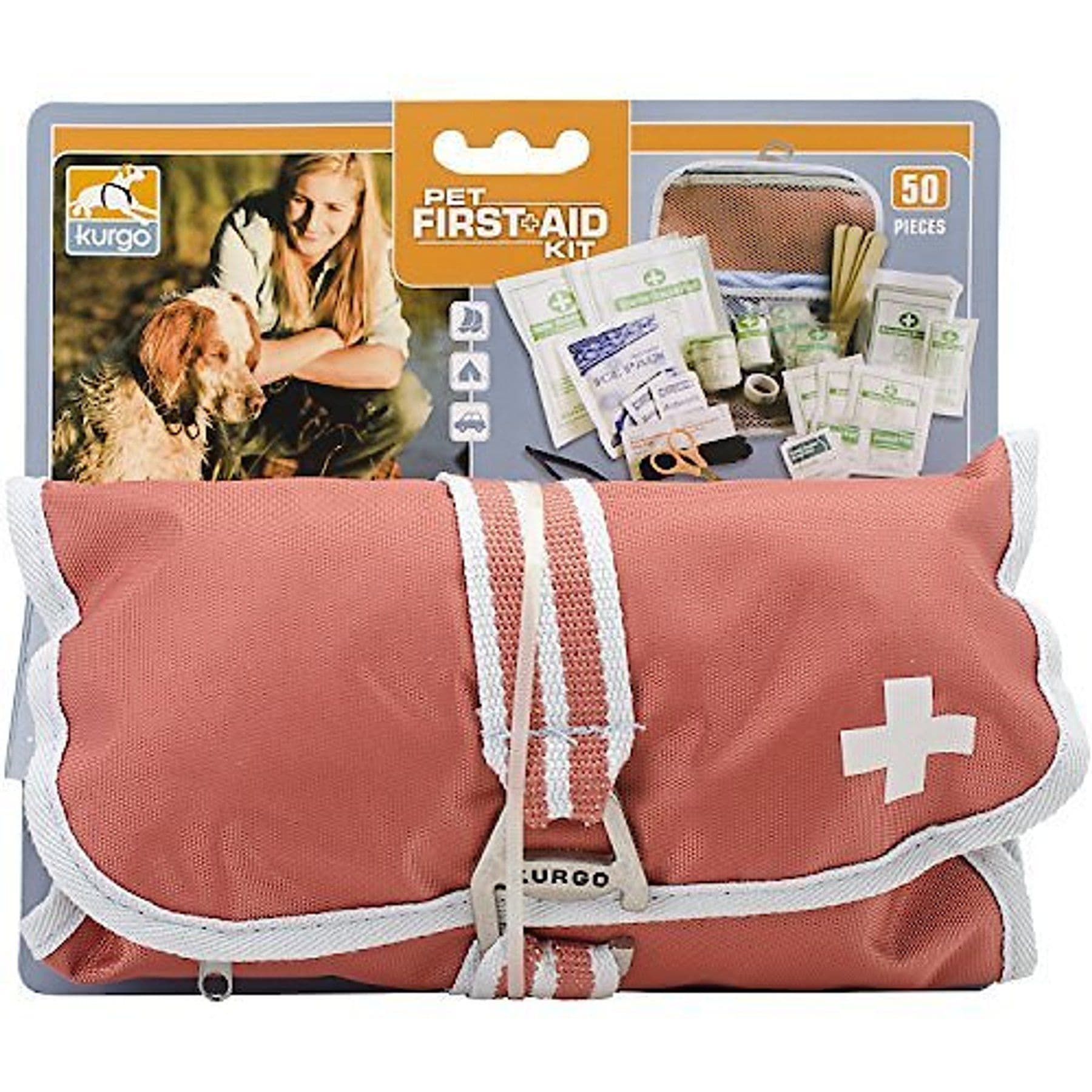
An optional kit for supplies your veterinary team recommends. It does not treat poisoning or a swallowed object; follow the clinic's instructions.
Webvet may earn a commission when you click through to Chewy, at no extra cost to you.

When you call, describe what you saw: how many, whole or chewed, when, your dog's weight, fresh or old acorns, and any vomiting since. A dog first-aid kit with a sample bag by the door gets a sample to the vet without a scramble.
What not to do
- Do not induce vomiting or reach for hydrogen peroxide unless your vet tells you to.
- Do not wait and see with a small dog or whole acorns; an obstruction worsens the longer it sits.
- Do not push bread or oil to move it through; nothing at home shifts a lodged acorn.
- Do not rely on equipment alone to prevent repeat scavenging. A basket muzzle must be selected and fitted for that purpose; some open designs allow food through. Supervise your dog and avoid acorn-covered areas.
- Do not assume one vomit means the acorn is out. Repeated vomiting, abdominal pain, or poor appetite needs prompt examination; those signs do not identify the cause on their own.
Why acorns are dangerous: tannins and whole-acorn obstruction
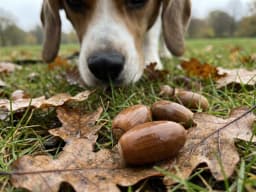
Whole acorns vary in size and shape. Swallowing one intact can create a mechanical concern as well as exposure to tannins. Tell the veterinarian whether your dog crunched the acorn or may have swallowed it whole; do not use the size of the example photo as a safe threshold.
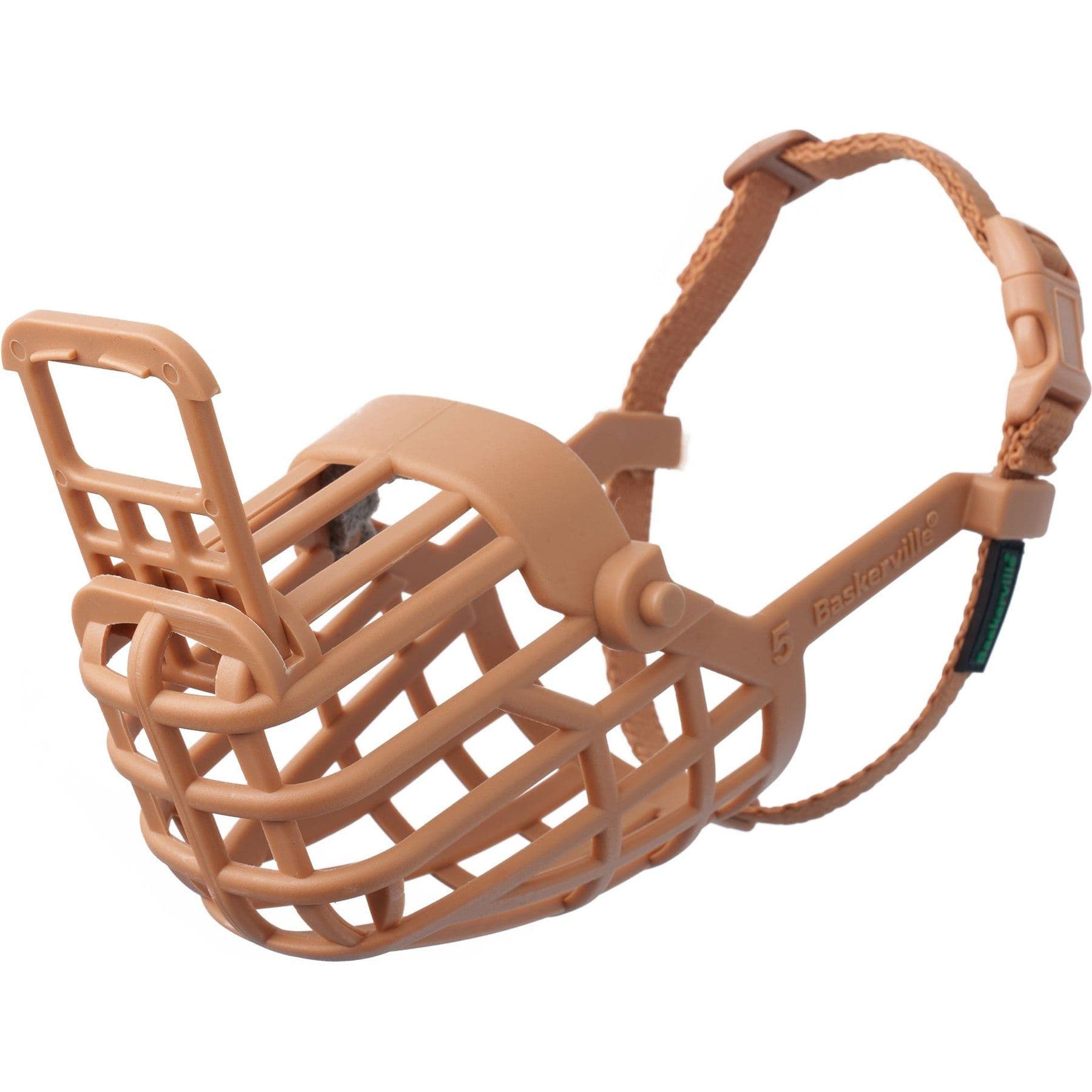
A basket muzzle is an optional preventive aid. Check fit and scavenging protection; some designs allow food through. Supervision remains necessary.
Webvet may earn a commission when you click through to Chewy, at no extra cost to you.
How much is dangerous: risk factors, not doses
How much acorn is toxic to dogs, or how many acorns before a dog gets sick, has no honest number: tannin content varies by oak species and ripeness, and dogs vary in size and reserve. Kidney damage is rare because dogs rarely eat enough, the ASPCA notes, and rare is not never. What raises the risk:
- Dog size: more tannin per pound, and a whole acorn more likely to lodge.
- Pattern: a pile at once, or grazing for days, drives the serious cases.
Optional dog training treats for routine use. Check the label and calories. After suspected ingestion, ask the treating veterinarian before giving food or treats.
Webvet may earn a commission when you click through to Chewy, at no extra cost to you.
- Green versus brown: unripe green acorns carry more tannin.
- Whole versus chewed: blockage risk versus more tannin.
- Puppies, seniors, liver or kidney disease: less reserve.
The triage table puts those together; it does not replace the call.
| What you saw | Information to gather | Possible concern | Do this now | Escalation |
|---|---|---|---|---|
| One acorn, chewed | Approximate amount and dog's size | Digestive irritation; no guaranteed safe count | Contact your vet promptly | Urgent assessment for repeated vomiting or pain |
| Several, some whole | How many were swallowed whole | Foreign-body obstruction as well as irritation | Contact your vet promptly | Do not wait for absent stool |
| A pile, or grazing for days | Amount and repeated access | Larger exposure may cause more serious illness | Contact your vet promptly | Report worsening appetite, energy, thirst, or urination |
| Old, wet, or moldy acorns | Appearance and amount | Decay may add a separate concern | Contact your vet promptly; save a sample | Emergency care for tremors, collapse, or severe illness |
| Caps, leaves, or buds | Which material and how much | Oak material or indigestible pieces | Contact your vet promptly | Report pain, vomiting, or worsening condition |
Symptoms and when they start
What are the symptoms of acorn poisoning, and when do they start? Vomiting, diarrhea, abdominal discomfort, poor appetite, and lethargy can occur. Signs overlap between irritation, obstruction, and other illness, and timing varies. Changes in thirst or urination should also be reported. An owner cannot distinguish these problems from a timetable alone.

Optional equipment or enrichment for your dog. Check suitability, condition, and directions, and supervise use. This product does not treat a hazardous exposure.
Webvet may earn a commission when you click through to Chewy, at no extra cost to you.
A dog seeming brighter the next morning does not establish what caused the illness or confirm that swallowed material has passed. If vomiting repeats, appetite falls, or your dog becomes quieter or painful, seek prompt examination. The symptom checker can help you describe each sign; it cannot rule out an obstruction or organ injury.
Mold on fallen acorns
Mention mold or decay to your veterinarian because it may add a separate concern. ASPCA warns that molds on fallen fruits, seeds, and grains can affect pets. That general warning does not identify a particular mold toxin in an acorn pile. Save a sample if safe, and seek immediate care for tremors, collapse, or severe illness.

Check the walking route throughout the acorn season and after fresh drops. Weather, local oak species, decay, and access vary; a calendar month alone does not establish whether one pile is more dangerous than another.
Oak leaves, buds, and acorn caps
Oak leaves and buds also contain tannins. Tell the vet if those materials may have been eaten, rather than counting time spent in a leaf pile as an ingestion. Acorn caps and other tough pieces may create a physical swallowing concern; describe the material and any missing pieces.
What the vet will do
The visit starts with a hands-on exam: gum color, hydration, and a careful feel of the belly. If the acorns went down recently and the dog is stable, your vet may decide to bring them back up in the clinic. Whole acorns or obstruction signs mean imaging; a large or repeated exposure means bloodwork for kidney and liver values now and again in a few days. Treatment is then supportive or surgical: fluids, stomach protectants, anti-nausea medication, and a bland diet, or surgery for a lodged acorn that will not pass.
Can a dog recover from eating acorns? Yes, but no acorn count predicts the outcome. The outlook depends on the exposure and whether there is digestive irritation, an obstruction, or organ injury. Follow the veterinarian's monitoring and recheck advice rather than assuming apparent improvement proves the risk has passed.
Prevention and safer alternatives: fall walk management and the leave it cue
Why do dogs love to eat acorns? Novelty, crunch, and scent: a fresh drop smells interesting, the shell cracks, and a scavenger treats anything at nose level as fair game. Do dogs know not to eat toxic plants? No; a dog that ate acorns last fall without consequence learned only that acorns are fine.
Route choice reduces access: avoid heavily littered areas when possible. Use a long line or no-pull harness with close supervision, rather than relying on the equipment to stop scavenging. For a repeat scavenger, ask about a properly fitted basket muzzle with suitable scavenging protection that permits panting and drinking.

Rake under the oak after each drop. Then teach the two cues: leave it for the acorn your dog has not reached, and drop it for the one already in the mouth, both built with high-value training treats that pay the dog for turning away. For which tree nuts are toxic to dogs, and the meats that never belong in the bowl, see the foods toxic to dogs hub; Can My Pet Eat That? covers everyday foods.

Frequently Asked Questions
Can dogs eat acorns at all?
Do not offer acorns as food. Risk varies with amount, size, material, and whether pieces were swallowed whole. There is no reliable safe acorn count established here; contact your veterinarian about an ingestion.
My dog ate one acorn and seems fine. Do I still call?
Yes, contact your vet promptly. Describe your dog's size, whether the acorn was chewed or swallowed whole, and any signs. Do not assume a small count or normal appearance guarantees that no problem will develop.
Are green acorns worse than brown ones?
Generally yes; unripe green acorns carry more tannin. Old brown acorns bring a different risk once they mold.
Can acorns cause kidney failure in dogs?
Rarely, but Merck records renal failure and liver injury in dogs after eating acorns. Large or repeated exposures are the cases.
How long does acorn poisoning take to pass?
There is no single recovery time. Digestive irritation, obstruction, and organ injury need different assessment and care. Follow your vet's monitoring plan and seek reassessment for repeated vomiting, pain, poor appetite, or worsening condition.
Sources
- ASPCA: 5 Toxic Seasonal Plants You Don't Want Your Pet To Fall For
Describes tannin-related digestive irritation after acorn exposure and uncommon kidney damage in dogs and cats; separately warns about toxic molds on fallen fruits, seeds, and grains.
- Merck Veterinary Manual: Oak Toxicosis in Animals
Gallotannins target the gastrointestinal tract and kidneys, with liver damage at higher doses, and dogs can develop renal failure and hepatopathy after eating acorns or show signs only from a physical intestinal blockage.
- ASPCA Animal Poison Control: Toxic and Non-Toxic Plants, Oak
Lists gallotannin as the toxic principle in oak and notes that acorns can obstruct the digestive tract; the entry is written for horses, so it supports the mechanism rather than dog-specific dosing.
Reviewed by Dr. Athena Gaffud, DVM
General guidance based on credible veterinary sources; not a diagnosis or a substitute for your veterinarian. If your pet ate something dangerous or is unwell, contact your vet or a pet poison line right away.