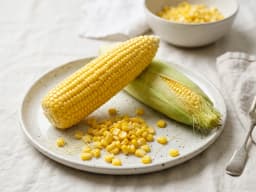
Can dogs eat corn?
SafePlain cooked corn kernels are generally non-toxic to dogs, but the cob can lodge in the gut and prepared foods need label review.


Medically reviewed by Dr. Athena Gaffud, DVM · Last reviewed
Can Dogs Eat Corn?
Plain cooked corn kernels are generally non-toxic to dogs and can be an occasional calorie-counted extra. The cob is a different issue: FDA identifies corn cobs as items that can lodge in a pet's esophagus, stomach, or intestines. Do not let a dog chew or swallow the cob.
- 1Assess corn by its exact form, amount, added ingredients, and the individual dog.
- 2There is no evidence-based fixed-volume or body-weight serving table for corn kernels. If corn fits the dog's diet, use the actual calories in the form served and the total treat allowance. Count corn with every topper, training reward, and table scrap.
- 3Prepare corn plainly and choose a size and texture suited to how this dog eats.
- 4Do not offer the cob; a swallowed piece needs prompt, case-specific veterinary advice.
- 5Call for persistent illness, swallowing trouble, a possible foreign body, or a hazardous co-ingredient.

Treats should stay under 10% of your dog's daily calories. JustFoodForDogs makes the rest of it.
- Recipes developed by veterinary nutritionists
- Whole-food ingredients you can recognise
- Fresh meals delivered to your door
Webvet may earn a commission when you click through to JustFoodForDogs, at no extra cost to you.
Is Corn Safe for Dogs?
A small amount of plain kernels may cause no signs, while unfamiliar or excessive corn may cause nonspecific digestive upset in an individual dog. A cob exposure deserves prompt veterinary assessment because piece size, location, timing, and the dog's anatomy affect the risk. For mixed products containing corn, keep the package and report every ingredient, amount, time, dog's weight, history, and signs.

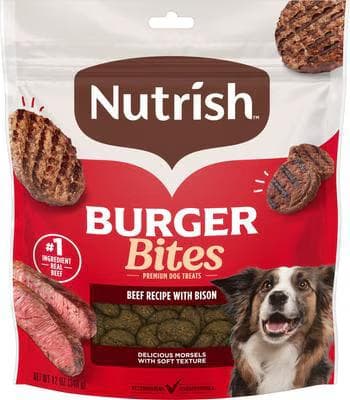
This is an optional dog treat. Review its current label, ingredients, calories, and feeding directions, and count it within the total daily extras.
Webvet may earn a commission when you click through to Chewy, at no extra cost to you.
Corn provides starch, protein, fat, fiber, vitamins, minerals, and energy. Corn used in a complete, properly formulated dog food is not equivalent to feeding leftover kernels, and its presence alone does not make a diet poor quality. An optional corn taste also does not treat constipation or supply a guaranteed skin, coat, or immune benefit. Dogs on elimination or therapeutic diets should receive only approved extras. Properly processed corn can be an ingredient in a complete formulated dog food, but that does not prove a health benefit from table corn. A few kernels are optional food, not a nutrient supplement or energy treatment.
Risks and When to Call
This food adds optional calories and nutrients, but the complete dog food remains responsible for meeting dietary requirements.
There is no evidence-based fixed-volume or body-weight serving table for corn kernels. If corn fits the dog's diet, use the actual calories in the form served and the total treat allowance. Count corn with every topper, training reward, and table scrap. Related guidance: vomiting; bloated belly; lethargy.

Nutritional Context for Corn
Use the calories in corn and the individual dog's remaining treat allowance; body weight alone is not a serving chart.
Remove all kernels from the cob before the dog has access, cook them plainly, and let them cool. Separate plain kernels from the cob, cornmeal, tortillas, canned corn, popcorn, creamed corn, and mixed dishes. The cob is not digestible food and a swallowed piece needs prompt case-specific advice. Popcorn and casseroles may add butter, salt, cheese, onion, garlic, or sweet coatings. Report the exact form and whether any cob or packaging is missing. Do not offer the cob as a chew. Check canned, frozen, or prepared corn labels for sodium, sauces, sweeteners, seasoning, and other ingredients.
| Decision point | Evidence-based guidance |
|---|---|
| Plain food | Assess plain corn by form, amount, tolerance, and the individual dog. |
| Portion | Use the individual calorie allowance, not a fixed piece or spoon table |
| Preparation | Serve it plain and choose a manageable size and texture. |
| Mixed product | Read every ingredient and keep the package or recipe for advice. |
| Medical diet | Ask the treating team before adding it to a therapeutic diet. |
How to Portion Corn
Loose soft kernels are different from a solid cob segment. A kernel may still be awkward for an individual dog that gulps, but the cited evidence does not identify kernels as a common surgical foreign body. Supervise and choose a manageable texture.

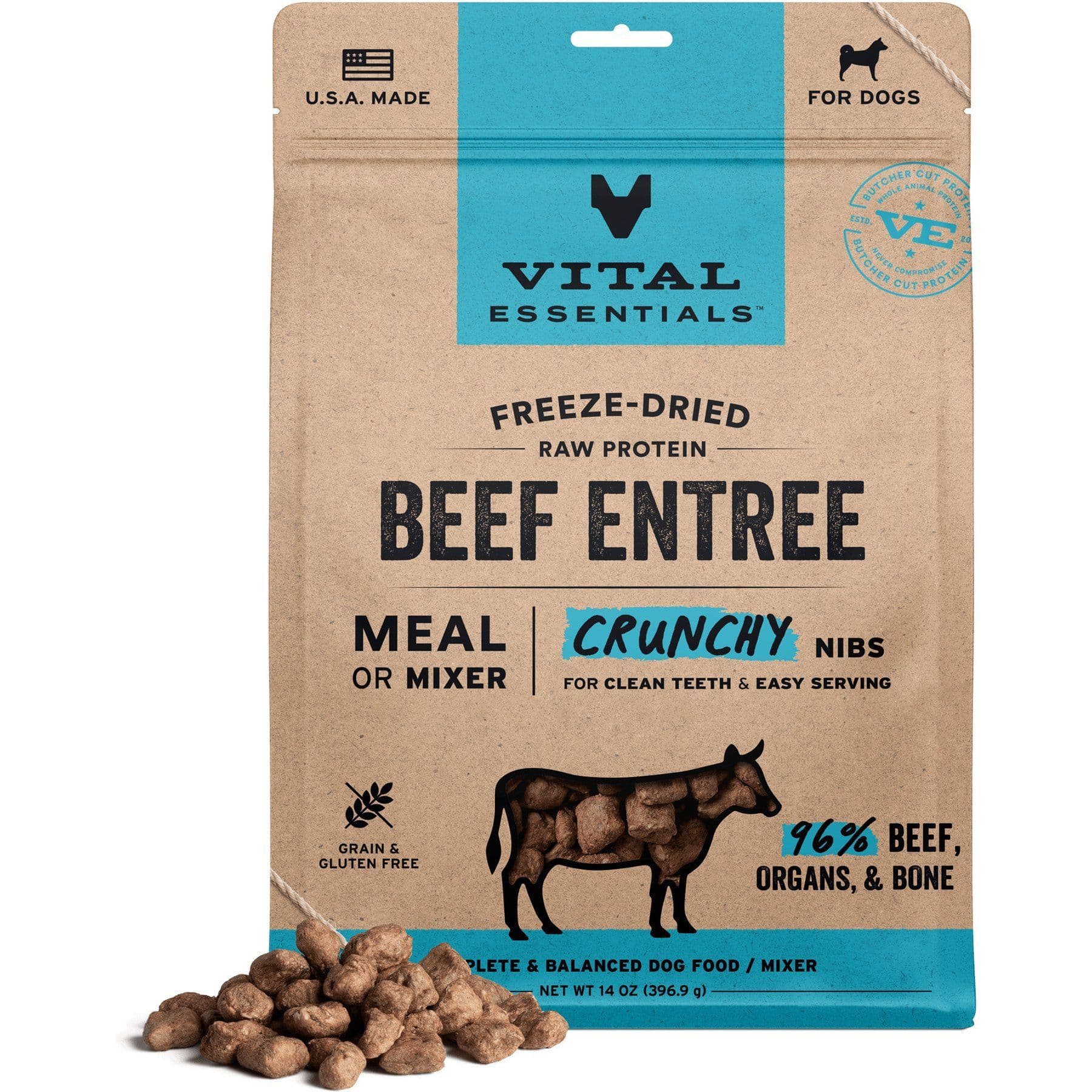
This is an optional dog treat. Review its current label, ingredients, calories, and feeding directions, and count it within the total daily extras.
Webvet may earn a commission when you click through to Chewy, at no extra cost to you.
FDA's foreign-body warning supports taking a swallowed cob seriously, but it does not establish a predictable one- or two-day onset, inevitable blockage, or guaranteed surgery. Call promptly even before signs after a meaningful cob exposure so the veterinarian can advise from the actual case.
| Decision point | Evidence-based guidance |
|---|---|
| Plain food | Assess plain corn by form, amount, tolerance, and the individual dog. |
| Portion | Use the individual calorie allowance, not a fixed piece or spoon table |
| Preparation | Serve it plain and choose a manageable size and texture. |
How to Prepare Corn
Butter, cooking oil, and ordinary salt affect calories, fat, sodium, and tolerance; they are not toxins at every amount. Onion and garlic seasoning are separate dose-dependent hazards. Popcorn also varies by kernel texture, salt, coatings, sweeteners, and other ingredients.
Dogs on weight, diabetes, kidney, heart, gastrointestinal, allergy, or other therapeutic diets should follow the treating team's ingredient and calorie plan. A diagnosis does not make plain corn a universal poison, but an unplanned extra may conflict with the purpose of the diet.
What about popcorn and corn in dog food?
Contact a veterinarian promptly after a swallowed cob or package. Seek urgent care for repeated vomiting, gagging, abdominal pain, a swollen abdomen, appetite loss, inability to keep water down, marked lethargy, or inability to pass stool. Do not induce vomiting unless directed.
Corn on the cob at cookouts creates two separate decisions: the kernels are generally low toxicity when plain, while the cob can become a foreign body. Secure discarded cobs in a closed container because a dog may swallow one after the meal rather than while food is served.

Risks and When to Call
If this food does not fit the plan, choose another veterinarian-approved treat and count it within the same calorie allowance. Related guidance: diarrhea.
After an Unplanned Exposure
Plain corn kernels can be optional dog food, but corn cobs should be kept away and assessed promptly if swallowed. Replace fixed portion and nutrient-benefit claims with individualized calories, recipe review, and case-specific foreign-body guidance.
Choosing Other Treats
The practical decision is individualized: confirm the exact food, use a manageable texture, keep extras within the calorie plan, and watch the actual dog rather than a fixed schedule. Contact a veterinarian for persistent vomiting or diarrhea, marked lethargy, pain, breathing or swallowing trouble, inability to pass stool or urine, neurologic signs, or any ingredient-specific toxicology concern. Related guidance: Peas; Carrots.

This is an optional dog treat. Review its current label, ingredients, calories, and feeding directions, and count it within the total daily extras.
Webvet may earn a commission when you click through to Chewy, at no extra cost to you.
Frequently Asked Questions
Can dogs eat plain corn kernels?
Plain cooked kernels are generally non-toxic when they fit the dog's calorie plan, though an unfamiliar amount may cause gastrointestinal upset.
Why are corn cobs dangerous to dogs?
FDA identifies cobs as items that can lodge in the esophagus, stomach, or intestines. Keep them away and call after ingestion.
Does every swallowed cob require surgery?
No. Outcome depends on the piece, location, timing, dog, and signs, but prompt assessment matters because obstruction can become serious.
Are butter and salt on corn automatically toxic?
No. Their effects depend on dose and patient. Onion or garlic seasoning is a separate toxicology issue.
What signs matter after a cob exposure?
Repeated vomiting, gagging, pain, abdominal distension, appetite loss, lethargy, or inability to pass stool needs urgent assessment.
More safe treats
More vegetables for dogs
Sources
- FDA: Potentially Dangerous Items for Your Pet
Identifies bones and corn cobs as foods that can lodge in the esophagus, stomach, or intestines and supports prompt case-specific veterinary assessment.
- Merck Veterinary Manual: Gastrointestinal Obstruction in Small Animals
Supports patient-specific foreign-body assessment and urgent evaluation when obstruction signs develop.
- Merck Veterinary Manual: Overview of Nutrition in Small Animals
Supports complete and balanced feeding and patient-specific nutrition; it does not establish clinical benefit from a treat portion.
- Merck Veterinary Manual: Garlic and Onion Toxicosis in Animals
Supports dose-dependent oxidative red-cell injury from Allium ingredients and separates that toxicology from ordinary fats, salt, or dairy ingredients.
- Merck Veterinary Manual: Salt Toxicosis in Animals
Supports dose- and hydration-dependent salt toxicosis rather than treating one salted bite as a defined toxic dose.
- WSAVA: Feeding Treats to Your Dog
Supports keeping dog treats within about 10% of daily calories and calculating portions from individual energy needs.
Reviewed by Dr. Athena Gaffud, DVM
General guidance based on credible veterinary sources; not a diagnosis or a substitute for your veterinarian. If your pet ate something toxic or is unwell, contact your vet or a pet poison line right away.