Hypoallergenic Dog Breeds for Allergy and Asthma Sufferers
Are asthma or allergies getting in the way of fulfilling that dream of having a furry companion?

BVMS MRCVS
Medically reviewed by Dr. Pippa Elliott, BVMS MRCVS · Last reviewed

This article contains affiliate links. Webvet may earn a commission when you buy through them, at no extra cost to you.
No dog breed is truly hypoallergenic. Some low-shedding breeds are genuinely easier to live with if you have allergies or asthma, but every dog makes the proteins that set off a reaction.
The trigger is not fur. It is dander, the microscopic skin flakes a dog sheds constantly, plus proteins in saliva and urine that dry onto the coat and travel with it.
The breeds sold as hypoallergenic are the low shedders. Less shedding means less allergen-carrying hair moving through your house. That is a real housekeeping advantage, not a dog that produces less allergen.
The Misconception About Short Fur
The common assumption is that short hair means less shedding and fewer allergens. It is backwards often enough to matter. VCA singles out short-haired dogs such as Labrador Retrievers and Beagles as the hardest on allergy sufferers.

What matters is how much hair a coat releases and how often the dog is groomed, not how long the hair is. Several long-coated breeds hold shed hair until it is brushed out, which is why they are easier to live with.
Do not push that too far, though. Less loose hair is a housekeeping advantage, not a proven drop in what you breathe. Dog allergen is a fine, sticky particle that settles into fabric and stays airborne, which is why cleaning and filtration matter.
What Actually Triggers a Dog Allergy (It Is Not the Hair)
You are not allergic to dog hair. You are allergic to a small group of proteins the dog produces, and hair is only the vehicle that carries them around your home.
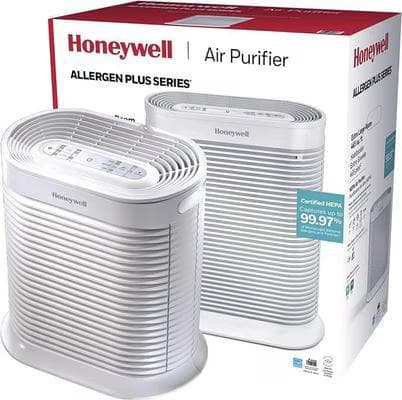
Certified True HEPA air purifier that captures 99.97% of airborne dust, dander, pollen, and smoke, reducing the airborne triggers behind feline asthma and respiratory irritation.
Webvet may earn a commission when you click through to Chewy, at no extra cost to you.
Seven dog allergens have been formally named under the WHO/IUIS allergen nomenclature, Can f 1 through Can f 7. Two account for most human reactions:
- Can f 1, a lipocalin found in saliva and dander. Around half of dog-allergic people carry antibodies to it, and many react to nothing else.
- Can f 5, a prostatic kallikrein, and the reason some people react to one sex of dog but not the other.
They reach you from dander (the microscopic skin flakes every dog sheds), from saliva the dog spreads over its own coat while grooming, and from urine. The coat itself is not the source.
Hair matters because it moves. Shed hair is coated in dried saliva and skin flakes and travels onto sofas, car seats and clothing. A dog that drops less hair spreads that cargo more slowly, which makes a house easier to keep clean. It does not mean the dog makes less allergen.
Male dogs, female dogs and Can f 5
Can f 5 is made in the prostate, so intact male dogs produce far more of it than females. Castration sharply cuts the amount that turns up in a dog's urine and on its coat.
Most allergy sufferers react to Can f 1 as well, so this changes nothing for them. But people sensitised only to Can f 5 are a real subgroup: in controlled provocation testing, children mono-sensitised to Can f 5 reacted to male dog extract while tolerating female dog extract.
If you are in that group, a female dog or a neutered male may work where an intact male does not.
Does the Hypoallergenic Label Hold Up in Research?
Not well. Nobody certifies the label, and the largest study that went looking for a measurable difference found close to the opposite of what buyers expect.
In 2012, Utrecht University researchers published a study in the Journal of Allergy and Clinical Immunology measuring Can f 1 in the hair and coats of 196 dogs from four breeds sold as hypoallergenic: Labradoodle, Poodle, Spanish Water Dog and Airedale Terrier.
They compared those against 160 control dogs, and sampled settled floor dust and airborne dust in the homes as well. The numbers ran the wrong way:
- Hair and coat samples from the hypoallergenic breeds carried significantly higher Can f 1 than the controls, not lower.
- Airborne dust showed no difference between breeds at all.
- Settled floor dust was lower for one group only, the Labradoodles.
The authors concluded there is no evidence for classifying any dog breed as hypoallergenic.
Be precise about what that proves. The study measured allergen concentrations rather than symptoms, and compared households at a single point in time, so it does not show that breed never matters to anyone.
It does show that the mechanism everyone repeats, that a low-shedding coat puts less allergen into the air you breathe, was not there when someone measured the air.
What does vary, and vary a lot, is the individual dog. VCA notes that a person can react badly to one Poodle and live symptom free with a different one, because dogs of the same breed do not all produce the same proteins in the same amounts.
No dog is truly hypoallergenic. When researchers measured Can f 1, the main dog allergen, breeds marketed as hypoallergenic actually carried more of it on their coats, and airborne levels in their homes were no lower. Allergen output varies more between individual dogs than between breeds, so spend real time with the specific dog before you commit.
 $65 · no membership
Have a health question about your dog?
A licensed vet can assess your dog over video and prescribe online when it's appropriate.
 Talk to a vet
- Licensed vets
- All 50 states
- same-day Rx

Webvet may earn a commission if you book.
Top 7 Hypoallergenic Dog Breeds for People With Asthma and Allergies
These seven range from toy lapdogs to a Poodle cross that can reach retriever size. Treat breed as a shortlist, not a solution: plan on steady grooming, weekly bathing and a true HEPA air purifier whichever one you choose.
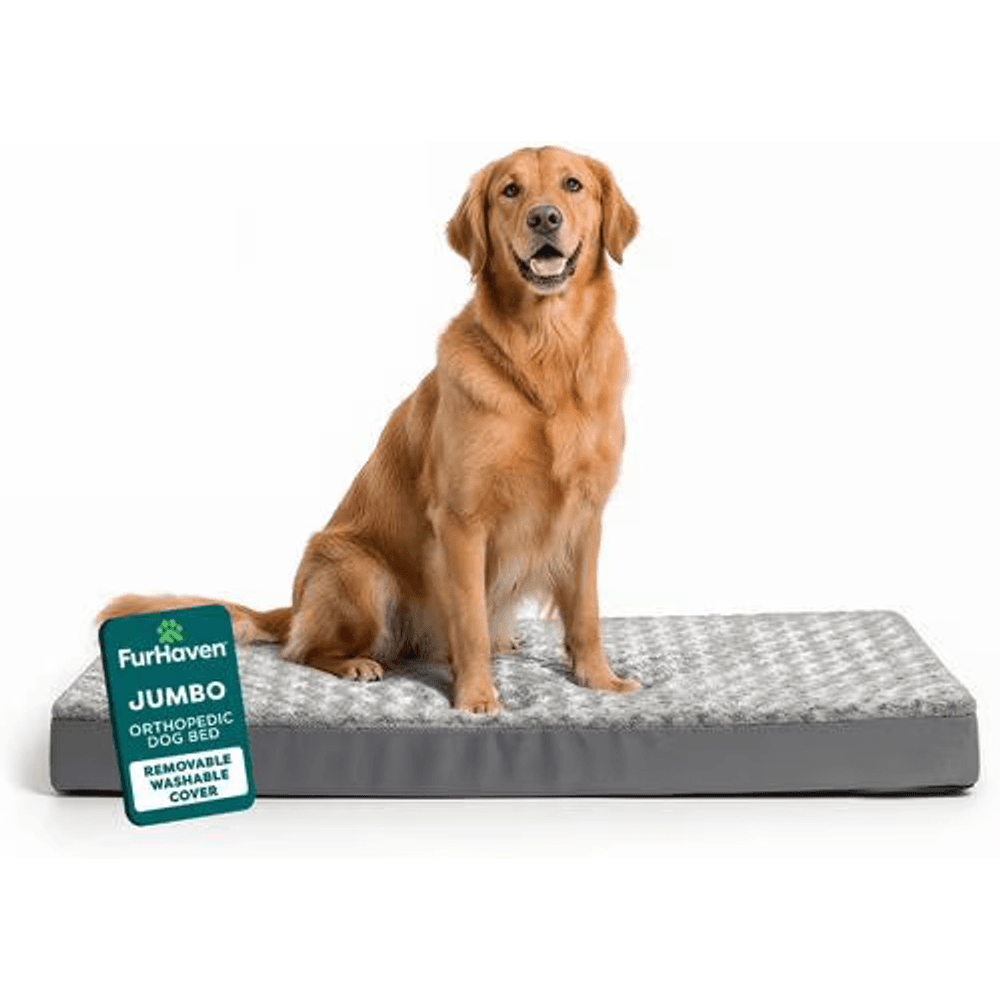
A plush orthopedic foam mattress that cushions aging joints and pressure points, giving a stiff or trembling senior dog warm, supportive rest.
Webvet may earn a commission when you click through to Chewy, at no extra cost to you.

Remember that, even among the hypoallergenic breeds, individual dogs are always quite different, so consider spending some time around the specific dog before making a commitment. Older adopters can also compare handling, energy, grooming, and support needs in our guide to the best dogs for seniors.
Yorkshire Terriers
Affectionately called Yorkies, Yorkshire Terriers are beloved for their feisty nature and pint-sized portability. With their silky, low-shedding coat, Yorkies provide an excellent option for those with asthma or allergies.

The Yorkie coat is fine, silky and single, with no undercoat, so it behaves more like human hair: it grows continuously and drops very little. Keep it long or take it down to a puppy cut, whichever you will actually maintain.
Yorkies live on laps and sofas, so the fabric they sit on becomes the reservoir. AAFA advises washable covers laundered weekly in hot water, which for a dog this small can be as simple as a washable throw over their usual spot.
Miniature Poodles
Do not let the Miniature Poodle's curls fool you. The coat is a single dense layer with no undercoat, and it grows continuously instead of cycling through heavy seasonal sheds.

Because the coat keeps growing, shed hair stays in the curls until it is combed or clipped out. At 10 to 15 pounds the Miniature sits between the Toy and the Standard, and it is among the most trainable dogs here.
Schnoodles (Schnauzer-Poodle mix)
A bright and lively mix of a Schnauzer and a Poodle, Schnoodles inherit the Poodle’s hypoallergenic traits. They have a wavy or curly coat, falling more into the category of “low-shedding.” Schnoodles are typically cheerful and energetic.

Alert and attentive, they do require mental stimulation, so be prepared to engage regularly with your Schnoodle.
Grooming matches a Poodle's: a professional trim on a regular cycle, plus brushing at home so the wavy coat does not mat. A dense coat holds dander and dried saliva close to the skin, so wipe-downs between baths keep the coat surface clean.
Shih Tzus
The Shih Tzu's long coat looks like the wrong choice, but this is a low-shedding breed. The coat grows continuously and holds shed hair rather than dropping it, so less of it ends up on your floors and furniture.

Their friendly temperament makes them an excellent choice for homes with young children. Given their size and activity level, they are also quite apartment-friendly.
One caveat the breed lists skip: the Shih Tzu is double coated, and a coat that holds hair also mats. Daily combing to the skin and a scheduled professional trim are the price of the low shedding.
Bichon Frise
An irresistible ball of fluff, the Bichon Frise, with its dense curly fur, is one of the best-known hypoallergenic breeds. One might mistake their fluffy coat for excessive hair, but this breed is actually low shedding.

Under the powder-puff outline is a soft undercoat with a coarser, curlier outer coat. Bichons are affectionate, sturdy and good with children, and the breed sits on the AKC's own hypoallergenic list.
Consistent grooming is not negotiable: without it the coat mats down to the skin. Expect a professional groom roughly every four to eight weeks, and budget for daily exercise, because Bichons are livelier than the fluffy look suggests.
Maltese
The Maltese carries a long, silky single coat with no undercoat, which is why the breed sheds so little. Shed hair stays in that coat until it is combed out, so daily combing is what makes the low shedding real.

At under 7 pounds this is one of the smallest dogs on the list, which also makes it one of the easiest to bathe weekly, the measure both AAFA and VCA put on their lists.
If long locks aren’t your thing, fret not! A short haircut, or “puppy cut,” works well to reduce effort and time on grooming while keeping the allergens in check.
Poodle Mix: Labradoodle/Goldendoodle
Labradoodles and Goldendoodles cross a Labrador or a Golden Retriever with a Poodle, and they are the most requested dogs on this list. They are also the least predictable, and it is worth knowing why before you pay a deposit.

Coat type is a lottery in a crossbreed. Puppies in one litter can inherit a tight wool coat, a loose fleece coat, or a flat hair coat that sheds like a retriever. If a breeder guarantees you a hypoallergenic dog, walk away.
Hypoallergenic Dog Breeds at a Glance
Weights below are AKC breed-standard figures for the purebreds. The two crosses have no breed standard, so their ranges depend entirely on the parents.
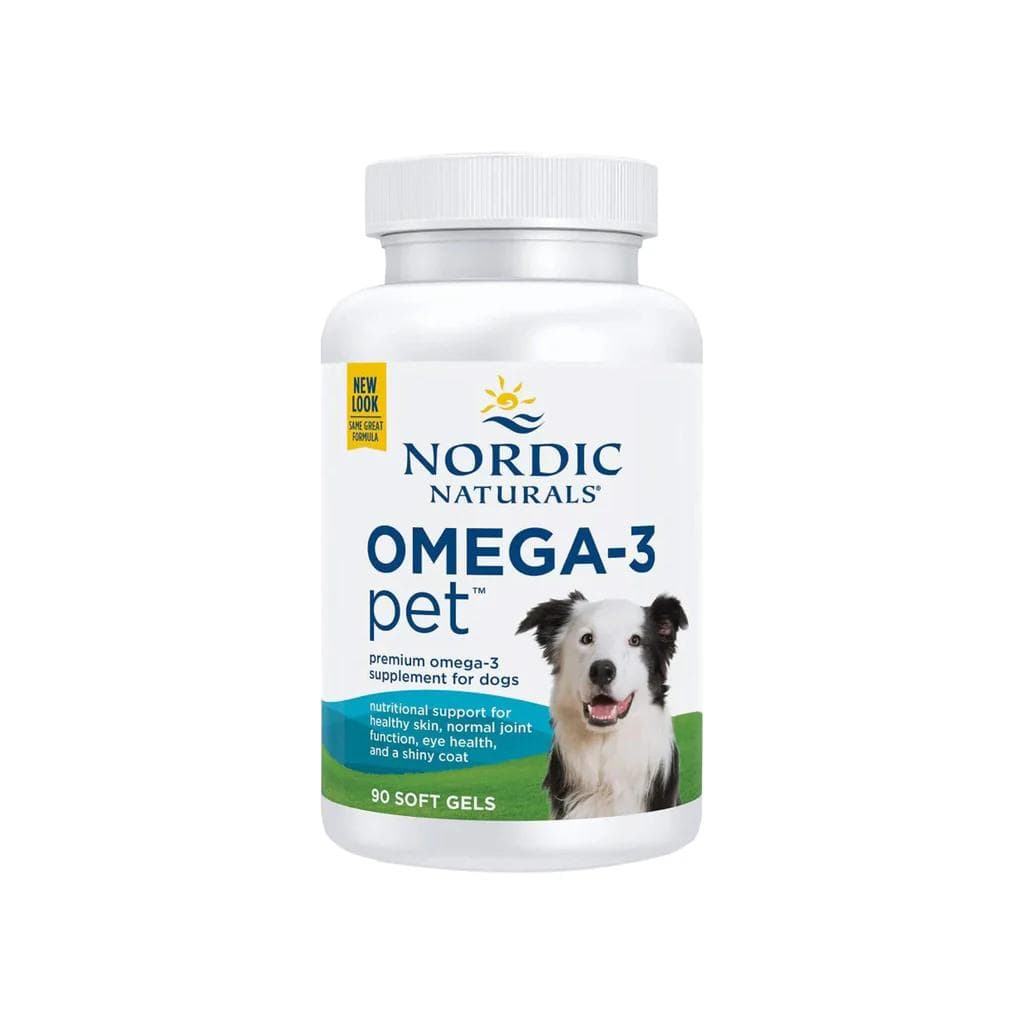
Third-party-tested omega-3 softgels (EPA and DHA) that support skin, coat, and joint health in dogs. Fish oil is one of the first things many vets suggest for a dull, dry, or flaky coat.
Webvet may earn a commission when you click through to Chewy, at no extra cost to you.
| Breed | Typical adult weight | Coat type | Shedding | Typical professional grooming | Best fit for |
|---|---|---|---|---|---|
| Yorkshire Terrier | Up to 7 lb | Fine, silky single coat, no undercoat | Very low | Every 4 to 6 weeks | Apartments and first-time small-dog owners |
| Miniature Poodle | 10 to 15 lb | Dense curly single coat, no undercoat | Very low | Every 4 to 6 weeks | Active homes that want a highly trainable dog |
| Schnoodle | About 6 to 75 lb, depending on the parents | Wavy to curly, varies within a litter | Low, but not guaranteed | Every 6 to 8 weeks | Owners who can meet the individual dog first |
| Shih Tzu | 9 to 16 lb | Long, dense double coat | Low | Every 4 to 6 weeks | Calm, indoor, low-exercise households |
| Bichon Frise | 12 to 18 lb | Soft undercoat under a coarser, curlier outer coat | Very low | Every 4 to 6 weeks | Families who want a cheerful, sturdy small dog |
| Maltese | Under 7 lb | Long, silky single coat, no undercoat | Very low | Every 4 to 6 weeks | Quiet homes prepared to comb daily |
| Labradoodle or Goldendoodle | About 15 to 90 lb, depending on the Poodle parent | Fleece, wool or hair, varies within a litter | Low to moderate, a genuine coat lottery | Every 6 to 8 weeks | Owners who check the individual dog's coat first |
The trade this table exposes is the one most breed lists skip: the coats that shed least usually need the most work.
A coat that holds shed hair will mat if nobody brushes it out, and a coat that grows continuously has to be cut. AKC guidance for Poodle owners is a professional groom roughly every four to eight weeks.
Medium and Large Hypoallergenic Dog Breeds
Every breed above is a lapdog. If you want a dog you can hike with, the low-shedding options above lap size are real, and most sit on the AKC's own hypoallergenic list. All weights are AKC figures.
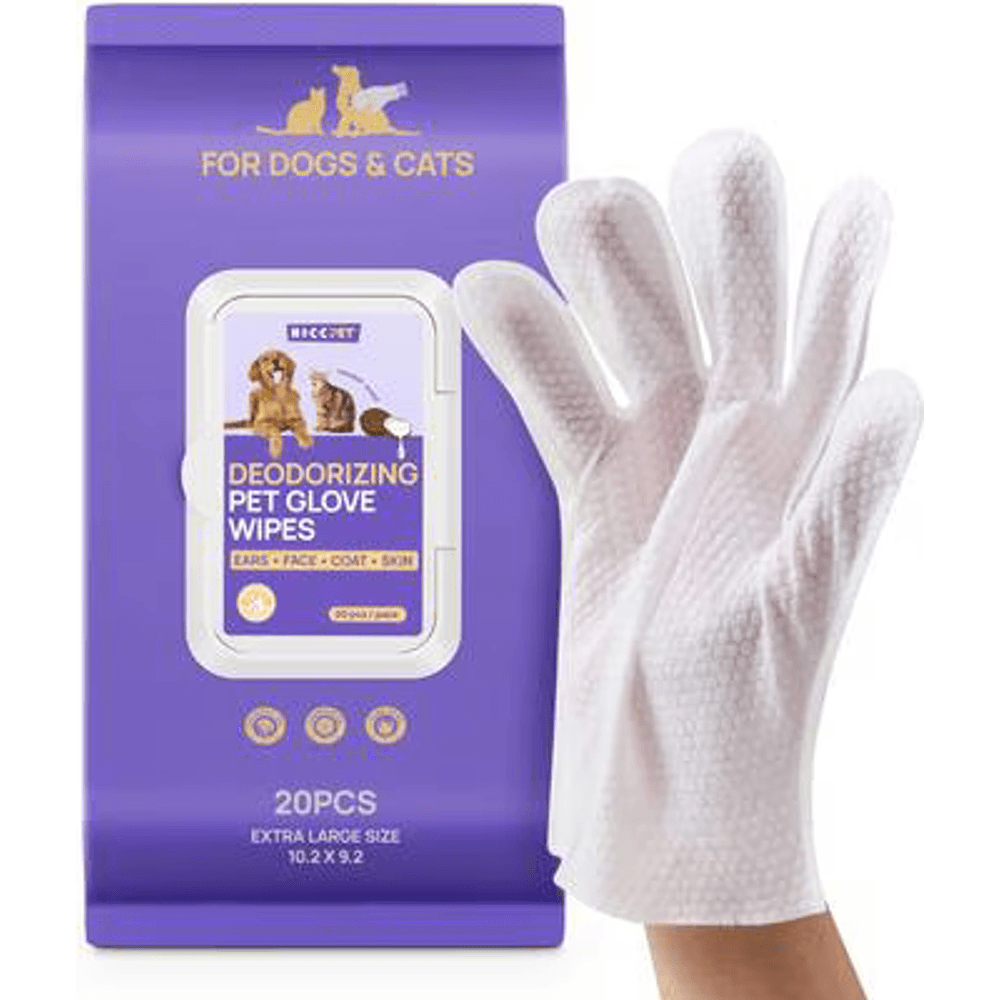
Wearable glove wipes that let you freshen and wipe down a dog's or cat's coat and skin without a full bath, while a fabric layer stays between your hand and the pet.
Webvet may earn a commission when you click through to Chewy, at no extra cost to you.
- Standard Poodle, 40 to 70 lb. The benchmark. A dense curly single coat that has to be clipped, on a Non-Sporting Group dog with a water retriever's brain, so it needs a job as much as a walk.
- Portuguese Water Dog, 35 to 60 lb. Curly or wavy, tightly built, bred to work in cold water. Expect real stamina.
- Soft Coated Wheaten Terrier, 30 to 40 lb. A single silky wavy coat with no undercoat, and the steadiest terrier temperament here.
- Standard Schnauzer, 30 to 50 lb, and Giant Schnauzer, 75 to 95 lb for males. A harsh wiry jacket, hand stripped or clipped. The Giant is a serious working dog and a poor first dog.
- Irish Water Spaniel, 45 to 68 lb. The tallest of the AKC spaniels, in tight liver-coloured curls.
- Kerry Blue Terrier, 33 to 40 lb. A soft wavy blue coat with no undercoat, clipped out rather than shed out.
- Lagotto Romagnolo, 24 to 35 lb. Italy's truffle dog: woolly curls, medium build, less drive than the water breeds.
- Barbet, 35 to 65 lb. A French water dog under a dense, curly, slightly oily coat. Easygoing for its size.
- Spanish Water Dog, 31 to 49 lb. The coat cords naturally, is never brushed out, and is shorn down once or twice a year.
- Afghan Hound, 50 to 60 lb. A long fine single coat with no undercoat, and one of the heaviest grooming loads here.
One caveat nobody has measured, so treat it as arithmetic rather than evidence: a 70 lb dog carries far more skin than a 7 lb dog and produces far more saliva. Same coat behaviour, more of everything, and a much bigger job to bathe weekly.
Dog Breeds That Are Hardest on Allergies
VCA singles out short-haired dogs such as Labrador Retrievers and Beagles as the hardest on allergy sufferers. Short coats shed constantly rather than seasonally, the stiff hair works into carpet and upholstery, and these dogs are rarely groomed on a schedule because they do not look like they need it.
Two groups are worth thinking twice about:
- Heavy year-round shedders with dense double coats. German Shepherds, Labrador Retrievers, Golden Retrievers, Siberian Huskies, Alaskan Malamutes, Pugs and Pembroke Welsh Corgis move a lot of hair through a house.
- Heavy droolers. St. Bernards, Bulldogs, Mastiffs and Newfoundlands spread more saliva onto their coats, your furniture and you, and saliva is a primary source of Can f 1.
None of this makes them bad dogs, and plenty of allergic people live happily with a Labrador. It does mean these breeds will ask the most of your cleaning routine.
Best Dogs for People With Asthma
No breed is safe for asthma, and any list that says otherwise is selling something. Dog allergen is a recognised asthma trigger, and the reaction differs in kind from hay fever: instead of a runny nose you can get airway narrowing, wheeze and cough.
AAFA notes that an asthma episode can begin within 15 to 30 minutes of inhaling allergens. That changes the order of operations, and it puts breed last rather than first.
- Get tested before you shop. An allergist can confirm whether you are actually sensitised to dog, using skin testing or specific IgE blood testing.
- Get a written asthma action plan. Your doctor should set out your controller medication, your rescue medication and what to do if symptoms escalate, before a dog is in the house.
- Trial the individual dog, repeatedly. Symptoms build with cumulative exposure, so one afternoon proves very little.
- Set the house up first. Bedroom off limits, hard flooring where you can manage it, filtration running before the dog arrives.
- Agree a fallback. Ask the breeder or rescue in advance what happens if it does not work out. A reputable one will take the dog back.
If your asthma is not well controlled right now, the honest answer is that a dog is a decision to postpone rather than optimise.
How to Cut Dog Allergen in Your Home
This is the part that actually moves your symptoms, and it is the part the top-ranking breed grids leave out. AAFA's recommendations for a household living with a pet allergy:
- Keep the dog out of bedrooms and close the doors. You spend a third of your life in there.
- Keep the dog off fabric furniture, or cover it with something washable.
- Choose hard flooring over carpet. Where carpet stays, use low pile and steam clean it regularly.
- Wash blankets, covers and dog bedding weekly in hot water.
- Vacuum carpet and upholstery weekly with a HEPA-filter vacuum.
- Run a HEPA air cleaner for at least four hours a day.
- Damp dust hard surfaces and skirting boards, and use washable curtains.
- Bathe the dog weekly. VCA notes weekly baths reduce the allergen-related protein on the coat and cut airborne allergen.
- Have someone without the allergy brush the dog, outdoors.
- Wash your hands and face and change clothes after handling the dog.
Two honest caveats. None of the primary sources puts a percentage on any of these, so be sceptical of any page that does. And they reduce exposure rather than removing it, so they work best stacked together.
Choosing the Right Dog When You Have Allergies
Allergies and asthma do not rule out a dog. They rule out choosing one on a breed name alone. A low-shedding breed narrows the field to coats that are easier to keep clean; everything after that is the individual dog and how you run your home.

So work in that order. Shortlist a few breeds that suit your space, get tested so you know what you react to, spend real time with the specific dog, and set the house up before the dog arrives.
Feature image: Istock
Frequently Asked Questions
Which dog is the most hypoallergenic dog?
There is no single most hypoallergenic dog, because no breed is allergen free. Poodles in all three sizes are the most consistently recommended, and the usual explanation is that a continuously growing curly coat holds shed hair and dander until it is brushed or clipped out. That explanation has not held up in measurement: in the 2012 Utrecht study, Poodle and Labradoodle hair tested higher for Can f 1 than control breeds, and airborne levels were no different. The most hypoallergenic dog is the specific dog you personally test well around.
What dog breed is worst for allergies?
Heavy year-round shedders with dense double coats, such as German Shepherds, Labrador Retrievers, Golden Retrievers and Siberian Huskies, move the most allergen-carrying hair through a home. Heavy droolers such as St. Bernards and Bulldogs spread more saliva, a primary source of Can f 1. VCA also singles out short-haired dogs like Labradors and Beagles as the hardest on allergy sufferers, because short coats shed constantly.
What is the calmest dog that doesn't shed?
Among low-shedding breeds, the lowest-energy options are the Coton de Tulear, Bolognese, Maltese and Shih Tzu, all developed as indoor companions rather than working dogs. The Bichon Frise often lands on calm lists, but the AKC describes the breed as playful, curious and peppy, so plan for a livelier dog than the fluffy coat suggests. Above lap size, the Soft Coated Wheaten Terrier is steadier than its terrier label implies, while the Standard Poodle's water-retriever history means it still needs real daily work.
What is a low maintenance hypoallergenic dog?
This is the trade most lists skip. The coats that shed least usually need the most work, because trapped hair mats and the coat has to be clipped every few weeks. The genuinely lower-effort options are the hairless breeds, such as the Chinese Crested, Xoloitzcuintli and American Hairless Terrier, but they swap coat care for skin care, including sun protection, moisturising and regular bathing. Low maintenance is a trade here, not a win.
Are hypoallergenic dogs safe for someone with asthma?
No breed is safe for asthma, and dog allergen is a recognised asthma trigger. AAFA notes that an asthma episode can begin within 15 to 30 minutes of inhaling allergens. If you have asthma, get tested by an allergist and get a written asthma action plan from your doctor before a dog comes home, then trial time with that specific dog before you commit.
Do male and female dogs produce different amounts of allergen?
Sometimes, yes. Can f 5 is a prostatic kallikrein produced by intact male dogs, and castration sharply cuts the amount found on the coat and in the urine. People sensitised only to Can f 5 often tolerate female dogs and neutered males, and in provocation testing children mono-sensitised to Can f 5 reacted to male dog extract while tolerating female extract. Component-resolved blood testing at an allergist is the only way to know whether you are in that group.
$65 · no membershipHave a health question about your dog?
A licensed vet can assess your dog over video and prescribe online when it's appropriate.
Talk to a vet- Licensed vets
- All 50 states
- same-day Rx
Webvet may earn a commission if you book.
Veterinarian · BVMS MRCVS
Dr. Pippa Elliott, BVMS, MRCVS, is a veterinarian with nearly 30 years of experience in companion animal practice. Dr. Elliott earned her Bachelor of Veterinary Medicine and Surgery from the University of Glasgow. She was also designated a Member of the Royal College of Veterinary Surgeons. Married with 2 grown-up kids, Dr. Elliott has a naughty Puggle named Poggle, 3 cats and a bearded dragon.


