A Detailed Guide on Teaching Your Dog the “Play Dead” Trick
Master the art of teaching your dog the engaging “play dead” trick with this comprehensive guide, including essential commands, steps, tricks, and tips


BVMS MRCVS

This article contains affiliate links. Webvet may earn a commission when you buy through them, at no extra cost to you.
Who can resist the adorable spectacle of a dog performing tricks? Dogs are delightful entertainers when equipped with an arsenal of engaging tricks.
One of these crowd-pleasers is the “play dead” trick, often referred to as “shoot the dog dead.” This trick might sound dramatic, but it’s a harmless display of your dog’s obedience and ability to follow commands.
Teaching this trick is a rewarding experience, reinforcing the bond between you and your canine friend. However, it’s crucial to remember that a good grasp of basic obedience training lays the foundation for such advanced tricks.
Understanding Your Dog’s Learning Process
Understanding your dog’s learning process is critical for successful training. This helps build empathy, patience, and effective communication methods.
Dogs learn through a process called “associative learning” and thrive on positive reinforcement [1].
Association
“Association” refers to how dogs link specific behaviors with certain outcomes. For example, if your dog associates sitting with getting a treat, they will be more likely to sit in the future.

Soft chicken-flavor training rewards in a larger bag for frequent practice. Break rewards into appropriate pieces for your dog.
Webvet may earn a commission when you click through to Chewy, at no extra cost to you.
It’s this simple association between a behavior and a consequence that forms the basis of most dog training. Remember, this association needs to be formed quickly, ideally within seconds, for your dog to understand and learn effectively.
Positive Reinforcement
Positive reinforcement builds on the association formed in your dog’s mind. It’s about rewarding your dog for exhibiting a desired behavior, incentivizing them to repeat it.
The reward can take various forms, such as treats, verbal praises, or a pat on the head. Varying these rewards can make the training process more exciting for your dog.
Consistency and Patience
As with any form of learning, consistency and patience are crucial for dog training. Be consistent with your commands, cues, and rewards. This consistency helps your dog better understand what’s expected of them.
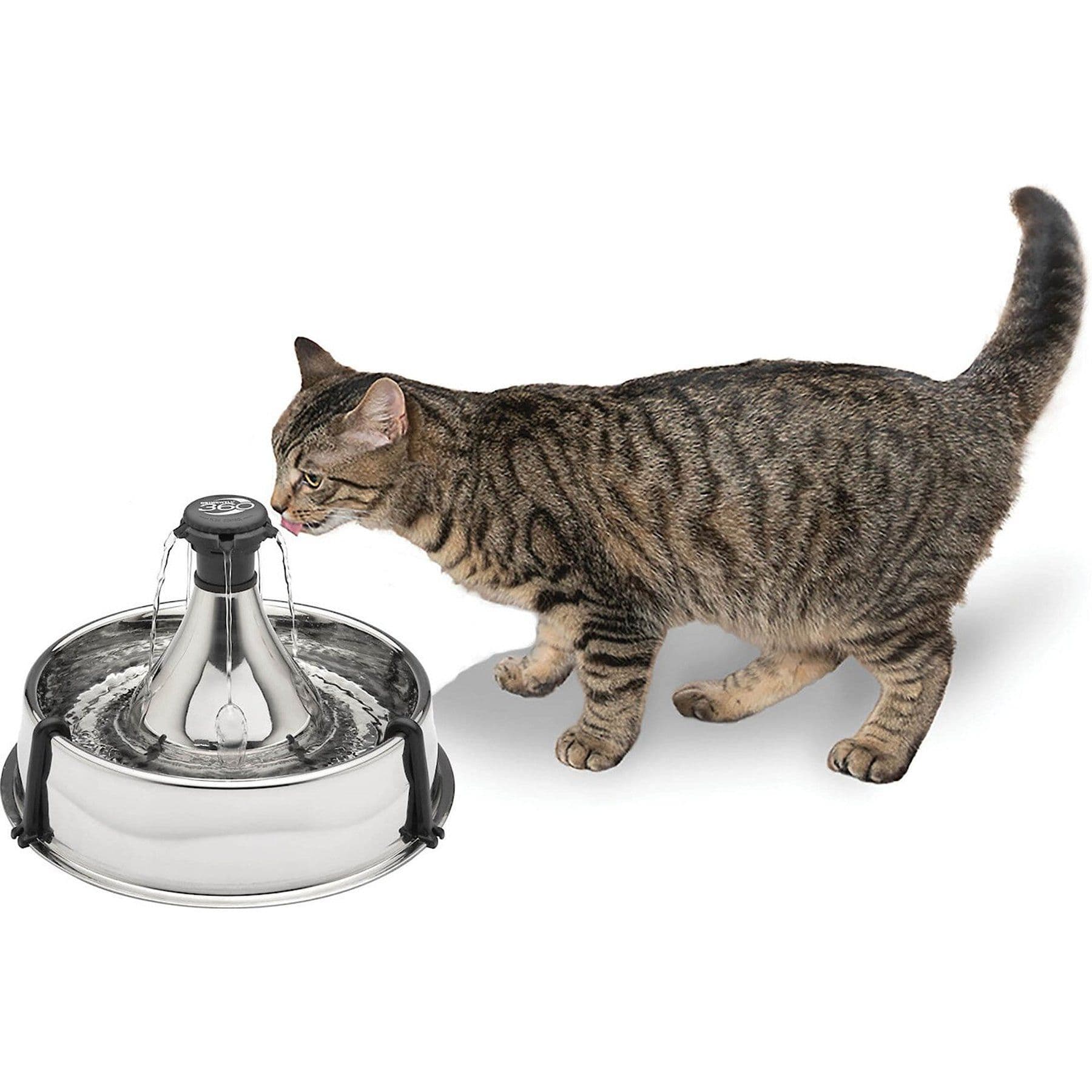
Webvet may earn a commission when you click through to Chewy, at no extra cost to you.
Also, remember that each dog learns at their own pace. Some might grasp new tricks quickly, while others will take longer. Show patience and understanding during this process.
Required Obedience Commands
Before progressing to complex tricks like “play dead,” your dog must master a few basic commands [2]:
- Down Command: The “down” command instructs your dog to lie down immediately, regardless of what they were doing. This command is not only essential for the “play dead” trick but also for ensuring your dog’s overall obedience and control. Practice this command in various settings so your dog can respond reliably even in different environments with varying distractions.
- Stay Command: The “stay” command instructs your dog to maintain their current position until you give them another command. It’s a vital command for your dog’s safety and discipline. Mastering this command allows your dog to handle situations where movement could lead to danger or misbehavior.
Breaking Down the “Play Dead” Trick
Teaching your dog to “play dead” becomes much easier when you understand the trick’s components and how they come together to create the complete trick:
- Start Position: The trick usually begins with your dog in a sitting or lying down position. Choose a comfortable and familiar spot for your dog to start learning this trick. Over time, you can vary the starting positions to challenge and reinforce their learning.
- Action: This is where your dog performs the main part of the trick — rolling onto their side or back, mimicking a “dead” position. This may be a strange and uncomfortable position for your dog initially, so encourage them with lots of positive reinforcement.
- End Position: After rolling onto their side, your dog should stay in the “dead” position until you give the next command. This requirement emphasizes the importance of the “stay” command. Practice this position and extend the duration gradually to help your dog master this part of the trick.
Teaching the Side Roll
The side roll is the centerpiece of the “play dead” trick. Here’s how to develop this skill in your dog [3]:
- Begin by putting your dog in the “down” position. This starting position should be comfortable for your dog, minimizing any resistance or unease they might feel.
- Next, gently roll your dog onto their side while giving the “stay” command. Be gentle and patient during this process. It’s a new behavior for your dog, and they might need your support in maintaining the position initially.
- At first, you might need to hold your dog in the side position for a few seconds until they understand the requirement. Ensure your touch is comforting, not restrictive, to avoid creating a negative association with the trick.
- Once your dog stays in the side position, reward them with a treat and shower them with praises. This act strengthens the positive association with the side roll.
- Repetition is key in mastering this position. Practice this several times a day in short, enjoyable sessions. How much you practice is more important than how long the sessions are.
Adding a Verbal Cue
A verbal cue is a specific word or sound that signals your dog to perform the trick. The choice of the cue is entirely up to you.
Some people prefer sounds like “Bang, “Pow,” or “Boom,” mimicking a shooting action. Others might prefer phrases like, “Play dead!”
Whatever you choose, the vital aspect is consistency. Your dog will learn to respond specifically to this sound, so stick with your choice throughout the training.
Once your dog has mastered the side roll, start integrating the verbal cue. Initially, you can give the verbal cue as you help them into the side roll position. With repeated association, your dog will begin to understand that this sound means they should play dead.
Adding a Visual Cue
Visual cues are additional signals that can enhance your dog’s understanding and performance of the trick. A common visual cue for the “play dead” trick is a hand gesture mimicking a gun.
You can experiment with different gestures and find what works best for you and your dog.
As with the verbal cue, introduce the visual cue in conjunction with the action. For example, make the gun gesture with your hand while saying, “Bang!” while guiding your dog into the side roll position.
Always follow the cue and action with a reward to reinforce the positive association.
Mastering the “Play Dead” Trick
With consistent practice, your dog should be able to perform the “play dead” trick on command within a couple of weeks. Here are a few pointers to ensure success:
- Practice Regularly: Regular practice is more important than long training sessions. It helps reinforce the trick in your dog’s memory and keeps the learning process active.
- Keep Training Sessions Short and Fun: Long and strenuous training sessions can lead to fatigue and loss of interest. Keep the sessions short, typically around 15 minutes, and maintain a positive, high-energy atmosphere.
- End Training Sessions on a Positive Note: Always end your training sessions with a successful action, even if it’s a simple one. This practice leaves a positive final impression in your dog’s memory, making them more enthusiastic about future training sessions.
Teaching the “Play Dead” Trick From a Standing Position
Once your dog has mastered the trick from a lying down position, it’s time to up the ante.
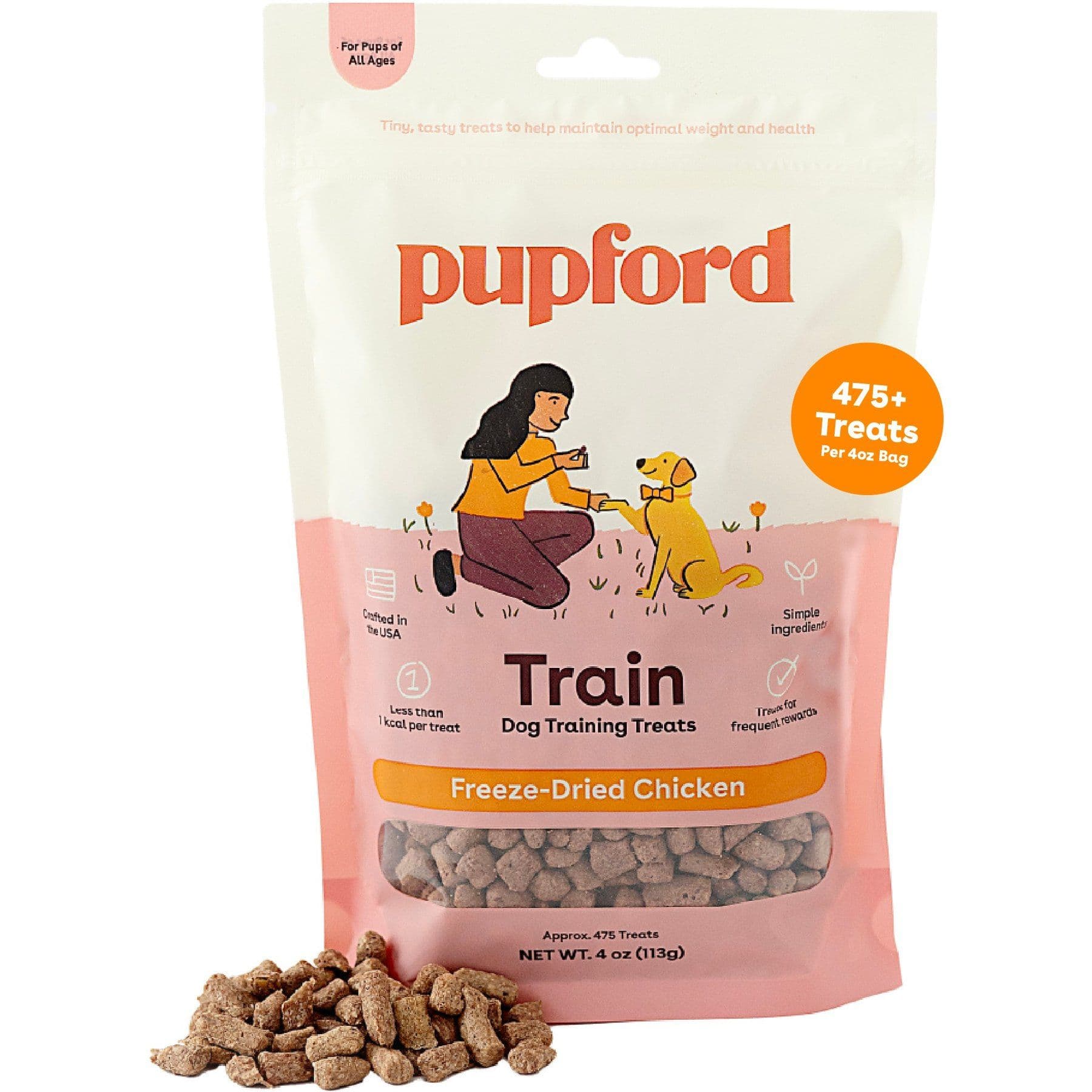
Freeze-dried chicken training rewards with a compact format for rewarding individual repetitions. Check the label for ingredients and feeding directions.
Webvet may earn a commission when you click through to Chewy, at no extra cost to you.
Try teaching your dog to play dead from a standing position. This variation requires your dog to understand and obey the “stand stay” command.
The steps are similar to the initial teaching process. Begin with the “stand stay” command, then use your chosen verbal and visual cues to instruct your dog to play dead.
It might take a little more time for your dog to master this variation, so be patient and continue to provide plenty of positive reinforcement.
Ensuring Successful Training Sessions
A successful training session relies on a few key factors [4]:
- Positive Environment: Create a calm and comfortable environment for training. Ensure your dog feels safe and relaxed to minimize stress and maximize learning. Keep distractions to a minimum, especially when introducing a new trick.
- Rewards and Praise: Consistent rewards and praise motivate your dog and reinforce their learning. Remember to give a reward as soon as your dog successfully performs the trick to form a strong association.
- Avoid Overtraining: Overtraining can cause your dog to lose interest and may even lead to physical exhaustion. Keep training sessions short, enjoyable, and balanced with plenty of rest and playtime in between.
By adhering to these guidelines, you can effectively train your dog to “play dead,” enhancing their obedience skills and mental stimulation while providing a fun way for both of you to bond!
Wrapping Up the “Play Dead” Training Journey
Teaching your dog the “play dead” trick is a rewarding process, creating fun moments and strengthening the relationship between you and your dog.
Remember that patience and consistency are key, and above all, make sure both you and your dog enjoy the process.
As with any form of training, it’s about the journey, not just the destination. Your pet will not only impress others with their new trick but will also enjoy the mental stimulation and the extra time spent with you. Good luck and happy training!
Would you like to delve deeper into the world of pets, their training, and their care? Click the link below for a wealth of information on a wide range of animals.
Compare coverage choices for your pet, then request a quote directly on Lemonade.
- Check a price for your pet
- Review available coverage choices
- See the terms before you decide
Eligibility, waiting periods, limits and exclusions apply.
Webvet may earn a commission when you click through to Lemonade, at no extra cost to you.
Callout Box:
🐾 Key Points To Remember in Teaching the “Play Dead” Trick to Your Dog 🐾
- Dogs learn through a process called “associative learning” and thrive on positive reinforcement.
- Prerequisite obedience commands, such as “down” and “stay”, lay the foundation for this advanced trick.
- Teaching the “play dead” trick involves various steps, including the side roll, adding verbal and visual cues, and mastering the trick.
- Consistent, short, fun training sessions are more effective than long, strenuous ones.
- Patience, understanding, and positivity are crucial in your dog’s successful learning journey.
- And above all, training should be a fun bonding experience for you and your pet!
FAQs
How Long Does It Typically Take To Teach a Dog the “Play Dead” Trick?
The time it takes for a dog to learn to “play dead” varies depending on their learning pace, consistency of training, and prior obedience training. On average, with regular practice, your dog may learn this trick within a few weeks.
What Can I Do if My Dog Isn’t Interested in Learning This Trick?
If your dog seems disinterested in learning, try mixing up your rewards or training during a time when your dog is more receptive, such as before meals when they are more motivated by treats. If your dog continues to show disinterest, it’s best not to force it. Not every trick is suitable for every dog.
My Dog Gets Up Immediately After Playing Dead. What Can I Do?
If your dog ends the trick too soon and gets up, this is where the “stay” command becomes crucial. Ensure your dog has mastered the “stay” command. You may need to revisit training for this command before proceeding with the “play dead” trick.
References/External Links:
- [1] Training Unleashed
- [2] American Kennel Club
- [3] Daily Paws
- [4] The Spruce Pets
- Feature photo: Istockphoto

Wendy Toth is an entrepreneurial writer, editor, and mom of two humans, two dogs and one cat. She’s currently Content Director here at PetFul. For the last 15 years she has held positions at Parents Magazine, NBC, PetSmart, and GreatPetCare, where she was co-founder. Her writing has appeared in many national outlets including Pet Lab Co., Retail Me Not, Ask Men, Wild Society Nutrition, and The New York Times. Because she loves her work so much, she’s obsessed with helping others find career fulfillment, and covers it regularly at PowerSuiting.
Veterinarian · BVMS MRCVS
Dr. Pippa Elliott, BVMS, MRCVS, is a veterinarian with nearly 30 years of experience in companion animal practice. Dr. Elliott earned her Bachelor of Veterinary Medicine and Surgery from the University of Glasgow. She was also designated a Member of the Royal College of Veterinary Surgeons. Married with 2 grown-up kids, Dr. Elliott has a naughty Puggle named Poggle, 3 cats and a bearded dragon.


