
Can cats eat plums?
Not recommendedRipe plum flesh is not a recognized feline toxin. Call a veterinarian promptly for a swallowed pit; chewed seed or plant material adds a cyanide concern.


Medically reviewed by Dr. Athena Gaffud, DVM · Last reviewed
Can Cats Eat Plums?
Ripe plum flesh is not a recognized feline toxin, but it is an optional, incomplete extra. Plum seeds, stems, and leaves contain cyanogenic compounds, while an intact pit creates a separate object-specific choking or foreign-body concern. Keep whole plums inaccessible and obtain prompt advice after a swallowed or chewed pit.
- 1A small amount of ripe plum flesh is not a recognized feline toxin.
- 2An intact swallowed pit is primarily a possible choking or foreign-body concern.
- 3Cyanide is released when cyanogenic seed or plant material is chewed, ground, or otherwise compromised.
- 4Cyanide toxicosis and gastrointestinal obstruction are distinct mechanisms and should not be combined.
- 5Contact a veterinarian promptly after a swallowed or chewed pit for case-specific guidance.

Treats should stay under 10% of your cat's daily calories. Smalls makes the rest, built around the meat an obligate carnivore actually needs.
- Human-grade ingredients, protein first
- Built for obligate carnivores
- Fresh meals delivered to your door
Webvet may earn a commission when you click through to Smalls, at no extra cost to you.
Are Plums Safe for Cats?
The honest answer is that plums sit in an awkward middle ground, which is exactly why they are best avoided. The ripe, juicy flesh on its own is not classified as toxic, so a cat who licks a sliver of pitted plum is not usually in danger. The problem is that the parts of the plum most likely to end up in a curious cat, the pit, the stem, and the leaves, are the parts that carry real risk. Because you cannot hand your cat a safe half of a plum without also managing the dangerous half, the food is more trouble than it is worth.


This is an optional cat treat. Review its current label, ingredients, calories, and feeding directions, and count it within the total daily extras.
Webvet may earn a commission when you click through to Chewy, at no extra cost to you.
Cats have species-specific nutrient requirements that should be met by complete feline food. Plum flesh is an optional supplemental food, and its vitamin or fiber content does not establish a clinical benefit from a household taste. Sweet-taste perception does not determine whether an ingredient can be digested or whether an individual cat will investigate it.
Why Plums Are a Poor Fit for a Cat's Diet
Nutrition marketing loves to point out that plums contain vitamins A, C, and K, potassium, fiber, and antioxidants. For a person, those are genuine perks. For a cat, they are almost meaningless. A healthy cat makes its own vitamin C, draws vitamin A from animal sources it can actually use, and meets its fiber needs through a balanced commercial diet. Loading a cat up with fruit does not fill a gap, because there is no gap to fill. Instead it adds sugar that a carnivore's digestive system is not designed to process well.
That extra sugar has a downside. Even without any toxic parts, a chunk of plum flesh can leave a cat with an upset stomach, gas, or diarrhea, especially in a pet who is not used to fruit. Cats are small, often around eight to ten pounds, so a portion that looks trivial to us represents a much larger share of their daily intake. Over time, sugary human snacks also crowd out the protein a cat truly needs and can nudge an indoor cat toward unwanted weight gain. None of this makes a single lick an emergency, but it does explain why a plum earns no place in a smart feeding routine.
The Real Dangers: Pit, Stem, and Leaves
The most serious hazard in a plum is chemical. The pit, stem, and leaves all contain cyanogenic compounds such as amygdalin, which the body can convert into cyanide. Cyanide interferes with cellular oxygen use, but risk depends on release from compromised cyanogenic material and the amount; small body size alone is not a dose calculation. Signs of cyanide poisoning can include difficulty breathing, bright red or brick-colored gums, dilated pupils, drooling, weakness, and collapse. These symptoms can come on quickly, which is why any chewing on a pit, stem, or leaf is a genuine emergency, not something to watch and wait on.

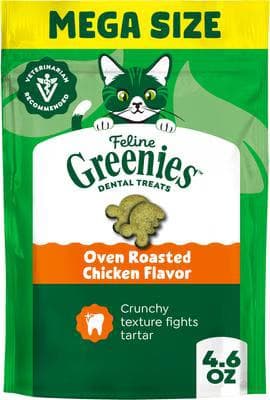
This is a dental cat treat. Follow the current label and ask your veterinarian how it fits alongside tooth brushing and professional dental care.
Webvet may earn a commission when you click through to Chewy, at no extra cost to you.
The second hazard is physical. A plum stone is hard, round, and roughly the size of a cat's throat, which makes it a real choking risk if a playful cat bats it around and then tries to swallow it. Even if it goes down, a pit is far too large to pass comfortably through a cat's narrow digestive tract and can lodge in the intestines, creating a blockage that often requires surgery to remove. Wilting plum leaves and stems from a garden tree are also worth knowing about, because the concentration of the toxic compounds can actually rise as the plant material wilts, so fallen fruit and prunings deserve the same caution as the fruit itself.
| Plum exposure | Primary assessment |
|---|---|
| Ripe flesh | Not a recognized toxin; assess amount and tolerance |
| Intact swallowed pit | Possible choking or foreign body; assess object, patient, and location |
| Chewed or cracked seed | Possible cyanogenic exposure plus physical hazard |
| Stems or leaves | Cyanogenic plant exposure; amount and condition matter |
| Processed product | Check pits, calories, sweeteners, and other ingredients |
What About Just the Plum Flesh?
People often ask whether a small piece of pit-free, ripe plum flesh is acceptable, since that part is not toxic. Technically a tiny lick will not poison a healthy cat, and there is no need to panic if your cat stole a crumb. That said, the flesh is not needed and is not something to offer on purpose. The moment you introduce whole plums into your cat's orbit, you also introduce the pit, the stem, and the sticky sweet smell that makes a cat investigate further. The safest habit is simply to keep plums, plum trees, and fruit bowls out of reach rather than trying to portion out a safe nibble.
How Much Plum Is Dangerous for a Cat?
There is no neat safe number, because the danger depends on which part of the plum a cat gets and how big the cat is. A cat that licks a small amount of ripe flesh is usually fine and simply needs watching for a mild stomach upset. A chewed seed or plant exposure and an intact swallowed pit require different assessments. Contact a veterinarian promptly with the cat's weight, whether the pit was chewed, object size, timing, and symptoms rather than assuming simultaneous cyanide poisoning and obstruction. When in doubt, assume the worst part was involved and call for advice rather than trying to guess whether the dose was low enough to ignore.

What to Do If Your Cat Eats Plum
Start by figuring out what your cat actually got. If it was only a small piece of ripe, pitted flesh, keep an eye out for vomiting, diarrhea, or a lack of appetite over the next day and call your vet if anything seems off. If your cat chewed on or swallowed a pit, stem, or leaves, contact your veterinarian or a poison line straight away rather than waiting for symptoms to appear. Watch closely for the warning signs of cyanide poisoning, difficulty breathing, bright red gums, dilated pupils, drooling, weakness, or collapse, as well as signs of a blockage such as repeated vomiting, straining, or a hard, painful belly. Bring any packaging or a sense of how much was eaten so your vet can act quickly.
Better Treats for Cats Than Plums
Because cats are meat eaters at heart, the best treats look like prey, not produce. A few small pieces of plain cooked chicken or turkey with no salt, oil, or seasoning is a favorite that actually fits a cat's nutrition. A little plain cooked egg or a small flake of plain cooked fish works well too, and a lick of plain meat-based baby food with no onion or garlic can be a gentle option for a picky or senior cat. If you would rather keep things simple, a proper commercial cat treat is formulated for exactly this purpose. If you still want to offer a bit of fruit as an occasional novelty, a couple of blueberries or a small cube of seedless watermelon are much safer than plums because they carry no toxic pit or stone. Whatever you choose, keep treats to no more than a tiny fraction of the day's food so your cat's real diet stays in charge.

This is an optional cat treat. Review its current label, ingredients, calories, and feeding directions, and count it within the total daily extras.
Webvet may earn a commission when you click through to Chewy, at no extra cost to you.
Ultimately, plums are a food where the kind thing and the safe thing are the same: keep them for yourself. Your cat cannot taste the sweetness anyway, and a small piece of real meat makes a far happier treat.
Frequently Asked Questions
Can cats eat plum flesh without the pit?
Ripe, pit-free plum flesh is not a recognized feline toxin, but no universal serving or clinical benefit is established. An individual cat may or may not tolerate an optional taste. Remove the entire pit, keep whole fruit and plant material inaccessible, and assess observed signs rather than predicting a sugar-related outcome.
What happens if my cat licks or eats a plum pit?
The pit is the most dangerous part. It contains cyanide compounds and is also a choking and intestinal-blockage hazard for a small cat. If your cat chewed on or swallowed a pit, call your vet or a poison line right away and watch for breathing trouble, bright red gums, drooling, weakness, vomiting, or straining. Do not wait for symptoms to appear.
Are dried plums or prunes safe for cats?
No. Prunes concentrate the sugar of several plums into one small piece and can have a laxative effect, so they are a poor choice for a cat. There is no nutritional reason to feed them, and they can trigger diarrhea or stomach upset. Keep prunes and plum-flavored products away from your cat.
What fruits are safer for cats than plums?
If you want a rare fruity nibble, small amounts of blueberries or seedless watermelon are safer than plums because they have no toxic pit or stone. Even so, fruit is never a nutritional need for a cat. Meat-based treats like plain cooked chicken, egg, or fish are always the better everyday choice for an obligate carnivore.
Are plum trees in the garden dangerous to cats?
Yes, they deserve caution. The stems and leaves contain cyanide compounds, and the concentration can rise as the plant material wilts, so fallen fruit and prunings are a hazard for an outdoor or curious cat. If you have a plum tree, clear dropped fruit and clippings promptly and discourage your cat from chewing the branches or leaves.

Safe alternatives
More fruits for cats
Sources
- Merck Veterinary Manual: Houseplants and Ornamentals Toxic to Animals
An intact swallowed cyanogenic seed is not expected to release cyanide; compromise by chewing or grinding changes the exposure.
- ASPCA: Plum
Plum stems, leaves, and seeds contain cyanogenic compounds in dogs and cats.
- Merck Veterinary Manual: Gastrointestinal Obstruction in Small Animals
Foreign-body risk is object- and patient-specific and mechanistically distinct from cyanide toxicosis.
Reviewed by Dr. Athena Gaffud, DVM
General guidance based on credible veterinary sources; not a diagnosis or a substitute for your veterinarian. If your pet ate something toxic or is unwell, contact your vet or a pet poison line right away.