Cat symptom
Eye discharge or goopy eyes in cats
Reviewed by the Webvet Veterinarian Team · Last reviewed June 22, 2026
Watery, mucky, or crusty discharge from one or both eyes. Often mild irritation or allergies, but thick or colored discharge — especially with squinting or redness — can mean infection or a scratch that needs care.
Common causes of eye discharge or goopy eyes in cats
- Conjunctivitis (irritation or infection)
- Allergies, wind, or dust
- Blocked tear ducts (tear staining)
- A scratch or ulcer; in cats, viral infections (herpesvirus)
Who's most at risk
- Brachycephalic and prominent-eyed breeds
- Cats (upper respiratory viruses)
- Allergic or outdoor pets
- Breeds prone to dry eye or blocked ducts
What you can do at home
- Wipe discharge away gently with a clean, damp cloth (one wipe per eye)
- Keep hair trimmed away from the eyes and avoid irritants
- Don't use leftover or human eye drops without veterinary advice
When to see a vet
- Thick yellow/green discharge, redness, or swelling
- Squinting, pawing, or holding the eye shut (possible pain or ulcer)
- A cloudy or visibly injured eye
- No improvement within a day or two
When it's more serious
- Pain, or a cloudy or injured eye, suggests a scratch or ulcer — see a vet today.
- That points to infection — book a vet visit soon.
What your vet may do
- Eye exam, tear test, and a stain to check for a scratch or ulcer
- Identify infection vs allergy vs blocked duct
- Prescribe the right drops or ointment
- Treat an ulcer or refer if serious
Questions to ask your vet
- Is this infection, allergy, or a scratch?
- Is the eye surface damaged?
- Which drops are safe, and for how long?
- Could this be a cat virus that recurs?

Frequently asked questions
What causes eye discharge or goopy eyes in cats?
Watery, mucky, or crusty discharge from one or both eyes. Often mild irritation or allergies, but thick or colored discharge — especially with squinting or redness — can mean infection or a scratch that needs care. Common causes include: Conjunctivitis (irritation or infection); Allergies, wind, or dust; Blocked tear ducts (tear staining); A scratch or ulcer; in cats, viral infections (herpesvirus).
Is eye discharge or goopy eyes in cats an emergency?
Book a veterinary visit soon. See a vet right away if: Thick yellow/green discharge, redness, or swelling; Squinting, pawing, or holding the eye shut (possible pain or ulcer); A cloudy or visibly injured eye; No improvement within a day or two.
What can I do at home for a cat with eye discharge or goopy eyes?
Wipe discharge away gently with a clean, damp cloth (one wipe per eye). Keep hair trimmed away from the eyes and avoid irritants. Don't use leftover or human eye drops without veterinary advice.
A closer look at eye discharge in cats
A little crusty gunk in the corner of your cat's eye after a nap is usually just dried tears and mucus, and it is rarely something to worry about. What matters is the trend: discharge that suddenly increases, turns thick and yellow or green, sticks to the fur, or shows up alongside squinting, redness, or sneezing is your cat telling you the eye or the airways behind it need attention. This page explains what that goop actually is, why cats in particular get it so often, and how to tell the harmless mornings from the ones that warrant a call to your veterinarian.
- 1Small amounts of clear or reddish-brown crust in the eye corners after sleep are normal for most cats.
- 2Thick yellow or green discharge, redness, or swelling points toward infection and deserves a vet visit soon.
- 3Squinting, holding the eye shut, pawing, or a cloudy eye can mean a painful scratch or ulcer, see a vet the same day.
- 4Discharge with sneezing and a runny nose usually means an upper respiratory infection, cat flu, often driven by feline herpesvirus.
- 5Never use leftover or human eye drops, some can seriously worsen a feline herpes ulcer.

An L-lysine supplement many vets suggest for cats whose herpesvirus eyes flare under stress.
Webvet may earn a commission when you click through to Chewy, at no extra cost to you.
What is actually happening in your cat's eye
A cat's eye is bathed constantly in a thin tear film that lubricates the surface, carries oxygen and nutrients, and washes away dust and debris. Those tears normally drain out through tiny openings in the inner corner of the eye and down a duct into the nose. When everything is working, you barely notice it. Discharge appears when this system is thrown off in one of two ways: the eye is making more tears or mucus than usual because something is irritating it, or the drainage plumbing is blocked so normal tears spill over and dry into crust on the fur.

The color and texture of the discharge are clues, not diagnoses. Clear and watery leans toward irritation, allergies, wind, or the very early stage of a viral flare. Thick, sticky, and yellow or green suggests white blood cells are fighting an infection. A reddish-brown or rusty stain in the corners is often just porphyrins, natural pigments in tears that oxidize to a brown tint in the air, which is why the crust looks dark rather than a sign of blood. Because so many different problems funnel into the same visible symptom, the exact cause usually cannot be read off the goop alone, which is why persistent or painful cases need a proper exam.
Why cats get goopy eyes so often
The single biggest reason cats seem more prone to weepy, gunky eyes than dogs is feline upper respiratory infection, the bundle of viruses and bacteria owners call cat flu. Feline herpesvirus and calicivirus are extremely common, spread easily in shelters and multi-cat homes, and love the moist membranes of the eyes and nose. That is why eye discharge so often arrives hand in hand with sneezing and a runny nose. The frustrating twist with herpesvirus is that it never fully leaves the body. Once a cat is infected, the virus goes dormant and can reactivate during stressful stretches, a move to a new home, a new pet, boarding, or illness, so some cats get recurring bouts of goopy, squinty eyes for life.
Conjunctivitis, inflammation of the pink membrane lining the eyelids, is the most common eye condition vets see in cats and often travels with those viruses. On top of that, flat-faced breeds such as Persians and Himalayans are built for tear trouble: their shortened faces distort the tear ducts so tears overflow instead of draining, leaving the classic rusty tear stains running down from the inner corners. Add everyday allergies, dust, and the occasional stray hair or grass seed catching the surface, and it is easy to see why a bit of eye gunk is one of the most routine things cat owners notice.
| Likely cause | Other signs you would see | How urgent |
|---|---|---|
| Normal tear crust | Small clear or reddish-brown flecks in corners after sleep, cat comfortable | Routine, just wipe away |
| Upper respiratory infection (cat flu) | Sneezing, runny nose, watery eyes, sometimes reduced appetite | See a vet soon, sooner if a kitten or not eating |
| Conjunctivitis or infection | Thick yellow or green discharge, red or swollen eyelids | Book a vet visit within a day or two |
| Blocked tear ducts | Constant overflow and brown tear staining, usually no pain | Routine, mention at next vet check |
| Scratch or corneal ulcer | Squinting, holding eye shut, pawing, cloudiness | Urgent, see a vet the same day |
How vets pinpoint the cause in cats
A cat's eye is small and cats are famously good at hiding discomfort, so vets lean on a short, methodical exam rather than guesswork. Expect them to start by looking at the eyelids, the pink conjunctiva, and the clear cornea in good light, checking whether one eye or both are involved and whether the surface looks smooth or dull. A tear test measures whether the eye is making enough tears, which matters because a dry eye and an over-watering eye need very different treatments.

The most important test for a painful or squinting eye is a fluorescein stain, where a harmless orange-yellow dye is dropped on the surface and glows green wherever the protective outer layer is scratched or ulcerated. This is how a vet distinguishes a simple infection from a corneal ulcer that could threaten the eye if missed. Depending on what they find, they may check eye pressure, examine the drainage ducts, or take a swab for lab testing when a stubborn or recurring infection suggests herpesvirus or another specific bug. Only after that picture is complete do they choose a treatment, which is exactly why reaching for a random bottle of drops at home can do harm.
What to expect at the visit and afterward
Treatment follows the diagnosis. A bacterial infection or conjunctivitis is usually managed with prescription eye drops or ointment; a suspected herpesvirus flare may add an antiviral and supportive care; a corneal ulcer needs protective medication and close rechecks to make sure it heals. If a blocked tear duct is the culprit and there is no infection, many cats simply need gentle daily cleaning rather than drugs. Your vet will tell you exactly which product, how often, and for how long, and you can read more about common feline eye medications in our medication database.
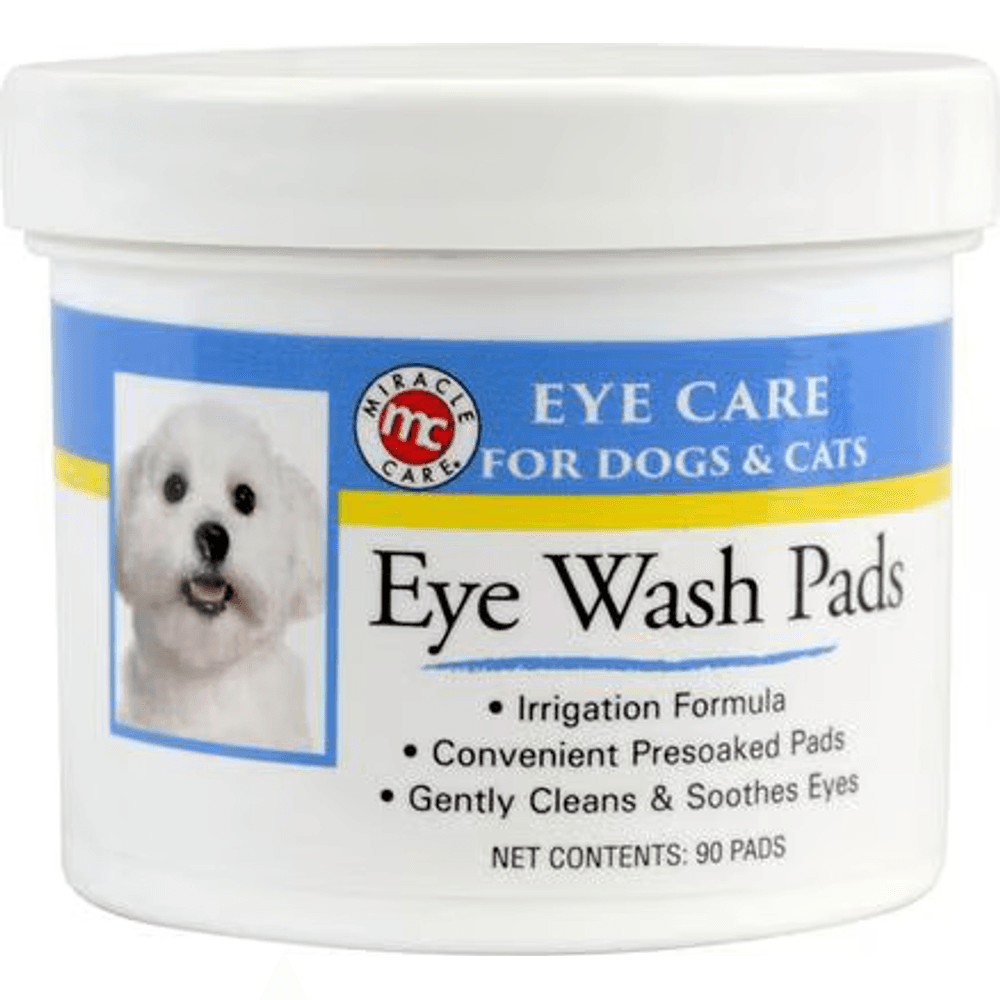
Sterile pads for gently wiping away the crusting that comes with a flare-up.
Webvet may earn a commission when you click through to Chewy, at no extra cost to you.
Most routine cases improve within a few days to a couple of weeks, and a simple case is one of the more affordable trips to the vet. The realistic exception is herpesvirus, which is a lifelong resident rather than a one-time cure, so those cats may need occasional short courses of treatment when stress triggers a flare. Getting the diagnosis right early is what keeps costs and complications down, because a scratch caught on day one is far cheaper and safer to treat than an ulcer that has been left to deepen.
How to help at home safely
For ordinary crusting, the safest thing you can do is keep the area clean. Dampen a soft cloth or cotton pad with plain warm water, wipe gently from the inner corner outward, and use a fresh section for each eye so you never carry an infection from one side to the other. If your cat is a flat-faced breed prone to tear staining, a quick daily wipe keeps the fur from matting and smelling. Keeping the face fur trimmed away from the eyes and reducing dust, smoke, and aerosol sprays around the house all cut down on irritation.


Gentle presoaked wipes for the crusting that comes with a flare-up. Cleaning only, and not for a squinting or cloudy eye.
Webvet may earn a commission when you click through to Chewy, at no extra cost to you.
How to lower the risk of future flare-ups
Because so much feline eye trouble traces back to respiratory viruses, prevention starts with keeping the immune system steady. Staying current on the core vaccines that cover herpesvirus and calicivirus reduces both the odds and the severity of cat flu, and keeping a new or sick cat separated from the rest of the household limits spread. For cats that already carry herpesvirus, the goal is managing stress: predictable routines, enough vertical space and hiding spots, gradual introductions, and calm handling during known trigger events like travel or boarding. Some vets recommend supplements for herpes-prone cats, which is worth discussing at a check-up rather than starting on your own.

A lubricating gel that soothes an irritated eye between vet-directed treatments.
Webvet may earn a commission when you click through to Chewy, at no extra cost to you.
It also helps to know your own cat's normal. A cat that always has a fleck of crust in the same corner after sleeping is different from one whose eyes suddenly start streaming or gluing shut. If watering and redness are the main event rather than crusty discharge, our guide to red or runny eyes in cats walks through those overlapping signs in more detail.
When goopy eyes become urgent
Most eye discharge is a routine problem, but a few signs mean the eye itself may be in danger and you should not wait to see. Squinting, holding the eye clamped shut, pawing or rubbing at the face, and any cloudiness or visible change to the clear surface all suggest pain and a possible scratch or ulcer. A cat that suddenly cannot open an eye, or whose eye is bulging, bleeding, or swollen shut, needs to be seen the same day. When in doubt, an eye is one of the areas where it is always worth a phone call, because the difference between a minor problem and a lasting one is often measured in days.

The takeaway for cat owners is that eye discharge sits on a spectrum. On the gentle end are the harmless morning crusts and tear stains that just need a wipe; on the serious end are painful, squinting, cloudy eyes and infections that need a vet's drops and a proper diagnosis. You do not have to figure out which is which alone. When the goop is mild and your cat is bright and comfortable, keep it clean and watch the trend. When pain, color, swelling, or sneezing enter the picture, let your veterinarian take a proper look, and never substitute a home or human remedy for the exam that tells you what is really going on.
Sources
Reviewed by the Webvet Veterinarian Team
This guide is general information, not a diagnosis, and does not replace an exam by your veterinarian. If your pet is in distress, contact your vet or an emergency clinic right away.