Cat Meowing at Night: Causes and How to Stop It
Nighttime meowing can reflect normal activity, hunger, learned attention, stress, age-related change, or illness. Use this humane seven-night reset and learn when your cat needs veterinary care.


BVMS MRCVS

This article contains affiliate links. Webvet may earn a commission when you buy through them, at no extra cost to you.
Cat meowing at night usually reflects one of three things: normal dawn-and-dusk activity, a need or habit that has been reinforced, or a physical or age-related problem. The safest response is to check your cat first, identify the pattern, and then use a consistent routine instead of punishment.
A young, healthy cat who has learned that 3 a.m. meowing produces food needs a different plan from a senior cat who has suddenly started wandering and yowling. This guide helps you make that decision, reset the nighttime routine, and recognize signs that deserve veterinary care.
Why Cats Meow at Night
Cats are crepuscular, which means they are naturally most active around dawn and dusk. This crepuscular activity can leave a cat ready to hunt, play, eat, and socialize when the household is winding down after a quiet afternoon. That rhythm makes nighttime activity more likely, but it does not mean every episode is normal. A sudden change, unusual intensity, or accompanying health sign raises the possibility of a medical cause and changes the first response.
If you are asking, "Why is my cat meowing at night?", begin with timing and context. A cat walking around meowing at night may be patrolling, searching for a resource, or struggling to settle, while a cat calling from the bedroom door may have learned that persistence brings attention. Sudden or intense vocalization changes the decision because health and distress must be checked first.
Common behavioral and environmental causes include:
- Hunger or feeding timing: A long gap between dinner and breakfast can make pre-dawn waking more likely.
- Attention reinforcement: If meowing sometimes produces food, play, conversation, or an open bedroom door, the behavior can become persistent.
- Unused energy: A young or active cat may need more purposeful movement and hunting-style play during the day.
- Stress or change: A move, new pet, schedule change, outdoor cat at the window, or unfamiliar noise can make a cat more vigilant.
- Resource access: A blocked litter box, empty water bowl, closed door, or uncomfortable sleeping area can prompt repeated calls.
- Reproductive behavior: An unspayed cat in heat may vocalize intensely and try to find a mate.
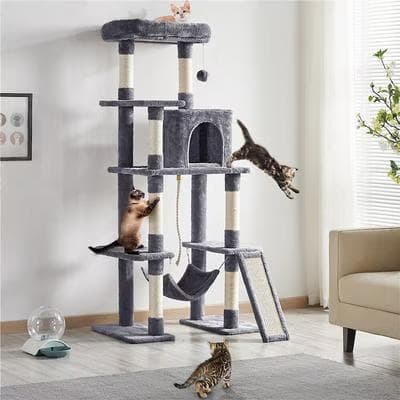
63-inch multi-level cat tree with plush perches, a condo, a hammock, sisal scratching posts, and a dangling toy. Dark gray.
Webvet may earn a commission when you click through to Chewy, at no extra cost to you.
For a broader explanation of vocal communication throughout the day, see why cats meow so much. This article focuses specifically on what changes after bedtime and how to respond without missing a medical cause.
- 1Crepuscular activity can make cats lively near bedtime and before dawn.
- 2A sudden change in nighttime vocalization is more concerning than a long-standing, predictable habit.
- 3Check food, water, litter, comfort, and signs of illness before treating the behavior as attention seeking.
- 4A seven-night reset works best when every person in the home follows the same response.
- 5Never punish, spray, yell at, or frighten a cat for vocalizing.
Feline sleep is spread across many naps rather than one uninterrupted night. Understanding how much cats sleep can help you decide whether your cat needs more daytime engagement or a medical check.
A securely anchored cat tree can add climbing, scratching, observation, and a comfortable perch, especially in a small home. Match the height and access points to your cat's mobility. A cat tree can improve the daily environment, but it cannot diagnose or single-handedly stop nighttime meowing.
What Nighttime Meowing Means
What does it mean when a cat keeps meowing at night? Repeated nighttime meowing means your cat is motivated by a need, a trigger, a learned result, or physical discomfort. The timing alone cannot identify which one. Check resources and health changes, note what happens before and after the sound, and choose the response that matches that evidence rather than assuming the cat wants attention. First confirm access to water, litter, food, comfortable rest, and familiar routes. Then note whether the pattern is new, escalating, or paired with a health change before treating it as a learned habit.
Match the Cause to the Next Step
The pattern around the vocalization is often more useful than the sound itself. This cause-to-action decision table turns each cause check action into a repeatable choice. Work across the row from the likely cause to what you can check and then to a safe first action. That sequence keeps the plan tied to evidence instead of guesswork and can prevent both accidental reinforcement and missed medical red flags. Reassess whenever the sound, timing, movement, appetite, thirst, or litter-box pattern changes.
| Possible cause | What to check | Safe first action |
|---|---|---|
| Hunger or a very early breakfast expectation | Meal timing, daily calories, weight, thirst, appetite change | Shift part of the daily ration later or use a measured timed meal |
| Attention reinforcement | Whether talking, feeding, play, or opening a door follows meowing | Meet needs before bed, then use one consistent response |
| Too little activity | Long daytime sleep, brief play, few climbing or foraging choices | Add short hunt-style play and food challenges earlier in the day |
| Environmental trigger | Outdoor animals, lights, appliances, hallway noise, a new pet | Block the trigger, add a retreat, and preserve predictable resources |
| Senior or sensory change | Wandering, disorientation, changed hearing or vision, altered sleep, or other medical red flags | Schedule a veterinary examination and improve nighttime access and lighting |
| Pain or illness | Appetite, thirst, weight, litter habits, vomiting, breathing, posture | Contact a veterinarian rather than trying to extinguish the behavior |
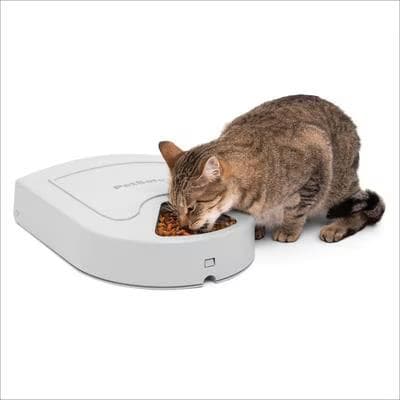
Webvet may earn a commission when you click through to Chewy, at no extra cost to you.
An automatic feeder may help when a healthy cat predictably wakes the household for a meal. Program a measured portion from the cat's normal daily ration so the feeder, not a waking person, delivers it. New hunger, thirst, appetite change, or weight loss is not a feeder problem and needs veterinary attention.
When Nighttime Yowling Needs a Vet
Nighttime yowling needs veterinary attention when it starts suddenly, becomes more intense, or appears with a change in health, movement, awareness, or litter-box behavior. At 2 a.m., first confirm that your cat is safe, can reach essential resources, and is not showing urgent distress.
Contact a veterinarian promptly if nighttime vocalization appears with:
- Straining to urinate, repeated litter-box trips, blood in urine, or little to no urine.
- Open-mouth breathing, marked breathing effort, collapse, severe weakness, or obvious trauma.
- Repeated vomiting, refusal to eat, a major thirst change, or unexplained weight loss.
- Crying when touched, reluctance to jump, limping, hiding, or a tense posture.
- Sudden disorientation, staring, getting trapped in corners, or failing to recognize familiar routes.
- A rapid change in a senior cat's sleep, movement, hearing response, or social behavior.
In an older cat, a veterinarian may consider pain, hyperthyroidism, high blood pressure, hearing or vision loss, kidney disease, and cognitive dysfunction among many possible explanations. Those are possibilities, not a diagnosis. An examination and appropriate testing are needed to separate them.
Why is an old cat meowing at night? Age raises the importance of pain, sensory loss, medical illness, and cognitive change even when attention or hunger may also contribute. An old cat meowing loudly at night, especially when the pattern is new or paired with wandering, needs a veterinary examination rather than a behavior-only plan.
- Senior-cat medical red flags: New disorientation, hearing loss, pain, altered mobility, and a major change in sleep or vocalization do not identify one disease, but they make a veterinary history and examination more important than a behavior-only response.
Watch how your cat rests as well as how they vocalize. New stiffness, guarded posture, or unusual rest positions can add useful context. WebVet's guide to cat sleeping positions when sick explains posture changes that may justify a closer look, although sleep position alone cannot diagnose illness.
Why Cats Yowl at 2 A.M.
Why is my cat yowling at 2am? A cat may yowl because the home is quiet, an outdoor trigger is active, food is expected, or the cat is searching for a person or resource. Sudden, intense yowling can also signal pain or disorientation. Check the cat immediately, then use the pattern and health signs to choose a safe next step. If safety and health checks are normal, record what happened just before the yowl and what ended it instead of assuming that every 2am episode has the same cause.
Why a Cat Walks Around Yowling at Night
Why does my cat walk around the house yowling at night? Walking while yowling often means the cat is searching, patrolling, or struggling to settle. Check whether doors block water, litter, beds, or people, and look for outside animals or noises. In a senior cat, nighttime wandering plus vocalization can accompany sensory or cognitive change and merits a veterinary examination. Map the route and timing for several nights. Repeated stops near one door, window, resource, or person can reveal the likely trigger and the safest first adjustment.
Should You Ignore Nighttime Meowing?
You may ignore nighttime meowing only when your cat's needs are met, there are no signs of distress, a medical concern has been addressed, and the pattern is clearly maintained by attention. The ignore-versus-intervene rule is simple: ignore demand meowing only after checking safety and health, never instead of checking.
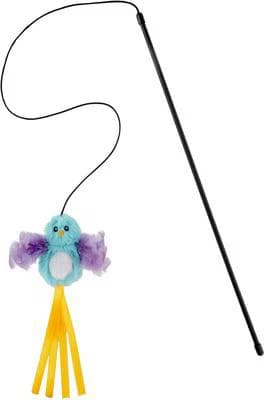
Teaser wand with a feathered bird charm and catnip to trigger your cat's chase-and-pounce instinct.
Webvet may earn a commission when you click through to Chewy, at no extra cost to you.
Before you stay in bed, verify that your cat has:
- Fresh water and an accessible, reasonably clean litter box.
- A safe temperature and an easy route to a comfortable sleeping place.
- No sign of injury, breathing trouble, vomiting, urinary difficulty, or disorientation.
- An appropriate meal plan and enough purposeful activity earlier in the day.
If those conditions are met, avoid answering, feeding, playing, or opening the door while the meowing is happening. Even occasional success can strengthen attention reinforcement because the cat learns that persistence sometimes works. Give affection, play, and food on a predictable schedule when the cat is calm.
Expect a learned pattern to become temporarily louder or longer when the usual reward stops. If the behavior changes character, your cat seems distressed, or you become concerned, reassess rather than rigidly continuing. Humane behavior work always leaves room for new information.
Should You Ignore Nighttime Yowling?
Do not ignore nighttime yowling until you have checked your cat and ruled out an urgent need. Yowling can be a louder form of social communication, but it may also accompany pain, fear, sensory loss, or disorientation. Only use a consistent non-response for a known attention pattern after needs and medical concerns are addressed. Intervene when the sound is new, unusually intense, or paired with medical red flags. For a familiar demand pattern, shift attention to calm daytime and evening behavior.
How to Stop 3 A.M. Meowing
How do I get my cat to stop meowing at 3am? Meet needs before bed, move purposeful activity and part of the daily food ration later, and prevent the waking person from becoming the reward. After medical concerns are addressed, follow the same response every night. The seven-night reset below organizes those steps and helps you measure change. Change one likely driver at a time, keep total daily calories stable, and use the activity log to judge whether episodes start later, end sooner, or become less intense.
Seven-Night Reset Plan
A seven night reset gives you enough structure to change several likely drivers while tracking what works. It combines timed feeding when appropriate with a pre-bed hunt-play-eat routine, consistent responses, and an activity log. The hunt play eat sequence is not a promise of instant silence, but it produces useful information.
When a cat won't stop meowing at night, consistency matters more than adding a new tactic every evening. The practical answer to how to stop my cat from meowing at night is to meet needs first, choose the most likely cause, and repeat a measured routine long enough to evaluate it. Timed feeding can separate hunger from attention reinforcement, while the activity log shows whether the hunt play eat sequence, outside cues, or household responses predict the episode. This seven night reset includes separate young-cat and senior-cat adjustments because exercise tolerance, sensory change, and medical risk are not the same. The ignore-versus-intervene rule still applies every night: ignore demand meowing only after checks, and do not ignore distress.


Probiotic supplement with Bifidobacterium longum BL999 that supports cats in maintaining calm behavior plus digestive and immune health. One daily sachet.
Webvet may earn a commission when you click through to Chewy, at no extra cost to you.
Nights 1 and 2: Establish a Baseline
Write down the time, sound, location, preceding activity, your response, and what ended the episode. Check meal portions, water, litter access, windows, lights, and noises before changing the routine.
Add two or three brief daytime activity sessions. Useful cat exercises include chasing, climbing, stepping over low obstacles, and food-search games adjusted to the cat's age and health.
Nights 3 and 4: Use a Hunt-Play-Eat Sequence
Schedule a supervised interactive play session before the final meal. Let the cat stalk, chase, pounce, and catch the toy several times. End while the cat is still engaged, offer the planned meal, then lower household activity and lights.
A small bedtime-conditioning reward can mark calm behavior after play, provided it fits the cat's daily calories. It should not be described as a sedative, sleep aid, or guaranteed calming treatment.
A teaser wand can support the hunt-play-eat routine because the owner controls the speed, distance, and end of the session. Supervise every use and store string, feathers, and wand attachments out of reach afterward. Do not leave an entanglement or swallowing hazard available overnight.
Nights 5 and 6: Change the Reinforcement Pattern
Meet needs before bed, then respond consistently. If hunger is the verified trigger, shift part of the normal ration later or schedule a measured pre-dawn feeder portion. If attention is the trigger, reward quiet evening behavior.
Ask every household member to follow the same plan. One person feeding the cat after ten minutes of calling can undo several nights of consistency. Avoid yelling, spraying water, rattling objects, or shutting a cat away without resources. Those responses can add fear while still providing attention.
Night 7: Compare, Do Not Guess
Review the activity log. Look for changes in start time, duration, intensity, location, and the action that ended each episode. Improvement may mean a later start, shorter bout, or easier return to rest, not perfect silence.
If there is no improvement, revisit the cause rather than escalating punishment. A persistent new pattern, senior-cat yowling, or any physical change belongs with a veterinarian. A long-standing behavior pattern may benefit from an individualized plan from a qualified feline behavior professional.
Fine-Tune Feeding, Sleep Space, and Life-Stage Needs
Change meal timing without increasing total intake. For a prescription diet, weight plan, or medical feeding schedule, ask the veterinarian first.
Build a nighttime area with easy access to water, litter, a stable perch, and a retreat. Some cats prefer an open bed while others choose a covered cat bed away from foot traffic. Keep the route well lit for a senior cat with sensory or cognitive change, and avoid forcing any cat into an enclosed bed.
Adjust the plan to the cat in front of you:
- Newly adopted cat: Use a smaller predictable territory, hideaways, familiar-smelling bedding, and a steady schedule while the cat settles.
- Young or high-energy cat: Add several short activity sessions, climbing, safe window viewing, and food-search tasks throughout the day.
- Senior cat: Favor gentle movement, easy-access resources, night-lights, warm resting areas, and veterinary assessment for new behavior.
- Multi-cat home: Duplicate key resources and watch whether another cat blocks food, water, litter, hallways, or preferred beds.
Separate young-cat and senior-cat adjustments matter because activity tolerance, sensory ability, mobility, and medical risk differ. Keep the same predictable framework, but change the intensity and safety checks.
A cat-specific calming supplement may be discussed with your veterinarian when stress appears to contribute to vocalization. It is an adjunct to environmental and behavior changes, not a treatment for pain, cognitive dysfunction, hyperthyroidism, urinary disease, or another medical cause. Do not call it a sleep aid.
Keep a Nighttime Activity Log
A useful activity log records the date, time, location, sound, trigger, food timing, litter use, household response, and when the cat settled. Add changes in appetite, thirst, weight, movement, vomiting, stool, or urination, and bring the log to a veterinary visit for a new or persistent pattern.
Frequently Asked Questions
What does it mean when a cat keeps meowing at night?
A cat that keeps meowing at night may be expressing hunger, social interest, unused energy, stress, a blocked resource, or a learned expectation that calling produces attention. Knowing what the pattern can mean keeps guidance tied to context. The practical next step is to check resources and health signs before choosing a humane response. Note the time, location, trigger, and what ends each episode so meaning comes from the repeated pattern, not the volume of one call.
Should I ignore my cat meowing at night?
You should ignore meowing only when your cat's needs are met, there are no signs of distress, and you are confident the behavior is a learned request for attention. Safe ignore meowing guidance starts with a practical next step: check for sudden vocalization, urinary difficulty, breathing change, pain, disorientation, vomiting, or altered appetite and thirst. If those checks are normal, reward calm behavior at planned times and avoid making a 3 a.m. response unpredictable.
Why is my cat Yowling at 2am?
Why is my cat yowling at 2am? A cat can be active, hungry, stressed, responding to an outside trigger, or seeking a familiar response. Useful yowling guidance starts with the practical next step of checking safety and health. Sudden yowling, especially in a senior cat, warrants a veterinary examination because pain or cognitive change may be involved. For a stable behavior pattern, log what happens before and after the yowl and address that cause consistently.
How do I get my cat to stop meowing at 3am?
To get a cat to stop meowing at 3am, meet your cat's needs before bed, add daytime activity, use a hunt-play-eat routine, and shift a measured part of the daily ration later if hunger is the trigger. Humane stop meowing guidance uses one practical next step: after medical concerns are addressed, avoid rewarding the episode inconsistently. Follow the plan for seven nights, then compare the start time, duration, and intensity before changing tactics.
Should I ignore my cat Yowling at night?
Do not automatically ignore yowling at night. Sound ignore yowling guidance begins with the practical next step of checking for distress, disorientation, pain, or difficulty reaching resources. If your cat is safe, healthy, and has an established attention-seeking pattern, a consistent non-response may help, but new or escalating yowling needs reassessment. When in doubt, observe the cat directly and contact a veterinarian rather than using ignoring as a test.
Why does my cat walk around the house yowling at night?
A cat may walk around the house yowling while searching for a person, food, a litter box, an exit, or a comfortable resting place. Practical walk around guidance starts with a practical next step: check access and outdoor triggers. In an older cat, wandering plus yowling can signal sensory or cognitive change, so schedule a veterinary examination. Record the route because repeated stops can reveal a blocked resource, outside animal, or location where the cat becomes disoriented.
Why is my senior cat meowing at night?
A senior cat may meow at night because pain, reduced mobility, hearing or vision loss, hyperthyroidism, high blood pressure, kidney disease, or cognitive dysfunction signs have changed sleep and orientation. These conditions cannot be distinguished from behavior by sound alone. A veterinary examination and nighttime history are the appropriate first steps.
Can an automatic feeder stop a cat from meowing before dawn?
An automatic feeder can stop a cat from meowing before dawn only when hunger linked waking is the actual cause. It moves the food reward away from the sleeping person and delivers a measured meal at a consistent time. It is not a treatment, and a medical cause remains possible. Include the portion in daily calories and investigate new hunger, thirst, or weight change. Do not use it as a blanket response to every nighttime sound.
The Bottom Line
Cat meowing at night becomes easier to solve when you match the response to the cause. Check safety and health first, then use measured feeding, daytime enrichment, a hunt-play-eat routine, a predictable sleep area, and consistent household responses. If the sound or behavior changes suddenly, especially in a senior cat, involve your veterinarian instead of trying to outlast it.

Wendy Toth is an entrepreneurial writer, editor, and mom of two humans, two dogs and one cat. She’s currently Content Director here at PetFul. For the last 15 years she has held positions at Parents Magazine, NBC, PetSmart, and GreatPetCare, where she was co-founder. Her writing has appeared in many national outlets including Pet Lab Co., Retail Me Not, Ask Men, Wild Society Nutrition, and The New York Times. Because she loves her work so much, she’s obsessed with helping others find career fulfillment, and covers it regularly at PowerSuiting.
Veterinarian · BVMS MRCVS
Dr. Pippa Elliott, BVMS, MRCVS, is a veterinarian with nearly 30 years of experience in companion animal practice. Dr. Elliott earned her Bachelor of Veterinary Medicine and Surgery from the University of Glasgow. She was also designated a Member of the Royal College of Veterinary Surgeons. Married with 2 grown-up kids, Dr. Elliott has a naughty Puggle named Poggle, 3 cats and a bearded dragon.


